
The Best Books on New Zealand
In this list
8 books
- The Penguin History of Aotearoa New Zealand · Michael King If
- The New Zealand Wars / Ngā Pakanga o Aotearoa · Vincent O’Malley No
- A Land of Two Halves: An Accidental Tour of New Zealand · Joe Bennett After
- Ghosts of Gondwana: The History of Life in New Zealand · George Gibbs Have
- Black Gold: Power, Money & the Team that Reshaped Rugby · Gregor Paul No
- The Luminaries · Eleanor Catton Winner
- The Bone People · Keri Hulme Winner
- The Whale Rider · Witi Ihimaera Originally
There are countries that are beautiful, and then there is New Zealand. Stretched across two dramatic main islands at the bottom of the South Pacific, Aotearoa — the Māori name meaning “Land of the Long White Cloud” — has a way of stopping people in their tracks. It is a place of snow-capped mountains and glassy fjords, of ancient volcanic landscapes and rolling green hills that look almost too perfect to be real. When Peter Jackson chose it as the backdrop for Middle-earth, the rest of the world finally got a glimpse of what New Zealanders had quietly known all along.
But New Zealand is far more than scenery. It consistently ranks among the world’s most peaceful, livable, and welcoming nations. Its indigenous Māori culture is one of the most vibrant and integrated in the world. Its wine, food, and outdoor lifestyle are the envy of millions. And its national rugby team, the All Blacks, has achieved a level of sustained excellence that borders on the mythical. Plenty of people visit New Zealand and never quite recover from it, returning home only to start quietly researching what it would take to move there permanently.
If you’ve ever been captivated by New Zealand — whether from a film, a friend’s holiday photos, or simply a map that made you wonder what lies down at the very end of the world — this reading list is for you. The eight books gathered here are weighted firmly toward non-fiction, spanning history, natural science, travel writing, and sport, with three outstanding novels included because they illuminate aspects of New Zealand’s culture and landscape that only fiction can reach. Together they paint a rich, layered, and deeply human portrait of one of the world’s most extraordinary countries. Whether you’re planning a trip, considering a move, or simply want to understand what makes New Zealand tick, these are the books that will take you there.

If you want to understand New Zealand — really understand it, from its geological origins to its modern identity — Michael King’s magisterial history is the place to start. Published in 2003 and an immediate bestseller, it remains the most comprehensive single-volume history of the country ever written, covering the arrival of Polynesian settlers, the development of Māori civilization, the arrival of Europeans, the colonial period, and the gradual emergence of a distinctive national identity. King, one of New Zealand’s most celebrated historians, writes with empathy, rigor, and a deep love for his subject. He died tragically in a car accident in 2004, just months after the book was published, but his legacy endures in every copy sold.
What makes this book so valuable for anyone interested in New Zealand is the way it explains how the country came to be the way it is. New Zealand’s legendary friendliness, its egalitarianism, its sometimes uneasy but increasingly mature relationship with its Māori heritage, its environmental consciousness — all of these things have roots that King traces with remarkable clarity. This is the book that will make everything else on this list make sense. Start here, and everything that follows will feel richer for it.

No honest account of New Zealand can sidestep its colonial history, and Vincent O’Malley’s acclaimed book is the most accessible and authoritative introduction to the country’s defining conflict of the nineteenth century. Between 1845 and 1872, a series of wars were fought between the Crown and various groups of Māori over land, sovereignty, and the meaning of the Treaty of Waitangi. These conflicts shaped the nation in ways that are still felt today — in land ownership, in politics, in the relationship between Māori and Pākehā — and yet for generations they were barely taught in New Zealand schools. O’Malley, a professional historian who has spent his career researching Māori-Crown relations, brings them vividly and accessibly to life.
Published in 2019, the book is richly illustrated with full-colour photographs, maps, timelines, and portraits, making it as visually engaging as it is intellectually serious. It does not shy away from the injustices of the colonial period, but it approaches its subject with balance and clarity rather than polemic. New Zealand is currently in the middle of a national reckoning with this history, and O’Malley is one of the historians leading that conversation. For anyone who wants to understand modern New Zealand — its politics, its culture, its ongoing debates about the Treaty — this book is indispensable.

After ten years living in New Zealand, British-born writer and columnist Joe Bennett asked himself a simple question: what on earth was he still doing there? To find out, he packed a bag, stuck out his thumb, and hitchhiked the length and breadth of both islands — from Bluff at the very bottom of the South Island to Cape Reinga at the northernmost tip of the North. The result, first published in 2004 and updated with new chapters in 2024, is one of the funniest, sharpest, and most affectionate portraits of New Zealand ever written by an outsider. Bennett has the dry wit of a man who has spent years observing his adopted country with fond bewilderment, and his eye for the telling detail — the roadside pub, the sheep station, the volcanically opinionated truck driver — is unerring.
What makes this book so valuable alongside the weightier histories on this list is the way it captures the texture of everyday New Zealand life: the people, the humour, the landscape, the contradictions. Bennett writes about what makes New Zealanders distinctively themselves — their practicality, their egalitarianism, their complicated pride — with the clarity that only a thoughtful outsider can bring. One reviewer memorably called it “Bryson meets gnarled Brit wit,” and that feels exactly right. For anyone considering a visit or a move, this book will prepare you for the real New Zealand far better than any guidebook.
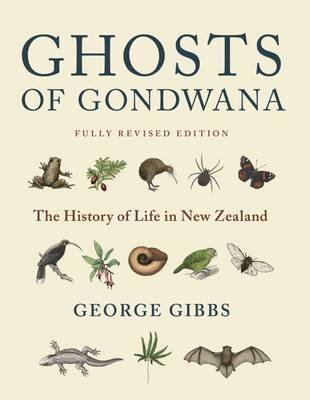
Have you ever wondered why New Zealand’s plants and animals are so unlike those found anywhere else on earth? Why the kiwi lives here and nowhere else? Why the kākāpō is the only parrot in the world that cannot fly? The answer lies deep in prehistoric time, and George Gibbs — a scientist and former Victoria University lecturer — tells that story with remarkable clarity and enthusiasm. New Zealand spent eighty million years in glorious isolation after breaking away from the ancient supercontinent of Gondwana, allowing its wildlife to evolve along entirely its own path. The result is a living laboratory unlike anything else on the planet, and Ghosts of Gondwana is its definitive popular account.
This award-winning book — available in a fully revised edition — covers everything from ancient frogs and giant moa to delicate native insects and the great southern beech forests, drawing on geology, genetics, and biology to explain how New Zealand came to be so wonderfully, bewilderingly strange. It is popular science at its very best: authoritative but never dry, richly illustrated, and written with the kind of infectious curiosity that makes you look at a kiwi or a tuatara with completely new eyes. For anyone heading to New Zealand — or simply captivated by the natural world — this is an essential and endlessly rewarding read.

No reading list about New Zealand would be complete without a book about the All Blacks, and Gregor Paul — New Zealand Herald rugby columnist, multi-award-winning journalist, and the most respected rugby writer in the country — has written the definitive modern account of the team that has come to define a nation. Black Gold explores how the All Blacks transformed themselves in the professional era into not just the world’s most successful rugby team but its most commercially powerful, and what that journey has cost them. From the fierce battle between Nike and Adidas for the famous black jersey to a landmark deal with Silicon Valley private equity group Silver Lake, Paul takes readers deep inside the inner workings of the All Blacks brand.
What makes this book so compelling for non-rugby fans as well as devotees is the way it illuminates New Zealand’s character through sport. The All Blacks are more than a team; they are a cultural institution and a living expression of national identity, and the tension between preserving that identity and monetising it turns out to be a gripping story. Even if you don’t know a lineout from a line dance, Black Gold will leave you with a deep appreciation for why New Zealand takes its rugby so seriously, and why the rest of the world is right to watch in admiration.

Winner of the 2013 Man Booker Prize, Eleanor Catton’s extraordinary second novel is set on the wild West Coast of New Zealand’s South Island during the 1866 gold rush. It is a literary tour de force; a vast, intricately plotted mystery set in the frontier town of Hokitika, involving twelve men gathered in secret to discuss a series of unsolved crimes. A wealthy man has vanished, a prostitute has nearly lost her life, and a fortune in gold has turned up in mysterious circumstances. The landscape of New Zealand — its dramatic skies, its lawless frontier towns, its sense of being a place where people come to reinvent themselves — is absolutely central to the story. Catton makes the South Island feel like a character in its own right.
At 832 pages, The Luminaries was the longest novel ever to win the Booker Prize, and Catton became the youngest-ever winner at age twenty-eight. Beyond its dazzling structure (the novel is organized around the signs of the zodiac and the movements of celestial bodies), the book captures something essential about New Zealand’s history: its colonial past, the astonishing diversity of people drawn there by opportunity and desperation, and the sheer strangeness of trying to build a civilization at the edge of the known world. It was also adapted into a television miniseries in 2020. For anyone seeking to understand New Zealand’s colonial roots through fiction, this is unmissable.

Winner of the Booker Prize in 1985, Keri Hulme’s singular novel is unlike anything else in world literature. Set on the rugged West Coast of New Zealand’s South Island, it follows three damaged souls — Kerewin, a reclusive artist of mixed Māori and European descent; Joe, a Māori man broken by grief; and Simon, a mute child with a mysterious past — as they collide and form an unlikely, volatile family. The novel is deeply rooted in Māori spirituality and mythology, and it forces readers to confront questions of identity, belonging, violence, and redemption in ways that are uncomfortable and ultimately extraordinary.
The Bone People is not an easy read — it is raw, strange, and demands patience — but it rewards those who stick with it with one of the most immersive portraits of New Zealand’s landscape and soul ever committed to paper. The coastline, the sea, the ancient forests, and the Māori worldview are so vividly rendered that the book functions almost as an immersion into the land itself. Hulme was the first New Zealander to win the Booker Prize, and also the first writer ever to win it with a debut novel. For anyone who wants to understand the deep spiritual relationship between Māori culture and the natural world, this is essential reading.

Originally published in 1987, Witi Ihimaera’s beloved novella tells the story of Kahu, a young Māori girl who is determined to claim her birthright as the leader of her tribe, descended from the legendary whale rider Paikea. Set in the coastal community of Whāngārā on the East Coast of the North Island, the story weaves together Māori mythology, family drama, and a profound connection to the natural world — particularly the sea and its creatures — in a way that is both deeply specific to New Zealand and universally moving.
The 2002 film adaptation, starring the extraordinary Keisha Castle-Hughes, brought the story to a global audience and became one of the most celebrated New Zealand films ever made. But the book retains a magic all its own, offering a richer immersion in Māori language, tradition, and spirituality than the film can provide. It is a short read — almost a fable — but it carries enormous emotional power, and it offers one of the most accessible and beautiful introductions to Māori culture available anywhere.
New Zealand is one of those rare places that genuinely lives up to its reputation. The films don’t lie. The travel rankings aren’t wrong. The people who move there and never come back have made a perfectly rational decision. And while no collection of books can fully substitute for standing on the shore of Milford Sound at dawn or watching the sun set over The Remarkables, the eight titles gathered here will take you a very long way toward understanding why this small, distant, improbably beautiful country has captured the hearts and imaginations of people all over the world.
As an Amazon Associate we earn from qualifying purchases made through links on this page.