Portland Jones: In Harmony with Animals
Portland Jones’ reading list
21 books mentioned in this interview
- The History of Sound · Ben Shattuck
- The Garden Against Time · Olivia Laing
- 90 Seconds to Midnight · Charlotte DeCroes Jacobs
- Banjo Paterson
- Dirt Music · Tim Winton
- Voss · Patrick White
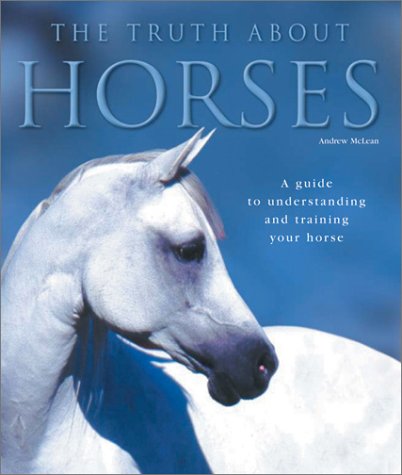
- The Truth About Horses
- Don’t Shoot the Dog · Karen Pryor
- Robert Sapolsky
- Horse
- Tom Keneally
- Dispatches
- All the Light We Cannot SeeRecommended 13 times
- Cutting for StoneRecommended 3 times
- The Shipping News
- The Things They Carried
- Highways to a War
- The Sound of One Hand Clapping
- Cloud AtlasRecommended 3 times
- A Fine Balance
- The God of Small ThingsRecommended 9 times
Books by Portland Jones: Equine: A Love Letter to the Horse
Portland Jones is a horse trainer, a writer and teaches equine behaviour at university. Her horse training career has always focused on welfare-centred, evidence-based training. Equine: A Love Letter to the Horse is her second non-fiction book about horses. She has also written two novels of historical fiction and has a PhD in literature. She and her partner live in the Swan Valley in Western Australia and have three adult children.

When someone asks ‘What do you do for a living?’, how do you respond?
I usually squirm a bit at this question because the answer makes me seem like someone with a really short attention span. Which, of course, is true but not necessarily what I like to lead with. So I usually say, It’s complicated. However, when pressed, I say that I write books, train horses, teach at university, run a small agistment centre and also teach adult literacy.
What are you reading at the moment?
I usually have two or three books on the go at once because I like to be able to choose what I’m going to read each night (also, short attention span). So, at the moment I have The Garden Against Time by Olivia Laing (which is part philosophy, part memoir), 90 Seconds to Midnight by Charlotte DeCroes Jacobs (a biography of Hiroshima survivor Nakamura Thurlow) and The History of Sound by Ben Shattuck which I read while on a recent trip to India. When I finished it I turned it over and started reading it again. It’s just so perfectly executed.


When you think about your childhood, what book comes to mind?
On my seventh birthday my parents gave me a collection of Banjo Paterson poetry illustrated with paintings by Pro Hart. For every subsequent birthday I received further illustrated collections of poetry. Banjo Paterson was a horse trainer who knew horses and also loved them deeply, I think.
I still remember discovering the excitement of his poems; the rhythm of them and the symmetry of the rhyme. You can feel the hoofbeats on the page. I still have the books on my library shelf and every few years I revisit them because I love the words.

What did you want to be growing up?
I could never decide between a horse trainer or a writer, neither of which were perceived as real jobs by anyone. Which is funny, isn’t it, because several decades later they seem pretty real to me. Although to be fair, when compared to what other people do — commuting and working in an office — they seem neither grown-up or real.
What do you think your school-aged self would think of you now?
You know, I think my school-aged self would disparage me for ever wanting to be anywhere else than where I am right now. I think of myself as an incredibly lucky person because I make a living doing what I love and that love has led me into some extraordinary experiences.
I have met the most incredible people because of animals. I have spent time with people who are rescuing feral camels and training them to be dairy animals, with a man who uses traditional falconry techniques to rehabilitate injured peregrine falcons, and with vets who spend their working days protecting wild populations of endangered animals.
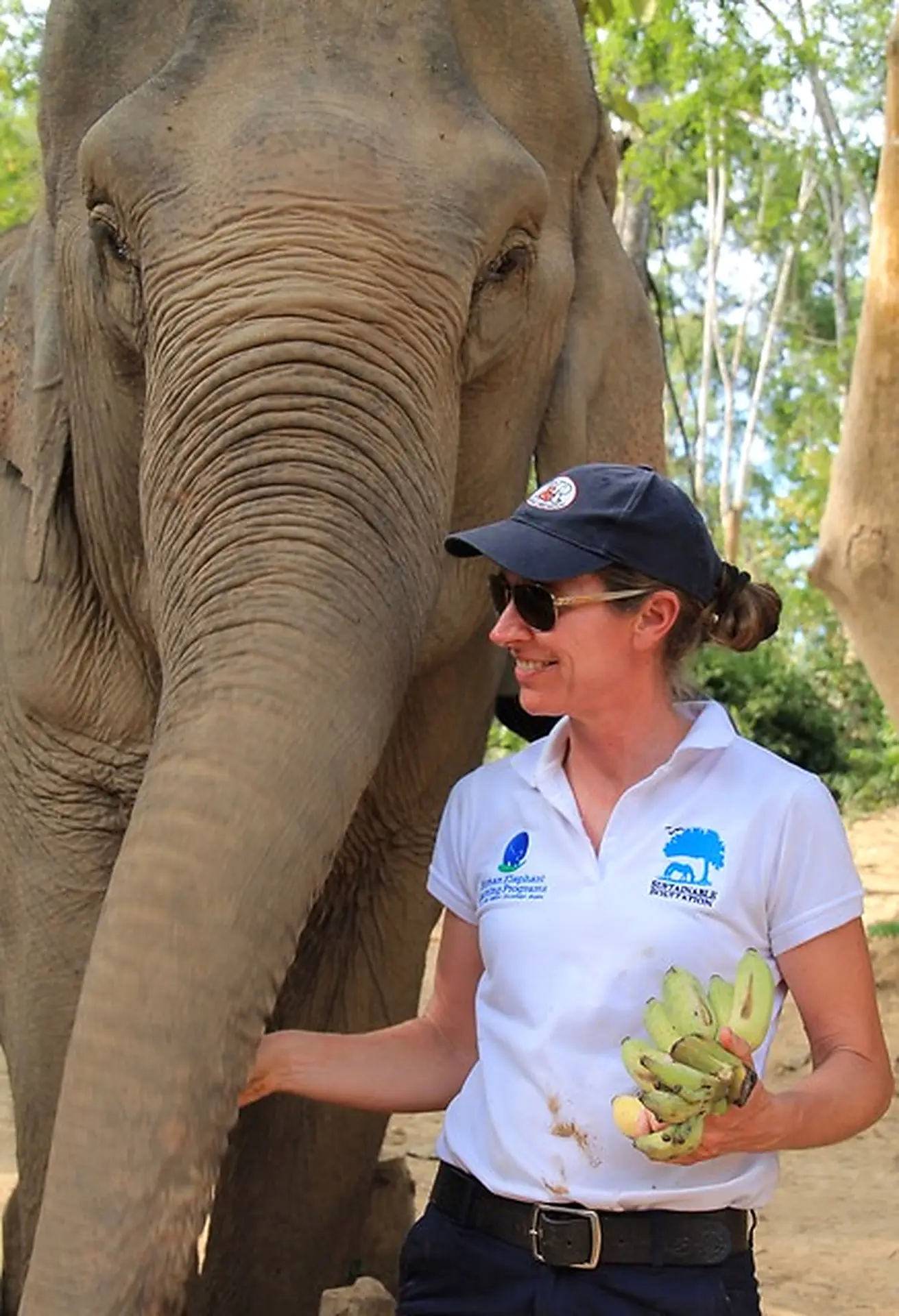
I have been on the board of The Help Foundation for over fifteen years and with Help I have travelled all over Asia training elephants and their mahouts. We apply a scientific model, the same way that we do with horses. We are a really small team but I like to think we are making a difference.
If you could wrap up a single book and gift it to yourself on your 21****st birthday, what book would you choose and why?
I would give myself a library because then I would never be bored or lonely. But if I could only choose just one, I think I would give myself Dirt Music by Tim Winton because it’s glorious and because Winton is a West Australian and his voice, the way he writes place and his use of metaphor, is something I admire.
Or maybe I would give myself Voss by Patrick White because there are scenes in that book where he wields language like a knife. They are so terrible and yet so perfectly written that you can’t look away.


Do you have any books that you strongly associate with important people in your life?
To me, one of the best things you can have in life is a great mentor. I have two. Dr Andrew McLean has guided my career as a horse trainer and Dr Richard Rossiter has guided my writing. Many years ago I worked on a book with Andrew called The Truth About Horses, it really marked the start of my evidence-based training journey and cemented one of the most important friendships of my life.
Which book have you recommended most to friends and family?
I have given away so many copies of Don’t Shoot the Dog by Karen Pryor that I’ve lost count. It was absolutely groundbreaking for its time. She was the first person to normalise positive reinforcement training. I have always had some reservations about some aspects of the book, but the overall message is so valuable it’s still worth sharing.
Many years ago when I started using a conditioned reinforcer for training horses we used to use a party-favour shaped like a cricket that made a distinctive clicking sound. Now of course you can get clickers in all shapes and sizes but I still have a deep fondness for those old time clickers. One of my university students who is now a dear friend once gave me a crocodile-shaped party-favour and I keep it on my desk because it reminds me that not so long ago training with positive reinforcement was viewed with extreme scepticism and seen almost as an act of rebellion. Which, if I ever get a bit down about the treatment of animals, reminds me of just how far we’ve come.

Do you prefer fiction or non-fiction? eBooks, audiobooks or physical books?
I think I’m a reader first and the medium is less important but I most enjoy physical books, then after that eBooks. I don’t listen to audio books very often and I can’t articulate exactly why that is. Perhaps it has something to do with the speed they’re read at (which might be too slow) or the single voice of the narrator. I’m not at all ideologically opposed to them, they’re just not my favourite way of ingesting stories.
I’m a totally indiscriminate consumer of words and will read anything that looks interesting or catches my eye. Having said that I probably read mostly literary fiction, then non-fiction (biology and history). I’m kind of obsessive, so I read everything I can about a single subject until I feel like I understand a tiny corner of it. I think my partner probably knows way more about octopus (cephalopods were a 2024 obsession), primate social hierarchies (2025), and equine biomechanics (ongoing) than he ever dreamed was necessary or even possible. Robert Sapolsky is definitely my favourite primatologist, his baboon books made me want to move to Africa.
What’s the best book you’ve read in the last six months?
The History of Sound. It’s series of short stories that interlock in beautiful and unexpected ways. Reading it is like watching someone carve something intricate and extraordinary. Or maybe it was Geraldine Brook’s novel Horse. It was shortlisted for the Historical Novel Society of Australasia’s award the same year as my second novel was. Which incidentally, Tom Keneally won and then very generously distributed a bit chunk of his winnings to the entire shortlist which was the brilliant act of an absolutely brilliant man. Horse is a masterclass in managing multiple narratives. Everything she writes sets a new benchmark.


Name a book that you feel everyone should read.
I think the book that everyone should read is the book that they’re capable of reading. Some of my literacy students speak English as a second language but might never have learned to write or read their first language. So, for them, any book is a milestone and an achievement. I started a library with donated books on the campus where I teach because learning is hard and books are the reward. A cookbook or a child’s early reader can be a conduit to a world that a student never thought they would be a part of. I always tell my students I don’t care what you read, as long as you do.
Which book do you feel has had the biggest impact on your life?
It’s difficult to narrow it down to just one.
My PhD was about the Vietnam War and the book that sparked my interest in that conflict was Michael Herr’s Dispatches. Just a brilliant, brilliant book. I have always loved history but that book made it real.
The Truth About Horses by Andrew McLean really cemented my future career path and set me on the road to evidence-based training. Understanding the science of training is a bit like watching one of those TV shows where they explain how magic tricks work. It doesn’t make the training any less remarkable, it makes it more beautiful because you have an understanding of the skill involved.


Are there any books you haven’t already mentioned that you’d want to include on your ‘Top 10’ reading list?
If this were a top 30 reading list I think I would still miss some. But here goes, without overthinking it:
All the Light We Cannot See, Anthony Doerr
Cutting for Stone, Abraham Verghese
The Shipping News, Annie Proulx
The Things They Carried, Tim O Brien
Highways to a War, Christopher Koch
The Sound of One Hand Clapping, Richard Flanagan
Cloud Atlas, David Mitchell
A Fine Balance, Rohinton Mistry
The God of Small Things, Arundhati Roy
A Primate’s Memoir, Robert Sapolsky
- All the Light We Cannot See
 All the Light We Cannot See
- Cutting for Stone
 Cutting for Stone
- The Shipping News
 The Shipping News
- The Things They Carried
 The Things They Carried
- Highways to a War
 Highways to a War
- The Sound of One Hand Clapping,
 The Sound of One Hand Clapping,
- Cloud Atlas
 Cloud Atlas
- A Fine Balance
 A Fine Balance
- The God of Small Things
 The God of Small Things
- A Primate’s Memoir
 A Primate’s Memoir
Please tell us briefly about your latest book.
Equine: A Love Letter to the Horse is my way of trying to share the joy of the horse with readers. I’ve tried to make the science accessible without taking away any of the absolute wonder. The book also has stories and memoir as well. I wanted it to be engaging and interesting and for readers to learn something but also to be entertained.

If you were to write an autobiography, what would it be called?
That’s a really tricky question. I think if you were to ask my children and my partner they would say something about not being able to sit still or stay quiet. Maybe, Down every rabbit hole? But I think the thread that unites everything I do, the writing, the animal training and my academic work has been a belief in non-violence. I’m deeply committed to kindness.
If you’ve enjoyed this interview with Portland, you can find out more about her on her Instagram and website. And you can find out more about The Help Foundation and their work with elephants on their Instagram and website.
As an Amazon Associate we earn from qualifying purchases made through links on this page.
You might also like

Bari Tessler: The Books Behind the Money Guru
Interview · 24 September 2016
Kathryn Paige Harden’s Reading List: The Books Behind The Genetic Lottery and Original Sin
Interview · 1 January 2023
Hahrie Han: The Crisis of Democracy
Interview · 7 April 2022
An Interview with Bridgett M. Davis
Interview · 25 September 2019