The Best Non-Fiction Books of 2025
In this list
13 books
- Everything Is Tuberculosis: The History and Persistence of Our Deadliest Infection · John Green Who
- The Fault in Our StarsRecommended 4 times
- Joyride: A Memoir · Susan Orlean Susan Orlean
- The Library BookRecommended 3 times
- Memorial Days: A Memoir · Geraldine Brooks On Memorial Day
- The Year of Magical ThinkingRecommended 7 times
- The Fate of the Day: The War for America, Fort Ticonderoga to Charleston, 1777-1780 · Rick Atkinson Rick Atkinson
- The British Are Coming
- Daughters of the Bamboo Grove: From China to America, A True Story of Abduction, Adoption, and Separated Twins · Barbara Demick Barbara Demick
- Nothing to Envy
- Empire of AI: Dreams and Nightmares in Sam Altman’s OpenAI · Karen Hao If
- Replaceable You: Adventures in Human Anatomy · Mary Roach Mary Roach
- King of Kings: The Iranian Revolution, A Story of Hubris, Delusion and Catastrophic Miscalculation · Scott Anderson Scott Anderson’s King
2025 was an extraordinary year for non-fiction, with books that challenged us, moved us, and opened our eyes to worlds we never knew existed. From intimate memoirs to sweeping histories, the year’s standouts captured both critical acclaim and the hearts of everyday readers. Here are the non-fiction titles that we feel defined 2025—books that made us think, feel, and see the world differently.

Who knew that John Green, the YA superstar behind The Fault in Our Stars, would write one of the year’s most important books about … tuberculosis? But here we are, and it’s absolutely brilliant. This #1 New York Times bestseller isn’t just a history of a disease—it’s a passionate argument about healthcare inequality and human choice.
Green tells the story of Henry Reider, a young tuberculosis patient he met in Sierra Leone in 2019, weaving it through the scientific and social history of TB. The result is urgent, compassionate, and surprisingly moving. Green makes the case that TB continues to kill over a million people yearly not because we can’t cure it (we’ve been able to since the 1950s), but because we choose not to prioritize the lives of the poorest among us. With his characteristic wit and emotional intelligence, Green has crafted a book that’s both a rallying cry for global health equity and a deeply human story about suffering and hope. It won the Goodreads Choice Award for Nonfiction and has been named a best book of 2025 by NPR, Scientific American, and numerous other outlets. This is non-fiction that actually changes minds—and maybe even lives.
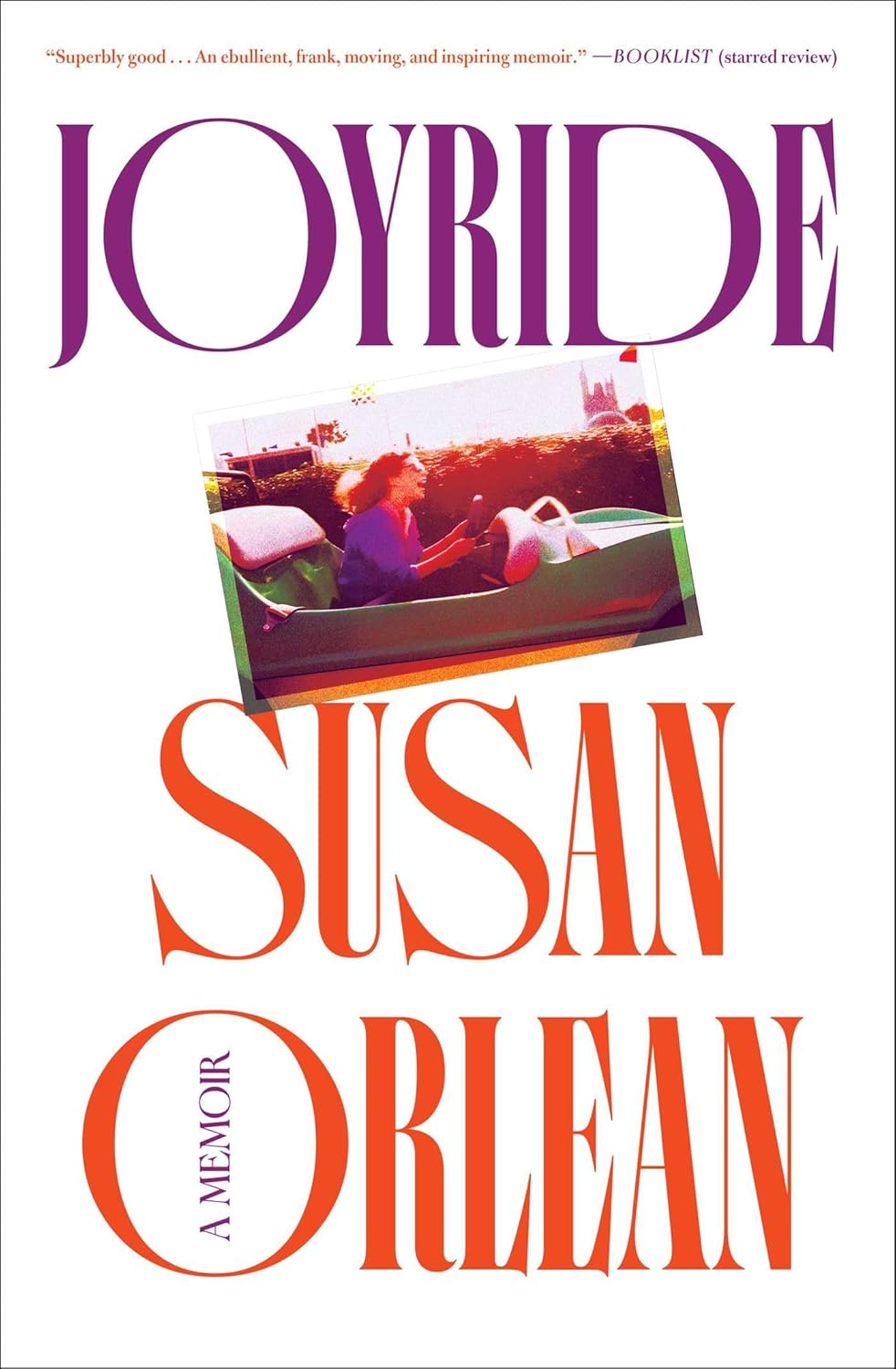
Susan Orlean has spent decades telling other people’s stories as a staff writer for The New Yorker, but in Joyride, she finally turns the spotlight on herself—and the results are magical. This national bestseller is part memoir, part meditation on creativity, and part love letter to the writing life.
“The story of my life is the story of my stories,” Orlean writes, and she takes us on a journey from her scrappy days in alt-weeklies through her career-making pieces to working alongside publishing legends like Tina Brown and David Remnick. She writes about the collapse of her first marriage, falling in love again, becoming a mother, and surviving the devastating library fire that inspired her bestseller The Library Book. But what makes Joyride so special is how Orlean captures the actual work of being a writer—the curiosity, the rejection, the tiny moments of discovery that become great stories. Named a best book of 2025 by NPR, Time, Oprah Daily, and Kirkus Reviews, this memoir is essential reading for anyone who’s ever dreamed of a creative life. David Sedaris called it “masterful,” and he’s not wrong.

On Memorial Day 2019, Pulitzer Prize-winning novelist Geraldine Brooks received a phone call that shattered her world: her husband, acclaimed journalist Tony Horwitz, had collapsed on a street in Washington, D.C., and died. He was 60 years old and seemingly in perfect health. Memorial Days is Brooks’ stunning, heartbreaking meditation on sudden loss, the work of grief, and the life she and Horwitz built together.
Brooks alternates between the immediate aftermath of Tony’s death—the bureaucratic nightmares, the rushed funeral planning, the struggle to tell their sons—and a 2023 retreat to a remote island off Tasmania, where she finally allowed herself to truly grieve. The result is a book that feels both achingly intimate and universally resonant. Brooks writes with the skill of a journalist (she and Horwitz were both foreign correspondents before becoming bestselling authors) and the emotional depth of a novelist. She doesn’t shy away from the brutal realities: the impatient ER doctor, the health insurance canceled upon death, the way grief makes time feel both endless and impossibly short. Comparisons to Joan Didion’s The Year of Magical Thinking are inevitable, but Brooks’ voice is her own—warmer, perhaps, and deeply grounded in both Jewish spirituality and the natural world. This is a book about love, loss, and finding a way forward when your whole life has been upended.

Rick Atkinson, the Pulitzer Prize-winning author who gave us the monumental World War II Liberation Trilogy, has done it again with the second volume of his American Revolution trilogy. The Fate of the Day is a #1 New York Times bestseller that brings the critical middle years of the Revolutionary War to vivid, bloody, dramatic life.
Atkinson covers 1777 to 1780—the years when the Revolution hung in the balance, when victory and defeat were separated by the thinnest of margins. We follow George Washington through the devastating winter at Valley Forge, witness the pivotal Battle of Saratoga, and watch Benjamin Franklin charm the French court while the Continental Army fights for survival. What makes Atkinson special is his ability to combine meticulous research (this 880-page tome took years to complete) with propulsive storytelling. You can practically smell the gunpowder and feel the cold of those brutal winters. Ken Burns called it a book that “keeps you on the edge of your seat,” and he’s right—even though we know how the story ends, Atkinson makes it feel urgent and uncertain. Released in time for the 250th anniversary of American independence, this is history writing at its absolute finest. If you loved The British Are Coming (the first volume), you’ll devour this one.

Barbara Demick, who won the Samuel Johnson Prize for her extraordinary Nothing to Envy about North Korea, has delivered another stunner with Daughters of the Bamboo Grove. It’s a story about twin sisters separated by China’s one-child policy, international adoption, and the trafficking that connected them.
In 2000, a Chinese woman gave birth to twins in a bamboo grove, hiding to avoid detection because she already had two daughters. In 2002, an American couple adopted what they thought was an abandoned Chinese toddler. Years later, Demick discovered the truth: the girl had been forcibly taken from her birth family and her identical twin, part of a system where local officials seized children to meet international adoption demand. This isn’t just one family’s tragedy—it’s a window into how China’s brutal one-child policy destroyed countless lives and how the international adoption system became complicit in child trafficking. Demick’s reporting is impeccable (she spent years as the LA Times‘ Beijing correspondent), and she never loses sight of the human cost. Named a New York Times Notable Book and longlisted for both the Baillie Gifford Prize and the NBCC Award, this is journalism that illuminates one of the darkest chapters in recent history while celebrating the families’ determination to reunite.

If you want to understand the AI revolution that’s reshaping our world, there’s no better place to start than Karen Hao’s Empire of AI. As a longtime AI insider with intimate access to OpenAI from its earliest days, Hao delivers an eye-opening account of the company driving the current AI frenzy—and the massive implications for all of us.
This isn’t dry tech reporting. Hao takes us inside OpenAI as it transforms from a non-profit research lab to a multi-billion-dollar company, with Sam Altman at the helm navigating impossible tensions between safety, profit, and world-changing ambition. She explores the arms race mentality that’s gripping the tech industry, the existential questions about AI’s impact on jobs and democracy, and the people making decisions that will reshape civilization. What makes this book essential is Hao’s ability to explain complex technology in clear language while never losing sight of the human stakes. Longlisted for the National Book Critics Circle Award and named a New York Times Notable Book, Empire of AI is required reading for anyone who wants to understand the single most important technological shift of our time.

Mary Roach has built a devoted following with her hilarious, deeply researched explorations of science’s stranger corners—from cadavers to ghosts to what happens when you digest food. With Replaceable You, she’s tackled one of medicine’s greatest challenges: how do we replace the parts of our bodies that fail? This instant New York Times bestseller is vintage Roach—funny, fascinating, and surprisingly moving.
Roach takes us on a whirlwind tour through the history and cutting edge of body part replacement. She visits a legendary burn unit in Boston, travels to a “superclean” pig facility in China (where organs are being grown for human transplant), spends the night with tissue recovery technicians, and even climbs into a working iron lung from the 1950s. Along the way, she explores everything from 3D-printed kidneys to stem cell hair restoration to the thorny question of when someone might choose to amputate a functioning limb in favor of a high-tech prosthetic. What makes this book special is Roach’s gift for finding the humanity in the science—she talks to amputees, ostomates, and the researchers working to solve these impossibly complex puzzles. Named a best book of 2025 by Time, Scientific American, Smithsonian Magazine, and Kirkus, Replaceable You is smart science writing at its most accessible and entertaining. Even Reese Witherspoon loved it. If you’ve ever marveled at what the human body can do—or wondered how we fix it when it goes wrong—this book is an absolute joy.

Scott Anderson’s King of Kings won the Kirkus Prize and became a finalist for the National Book Critics Circle Award for good reason: it’s a gripping, brilliantly reported account of one of the most consequential events of the 20th century—the Iranian Revolution of 1979.
Anderson takes us deep into the world of the Shah of Iran, a dictator propped up by the United States who believed himself invincible. The book reads like a thriller as it chronicles the hubris, miscalculations, and sheer delusion that led to the revolution, the rise of Ayatollah Khomeini, and the hostage crisis that humiliated America. Anderson has a gift for making complex geopolitical events feel immediate and personal, and he shows how decisions made 45 years ago continue to reverberate today. With tensions between the U.S. and Iran still making headlines, King of Kings offers essential context for understanding how we got here. Critics have praised Anderson’s narrative skill and meticulous research. This is history that feels urgent and relevant, told by a master storyteller at the top of his game.
These books represent the best of what non-fiction can do: enlighten us, challenge our assumptions, break our hearts, and help us make sense of our complicated world. Whether you’re drawn to memoir, history, science, or investigative journalism, 2025 delivered books that will stick with you long after you turn the final page.
As an Amazon Associate we earn from qualifying purchases made through links on this page.