The Best Books On Grief
In this list
10 books
- Grieving is Loving · Dr. Joanne Cacciatore
- It’s OK That You’re Not OK · Megan Devine
- Healing After Loss · Martha Whitmore Hickman
- How To Go On Living When Someone You Love Dies · Therese A. Rando
- Grieving the Child I Never Knew · Kathe Wunnenberg
- The Other Side of Sadness · George A. Bonanno
- A Parent’s Guide to Raising Grieving Children · Phyllis R. Silverman and Madelyn Kelly
- Bearing the Unbearable · Joanne Cacciatore
- How to Carry What Can’t Be Fixed · Megan Devine
- The Year of Magical Thinking · Joan DidionRecommended 7 times
Reading the best books on grief can be a helpful way to better understand and cope with the complex emotions that arise when we experience loss. Grief is a natural response to loss, and everyone experiences it differently. Some people find that reading about others’ experiences with grief can provide comfort, validation, and a sense of connection. It can also provide practical tips and strategies for managing grief and finding ways to heal.
For example, reading about different stages of grief and how other people have coped with those stages can help you to identify where you are in your own grief journey and give you ideas for how to move forward. Books on grief can also provide insights into the grieving process and help you to understand that your feelings are normal and that it is okay to take the time you need to heal.
In addition, reading about grief can provide a sense of perspective and help you to see that you are not alone in your experience. Many people have gone through similar experiences and have found ways to cope and move forward. Reading about their stories can provide hope and inspiration as you navigate your own grief journey.
It’s important to note that while reading about grief can be helpful, it is not a substitute for professional help or support from loved ones. If you are finding it difficult to cope with your grief, it is important to seek out additional support, such as therapy or support groups, to help you through this difficult time.
Let’s explore the best books on grief…
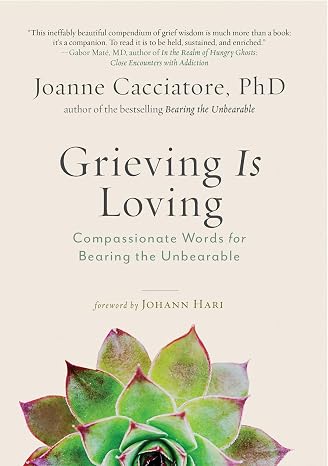
“Grieving is Loving” is a book from bestselling author Joanne Cacciatore that helps readers cope with the pain of loss and grief. Presented in a quote-a-day format, this book distills the award-winning “Bearing the Unbearable” into easily digestible chunks, and includes new prose and poems from Cacciatore and other sources.
The book offers a loving and supportive companion for those who are grieving the loss of a loved one, and helps to combat feelings of isolation and the pressure to “just get over it” that many bereaved individuals experience. Its quotations and new material from Cacciatore can be accessed in just a few seconds, providing validation, empowerment, and courage to those dealing with the most difficult losses.

In “It’s OK That You’re Not OK,” Megan Devine offers a new approach to understanding and coping with grief. Drawing on her experience as both a therapist and someone who has personally experienced loss, Devine writes with insight about the complexities of love, loss, and healing. She challenges the idea that we should strive to return to a “normal” life after experiencing loss and instead advocates for building a life alongside grief.
The book offers practical guidance for managing stress, improving sleep, and decreasing anxiety while also debunking myths about the grieving process and providing suggestions for supporting loved ones through grief. “It’s OK That You’re Not OK” is a valuable resource for anyone dealing with grief, as well as for those seeking to better understand and support those who are grieving.

In “Healing After Loss,” Martha Whitmore Hickman offers daily meditations for people who are grieving the loss of a loved one. The book is structured around a year’s worth of meditations, with each day’s meditation exploring a different quotation or passage on grief or suffering. The sources for these passages range from Shakespeare to Emily Dickinson and from the Christian Bible to Hindu proverbs.
The book is intended to provide solace and guidance for those who are navigating the difficult process of grief and moving towards recovery. It is a sensitive and thoughtful collection that will provide comfort and inspiration for anyone who is grieving.

“How to go on living when someone you love dies” is a book that helps readers navigate the difficult process of grieving the loss of a loved one. Written by bereavement specialist Therese A. Rando, Ph.D., the book offers compassionate and comprehensive guidance on how to understand and resolve grief, talk to children about death, resolve unfinished business, take care of oneself, accept the help and support of others, get through difficult times of the year, and plan funerals and personal bereavement rituals.
The book recognizes that each person’s response to loss is different and provides a range of tools and strategies to help individuals find their own way through the grieving process. It aims to offer solace, comfort, and guidance to those dealing with the pain of loss, while also helping them to move forward and create a new life without forgetting the past.

“Grieving the Child I Never Knew” is a book written by Kathe Wunnenberg, who has personally experienced three miscarriages and the death of an infant son. The book is a 31-day devotional designed to help mothers cope with the grief and trauma of losing a child, offering guidance on how to grieve honestly and well, process the insights and questions of others, and cultivate a healing journey that works for them.
Each devotion includes a scripture passage, a prayer, steps towards healing questions, and space for journaling, as well as readings for holidays and special occasions. The book serves as a comforting and supportive companion for mothers who are struggling with the devastating loss of a child and are seeking ways to navigate their grief and find hope in the face of unimaginable pain.

“The Other Side of Sadness” by George A. Bonanno challenges the traditional understanding of grief as a predictable five-stage process of denial, anger, bargaining, depression, and acceptance. Instead, the book argues that we are naturally equipped to handle loss in more dynamic and varied ways, using a range of emotions including anger, denial, relief, and joy to help us cope.
Bonanno draws on personal anecdotes and original research to explore the complexities of mourning and how it can deepen interpersonal connections and bring about positive experiences. The book also examines universal experiences of grief, such as the death of a loved one.

“A Parent’s Guide to Raising Grieving Children” by Phyllis R. Silverman and Madelyn Kelly is a book that provides practical guidance for parents navigating the challenges of helping their children cope with the loss of a loved one. The authors argue that children’s grieving process is often misunderstood and advocate for an open and honest approach to dealing with loss. They offer advice on a range of topics, including preparing for the death of a loved one, explaining death to young children, managing the moods of grieving teenagers, and seeking help from therapists and bereavement groups.
The book is based on research into the experiences of bereaved children and includes real-life examples of conversations with parents and children who have gone through the grieving process. Filled with compassion and common sense, “A Parent’s Guide to Raising Grieving Children” offers readers a wealth of solace and practical advice as they work to rebuild their families after the loss of a loved one.

“Bearing the Unbearable” by Joanne Cacciatore is a book that offers guidance and support to those struggling with the pain of loss. The book, which won a Gold Medal for Self-Help in the Foreword INDIES Awards, is organized into 52 short chapters and is designed to be a companion for those navigating the difficult and often nonlinear process of grief.
Cacciatore, a bereavement educator and leading counselor in the field, shares moving stories of her own encounters with grief as well as her experience with loss, and offers insights on how grief can open our hearts to connection, compassion, and a deeper understanding of our shared humanity. The book is not only for the bereaved, but is also intended for grief counselors, therapists, social workers, clergy, educators, academics, and medical professionals, and can be read aloud in support groups.

“How to Carry What Can’t Be Fixed” by Megan Devine is a journal that offers creative ways to approach grief and loss with honesty and kindness. The book is designed to help readers tell their whole story without feeling the need to “tack on a happy ending where there isn’t one.” It includes writing prompts, self-care exercises, and practical advice for coping with difficult situations, and encourages readers to find meaning in their loss and learn how to hold joy and grief at the same time.
The book is not a guide to “fixing” grief, but rather offers tools and resources to help readers navigate the natural response to death and loss and find their own path through the grieving process. It is a journal and everyday companion for those seeking to engage in a conversation with their grief and learn how to carry the pain of loss in a healthy and compassionate way.

“The Year of Magical Thinking” by Joan Didion is a powerful and deeply personal book that explores the author’s experience of grief and loss following the sudden death of her husband and the serious illness of her daughter. The book traces the events leading up to and following the death of John Gregory Dunne, including the hospitalization of their daughter and her subsequent recovery.
It is a poignant and moving portrait of a marriage and a life marked by both good times and bad, and a powerful exploration of the complexities of grief, illness, and loss. Through her writing, Didion grapples with the deep and often overwhelming emotions that accompanied these events, and reflects on the ways in which they challenged and changed her understanding of death, illness, memory, sanity, and life itself.
Grieving is a difficult and often overwhelming process that can be emotionally and physically draining. It is a natural and necessary response to loss, but it can be incredibly challenging to navigate and can leave us feeling lost, confused, and isolated. It is important to recognize that grief is a deeply personal experience and that everyone grieves in their own way. There is no right or wrong way to grieve, and it is important to be kind to oneself and allow oneself the time and space to process and work through the feelings of loss.
It is common to experience a range of emotions during the grieving process, including sadness, anger, guilt, and disbelief. These emotions can be intense and can be accompanied by physical symptoms such as sleep disturbances, changes in appetite, and difficulty concentrating. Grief can also take a toll on our relationships and can affect our daily routines and activities.
It is important to remember that it is okay to not be okay and to give oneself permission to feel and express the full range of emotions that come with grief. It is also important to be kind to oneself and to recognize that it is okay to take breaks and seek support when needed. It is important to seek help from trusted friends, family members, or professionals if needed, and to remember that it is okay to ask for help.
Grieving is a difficult and often long process, but with time, support, and self-care, it is possible to find ways to cope with the loss and move forward. It is important to be kind to oneself and to remember that it is okay to not have all the answers and to take things one day at a time.
If you found this reading list on the best books on grief useful, you may also want to read our list of the best books on mindfulness.
As an Amazon Associate we earn from qualifying purchases made through links on this page.