The Best Books for Understanding American Politics
In this list
8 books
- The Federalist Papers · Alexander Hamilton
- Democracy in America · Alexis de Tocqueville A
- Team of Rivals · Doris Kearns Goodwin This
- What It Takes · Richard Ben Cramer Widely
- The Big Sort · Bill Bishop Ever
- Why We’re Polarized · Ezra Klein Journalist Ezra Klein
- Divided We Fall · David French Coming
- How Democracies Die · Steven Levitsky and Daniel Ziblatt Written
If you’ve found yourself staring at the news lately, wondering how American politics got quite so loud, quite so divided, and quite so exhausting, you’re not alone. The good news is that you don’t need a political science degree to understand what’s happening—you just need the right books. The ones below were chosen because they’re written for curious, engaged readers rather than academics, and because each one illuminates a different piece of the puzzle: where the system came from, how it actually works day to day, and why it feels so fractured right now.

Yes, this one is old—really old—but it’s also the closest thing America has to an owner’s manual. Written in 1787 and 1788 to convince skeptical New Yorkers to ratify the Constitution, these essays lay out, in the founders’ own words, why the American system was built the way it was: why power is split between branches, why the Senate looks different from the House, and why the whole thing was designed to be a little bit slow and frustrating on purpose.
You don’t need to read all 85 essays cover to cover. Most modern editions come with helpful introductions and notes that guide you to the most relevant ones, like Federalist No. 10, on the dangers of factions, which reads like it could have been written last week. Once you understand the original blueprint, a lot of today’s gridlock starts to make a strange kind of sense.

A young French aristocrat toured the United States in the 1830s and wrote what many still consider the sharpest outside analysis of American character ever produced. Tocqueville was fascinated by this new experiment in self-government, and he spotted both its genius and its vulnerabilities with startling clarity, including a prescient warning about how democracies can slide toward a kind of soft, comfortable conformity.
This is a longer, denser read than the others on this list, so it’s fine to treat it as a book to dip into rather than race through. What makes it worth the effort is how often you’ll catch yourself thinking, “he’s basically describing the news today.” Nearly two centuries later, Tocqueville’s observations about American individualism, associations, and the tyranny of the majority still land with real force.
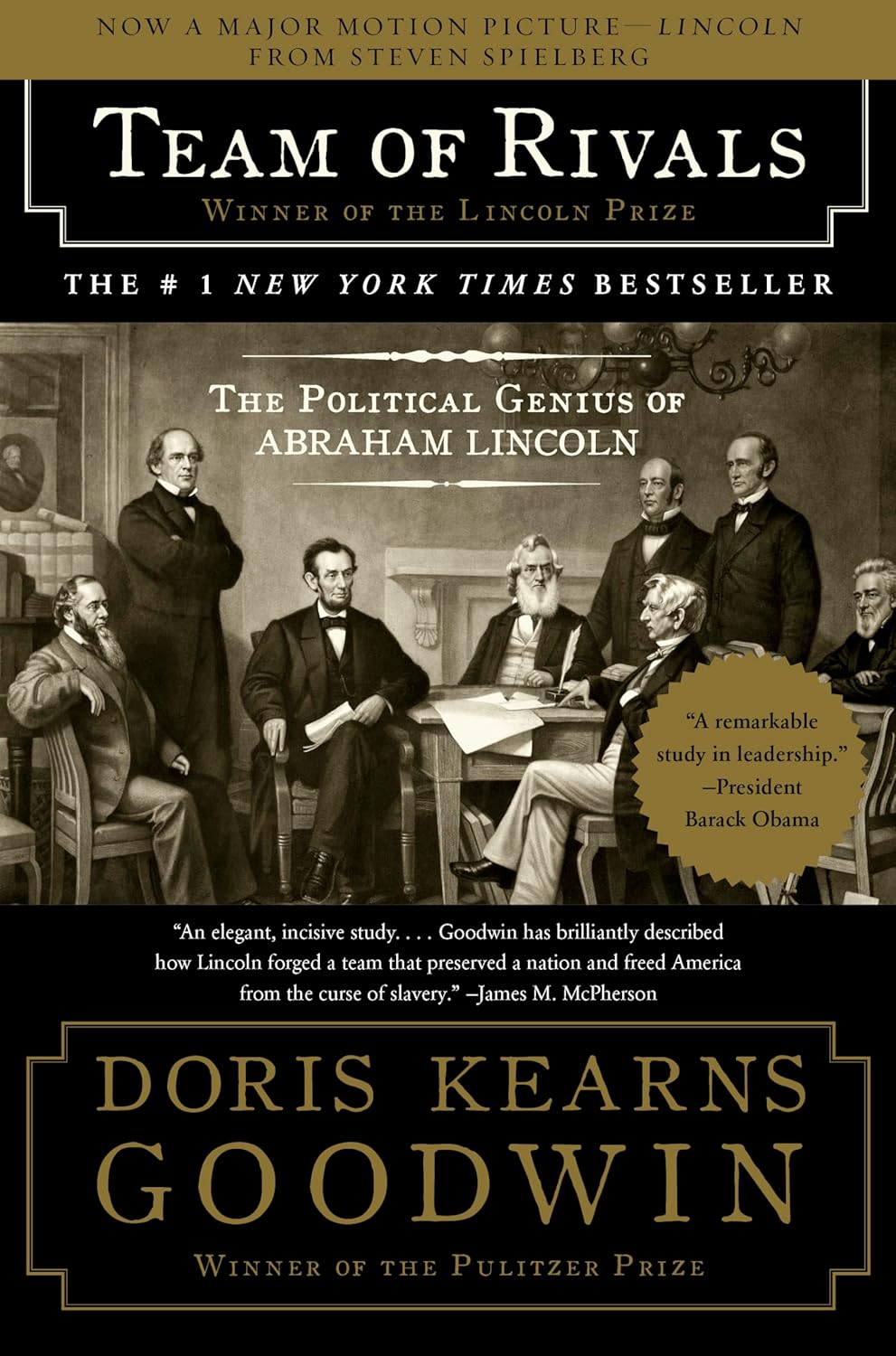
This is history at its most readable: the story of how Abraham Lincoln assembled a cabinet full of the men who had run against him for president, and then managed to hold together both his government and a fracturing nation through the Civil War. Goodwin is a master storyteller, and this book reads more like a gripping character study than a textbook.
What makes it so relevant now is Lincoln’s approach to politics itself. He surrounded himself with people who disagreed with him, absorbed criticism without losing his footing, and found ways to build coalitions in a country that was, quite literally, tearing itself apart. In an era when compromise can feel like a lost art, watching a master practice it is genuinely inspiring.

Widely regarded as one of the greatest books ever written about a presidential campaign, this deep dive into the 1988 election follows candidates like George H.W. Bush, Bob Dole, and Joe Biden as they chase the highest office in the land. Cramer spent years embedded with these campaigns, and it shows: the book captures the ambition, exhaustion, ego, and occasional decency of the people who run for president in a way that feels almost novelistic.
If you’ve ever wondered what actually drives someone to put themselves through the brutal machinery of a national campaign, this is the book that answers it. It’s long, but it moves, and it will change the way you watch every future election unfold.

Ever notice how entire towns and neighborhoods seem to lean overwhelmingly one way politically? Bishop’s central argument is that Americans have spent the past several decades increasingly choosing to live near people who think like them, and that this quiet, voluntary self-segregation has done more to deepen political division than almost anything happening in Washington.
It’s a genuinely eye-opening read because it locates the roots of polarization not in politicians or cable news, but in everyday choices about where to buy a house or which church to attend. Once you see the pattern Bishop describes, you’ll start noticing it everywhere, from your own street to the national map of red and blue counties.

Journalist Ezra Klein set out to answer the question so many Americans are asking right now: how did politics become this identity-driven, this tribal, this all-consuming? Drawing on political science research, Klein argues that polarization isn’t really about policy disagreements anymore. It’s about identity, and how being a Democrat or a Republican has become tangled up with who we feel ourselves to be.
The book is clear, well-argued, and written in an accessible, conversational style that makes complicated research easy to follow. Whatever your own politics, it offers a genuinely useful framework for understanding why arguments about policy so often turn into arguments about identity instead.

Coming from a conservative perspective, French, a lawyer and prominent commentator, makes a sobering case that America’s political divisions have grown so deep that the country’s unity can no longer be taken for granted. Rather than simply cheering for one team, he examines how both the left and the right have contributed to a climate of distrust and division, and offers ideas for pulling back from the brink.
What sets this book apart is French’s willingness to critique his own political side just as sharply as the other. Reading it alongside Klein’s book above gives you a genuinely balanced view of how commentators from different ends of the spectrum are grappling with the same underlying problem.

Written by two Harvard political scientists who study the collapse of democratic systems around the world, this book asks a chilling question: could it happen in America? Rather than focusing on dramatic coups, the authors show that modern democracies more often erode gradually, through the slow weakening of institutional norms and guardrails that most citizens never think twice about.
The book draws on case studies from around the globe, which gives it a comparative perspective that’s often missing from purely American political commentary. It’s not a partisan takedown of any one figure or party; it’s a study of the warning signs that history suggests are worth watching for. For anyone trying to understand the stakes of the current moment, it’s essential reading.
Taken together, these eight books offer something more valuable than any single hot take or news cycle can: perspective. You’ll walk away understanding not just what’s happening in American politics today, but why the system was built the way it was, how it has evolved, and why so many people feel like the ground is shifting beneath their feet.
Happy reading—and here’s hoping a little more understanding makes the noise a little easier to tune into, rather than tune out.
As an Amazon Associate we earn from qualifying purchases made through links on this page.