The Best Books on Negotiation
In this list
8 books
- Getting to Yes: Negotiating Agreement Without Giving InRecommended 3 times
- Never Split the Difference: Negotiating As If Your Life Depended On ItRecommended 4 times
- Crucial Conversations: Tools for Talking When Stakes Are High
- Influence: The Psychology of PersuasionRecommended 13 times
- Bargaining for Advantage: Negotiation Strategies for Reasonable People
- Getting More: How You Can Negotiate to Succeed in Work and Life
- Dare to Lead: Brave Work. Tough Conversations. Whole Hearts
- The Book on Negotiating Real Estate
Whether you’re haggling over a salary, navigating a tricky conversation with a family member, or closing a major business deal, negotiation is one of the most valuable skills you can develop. The good news? It’s a skill anyone can learn. These eight books — a mix of timeless classics and modern must-reads — will give you the tools, mindset, and confidence to become a far better negotiator in every area of your life.
Getting to Yes: Negotiating Agreement Without Giving In
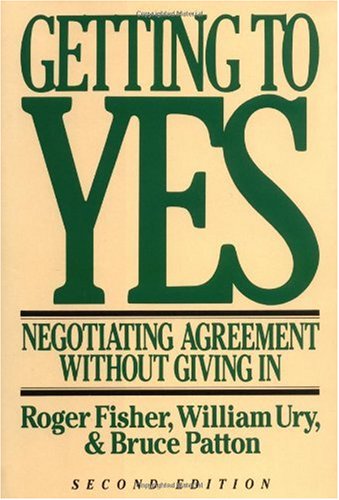
Roger Fisher and William Ury
First published in 1981 and still selling strong, this is the book that started it all. Fisher and Ury, founding members of the Harvard Negotiation Project, introduced the idea of “principled negotiation” — a method that focuses on mutual interests rather than hardball positions. Their core insight is simple but transformative: stop arguing over what each side wants and start exploring why they want it.
What makes this book endure is its clarity and practicality. The advice is calm, wise, and immediately usable, whether you’re mediating a workplace conflict or negotiating a car price. It’s short, readable in a weekend, and genuinely changes how you think about disagreement. If you only read one book on this list, make it this one.
Never Split the Difference: Negotiating As If Your Life Depended On It
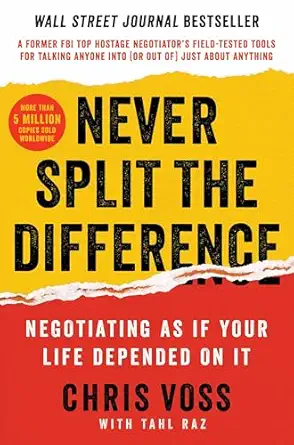
Chris Voss with Tahl Raz
Chris Voss spent 24 years with the FBI, rising to become its lead international hostage and kidnapping negotiator, and this book distills everything he learned into a gripping, surprisingly fun read. His approach throws out the old rational-actor playbook and leans into the messy, emotional reality of how people actually make decisions. Techniques like “tactical empathy,” the “accusation audit,” and the power of a well-placed “no” will stick with you long after you finish.
What separates this book from the pack is its energy. Voss writes with swagger and storytelling flair, pulling you through real-life negotiations involving kidnappers, terrorists, and bank robbers before circling back to show how the same principles apply to your next job offer or lease renewal. It’s the most entertaining book on this list, and one of the most effective.
Crucial Conversations: Tools for Talking When Stakes Are High

Kerry Patterson, Joseph Grenny, Ron McMillan, and Al Switzler
Not every negotiation happens in a boardroom. Some of the toughest ones happen at the dinner table, in a relationship, or with a difficult boss. That’s where Crucial Conversations shines. The authors define a crucial conversation as one where opinions differ, stakes are high, and emotions run strong. Then they offer a practical framework for handling those moments without blowing up or backing down.
The book is full of relatable scenarios and concrete techniques for staying calm, speaking honestly, and actually hearing the other person. It’s especially valuable for anyone who tends to go silent under pressure or, at the other extreme, comes out swinging. This is negotiation as emotional intelligence, and it’s essential reading.
Influence: The Psychology of Persuasion

Robert B. Cialdini
Strictly speaking, this isn’t a negotiation book;s it’s a psychology book about why people say yes. But understanding the six (now seven) principles of influence that Cialdini identifies — reciprocity, commitment, social proof, authority, liking, scarcity, and unity — will make you a dramatically sharper negotiator. You’ll start spotting these levers being used on you everywhere, and you’ll know how to use them ethically yourself.
Cialdini writes with warmth and wit, and the book is packed with fascinating research and real-world examples. It’s been assigned in business schools around the world for decades, and a fully revised edition keeps it feeling fresh and relevant. A true classic that belongs on every negotiator’s shelf.
Bargaining for Advantage: Negotiation Strategies for Reasonable People
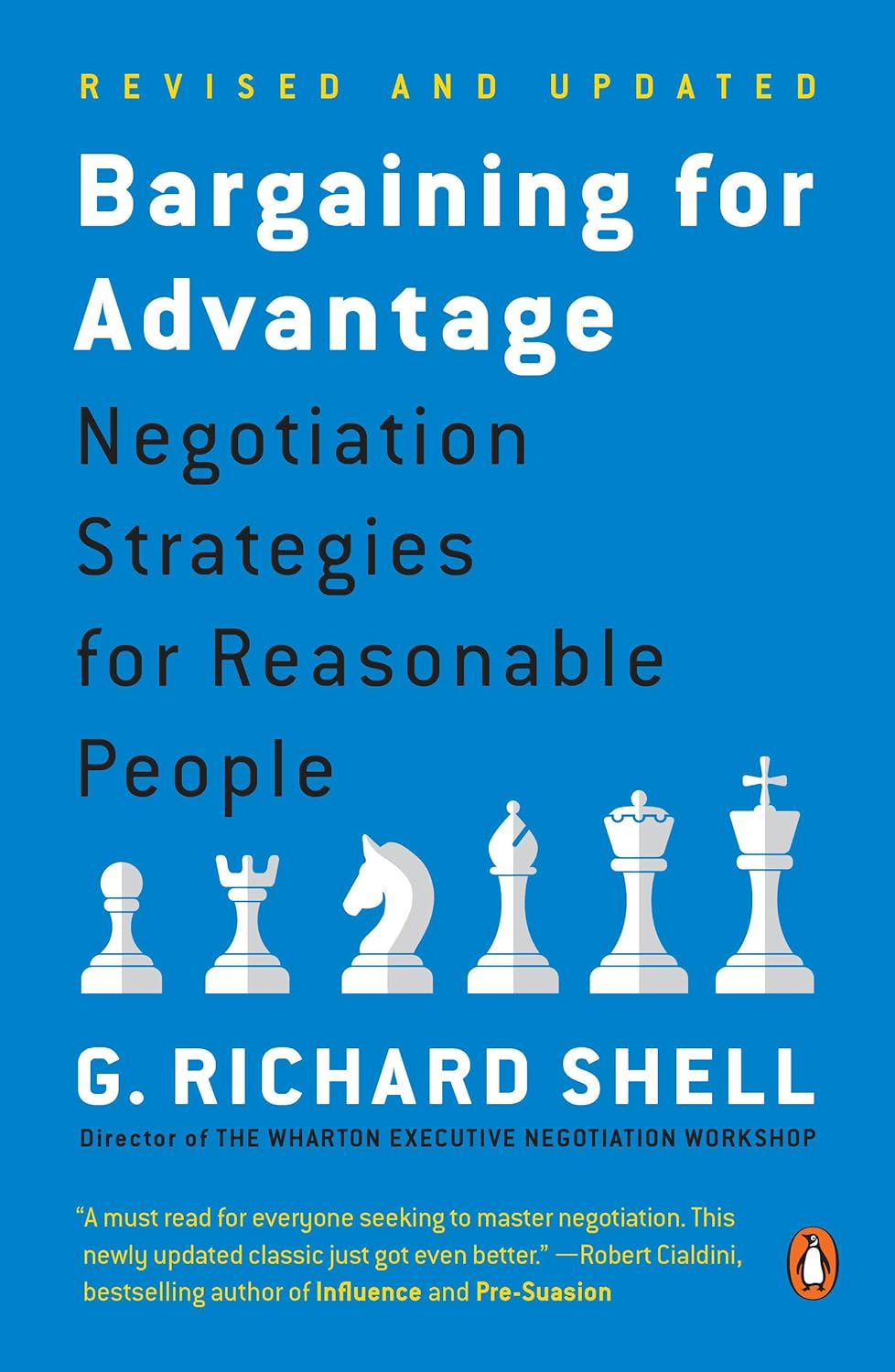
G. Richard Shell
This book is the thinking person’s negotiation guide. Shell, a professor at the Wharton School, grounds his advice in both rigorous research and a deeply humanistic approach. Rather than offering one-size-fits-all tactics, he encourages readers to understand their own negotiating style and values first — and then build a strategy that actually fits who they are.
Bargaining for Advantage covers everything from preparation and leverage to cultural differences and ethics. It’s particularly good on the idea that the best negotiators aren’t necessarily the most aggressive ones — they’re the most prepared. If you want a book that treats you as a whole person rather than just a dealmaker, this is it.
Getting More: How You Can Negotiate to Succeed in Work and Life

Stuart Diamond
Stuart Diamond taught negotiation at the Wharton School for years, and this book grew out of a course that was consistently the most popular in the school’s MBA program. His central argument is both radical and refreshing: most negotiation advice is wrong. Forget power and leverage — what really works is understanding what the other person values and finding ways to meet them there.
The book covers an enormous range of situations, from dealing with airlines and utilities to navigating office politics and parenting challenges. Diamond writes with enthusiasm and backs up his ideas with thousands of real-world examples from his students. It’s a big, generous book full of immediately actionable advice for everyday life.
Dare to Lead: Brave Work. Tough Conversations. Whole Hearts.

Brené Brown
Brené Brown might not come to mind immediately when you think of negotiation, but Dare to Lead is quietly one of the best books out there on the human side of difficult conversations. Brown’s research on vulnerability, courage, and trust has profound implications for anyone who negotiates — which is everyone. Learning to have honest, courageous conversations without shutting down or lashing out is at the heart of effective negotiation.
Particularly valuable are her sections on “rumbling with vulnerability” and navigating conflict without armor. This book is less about tactics and more about the kind of person you need to become to negotiate with integrity. It’s warm, honest, and deeply practical — exactly what you’d expect from Brown.
The Book on Negotiating Real Estate

J. Scott, Mark Ferguson, and Carol Scott
For anyone buying, selling, or investing in property, this is the most practical and specific guide you’ll find. With over 1,000 successful real estate deals between them, the three authors walk you through the negotiation process step by step — from crafting offers to handling counteroffers, navigating contingencies, and dealing with difficult agents or sellers.
What makes it stand out is its specificity. Rather than high-level theory, you get real scripts, real scenarios, and real strategies tailored to the real estate context. It’s aimed primarily at investors and agents rather than casual homebuyers, but anyone seriously engaged in property transactions will find it invaluable — potentially worth tens of thousands of dollars in better outcomes.
The best negotiators aren’t born — they’re made. Every book on this list will teach you something different: the psychology of persuasion, the power of empathy, the importance of preparation, or the courage to have hard conversations. Start with whichever one feels most relevant to your life right now, and you’ll quickly find the skills you build in one area start paying off in all the others. Happy reading — and happy negotiating.
If you found this article useful, you might also like to read about our other recommendations for The Best Books on Conflict Resolution.
As an Amazon Associate we earn from qualifying purchases made through links on this page.