Ian Donald: Stumbling Into Psychology
Ian Donald’s reading list
25 books mentioned in this interview
- Heaven · Mieko Kawakami
- Quiet · Susan CainRecommended 5 times
- Without Warning and Only Sometimes
- Lowborn · Kerry Hudson
- Against the Loveless World · Susan Abulhawa
- Woman at Point Zero · Nawal El-Saadawi
- Lessons in Chemistry · Bonnie GarmusRecommended 3 times
- The Faster I Walk, The Smaller I am · Kjersti A. Skomsvold
- Introduction to Psychology (6 th edition) · Hilgard and Atkinson
- Facet Theory: Approaches to Social Research
- The Psychology of Personal Constructs (Volume 1) · George Kelly
- The Shaping of Modern Psychology · Leslie Hearnshaw
- A Short History of British Psychology, 1840 -1940
- The Wasp Factory · Iain BanksRecommended 3 times
- Catcher in the Rye · J.D. SalingerRecommended 26 times
- American Psycho · Bret Easton EllisRecommended 6 times
- My Absolute Darling · Gabriel Tallent
- A Girl is a Half-formed Thing · Eimear McBride
- The Trick to Time · Kit de Waal
- The Last Act of Love · Cathy Rentzenbrink
- The Memory Police · Yoko Ogawa
- Convenience Store Woman · Sayaka Murata
- Piranesi · Susanna Clarke
- My Monticello · Jocelyn Nicole Johnson
- A Way to Die · Victor and Rosemary Zorza
Books by Ian Donald: Environmental and Architectural Psychology: The Basics
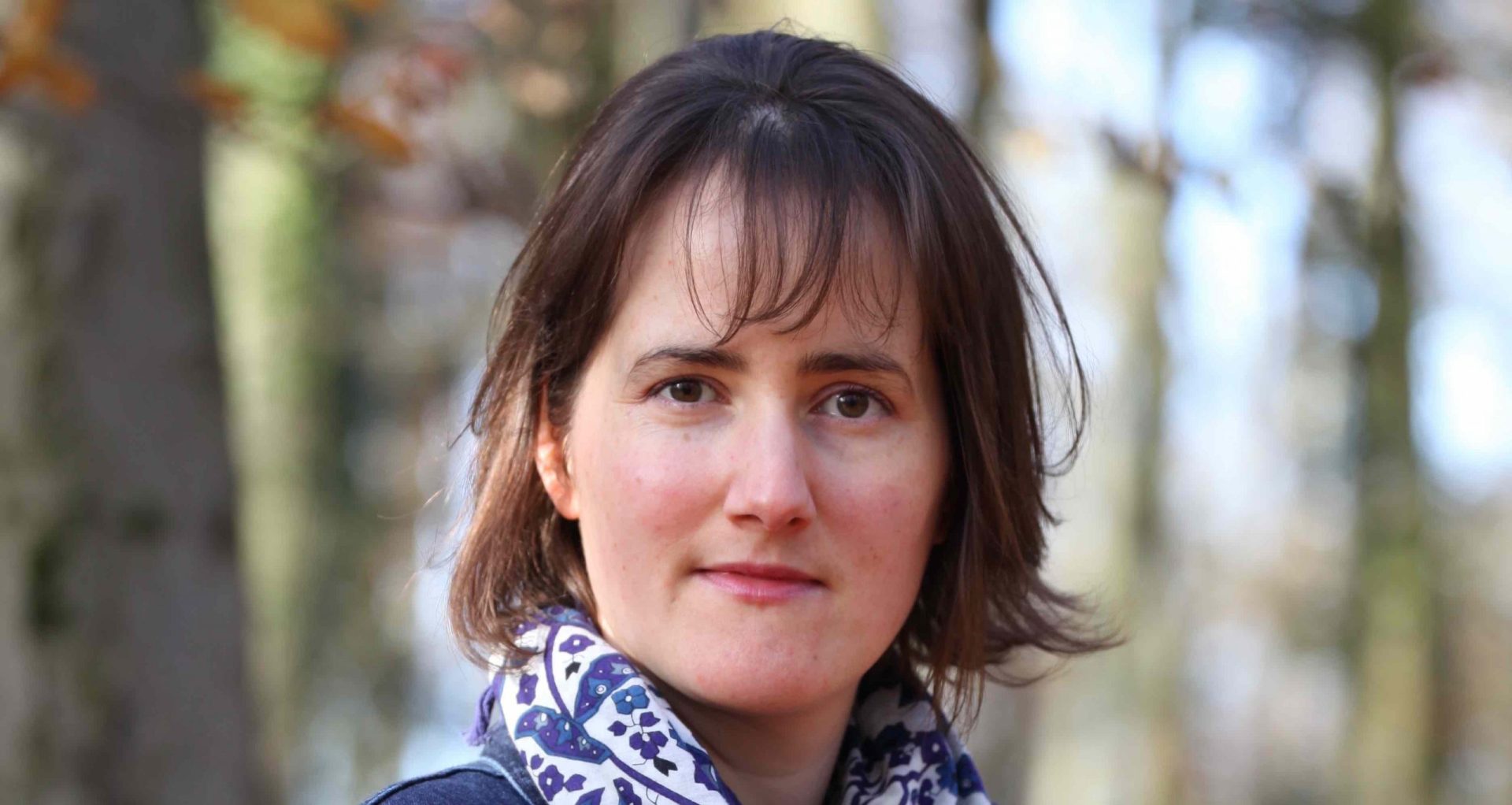
Ian Donald is Emeritus Professor of Psychology at the University of Liverpool, UK, where he was previously Head of the School of Psychology. He was the International Co-editor of the Journal of Environmental Psychology for ten years and on the Editorial Advisory Board for 25 years. Ian is an active researcher and has taught Environmental Psychology at the undergraduate and postgraduate levels in the UK and abroad. Ian Donald is also the author of Environmental and Architectural Psychology: The Basics.
Please enjoy our interview with Ian Donald…

When someone asks you ‘what do you do for a living?’ – How do you respond?
Professionally, I say I am a psychologist, and then what I do research on. At a party, I would say anything other than a psychologist. The only thing a psychologist can accurately predict about people’s behaviour is that when you tell them what you do, they’ll say “are you reading my mind?” or “can you tell what I’m thinking.” For once the answer is yes.
I also avoid saying I’m a professor (in the British sense) and just leave it as “I work at a university” – I think I’ve always been slightly embarrassed about being an academic, which is a hangover from my working-class background. I suppose what I have done my entire career can be boiled down to I find stuff out and then tell people about it.
What are you reading at the moment?
Until recently I felt I should only be reading things relevant to work. During Covid and the lockdowns, I got back into reading purely for pleasure and now read two or three novels or memoirs a week. I only read psychology as research for what I am writing.
Currently, I am reading Heaven by Mieko Kawakami, in which the two main characters are severely bullied. Also Quiet by Susan Cain, which is about how the meek should inherit the world – well, that introverts are undervalued and have a lot to contribute and that they make for very good leaders.
I have just finished two memoirs. Without Warning and Only Sometimes, Kit de Waal’s new memoir. It’s an account of growing up in a working-class, Irish-Caribbean, religious household during the 1960s and 1970s in Birmingham, not far from where I grew up. It is warm, sometimes funny, and often moving.
The other memoir is Lowborn by Kerry Hudson. This is a description of her early life in very poor and sometimes chaotic circumstances, and how despite the State, she survived and flourished. Coincidently, some of her early years were in Aberdeen, a street away from my grandparent’s flat. The different accounts allow an interesting comparison of the lives of two women rebelling, walking on the wild side, and fighting to eventually become the writers they are today.
The novels I have just finished, are Against the Loveless World by Susan Abulhawa, a story of a Palestinian woman fighting for love in ‘a loveless world’. It is set within the context of the oppression of Palestinians, especially, though not exclusively, by the Israeli State.
Woman at Point Zero by Nawal El-Saadawi focuses on the life of Firdaus, who is in a Cairo prison awaiting execution for the murder of a man. It is a story of how all the men in her life brought her to that cell.
Lessons in Chemistry by Bonnie Garmus is clever and funny, but also has an anti-misogynistic theme. Many of the scenes based on academic and research environments resonate with authenticity. The last very recent book I’d mention is The Faster I Walk, The Smaller I am by Kjersti A. Skomsvold (beautifully translated by Kerri Pierce). It’s a very gentle and funny book told by a 90-odd-year-old woman who is a wonderfully unreliable narrator. It is matter-of-fact, funny and poignant.
- Heaven by Mieko Kawakami
 Heaven by Mieko Kawakami
- Quiet by Susan Cain
 Quiet by Susan Cain
- Without Warning and Only Sometimes
 Without Warning and Only Sometimes
- Lowborn by Kerry Hudson
 Lowborn by Kerry Hudson
- Against the Loveless World by Susan Abulhawa
 Against the Loveless World by Susan Abulhawa
- Woman at Point Zero by Nawal El-Saadawi
 Woman at Point Zero by Nawal El-Saadawi
- Lessons in Chemistry by Bonnie Garmus
 Lessons in Chemistry by Bonnie Garmus
- The Faster I Walk, The Smaller I am by Kjersti A. Skomsvold
 The Faster I Walk, The Smaller I am by Kjersti A. Skomsvold
What did you want to be when you were growing up?
I had lots of thoughts about what I wanted to be. Being from a working-class background in the 1970s ideas about what I could be were few, and opportunities even fewer. Becoming a bricklayer was popular amongst my friends, but I didn’t fancy working outside in the rain. I thought about being a plasterer or car mechanic, but nothing available really appealed to me. I told my school’s ‘careers advisor’ that I wanted to “do a degree”.
At that point, I honestly didn’t know what one was, or what a university was, but my cousins in Scotland had been students and they looked to have had a great time. The school got me an interview for a job as a forklift truck driver in a toilet distribution warehouse. I didn’t go. Instead, by an odd set of circumstances, I stumbled into psychology a couple of years later.
When did you first become interested in psychology?
My main interest was politics, but I had a curiosity about psychology. I thought psychology would tell me how to read minds and know what people at parties were thinking. When I took a subsidiary course in the subject I discovered that instead, it was full of experiments on perception and cognition that were so abstracted from real life that I couldn’t see much point to them.
In my final year, I enrolled on a module in environmental psychology, which does research with real people in their real settings and looks at important issues and problems. I was sold on it. From there my interest grew and broadened out into other areas that I would broadly characterise as applied social psychology.

If you could wrap up a single book and gift it to yourself as you left education – which book would it be and why?
I would gift the book to my 16-year-old self. That was really the beginning of my education and the start of what became a series of leaps into the dark for me. At each hurdle, I expected to fail and end up in my rightful place on a building site or crashing around a warehouse on a forklift.
So, I would gift my younger self the book I have just published; Environmental and Architectural Psychology: The Basics. Inside I would write something reassuring and encouraging to myself. I hope that would give the younger me more faith in the leaps he is about to take, and allow him to relax a bit and enjoy the ride.
Does your reading have routine? Is there a particular time or place that you like to read?
I like to read first thing in the morning. I need several coffees to get the day started. During the first two, I read for pleasure unless I’m distracted by Twitter. The first coffees and books might be at the kitchen table or in the summer I’ll sit in the garden. I often read before I go to sleep, so I suppose reading acts as a bookend to the day. Between those times, I usually only read whatever it is that I’m working on.
Which book has had the biggest impact on your career so far? How did it impact it?
A book that rescued me and got me through psychology in my first undergraduate year was Introduction to Psychology (6th edition) by Hilgard and Atkinson. I had no idea what I was being taught in my psychology classes, so I gave them up and just read the book, assuming it would cover what I would need for the exams. It did.
Facet Theory: Approaches to Social Research, David Canter’s edited book. I was very interested in that approach to research, but its main impact was because I wrote one of the chapters. It was my first real publication and the first indication to me that I might be able to make it as an academic.


What advice would you give to a young aspiring psychologist looking to begin their career?
Apart from do something that matters and always have integrity, I would have two general pieces of advice. First, try to work with the best people possible. At the start of your career you will be working with the cleverest, most insightful boss/supervisor you can find. It’s helpful if they are also generous with their time and ideas. Later in your career, it will mean having the best researchers /PhD students available. And remember, be generous – you’ve made it; it’s time to give back.
Second, say yes, even if you don’t really know how you will do what you are saying yes to. It could take you somewhere interesting. One of many examples in my own career was being asked if I would be interested in working with some vets on bovine TB. Thinking psychology had absolutely nothing to offer I still said yes.
That became an interesting project, which eventually lead me to be part of a major working party on antimicrobial resistance (AMR), writing the UK social science AMR research priorities, and participating in AMR research and workshops, including in Shanghai. I also met a lot of very interesting and fun people along the way. Just say yes.
If you had to pick three books that would provide the best introduction to psychology, what would they be and why?
That’s difficult and depends on the specific area of psychology. It certainly wouldn’t be anything by or about Freud or any other fablists. Freud has a lot of entertaining stories, but I prefer empirical, scientific psychology – the same way that I prefer astronomy over astrology.
First, find a good introductory text that works for you and makes sense to you. Which one is a personal choice. The Psychology of Personal Constructs (Volume 1) by George Kelly influenced how I think about psychology. It provides a good way to conceptualise how people structure their world. I don’t buy all of what he had to say, but it provides a good foundation. Kelly’s style also shows that serious writing about psychology doesn’t have to be dry, dull or pretentious.
Maybe also The Shaping of Modern Psychology by Leslie Hearnshaw or A Short History of British Psychology, 1840 -1940 by the same author. I think it is important to have a historical perspective on your subject. It helps you to understand it and gives you a big picture of how it all fits together.
- The Psychology of Personal Constructs (Volume 1) by George Kelly
 The Psychology of Personal Constructs (Volume 1) by George Kelly
- The Shaping of Modern Psychology by Leslie Hearnshaw
 The Shaping of Modern Psychology by Leslie Hearnshaw
- A Short History of British Psychology, 1840 -1940
 A Short History of British Psychology, 1840 -1940
Do you have any books that you strongly associate with someone important in your life?
Not really, I tend to associate books with times and places rather than people.
What book have you recommended the most to friends and family?
This varies over the years. In addition to those I have already mentioned, I just recommended to my son The Wasp Factory by Iain Banks. It’s sort of Catcher in the Rye by J.D. Salinger meets American Psycho by Bret Easton Ellis, both of which I also recommended to him.
I have been recommending My Absolute Darling by Gabriel Tallent. How this debut managed to avoid getting any literary prizes is a mystery to me. It is a hard-hitting book that won’t be to everyone’s taste. It should probably carry more trigger warnings than the gunfight at the OK corral.
A Girl is a Half-formed Thing by Eimear McBride is a brilliant stream-of-conscious novel – another debut. It is an intense book about the developing life of a young girl. Also, The Trick to Time by Kit de Waal. It was my favourite of the novels I read through the lockdown.
I have also started telling people about The Last Act of Love by Cathy Rentzenbrink. I tend to recommend authors as much as books. In no order of preference, they include Deborah Levy, Ali Smith, Sebastian Barry, Rachael Cusk and Donal Ryan.
- The Wasp Factory by Iain Banks
 The Wasp Factory by Iain Banks
- Catcher in the Rye by J.D. Salinger
 Catcher in the Rye by J.D. Salinger
- American Psycho by Bret Easton Ellis
 American Psycho by Bret Easton Ellis
- My Absolute Darling by Gabriel Tallent
 My Absolute Darling by Gabriel Tallent
- A Girl is a Half-formed Thing
 A Girl is a Half-formed Thing
- The Trick to Time by Kit de Waal
 The Trick to Time by Kit de Waal
- The Last Act of Love by Cathy Rentzenbrink
 The Last Act of Love by Cathy Rentzenbrink
What’s the best book you’ve read in the last 6 months?
I’ve read a lot of books in the last 6 months. Picking one out is like picking your favourite drop of water out of the ocean. I have already mentioned some books that I could put here. But of those I have not, The Memory Police by Yoko Ogawa (translated by Stephen Snyder), Convenience Store Woman by Sayaka Murata (translated by Ginny Tapley Takemori), Piranesi by Susanna Clarke, and My Monticello by Jocelyn Nicole Johnson come to mind. If I answered this tomorrow, it would probably be a different list.


In the world of psychology, what current research studies are you most excited about?
There’s a distinction between exciting and important. I think there is potentially very important work on tackling antimicrobial resistance (AMR), and on addressing the climate emergency. Both are driven by behaviour, making psychology, and other social sciences, central to solving them.
AMR is a problem that will dwarf the health and economic impact of Covid-19 within the next thirty years. The threat of climate change and unsustainability are more obvious and attract more interest and, of course, are of critical importance. While there has been some impact from psychology on both areas, I feel there needs to be some radical (re)thinking of how we approach research and try to influence policy. I don’t know what that thinking is, but the prospect of developing something more effective is exciting.
The converse of this, what worries me in psychology is seeing some psychologists jumping on and contributing to the conspiracy theory bandwagon. There are better, more honest and less dangerous ways to make your name, sell books and make money.
What is the book that you feel has had the single biggest impact on your life? What impact did it have?
I’m not sure if I could name a single book that had the biggest impact. A book that means a lot to me is a copy I have of A Way to Die by Victor and Rosemary Zorza. It means a lot because it was sent to me by the authors in response to something I had written when I was newly graduated and, unemployed.

What books or subject matter do you plan on reading in the next year?
Among other things, I am working my way through the winners and some of the nominees of the Women’s Prize for Fiction and the Goldsmith’s Prize. It was one of my ways back into reading for pleasure rather than work. I will carry on with that. It’s a slow process because I also keep seeing new novels I want to read.
I’m writing a book on antimicrobial resistance, so there will be a lot of reading around that. One of the challenges but also pleasures is that I will also be reading in areas in which I am not an expert. That’s always enjoyable – it’s finding stuff out so I can tell people about it.
If you were to write an autobiography – what would it be called?
There are two that come to mind. Who Are You Now? Or The Giveaway. It would be a memoir rather than an autobiography.
If you enjoyed this interview with Ian Donald, be sure to follow them on Twitter.
As an Amazon Associate we earn from qualifying purchases made through links on this page.