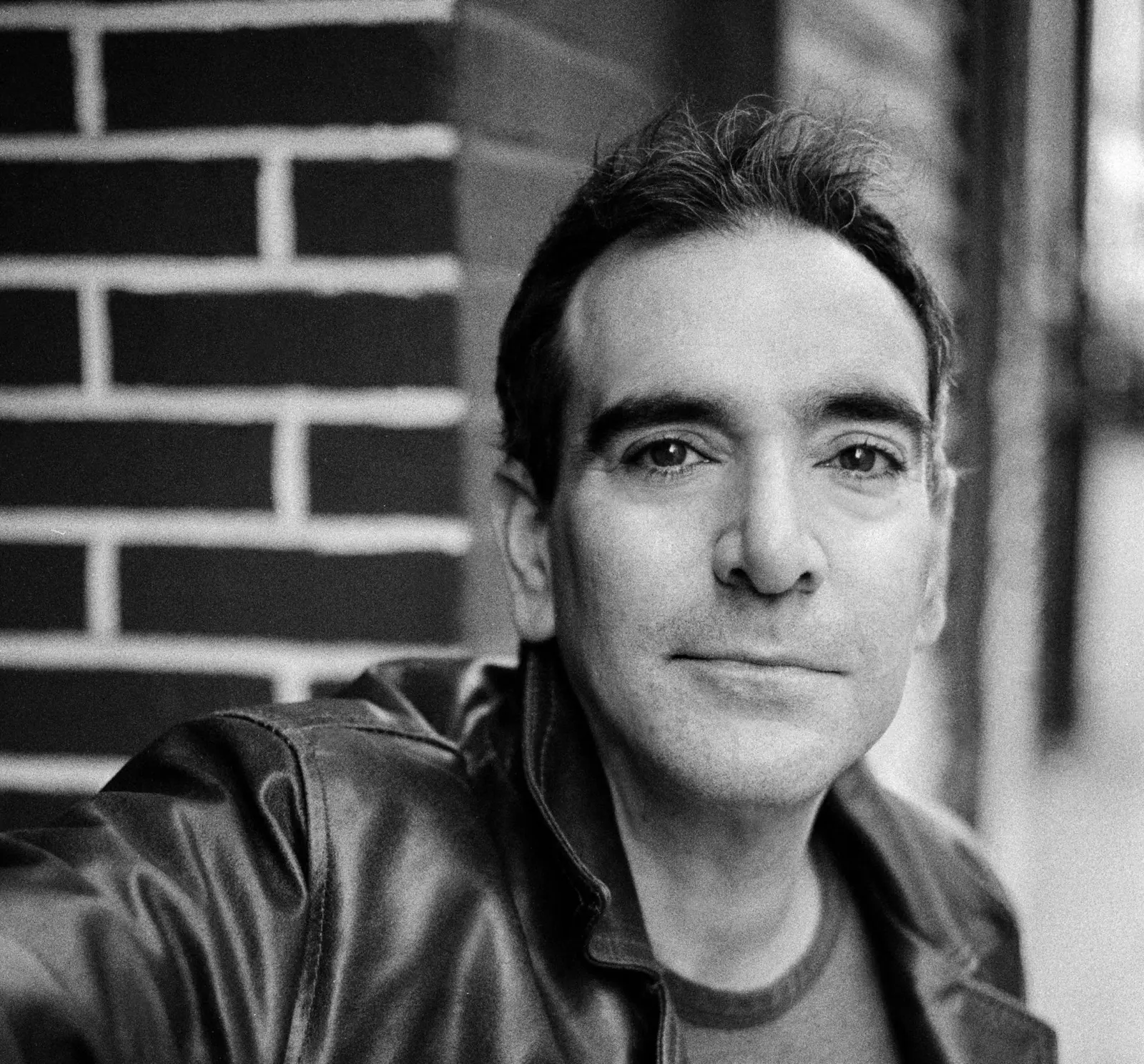
Aaron Poochigian: Immersed in Poetry
Aaron Poochigian’s reading list
15 books mentioned in this interview
- MeditationsRecommended 13 times
- Henry VI, Part III
- The Divine ComedyRecommended 5 times
- A Portrait of the Artist as a Young ManRecommended 5 times
- The Catcher in the RyeRecommended 26 times
- Aeneid
- The Whitsun Wedding
- Constantine Cavafy
- translation of the Tang Chinese poetry
- Jeremy Irons’ recording of Eliot’s complete poetic works
- Gravity’s RainbowRecommended 3 times
- Collected Poems
- The Tower
- HamletRecommended 7 times
- Antony and Cleopatra
Books by Aaron Poochigian: American Divine
Aaron Poochigian earned a PhD in Classics from the University of Minnesota and an MFA in Poetry from Columbia University. His latest poetry collection, American Divine, the winner of the Richard Wilbur Award, came out in 2021. He has published numerous translations with Penguin Classics and W.W. Norton. His work has appeared in such publications as Best American Poetry, The Paris Review and POETRY. He is the recipient of the 2025 Anahid Literary Award.

When someone asks ‘What do you do for a living?’, how do you respond?
I am proud to say that, when asked what my career is, I can say, with confidence, a poet. I do teach a few classes. I do translations, sometimes prose, as with the Meditations. Still, at the end of the day, I am a poet. Usually, after saying that my career is making poetry, the questioner goes on to ask, “How do you make a living as a poet?” I am still working that out.

What are you reading at the moment?
I am re-reading Shakespeare. I started with the earliest plays, the ones about the Wars of the Roses. I have just finished Henry VI, Part III. It gives me great pleasure to see Shakespeare emerge as a genius as I make my way chronologically through his works.

When you think about your childhood, what book comes to mind?
Joyce’s A Portrait of the Artist as a Young Man has stayed with me since my teenage years. The books that were most influential on me, however, were Salinger’s The Catcher in the Rye and Dante’s The Divine Comedy. I read the latter in an outdated translation full of archaic language. I loved it, even when I didn’t know what Dante was talking about.


What did you want to be growing up?
Like every other young person, I wanted to be a rock musician growing up. I practised guitar (electric and Classical) hours after hours every day. I played in a band. That ended my freshman year in College when I had a religious experience. I was reading, in a textbook, the opening of Virgil’s Aeneid in Latin: Arma virumque cano … The sky became brighter, the grass became greener, and I knew I was supposed to be a poet and learn Latin and Ancient Greek.

What do you think your school-aged self would think of you now?
I would like to hope he would be proud. For better or worse, for richer or poorer, I have been wedded to poetry for many years now. I really have gone all-in on it. I hope my school-aged self would recognize that my ambitious obsession has paid off in that I have developed a facility for writing poetry and some bit of recognition for it.
If you could wrap up a single book and gift it to yourself on your 21****st birthday, what book would you choose and why?
I would choose the English poet Philip Larkin’s The Whitsun Wedding. It is a perfect book of poems. Every poem in it is a knockout. Larkin shows how great poetry can be in the living language of our day. I would gift the book to myself so that I could grasp what poetry can do right now.

Do you have any books that you strongly associate with important people in your life?
My friend Lili loves the poetry of the Modern Greek poet Constantine Cavafy. While living in Greece, she studied with a great authority on Cavafy’s work. She remembers those lectures from long ago almost word for word. I love to sit and listen to her recreate, in conversation with me, all that she learned years ago about Cavafy’s poetry.

Which book have you recommended most to friends and family?
I recommend the English polymath Arthur Cooper’s translation of the Tang Chinese poetry of Li Bai and Tu Fu. Cooper was a genius — he worked as a codebreaker during World War II. I have been slowly teaching myself Classical Chinese, and Cooper’s commentary, even more than his translations, has showed me both how fascinating the Chinese language is and how different it is from the Indo-European languages I know. He opens up a whole new linguistic universe.

Do you prefer fiction or non-fiction? Ebooks, audiobooks or physical books?
Lately I have been reading more nonfiction — history, interpretations of poetry, books in Urban Studies. I see reading nonfiction as necessary for my poetry. I sit down and read books about subjects I am writing about.
I live in a cramped apartment in Manhattan and have learned not to have physical books. They take up too much space, and they are heavy to move from one apartment to another. I now prefer Ebooks because I can carry them all in my phone. I have recorded my own Audiobooks for Audible.com and often listen to audiobooks of poetry — Shakespeare, Milton, T.S. Eliot. The audiobook I have been listening to lately while jogging is Jeremy Irons’ recording of Eliot’s complete poetic works.

What’s the best book you’ve read in the last six months?
The book that has most struck me recently is Thomas Pynchon’s Gravity’s Rainbow. Pynchon creates universes, universes full of conspiracy theories and paranoia, and those universes are too much like our own. I am in awe of all the historical research Pynchon must have done to bring the historical context (WWII) to life. Pynchon also knows that, when you are writing, there must always be an element of play, even when you are writing about serious stuff.

Name a book that you feel everyone should read.
It’s thick, but I would recommend the English poet W. H. Auden’s Collected Poems. It’s like a Bible for living in our contemporary world. He turns the British idioms of his day into incantatory magic. He captures the Zeitgeists of the several ages he lived through. Still more, he was so clearly a good person. His conscience spoke loudly in him, and he refused to become desensitized to violence and other vices that recur in the human condition.

Which book do you feel has had the biggest impact on your life?
The Irish poet W.B. Yeats’ book of poems The Tower has had the biggest influence on me. I memorized it when I was 18, even before I had come to understand what many of the words are getting at. Yeats, as a poet, is the master of passion and music. Phrases, lines, whole poems of his are unforgettable. W. H. Auden and Philip Larkin are my heroes. Yeats is my god. When I assess the merits of my own work, I ask myself, “Is this poem good enough to be in Yeats’ Tower.” He is my weathervane and lighting rod.

Are there any books you haven’t already mentioned that you’d want to include on your ‘Top 10’ reading list?
Certain plays by Shakespeare, Hamlet and Antony and Cleopatra, for example, hold a numinous power over me. I couldn’t recommend them more highly. I have read them many times and memorized passages of them, but I still re-read them, and the process is like a ritual being completed, like a religious rite. Everything stands out in them. They are perfections. So, yes, if you haven’t read Hamlet and Antony and Cleopatra yet, I advise you to dig in.


Please tell us briefly about your latest book.
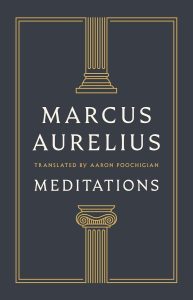
I have just published a new translation of Marcus Aurelius’ Meditations. I call it a literary translation, to contrast it with the competing translations. I recognize that Meditations is a drama, a psychodrama in which rival voices (each belonging to Marcus) compete with each other in pursuit of the great goal of Stoicism — living in harmony with Nature. Whereas other translations reduce Marcus to a thinker alone, my translation, I hope, brings Marcus to life again as a literary stylist. I tried to make my Meditations translation a work of literature — and that means that “charge” or “excitement” must be sustained throughout.
If you were to write an autobiography, what would it be called?
My autobiography would be titled He Did His Best. I think a lot about what I might regret on my deathbed. I don’t want to have any regrets, especially when it comes to poetry. I don’t want to say to myself, “If only I had spent more time on poetry.” So I spend the majority of each day on it. Whatever happens in the future in my poetry career, I can console myself with the fact that I really have immersed myself in it. I really have gone all-out.
To find out more about Aaron and his work, you can follow him on Facebook, Instagram and X.
As an Amazon Associate we earn from qualifying purchases made through links on this page.
You might also like
Tim Atkin: This is Not a Dress Rehearsal
Interview · 22 November 2016
Lawrence Grobel: The Books Behind The King Of Interviews
Interview · 22 June 2017

B. Dolan: Drugs, Dostoyevsky and the Bible
Interview · 13 July 2016

Anthony Mastromatteo: Fundamental Depth And Unending Process
Interview · 17 November 2018