Anthony Mastromatteo: Fundamental Depth And Unending Process
Anthony Mastromatteo’s reading list
15 books mentioned in this interview
- Process and Reality · Alfred North Whitehead
- The Fold · Giles Deleuze
- Bullfinch’s Mythology · Thomas Bullfinch
- The Ritual Process · Victor Turner
- The Song of the Lark · Willa Cather
- Baudolino
- Foucault’s Pendulum
- Pedro Páramo · Juan Rulfo
- The Aesthetics of Thomas Aquinas · Umberto Eco
- The Divine Comedy · Dante AlighieriRecommended 5 times
- Ulysses · James JoyceRecommended 8 times
- The Complete Poems · Emily Dickinson
- The Luzhin Defense · Vladimir Nabokov
- Petersburg · Andrei Bely
- Portrait of the Artist as a Young Man · James JoyceRecommended 5 times
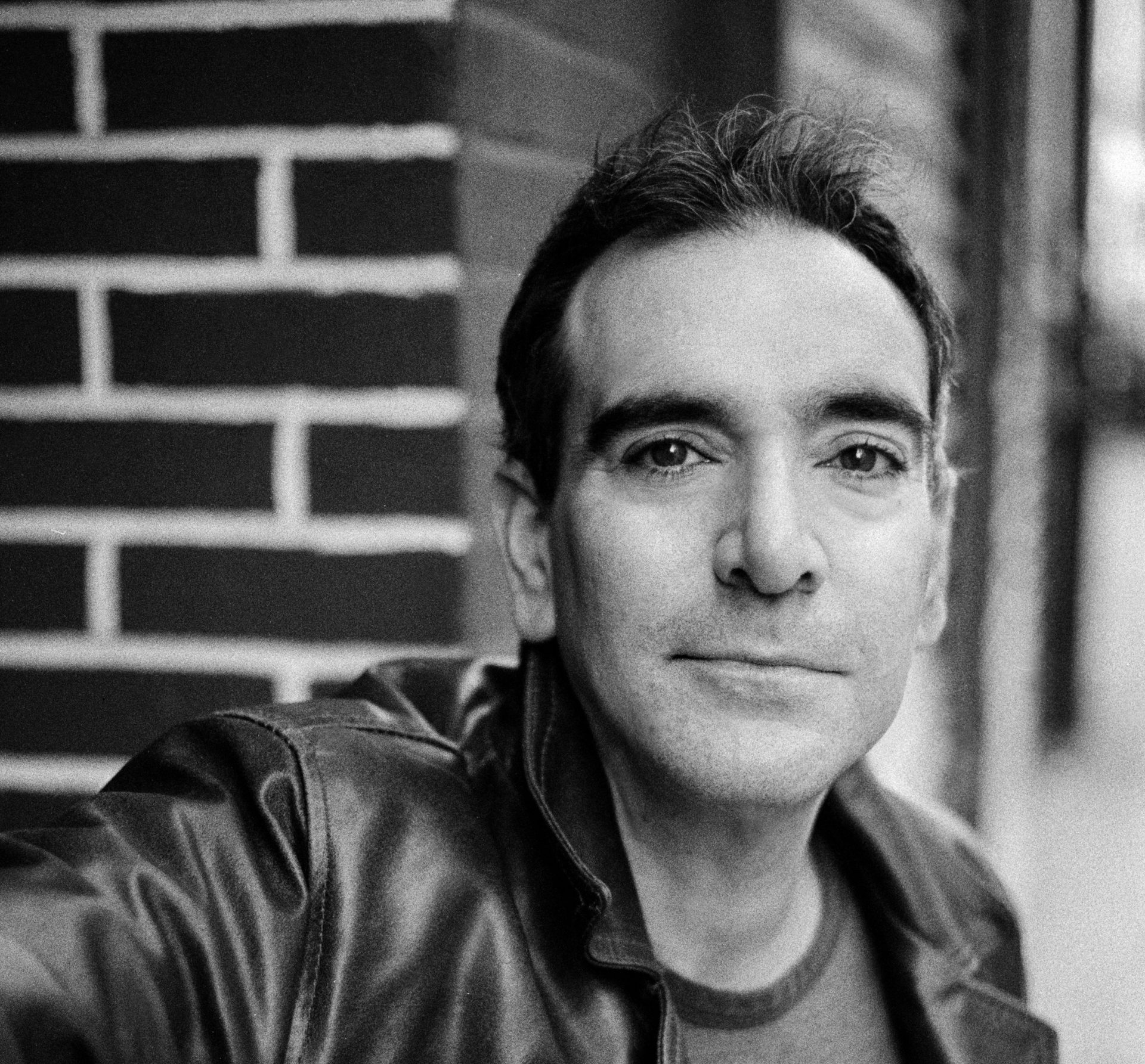
Anthony Mastromatteo is an artist, who did not discover his interest until a trip to the Cleveland Museum of Art in his senior year of high school; this would lead to him going to Princeton University where he would study Art History. Following his graduation; Anthony Mastromatteo spent time in New York City working at an international auction house – giving him an additional education in art. It wasn’t until 1996, that he made the decision to pursue a career as an artist himself; when he enrolled himself in classes at the Art Students League. After a year, after a chance encounter with Jacob Collins, Anthony Mastromatteo decided to pursue his studies at Water Street and made his decision to devote himself full-time to becoming a visual artist. Mastromatteo continued to study through 2002 when he made the transition to living as a professional painter. In spite of some early success in New York City, Anthony Mastromatteo and his wife moved back to Ohio in 2004. The move was tough, but with reduced living costs, Anthony had more time and less pressure; allowing him to focus on his craft. Looking ahead, he plans to continue to explore painting. However, upon speaking with Anthony, it was clear that his passion for reading has had a big impact on his work as an artist. So, please enjoy my interview with Anthony Mastromatteo.
How do you describe your occupation?
As an occupation, I describe myself as someone who thinks about and then makes paintings, builds a network of private clients and representative agents potentially interested in buying or selling these paintings, and prays to any and all manifestations of the Almighty that someone actually does purchase something in time to meet the demands of the bill collectors lining up at my door with hands extended. That is painting as an occupation, and I don’t ignore this reality. It is a stupid pursuit as an occupation. But as a vocation…a calling…it is magic. I read and think and look and feel as much as possible to inform myself with material for that next painting. I pour myself into its execution with love and attentiveness until it approximates the perfection of my vision and understanding. Sometimes that pouring is 1 day. Sometimes it is 1- months. Sometimes it is fun. Sometimes it is sheer brutality. As a vocation, there is nothing else I can see myself doing on a daily basis
What is something about you that people might find surprising?
Very few people pay any attention to me, so the most surprising thing might simply be that I have something to contribute of compelling interest. Beyond that, I think the few who do know me would be surprised to find out that before becoming a painter I wanted (and still, to some extent want) to be a writer before wanting to be a painter. But things just don’t work for me like that. Paintings make sense to me in their construction and execution. I am paralyzed by nearly every attempt to express myself with the written word
What are you reading at the moment and what made you want to read it?
At the moment I am on page 94 of Process and Reality by Alfred North Whitehead. I am six months into it and will probably need another 12 to 18 months to finish it. I am not an achievement reader. I read until the content paralyzes my brain. With some books that never happens. With this one, most mornings I make it through one or two paragraphs. I always read before I run, so the running allows for the act of processing the morning reading. I opened Whitehead based on a reference from The Fold by Giles Deleuze. As a reader, I am a follower of threads. This was a thread from a previous book. When I find the thread I purchase the corresponding book. When I finish the current reading, I assess which thread makes sense given my current interests, state of mind and availability


What was your favourite book as a child and why?
Without a doubt, my favorite book was Bullfinch’s Mythology by Thomas Bullfinch. When I was six or seven I had the chickenpox. This gave me 1 week off school with nothing to do. I picked this book up and have been immersed in the ramifications of my engagement with it ever since, in one way or another

Did you demonstrate an affinity with art as a child?
I had neither affinity for nor interest in art as a child. I grew up in suburban Ohio. I grew up on Gilligan’s Island and soccer. Art played no role whatsoever. It was actually on a spurious trip to the Cleveland Art Museum on a day that was supposed to be spent at a college fair that art became a reality to me. It was whilst standing in front of JMW Turner’s “Burning of the Houses of Lords and Commons” that my life changed. At the time I did not understand why, but looking at an impasto passage in the sky I felt the visceral sensation that somehow this thing made sense to me. The rest of my life, beginning with my Art History degree, has been a clumsy dance trying to unwrap just what was contained in that sensation of sense. Art History led me to the art world in the employ of Christie’s Auction House. And that led me to the actual pursuit of making paintings myself. This last step did not happen until I was 27 years old, at the Art Student’s League in NYC
What was the last book you purchased, and why did you buy it?
My most recent purchase: The Ritual Process by Victor Turner. It addresses a topic of great interest to me…liminality. As I understand it (and that qualifier should be taken as a sincere expression of my limits) Turner was at or near the beginning of the topic. The interest arises from my interest in the topic of the nature, interpretation and generation of meaning. Hermeneutics deals with the interpretation of a text in its limited definition but actually applies to any deciphering act of an engaged reality. Hermeneutics…Hermes… the god of boundaries and transitions…portals…limens…liminality. Turner elaborates the back-and-forth transition between structure and anti-structure in the human frame of reference. As an artist, the subject is interesting to me as I feel that an understanding of the structure and epistemology of meaning allows a certain ability to reverse engineer it into my attempt to structure a meaningful work of art

What book have you found most inspiring, what effect did it have on you?
I am answering this question in its most literal sense, meaning that I am answering it with the book in mind that inspired in the sense of motivating to action. It compelled me through a phase transition from solid to liquid. It pushed me to move from wanna-be artist to I’ve got to be an artist. And for some ten years it is a book I reread every year; in fact, it is the only book I have ever done that with. The book is The Song of the Lark by Willa Cather. I don’t read it anymore on an annual basis but I love the memory of it and my relationship to it. There is a revelatory moment in Thea Kronberg’s life when her calling becomes manifest. At that moment it became manifest for me as well. And so my emphasis moved from talking and thinking about past art to working out the steps toward realizing a life of art making

What’s the most obscure book you own; how did you discover it?
I would probably give that designation to Umberto Eco’s dissertation. I was writing a paper in my junior year in college on the aesthetics of early Cistercian architecture. The professor, under whose watchful eye the paper was completed, recommended a book on medieval aesthetics by Umberto Eco. That began a love affair with both his academic work and his literary work. (I remember reading Baudolino with great fondness and a particular passage from Foucault’s Pendulum has inspired a number of my paintings


What’s the best book you’ve read in the last 6 months?
The books of the last 6 months are all mentioned in other places in these responses. I am a consistent but slow reader. I do not see the finishing of a book as an achievement. If I could go slightly beyond that timeframe I would say that reading Pedro Páramo by Juan Rulfo was the kind of reading experience that was fundamentally transformative. There are parts of that book that still echo in my head. Just an amazing and transformative experience.

What’s the most obscure book you own?

What is your proudest achievement?
My humanity would demand that I say my familial relationships, but humanity has little to no interest for me outside of said immediate familial relationships. So, I offer another answer. My proudest achievement is the last painting I finished. It is my proudest achievement until the next completed painting. I have done this long enough and cycled through the emotional and psychological structure of this pride that I really don’t feel proud any longer. I just keep doing. I just keep moving. I rarely, if ever remove myself from the process long enough to make the evaluation that might elicit pride. I just keep moving.
Who would you say are the three artists that continue to inspire you?
Firstly I’d select Albrecht Dürer, because he helped me conceive of myself as an artist and because I feel his Self Portrait painted in 1500 and currently in Munich is one of the greatest paintings ever made, (2) JMW Turner…because his painting in Cleveland, “The Burning of the Houses of Lords and Commons,” is the physical embodiment of my interest in art and philosophy (as expressed best in Michel Serres essay from the early Hermes series on Carnot); and, (3) Vincent van Gogh…because his “Self Portrait” of 1888 dedicated to Paul Gauguin reminds me that my daily pursuit is a calling an not a profession…a religious pursuit of fundamental depth and unending process.
If you were trying to impress a visitor, which book that you own would you leave on the coffee table?
I make an effort to leave no remnants of my intimate mental and emotional life laying around the public parts of my house. In fact, I do not even have a coffee table to leave them on. Surfaces parallel to the floor collect the detritus of the day and dust. I am opposed to surfaces parallel to the floor for this very reason. My books are events in my interior life. They live with the rest of my interior existence in my studio.
What two pieces of advice would you give a young aspiring artist?
I would tell the aspiring artist to remember that each “thing” put out in the world is the medium through which we…the ones experiencing the “thing”…conceptualize the aspiration. Never compromise on the “thing” put into the world. Don’t be the limit of your own aspiration. (2) Realize that you don’t choose to be an artist once. You choose it again and again and again. And that decision becomes harder and harder and harder as practicality and life intrude on the idealism of life. Do not be deterred by this constant need to re-choose, under the weight of actuality, your idealism.
If an alien landed in your garden; which three books would you gift them to showcase humanity in the best possible way?
Setting aside the fact that I have no garden and despite all the efforts necessary to cultivate one, I would showcase humanity through the following 3 books: (1) The Divine Comedy by Dante Alighieri…from the low to the high of humanity, literally, (2) Ulysses by James Joyce…because I loved the reading of it and continue to love the continued thinking about it; and, (3) The Complete Poems by Emily Dickinson…because I just love the poems.


Are there any books you haven’t mentioned that you feel would make your reading list?
Books that I have the greatest memories of having read: The Luzhin Defense by Vladimir Nabokov, Petersburg by Andrei Bely, Portrait of the Artist as a Young Man by James Joyce, Federico Garcia Lorca and E. E. Cummings. I am sure there are others but these are books not mentioned in other answers that have resonated with me over years and, in some cases, decades.


Do you think there is a relationship between books and art?
Without a doubt on both a personal and a historical level. Books are the starting point for most of my paintings. Historically, literary narrative…whether classical or biblical…has spurred visual language. The relationship has changed in contemporary times. While the relationship now might not be so superficial (not meant in a pejorative way) the dialogue still remains vital.
Which book sat on your shelf are you most excited about reading next and why?
I used to have a stack of coming attractions but what I have found is that the thread of ideas does not follow the books in the stack. Because of this, I have done away with the stack. I can get most books these days that would follow from the thread no matter how esoteric in a matter of a couple days. I love this removal of limits of place as regards my interior life. I guess the answer to this will be the answer to my next interview with The Reading Lists.
If you’d like to learn more about Anthony Mastromatteo, you can find him on his website and Twitter.
As an Amazon Associate we earn from qualifying purchases made through links on this page.