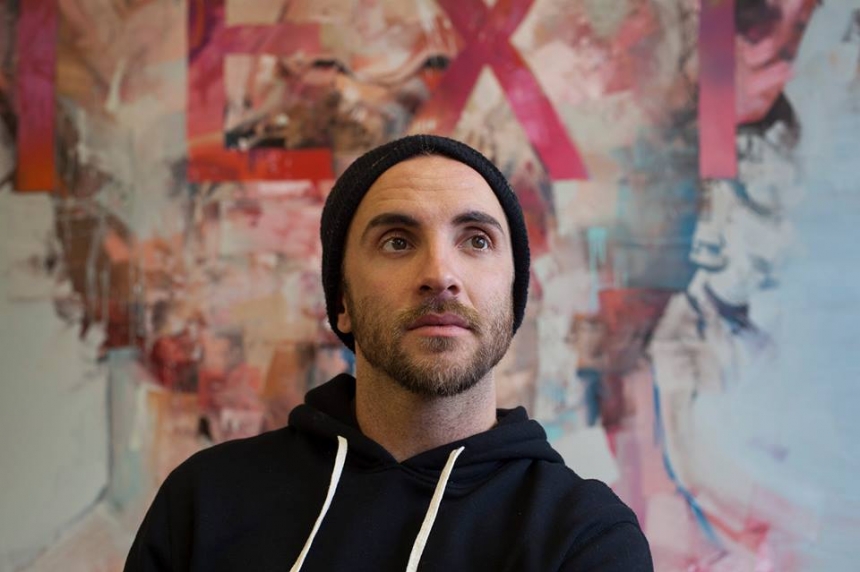
Andrew Salgado: Blood, Sweat, Tears & Paint Solvents
Andrew Salgado’s reading list
17 books mentioned in this interview
- The Passage · Justin Cronin
- Portrait of the Artist as a Young Man · James JoyceRecommended 5 times
- The RoadRecommended 8 times
- The Lion, The Witch and The Wardrobe · C.S. LewisRecommended 9 times
- The Magician’s Nephew
- ART/WORK · Heather Bhandari
- Slaughterhouse-Five · Kurt VonnegutRecommended 13 times
- The Orchid Thief · Susan Orlean
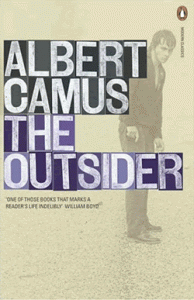
- The Outsider · Albert CamusRecommended 4 times
- Lord of the Flies · William GoldingRecommended 9 times
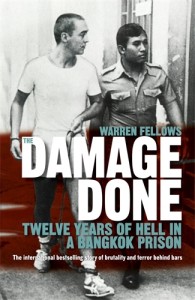
- The Damage Done · Warren Fellows
- The Satanic Verses · Salman Rushdie
- The GoldfinchRecommended 10 times
- The Loney
- Dark Knight
- The Book of Lost Things
- ShantaramRecommended 4 times
I first discovered the work of Andrew Salgado when I was reading an article in GQ about the artists you should be investing in now. On that list was Andrew Salgado. I really loved the image of his work so I delved a little further and discovered a wealth of incredible paintings. It is no wonder that he has been labelled as one of the most promising young figurative painters working today. His increasing notoriety is being propelled by a prolific series of solo exhibitions between 2013 and now. I reached out to Andrew, to see if he’d be interested in sharing his favourite books and he kindly agreed. His reading list is a blueprint for other young aspiring artists, so get your Amazon wishlist up, and get ready. Here is my interview with Andrew Salgado…
When someone asks you ‘what do you do for a living?’ – how do you respond?
I’m an artist. I paint.
What are you reading at the moment?
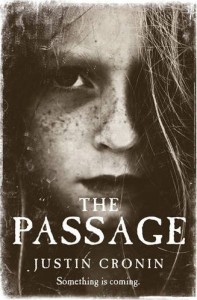
I’ve been reading The Passage by Justin Cronin for what feels like ages. Its a massive book, like 1,400 pages, and has various stages. I used to read really heavy literature, but to be honest, I spend so much time thinking critically and professionally about art that at the end of the day, if and when I’m reading, I want to enjoy it. For instance, the last ‘modern Classic’ I tried reading was Portrait of the Artist as a Young Man by James Joyce and I was so profoundly bored that eventually just gave up and read some schlocky nonsense. The Passage is a junky beach read masquerading as high lit. But its not: its all apocalyptic vampire trash. Its quite fun. Remember how wonderful and profound Cormac McCarthy did post-apocalyptic road-novel with The Road? Yeah, this is nothing like that. Its sort of like a Michael Crichton without all the boring lectures about science.


When you think about your childhood, what book comes to mind?
Without a doubt, The Lion, The Witch and The Wardrobe by C.S. Lewis. Every so often I return to that book, and unlike a lot of things I loved as a child, it still holds up. Forget the fact that its basically Catholic pedagogy in disguise, but its a wonderful book. So profound. I used to try to read the entire series, the 7 books, but I’d start with the first book The Magician’s Nephew and get to book 3 or 4, get bored, and re-read The Lion… again. There’s a trend starting here: I get bored easily.


What did you want to be when you were growing up?
I told my parents once that I wanted to be a waitress. They corrected me: *you mean a wait-*er. *Nope, a wait-*ress, was my response. Go figure.
What do you think your school aged self would think of the present day you?
I’d be aghast. I drink far too much and have no nice clothing. No, but really…I mean its quite an egotistical question but I’d be happy with what I have accomplished. I can support myself doing what I love and I’ve managed to garner a fairly good reputation at that. I’m a really high achiever so I think its important to recognise the little (and not so little) victories along the way.
If you could wrap up a single book and gift it to yourself as you left education – which book would it be?
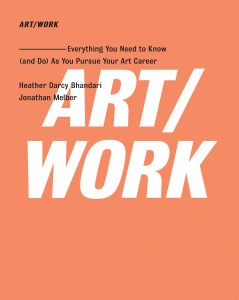
It’s called ART/WORK by Heather Bhandari. Its a very valuable tome for anyone pursuing a career in the arts. What you need to know, but don’t. What you should and shouldn’t be doing as an artist to get a career off the ground. A lot of artists ask me for advice and I just refer them to this book.

Does your reading have routine? Is there a particular time or place that you like to read?
I usually read on flights, and I’m always flying somewhere for work or art fairs or meetings, so I manage to sneak in enough reading time each month. Otherwise, I’m always connected to something…as an artist, I’m running my own enterprise. I’m never not working.
Which book has had the biggest impact on your career so far?
Oh wow. Thats a big question. I mean, so many books have surfaced in my life and work and as sources of inspiration that its really hard to pin it down to just one. I adore Slaughterhouse-Five by Kurt Vonnegut and I think it was one of the first times that the omniscient power one has as narrator was so evident. As a painter, I’m omniscient, I’m god of my canvas, I’m controlling the meta-narratives, so these (ugh, sorry for the word) postmodern approaches to narrative and story had a pretty profound affect on my work. Not to mention the sheer zaniness of his approach. It is sort of like a no-holds barred approach to one’s art. Its all communication, isn’t it? This sort of ‘making the rule that there are no rules’ is important as an artist. From Vonnegut to Radiohead to Alexander McQueen…its important to recognise the rule breakers because they can have a profound effect on our production.

What book have you recommended the most to friends and family?
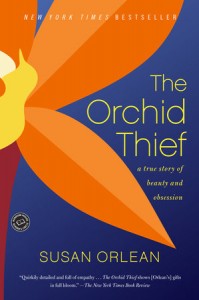
This would have to be The Orchid Thief by Susan Orlean. Its a non-fiction book about, well, orchids that was originally an article for The New Yorker. She was approached by a publisher to expand it into a full book, and its basically about her time following a white man named John Laroche who was being prosecuted by the Florida government for poaching orchids, (which were reserved for the Seminole Indians), all enveloped by a very-loose history of orchids, which, in and of itself, is extraordinarily fascinating. I call it a case of accidental genius: I don’t think that even Orlean herself was aware of the grand, overarching themes that were operating as she wrote. Its tragic, beautiful, profound, and devastating. There’s this moment in the book when Orlean realises that Laroche might be nuts, but he’s driven. The line is something to the effect of ‘I realised that what I wanted more than anything was to want something passionately’ and its one of those shattering lines that even now sends shivers through my body. So tragic. So intimate. It was turned into a very strange movie called Adaptation that sort of falls apart at the end and has very little to do with the book.

Do you prefer fiction or non-fiction?
Depends. I go through stages. I just like an engaging read.
Do you think reading is important?
Well this is kind of a self-fulfilling question, no?
What’s the best book you’ve read in the last 6 months?
Mmmm… I’ve been reading a lot of junk lately. But The Outsider by Albert Camus hit me in the face like a ton of bricks. It is outrageous. The final page is just – oh god its like the ultimate final paragraph in the history of literary fiction. I read it in one sitting. Its a perfect novel.

Do you prefer real books or digital books?
Shamefully I prefer to read on my ipad. Is that bad? I feel like the purists won’t like that answer.
Name a book that you feel every human should have to read by law.
Lord of the Flies by William Golding. We’re so dumb and violent as human beings. Is that misanthropic? As I write this a man just killed 49 persons in Orlando. What a world…it is perhaps one of the most important things I’ve ever read in my life.

What is the book that you feel has had the single biggest impact on your life?
Oh god, who knows. I’m writing it as I go.
Are there any books you haven’t mentioned that you feel would make your reading list?
The Damage Done by Warren Fellows is a memoir by an Australian man who spent time in The Big Tiger – Bangkok’s toughest prison – for smuggling heroin. The opening scene he details is so visceral and horrific…it gripped me and didn’t let me go. I also read this in a single sitting, on the beach in Australia. I was racing to finish as the sun was setting and I think I was balling like a baby as I finished. The most powerful thing he describes is failing to have a choice in any regard…so simple but with such larger resonating themes. Like an echo-chamber. He describes something about being told whether he’d have coffee or tea, and when he’d have it… a silly little metaphor for these gross atrocities he experienced in one of the worst prisons in the world. Its a really, really tough read. You’ve been warned. The Satanic Verses by Salman Rushdie is a very important novel. I was fortunate that in my undergrad I took a course – I’m talking an entire semester – dedicated to reading the book. There are so many paths happening in the book, and so much has to do with the Qu’ran that without the course I would have been really lost. The book opens with two planes – The Bostan and the Gulistan (named after the two heavens of Islam) in a head-on collision and two guys falling to earth and having a conversation on the way down. Yeah, its that kind of complex. I mean you don’t earn a fatwa for just a few critical comments. Its big.

What books or subject matter do you plan on reading in the next year?
I don’t know, maybe you can recommend something! I’ve been bored lately with so many books – I’ve probably read 3/4 of about a dozen books and given up. I read 750 pages of The Goldfinch before I just admitted it was the most boring obnoxious crap I’d ever suffered through. I quit The Loney because it was dull as dishwater. I skimmed through Frank Miller’s Dark Knight because even that bored me. I quit a Harlan Coben because it was just too dumb. My girlfriend recommended The Book of Lost Things that I couldn’t wrap my head around. I also hated, but I mean hated on another kind of level hated, Shantaram. So yeah, I need something good.


If you were to write an autobiography – what would it be called?
Blood, Sweat, Tears & Paint Solvents.
If you’d like to learn more about Andrew Salgado, you can do so on his website, his Facebook and his Twitter.
As an Amazon Associate we earn from qualifying purchases made through links on this page.
You might also like

Alison Littlewood: Experiencing Other Lives
Interview · 18 October 2017

Anthony Mastromatteo: Fundamental Depth And Unending Process
Interview · 17 November 2018

George Monbiot: Obtaining A Far Deeper Understanding
Interview · 21 October 2017

Andrew Huang: Books for the Selecting and Ordering of our Reality.
Interview · 9 November 2016