Alison Littlewood: Experiencing Other Lives
Alison Littlewood’s reading list
28 books mentioned in this interview
- The Conan Doyle Weirdbook · Arthur Conan Doyle
- Body in the Woods · Sarah Lotz
- The Little Mermaid · Hans Christian Andersen
- The Red Shoes
- On Writing · Stephen KingRecommended 31 times
- Oscar and Lucinda · Peter Carey
- I ChingRecommended 4 times
- The Road · Cormac McCarthyRecommended 8 times
- The Handmaid’s Tale · Margaret AtwoodRecommended 20 times
- The Lion, the Witch and the Wardrobe · C. S. LewisRecommended 9 times
- The Hobbit · J. R. R. TolkienRecommended 16 times
- Harry Potter series · J. K. RowlingRecommended 39 times
- Skulduggery Pleasant books · Derek Landy
- His Classic Fairy Tales · Hans Christian Andersen
- Some Kind of Fairy Tale · Graham Joyce
- English Passengers · Matthew Kneale
- A Monster Calls · Patrick NessRecommended 5 times
- Neverwhere · Neil GaimanRecommended 4 times
- Song of Kali · Dan Simmons
- The Lie Tree · Frances Hardinge
- The Faery Reel · Ellen Datlow
- Fearie Tales · Stephen Jones
- Strange Weather · Joe Hill
- Sleeping Beauties · Stephen and Owen King
- The Rift
- The Parts We Play
- Born to the Dark · Ramsey Campbell
- The Wraiths of War · Mark Morris
Books by Alison Littlewood: The Crow Garden, The Hidden People, A Cold Season
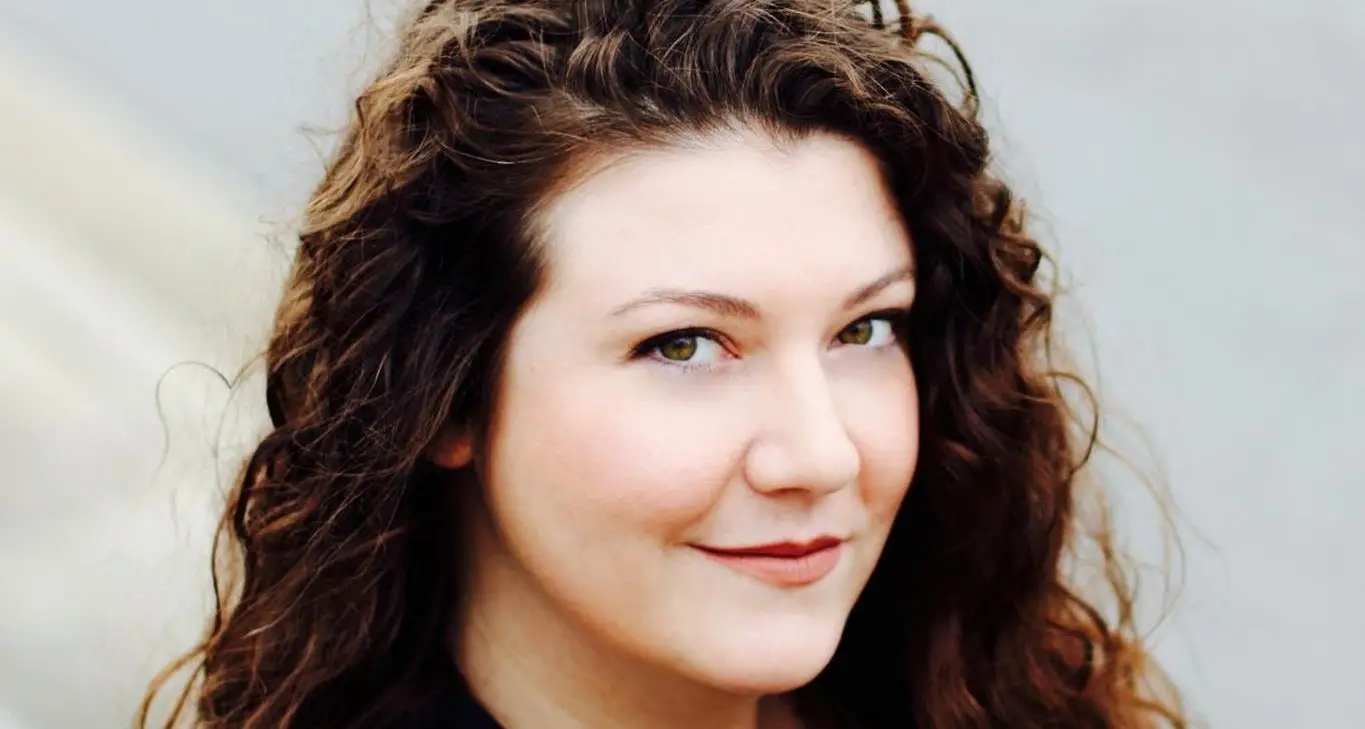
Alison Littlewood is a popular author whose latest novel is The Crow Garden, a tale of obsession set amidst Victorian asylums and séance rooms. It follows The Hidden People, a Victorian tale about the murder of a young girl suspected of being a fairy changeling. Alison Littlewood’s first novel, A Cold Season, was selected for the Richard and Judy Book Club and described as ‘perfect reading for a dark winter’s night’. Alison’s short stories have been picked for Best British Horror, The Best Horror of the Year, The Year’s Best Dark Fantasy and Horror and The Mammoth Book of Best New Horror anthologies, as well as The Best British Fantasy and The Mammoth Book of Best British Crime. In 2014, Alison Littlewood also won the Shirley Jackson Award for Short Fiction. I was excited for this interview; please enjoy my interview with Alison Littlewood.


When someone asks you ‘what do you do for a living?’ – How do you respond?
I say I’m a writer, and then look shifty while my inner critic tells me they’re about to tap me on the shoulder and say, ‘Of course you’re not!’
What are you reading at the moment?
I’m reading The Conan Doyle Weirdbook by Arthur Conan Doyle, a collection of his supernatural fiction, edited by Rafe McGregor. It’s defies expectations of Doyle, which are largely formed by Sherlock Holmes’s rationalism, and it’s an interesting discovery that he also wrote stories about ghosts and reanimated mummies. I’m also reading Body in the Woods by Sarah Lotz, which is tense and intriguing and generally just wonderful.


When you think about your childhood, what book comes to mind?
That would be Hans Christian Andersen’s fairy tales. I loved them when I was little. I wept time and again over The Little Mermaid by Hans Christian Andersen, giving up everything for her prince but unable to make him love her back. It made a deep impression on me, and I still love a book that can make me cry. When re-reading the stories as an adult, some are actually pretty disturbing – I think now that The Red Shoes was probably the first horror story I read – but back then I was entranced rather than frightened. Perhaps that was the beginning of it all.


Can you remember the first story you ever wrote?
Vaguely. I think it had horses in it. In fact, I’d be very surprised if it didn’t have horses in it.
What did you want to be when you were growing up?
I don’t think I had much of a clue. I was happier as a kid with my head lost in a cloud of stories, but I never imagined I’d be able to be a writer myself. That was something that other people did. I ended up going into marketing, though I think that was because I could use words in some way. Of course, at some point in my childhood I probably wanted to be a show-jumper, or a jockey, or even, if I was really really good, an actual horse.
What do you think your school aged self would think of the present day you?
I think they’d be very surprised indeed, and heartened – I was an odd little kid at times and didn’t really fit in, so to think I could find my way into something I love, and to have a bunch of writer friends all into the same kind of things I am – well, it would have been nice knowing that I had something that special to look forward to!
If you could wrap up a single book and gift it to yourself as you left education – which book would it be and why?
It’s a tricky one because I studied Literature and History and read an awful lot of books, but if there’s one I’d like to have discovered earlier, it’s On Writing by Stephen King. It’s not only full of some very good advice about writing but is very encouraging, and the personal memoirs of how he began are fascinating. Reading that book is one of the things that spurred me on to join a local writing class. I’ve read several ‘How to’ books about writing since then, but few that I’d recommend, and this remains one of the very best. Of course, it occurs to me now that if I could just wrap up my first novel and pass that on to my younger self, it would have been a whole lot easier to write it.

Does your reading have routine? Is there a particular time or place that you like to read?
I like to read before I go to sleep, but if I’m struggling to get into my writing I sometimes read for a while first to immerse myself in words. Also if I’ve wrapped up my word count and feel like I’m done, I’ll have a cheeky read during work time. There’s my reading for research too, but I like to indulge in some fiction just for pleasure at some point every day. As for place, I’ll read at my desk or in the garden or in bed or on the sofa with a dog on my knee – pretty much anywhere, really.
Can you talk us through your writing process, from the first spark of an idea, to having your first completed draft?
You’d think I’d have a very clean, straightforward way of getting from A to B by now, but really each book has been its own challenge so to an extent I’ve had to learn things afresh each time. Broadly though, one of the ideas I’ve jotted down in a notebook will stick in my mind and start to accrue other things – it’ll bond with another idea, or I’ll start to imagine scenes or snatches of dialogue. I write them all down and it snowballs from there. I’ll start reading up on areas I need to research to put flesh on the bones or get a sense of what kind of texture I’d like it to have, particularly for my historical work. I know some people dive in and write whatever scenes take their fancy, but I start at the beginning and work my way through chronologically. That way I can follow the characters as they develop and change. I like to have a well-formed idea of what will happen at the beginning and roughly where things are going to end up, but I don’t plan things minutely. Having a bit of room for discovery in the middle seems to be where interesting things happen. The downside is that it makes things frustrating at one point or another when I’m not sure what’s going to happen next. Then it’s a case of being disciplined and keeping putting one word after another until it clicks and starts to flow again.
Which book has had the biggest impact on your career so far? How did it impact it?
Well in a way, everything could be said to hark back to my love of fairy tales when I was a kid – the dark, twisted variety anyway. I love mingling the unreal and the real, although most often where it’s unclear whether events are supernatural or in the eye of the beholder. Another book that was my favourite for a lot of years – before I started writing – was Oscar and Lucinda by Peter Carey. It’s a wildly complex and wide-ranging historical novel with quirky, fascinating characters, and beautifully rooted in time and place. When I started writing genre fiction I felt I’d moved away from my old favourite and soon gathered others, but when I had the idea for The Hidden People I found myself turning to historical fiction myself. I felt like I’d looped around to something that was always close to my heart but seemed like something I could never do – a bit like writing itself, in fact!


What two pieces of advice would you give a young aspiring writer?
If you love it, never give up. Every piece will teach you something, even if it’s unsuccessful – maybe especially then. Keep on writing and reading and learning and moving onwards and upwards. On the other hand, if people tell you it’s impossible to be published, don’t believe them.
Do you have any books that you strongly associate with someone important in your life?
I always associate the I Ching, or Book of Changes, one of China’s most ancient texts, with my grandad. Named Bill – short for William – he was a brickie in one of Sheffield’s steelworks, but a ‘thinking man’ as my mum always put it. The I Ching was one of the books on his shelf and I have an image of him laying bricks by day and trying to fathom its mysteries by night. Apparently, in ancient times it was used for divination before becoming influential in the worlds of philosophy, religion, psychology, art and many other areas. One commentator, Fu Xi, studied it “in order to become thoroughly conversant with the numinous and bright and to classify the myriad things,” which is rather lovely. I wish I could ask my grandad about it, but it’s too late now. My mum says she got her love of books from him and she passed it on to me, so I owe Grandad Bill a debt.

What book have you recommended the most to friends and family?
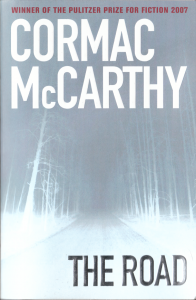
That would probably be The Road by Cormac McCarthy. It’s tremendously bleak but also rather beautiful. An unnamed father and son are making their way through a post-apocalyptic landscape and trying to survive. The Earth has become a grey, dead place, and although the nature of the disaster that has befallen it is not spelled out, it stands as a stark warning about how humanity behaves towards the world that supports us. Despite its bleakness, images of the life that once existed stand out with stark clarity against what remains, giving a reminder of beauty and fecundity and all that we have to lose. It’s one of the few books that made me want to turn back to page one and start on it again the moment I’d finished. There’s a terrific audio version too, narrated by Rupert Degas. He’s one of the best in the business and it makes for hypnotic listening.
Do you prefer fiction or non-fiction?
I loved fiction as a child and it remains my first love now, though since I started setting books in the Victorian period I’ve read a lot more non-fiction than I used to. It’s been fascinating to read as widely as I can, rather than purely focusing in on the areas I need to know about, especially as the thing with writing historical fiction is that you don’t know what you don’t know! I’ve also come across some weird and wonderful things that way, that I might well use in short stories or in a different novel at some point.
Do you think reading is important?
Of course! Apart from being hugely enjoyable, if you look at it from the earliest years, it’s a vital skill that underpins learning in any subject. I also think that in experiencing other lives through the page, it helps us learn to think our way under other people’s skin, to empathise. It also encourages us to daydream, to use our imagination – there are probably many inventions in the world today that were first dreamed of in fiction. So there’s a practical side to it, as well as a wonderfully indulgent one.
What’s the best book you’ve read in the last 6 months?
I was inspired by watching the recent TV adaptation to pick up my old copy of The Handmaid’s Tale by Margaret Atwood. It’s absolutely remarkable – one of those books that I read when I was quite young and didn’t appreciate as much as it deserved. In fact, I seem to remember reading it purely as a fantasy, one set in a world with little relation to our own. Reading it again, I found it all too terrifyingly plausible: powerful and disturbing as well as a compulsive piece of writing. It was a disconcerting experience to find how very differently it’s possible to look at a text after the passage of years.

Do you prefer real books or digital books?
I actually don’t mind. Real books can be so beautiful with lovely papers and illustrations, and paperbacks are handy for reading in the bath, but I love the convenience of my e-reader too. Being able to get hold of a book in seconds and adjust the font and spacing is great, and I find it useful for research and editing. When it comes to fiction I tend to think the magic is in the words rather than the medium, and it works best when I can forget that I’m reading at all and just get lost in the story.
Name a book that you feel everyone would benefit from reading and explain why.
Oh, I feel like I should be choosing the one book that would make everyone be good to each other and magically make the world a better place. I’m not sure that’s possible, so I’m not going to pick some deeply philosophical tome. Instead, I’d love it if more people realised how wonderful it can be to read and enjoy stories, and went off and discovered more books for themselves. So it would be great if everyone could read a terrific adventure when they were young, something to switch them on to reading – for me it might have been something like The Lion, the Witch and the Wardrobe by C. S. Lewis, or The Hobbit by J. R. R. Tolkien. Now it might be something like the Harry Potter series by J. K. Rowling or the Skulduggery Pleasant books by Derek Landy. Something fun.
- The Lion, the Witch and the Wardrobe by C. S. Lewis
 The Lion, the Witch and the Wardrobe by C. S. Lewis
- The Hobbit by J. R. R. Tolkien
 The Hobbit by J. R. R. Tolkien
- Harry Potter series by J. K. Rowling
 Harry Potter series by J. K. Rowling
- Skulduggery Pleasant books by Derek Landy
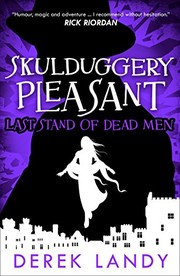 Skulduggery Pleasant books by Derek Landy
What is the book that you feel has had the single biggest impact on your life? What impact did it have?
It would have to be His Classic Fairy Tales by Hans Christian Andersen. I still have the copy of the book that made such an impression on me when I was young, translated by Erik Haugaard and beautifully illustrated by Michael Foreman. It’s inscribed in the front: ‘Alison, with love from Mummy, Christmas 1976.’

Are there any books you haven’t mentioned that you feel would make your reading list?
Lots! I’d include Some Kind of Fairy Tale by Graham Joyce – it’s just beautiful. English Passengers by Matthew Kneale is a terrific historical novel. A Monster Calls by Patrick Ness certainly passed the ‘books that make me cry’ test. Neverwhere by Neil Gaiman is always fun. Song of Kali by Dan Simmons has the most wonderful sense of place and The Lie Tree by Frances Hardinge is magical. I’d throw in some anthologies – The Faery Reel by Ellen Datlow is terrific, as is Fearie Tales by Stephen Jones. Maybe also a volume of poetry by Charlotte Mew.
- Some Kind of Fairy Tale by Graham Joyce
 Some Kind of Fairy Tale by Graham Joyce
- English Passengers by Matthew Kneale
 English Passengers by Matthew Kneale
- A Monster Calls by Patrick Ness
 A Monster Calls by Patrick Ness
- Neverwhere by Neil Gaiman
 Neverwhere by Neil Gaiman
- Song of Kali by Dan Simmons
 Song of Kali by Dan Simmons
- The Lie Tree by Frances Hardinge
 The Lie Tree by Frances Hardinge
- The Faery Reel by Ellen Datlow
 The Faery Reel by Ellen Datlow
- Fearie Tales by Stephen Jones
 Fearie Tales by Stephen Jones
What books or subject matter do you plan on reading in the next year?
I’m sure I’ll be reading plenty more books from or about the Victorian era, both fiction and non-fiction. I’ll keep on enjoying genre material and will no doubt make time for Strange Weather by Joe Hill, as well as Sleeping Beauties by Stephen and Owen King. Nina Allan’s short fiction has always been impressive and I’m looking forward to her novel, The Rift. Another talented writer, Priya Sharma, has a collection scheduled for next year and I’m excited to read that. Also on the ‘to be read’ shelf are The Parts We Play, a short story collection by Stephen Volk, Born to the Dark by Ramsey Campbell (see Ramsey Campbell’s reading list) and the third part of the Obsidian Heart trilogy, The Wraiths of War by Mark Morris.
- Strange Weather by Joe Hill
 Strange Weather by Joe Hill
- Sleeping Beauties by Stephen and Owen King
 Sleeping Beauties by Stephen and Owen King
- The Rift
 The Rift
- The Parts We Play
 The Parts We Play
- Born to the Dark by Ramsey Campbell
 Born to the Dark by Ramsey Campbell
- The Wraiths of War by Mark Morris
 The Wraiths of War by Mark Morris
If you were to write an autobiography – what would it be called?
It’s not going to happen I’m sure, but let’s go with The Next Best Thing to Being a Horse.
If you’d like to learn more about Alison Littlewood, you can find her on her website and Twitter.
Image credit: Karen Knighton
As an Amazon Associate we earn from qualifying purchases made through links on this page.