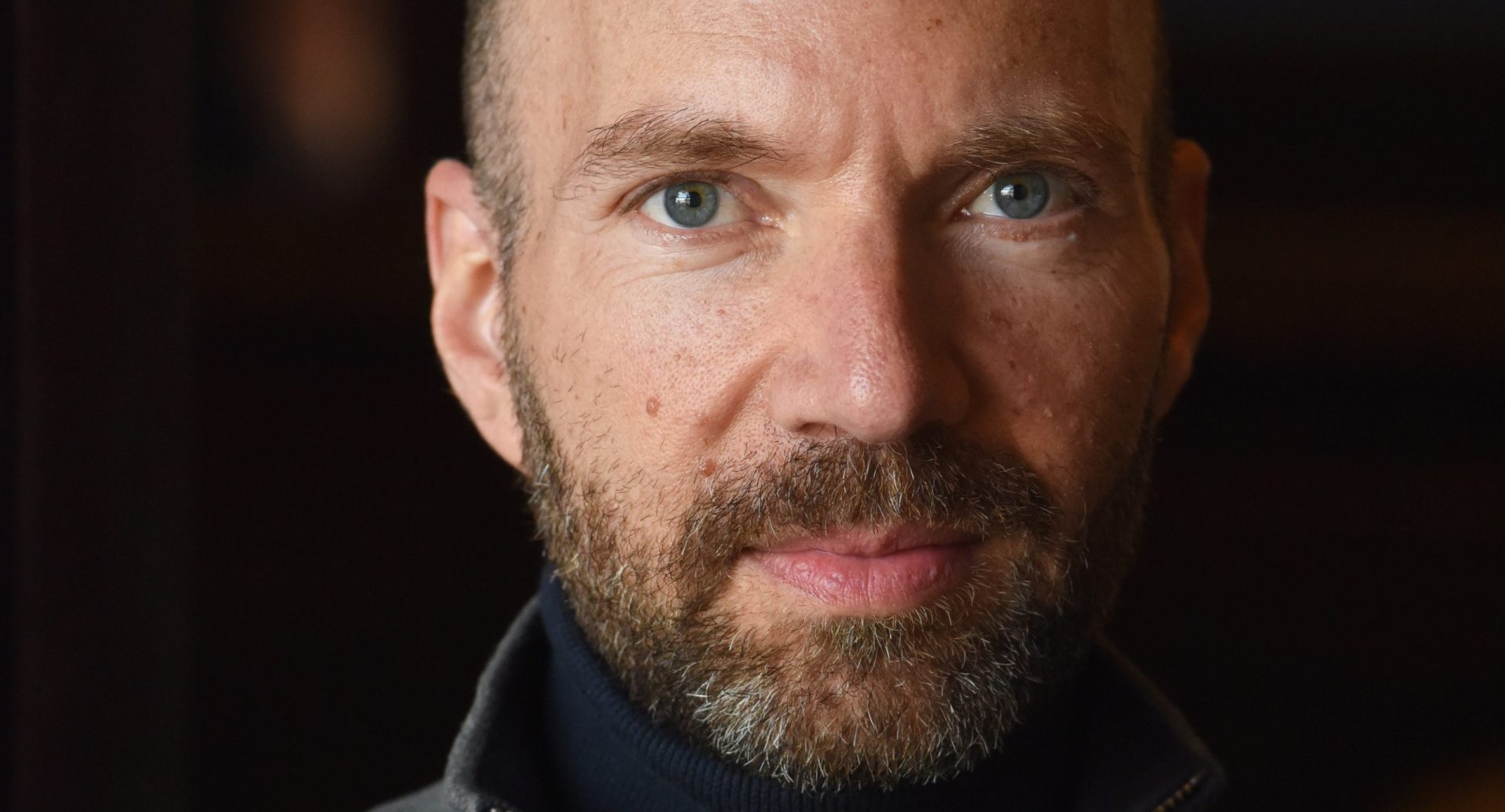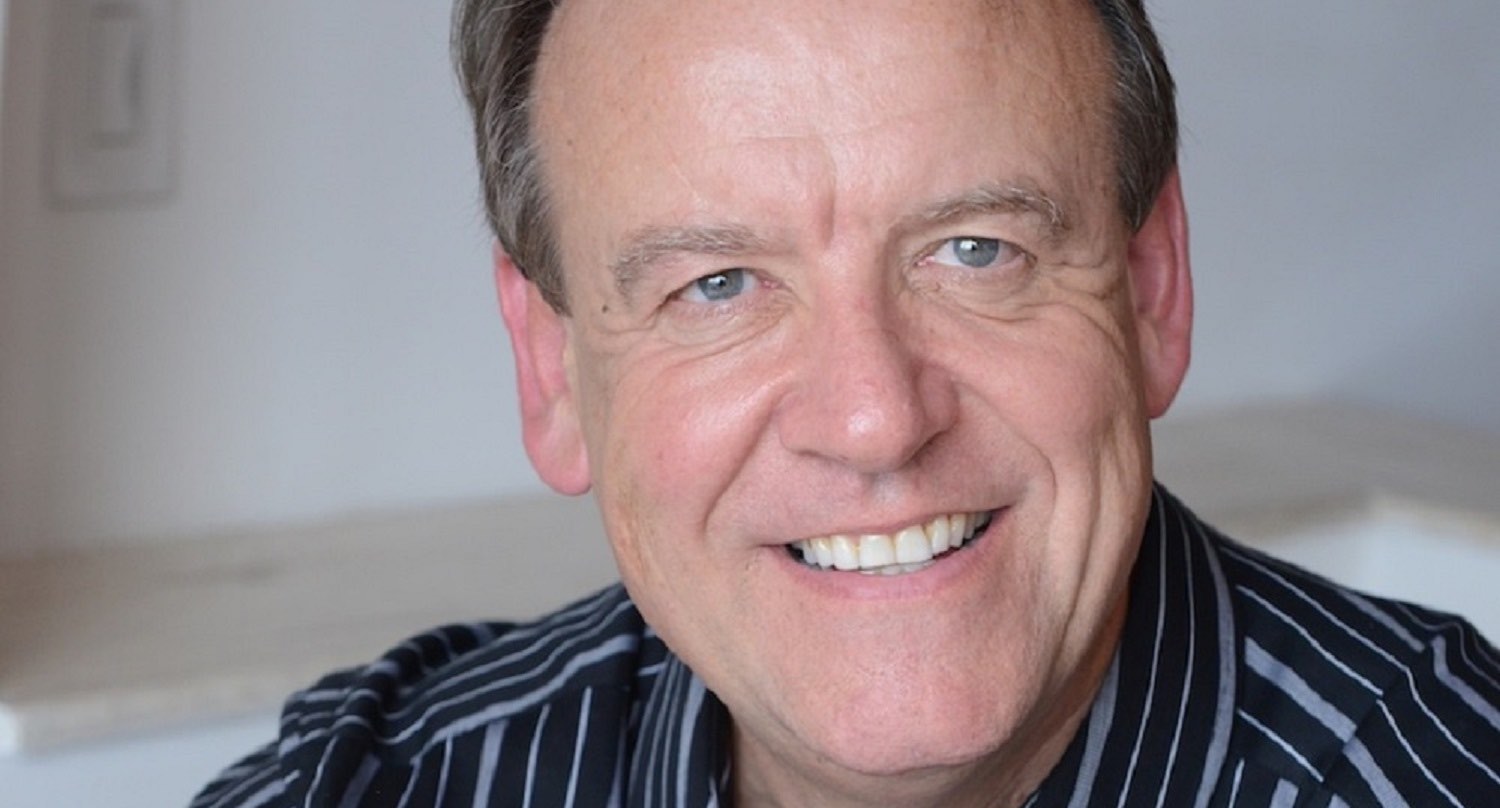
An Interview with Dawson Church
Dawson Church’s reading list
16 books mentioned in this interview
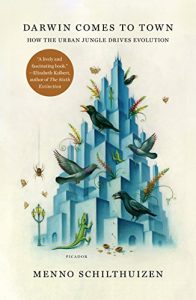
- Darwin Comes to Town · Menno Schilthuizen
- Enlightenment Now · Steven PinkerRecommended 8 times
- Behave · Robert SapolskyRecommended 3 times
- Meditations of Roman Emperor Marcus Aurelius
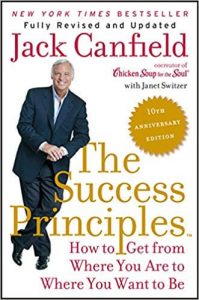
- The Success Principles · Jack Canfield
- Tribe of Mentors · Tim Ferriss
- Money: Master the Game · Tony RobbinsRecommended 3 times
- The Energy Cure · Bill Bengston
- Energy Medicine · Donna Eden and David Feinstein
- Super Human · Dave Asprey
- Sapiens · Yuval Noah HarariRecommended 19 times
- The Biology of Belief · Bruce Lipton
- Resilience · Linda Graham
- Embracing the End of Life · Pat Lind-Kyle
- Science and the Akashic Record · Ervin Laszlo
- Altered Traits · Daniel Goleman and Richard Davidson
Books by Dawson Church: The Genie in Your Genes, Mind to Matter
Dawson Church, PhD, is an award-winning author whose best-selling book The Genie in Your Genes has been hailed by reviewers as a breakthrough in our understanding of the link between emotions and genetics. His follow-up title, Mind to Matter, reviews the science of peak mental states. Dawson Church founded the National Institute for Integrative Healthcare to study and implement promising evidence-based psychological and medical techniques.
Please enjoy my interview with Dawson Church.


How do you describe your occupation?
My occupation is a byproduct of my passion. I manage a nonprofit which has done a great deal of scientific research into energy therapies and also provided free treatment to over 20,000 veterans suffering from PTSD.
My business trains professionals in applying energy therapies with their clients. We also have online programs that show people how to use these methods for their relationships and health. I share my passion through my websites, blogs and interviews each year.
Talk us through a typical day for you…
My typical day begins with meditation around 5:30 a.m. Centering one’s mind in the nonlocal universe, as I describe in my book Mind to Matter, is the foundation of a happy life. I start work early, because research shows that the hours before noon are the most productive for most people. I leave trivia like responding to emails and texts for the end of the day, when the brain is less coherent. I take breaks every 2 hours, plus a 15 minute nap mid-afternoon, because research shows that these techniques increase productivity. After 10 or 12 hours of focused work, I’m done. I then spend time with friends and loved ones, do some reading and get a great night’s sleep.
What are you reading at the moment and what made you want to read it?
I read many science books every year. My current favorites are Enlightenment Now by Steven Pinker and Darwin Comes to Town by Menno Schilthuizen. I’ve also become hooked on a series of 19th-century naval novels by an author named David Donachie, and they feature an endearing yet infuriating character called John Pearce.

Can you remember the first book you read by yourself?
When I was in elementary school I didn’t like reading and avoided it at all costs. But when I turned 12, my imagination was fired by the novels of authors like Rider Haggard, C. S. Forrester, Robert Heinlein, and Edgar Rice Burroughs. I checked out 200 books from the library that year, and read them while pretending I was doing my homework.
When I was growing up in the 1960s, British culture regarded dog-earing a page or marking inside a book as a cardinal sin. But scientific pragmatism eventually won over. You need to be able to find information in books fast. If you’re looking for a specific piece of information in a tome like the monumental Behave by Robert Sapolsky, you can’t sift through 800 pages looking for a particular reference you read two years ago.

Are you a page folder or a bookmarker?
Books were made to be dogeared and underlined. The hosts of video podcasts sometimes show me their copies of my book Mind to Matter, and it’s full of sticky notes and marked pages. I consider this the highest of compliments.
If you could gift yourself books at age 16 and age 25 – what would they be and why?
If I could gift myself books at an early age, they would include the Meditations of Roman Emperor Marcus Aurelius, and The Success Principles by Jack Canfield. Marcus Aurelius’s writing co


ntains the summarized wisdom of the ancient world, and is still refreshingly relevant to leading a good life today.
Jack’s book distills the wisdom of the world’s most successful people. I wish I had known this when I was 25 years old. Other such compilations include Tribe of Mentors by Tim Ferriss. And Money: Master the Game by Tony Robbins. If you can learn the best secrets from the brightest minds in a given field, why reinvent the wheel?


What are perfect reading conditions for you?
The perfect reading conditions for me are any conditions at all. Well, perhaps there are some exceptions – sex and sleep.

For someone starting out in your career, which three books would you make required reading and why?
The question about which books would I make required reading for someone starting out in my career is simple. That’s because we train thousands of professionals every year, and we draw up required reading lists. I have included summaries of all the most relevant research in my books Mind to Matter and The Genie in Your Genes, so that those are required. The Energy Cure by Bill Bengston is an inspiring example of how energy can heal, while the book Energy Medicine by Donna Eden and David Feinstein is the standard textbook in the field.


If you could invite 5 authors (dead or alive) to a dinner party – who would they be and why?
If I could invite five authors either dead or alive to a dinner party I would have some difficult choices to make. I’d certainly invite Tony Robbins because I think he did a magnificent job in demystifying finances with his book Money. I’d also invite Tim Ferriss, because he has gathered together the best wisdom from many fields in his podcasts and books. I would love to tune into the wisdom of Kahlil Gibran who wrote The Prophet. Marie Curie was one of the most incredible minds of all time, and her little-known work in WWI applied science to healing. For the last place we get to really tough choices between people like Albert Einstein, Joan of Arc and Abraham Lincoln! (See how a good writer can cunningly sneak in two extra guests?)
What was the last book you purchased, and why did you buy it?
The most recent book I ordered was a new title Super Human by Dave Asprey. I bought it because Dave is a synthesizer and explainer of useful science, much the way I am.

What is your favourite thing about reading?
My favorite thing about fiction reading is that it allows you to enter a world of your imagination. Great science writing is as captivating as a good novel. That’s the goal I set myself when I write a new book. I want it to be as engaging as a thriller.
What’s the best book you’ve read in the last 6 months?
The best book I’ve read in the last six months is Sapiens by Yuval Noah Harari. He manages to not only be scientifically precise, but to write with lyrical beauty. It’s a combination to which I aspire. Like me, he meditates every day.

If you could insert yourself into any book, which would you pick and why?
If I could insert myself into any book, I’d insert myself into one of the best-selling books of all time. The reason for this seemingly arrogant aspiration is my goal of maximum influence. People suffer unnecessarily, and it touches me deeply. My life’s mission is to relieve that suffering, and the more people I can reach with evidence-based tools like meditation and energy therapies, the better.
Name a book that you feel everyone would benefit from reading and explain why.
If I had to pick a book that everyone would benefit from reading I would choose The Success Principles by Jack Canfield. The reason for this is that it’s a compilation of advice for leading a successful life, and there isn’t a person in the world who doesn’t need to know that.
What is the book that you feel has had the single biggest impact on your life? What impact did it have?
Picking a single book that’s had the biggest impact on my life is hard, because so many have. A pivotal one for me was The Biology of Belief by Bruce Lipton. I helped Bruce self-publish the first edition of the book, and it renewed my interest in energy medicine and energy psychology. That led directly to me writing my first best-seller, The Genie in Your Genes. I had written two books before that, but they didn’t make a big splash. But the chain of reasoning that Bruce’s book set off in my mind, leading me to synthesize the best ideas in epigenetics, energy medicine and the science of intention, shaped my entire subsequent career.

Are there any books you haven’t mentioned that you feel would make your reading list?
Among other inspiring books I’ve recently read is Resilience by Linda Graham. It contains 130 exercises to build a resilient brain. Also Embracing the End of Life by Pat Lind-Kyle, because it shows us how to approach death mindfully. Science and the Akashic Record by Ervin Laszlo was highly provocative for the scientific mind, and the book Altered Traits by Daniel Goleman and Richard Davidson is revolutionary in what it shows meditation can do for our brains, turning pleasant temporary states into hardwired neurological traits.
- Resilience by Linda Graham
 Resilience by Linda Graham
- Embracing the End of Life by Pat Lind-Kyle
 Embracing the End of Life by Pat Lind-Kyle
- Science and the Akashic Record by Ervin Laszlo
 Science and the Akashic Record by Ervin Laszlo
- Altered Traits by Daniel Goleman and Richard Davidson
 Altered Traits by Daniel Goleman and Richard Davidson
If you’d like to learn more about Dawson Church, you can find him on his website.
As an Amazon Associate we earn from qualifying purchases made through links on this page.