Andrew Craig: The Quest for Financial Literacy
Andrew Craig’s reading list
27 books mentioned in this interview
- When: The Scientific Secrets of Perfect Timing · Daniel Pin
- the BelgariadRecommended 3 times
- the Mallorean
- Haunted House · Jan Pienkowski
- Sleep: The Myth of 8 Hours, the Power of Naps, and the New Plan to Recharge Your Body and Mind · Nick Littlehales
- Why We Sleep · Matthew WalkerRecommended 4 times
- The Ascent of Money · Niall Ferguson
- Rich Dad, Poor Dad · Robert KiyosakiRecommended 4 times
- Think and Grow Rich · Napoleon HillRecommended 14 times
- The 4-Hour Work Week · Tim FerrissRecommended 8 times
- The 80/20 Principle · Richard Koch
- The One Thing · Gary KellerRecommended 3 times
- Live on Less, Invest the Rest
- Harriman’s New Book of Investing Rules · Christopher Park
- The Rational Optimist · Matt Ridley
- Enlightenment Now · Steven PinkerRecommended 8 times
- Abundance · Peter Diamandis and Steven Kotler
- Factfulness · Hans and Ola RoslingRecommended 4 times
- SapiensRecommended 19 times
- Homo DeusRecommended 7 times
- Flow · Mihaly CsikszentmihalyiRecommended 4 times
- The 4-Hour BodyRecommended 4 times
- The 4-Hour Chef
- Meditations · Marcus AureliusRecommended 11 times
- Man’s Search for Meaning · Viktor FranklRecommended 29 times
- Wild Swans · Jung ChangRecommended 5 times
- Principles · Ray Dalio
Books by Andrew Craig: How to Own the World
Andrew studied Economics and International Politics at the University of Birmingham, graduating in 1997. His first job took him to Washington DC to work as an intern for a US Congressman on Capitol Hill. On returning to the UK, Andrew Craig began his career in finance on the Eurobond desk of SBC Warburg (now UBS) but moved to equities two years later to join the UBS smaller companies team at the end of 1999. Andrew Craig subsequently headed smaller company sales and sales trading at Williams de Broë and then held senior equity sales positions with Credit Agricole Cheuvreux and SEB in London and New York from 2007. In addition to his responsibilities at Plain English Finance, Andrew Craig has also been a partner at boutique life sciences investment bank, WG Partners, since January 2015.
Since founding Plain English Finance in 2011, Andrew Craig has appeared in numerous national and specialist financial publications including The Mail on Sunday, The Mirror, CityAM, The Spectator, Shares and MoneyWeek magazines, YourMoney, This Is Money and Money Observer. Andrew Craig has been a regular commentator on Shares Radio and IG TV, was featured in Russell Brand and Michael Winterbottom’s 2015 film “The Emperor’s New Clothes” and interviewed by Eamonn Holmes for the Channel 5 programme “How the other half live”. The third edition of Andrew’s book How to Own the World has been an Amazon bestseller in a number of categories and currently enjoys more than 2,000 reviews across Amazon, Audible and Goodreads, the significant majority of which are at five-stars.
Please enjoy our interview with Andrew Craig.
How do you describe your occupation?
I have two main roles. In one (WG Partners – a boutique investment bank, specialising in life sciences) – I do my best to try to find investors for biotech and healthcare companies. In the other (Plain English Finance) – our stated goal is “to improve the financial affairs of as many people as possible”. We seek to do this through my books and other writing, and via an online Community and an investment fund.
What is something about you that people might find surprising?
I used to sing tenor in one of London’s leading chamber choirs and also make wonderfully bad dance music in a pretty well-equipped home recording studio. Sadly, I don’t have time to do any of that anymore, given the combination of work and fatherhood – but one day I will get back at it.
What are you reading at the moment and what made you want to read it?
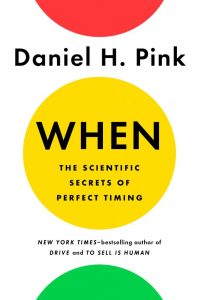
When: The Scientific Secrets of Perfect Timing by Daniel Pink. I heard him being interviewed on the Tim Ferriss (podcast) show and realised I had to catch up on a number of his books I hadn’t yet read.

What was your favourite book as a child and why?
Very difficult to answer as there are so many contenders. That having been said – I particularly loved fantasy stuff like Tolkien. In that genre, David Eddings’ two series – the Belgariad and the Mallorean were some of my favourites.


What inspired you to write your book, How to Own the World?
Over many years working in the City of London, it became increasingly clear to me just how little most people know about the nuts and bolts of effective personal finance and about economics more generally. We live in a capitalist society but almost certainly 90% or more of the population has no functional understanding of capitalism – what it actually is and how it works. This is certainly true of many politicians – which is a big part of our problem nowadays. Amazingly enough, even people who work for big investment banks can often be pretty hopeless when it comes to their own personal finances. If they’re not very good at it – what hope do the rest of the population have?
I feel very strongly that this is truly one of the biggest problems of our time. Financial literacy can be a silver bullet – for the individual because it hugely increases the chance someone can become wealthy – and actually makes it pretty simple to be comfortably off at the very least, almost no matter what you earn. Bigger picture, however, it is also extremely good for society as a whole. The more people within a society who are good at this, the better the society will likely be, all other things being equal, given that people are able to take care of themselves and their dependents, and there is more money available for tax and to fund innovative companies (see Switzerland and Singapore for details, for example).
How to Own the World was my first attempt to address that problem by trying to make the subject as accessible as possible to people and write about it in plain English (hence why my business is called www.plainenglishfinance.com ).
What was the last book you purchased, and why did you buy it?
Truthfully it was Haunted House by Jan Pienkowski – an amazing pop-up book first published in the seventies which I had as a child. My three-year-old daughter, Ella, is just as scared of the big gorilla that emerges from the page as I was at the same age seemingly.
Back in grown-up land, however, it was Sleep: The Myth of 8 Hours, the Power of Naps, and the New Plan to Recharge Your Body and Mind by Nick Littlehales. I bought it because I’m constantly looking for things that can improve how I experience life. I am an unrepentant “self-help” junkie. Sleep is clearly extraordinarily important for so many reasons. I’ve already read Why We Sleep by Matthew Walker, but Nick Littlehales’ book looked like another interesting take on such an important subject.
- Haunted House by Jan Pienkowski
 Haunted House by Jan Pienkowski
- Sleep: The Myth of 8 Hours, the Power of Naps, and the New Plan to Recharge Your Body and Mind by Nick Littlehales
 Sleep: The Myth of 8 Hours, the Power of Naps, and the New Plan to Recharge Your Body and Mind by Nick Littlehales
- Why We Sleep by Matthew Walker
 Why We Sleep by Matthew Walker
Other than your brilliant book, which three books on investing would you make required reading and why?
This is another hard question to answer. There are two or three hundred books listed in the bibliography of How to Own the World. If I had to pick only three, I would probably go for the following:
The Ascent of Money by Niall Ferguson. It is of practical importance for someone’s development as an investor that they have a basic grasp of the history of money and the various financial products. This is the best book for this purpose that I have read to date. For folk who are not big readers, there is also an accompanying television series for what it is worth.
Rich Dad, Poor Dad by Robert Kiyosaki. This book is not specifically about investment or trading. It is a more general book about personal finance. A key message in the book is that “the poor and the middle-class work for money … the rich have money work for them. Another point Kiyosaki makes is how poorly education systems around the world prepare people to look after their personal financial situation. These are views I share.
Think and Grow Rich by Napoleon Hill. This is another book on how important a person’s attitude to money is. People who believe that money is scarce and hard to come by are the least likely to succeed in getting hold of any. Those who believe that it is within their power to become wealthy have a much better chance of doing so. Napoleon Hill’s classic book on this very subject was originally published in the 1930s and has sold many millions of copies since then. I would argue that this book has the power to improve more than just your financial situation. Some of the content in this book is a little “out there” but I think this is a small price to pay for the attitude to money and wealth it can instil – which I think makes it an incredibly valuable read.
- How to Own the World
 How to Own the World
- The Ascent of Money by Niall Ferguson
 The Ascent of Money by Niall Ferguson
- Rich Dad, Poor Dad by Robert Kiyosaki
 Rich Dad, Poor Dad by Robert Kiyosaki
- Think and Grow Rich by Napoleon Hill
 Think and Grow Rich by Napoleon Hill
- the four hour work week
 the four hour work week
What book have you found most inspiring, what effect did it have on you?
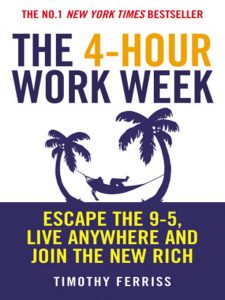
The 4-Hour Work Week by Tim Ferriss. I suspect this one needs little introduction given what a mega-bestseller it has been for fifteen years or so now. I read it back in 2009 when I was living in New York and not particularly enjoying life. It was one of the key catalysts in my deciding to quit my stockbroking job, leave New York and take a pretty long career break. I never would have written How to Own the World had I not made that decision.
What’s the most obscure book you own; how did you discover it?
Hard to say. I went to the wedding of a Nigerian friend of mine many years ago and they handed out a wonderful little book of African proverbs and sayings. I suppose this could rank as one of the least “mainstream” books on my bookshelves. I particularly liked the saying: “Smooth Seas Do Not Make Skilful Sailors.” I think I have an English / Russian dictionary somewhere too – so that might qualify. 😉
What’s the best book you’ve read in the last 6 months?
The 80/20 Principle by Richard Koch and The One Thing by Gary Keller both carry a similar (and incredibly valuable) message.


What is your proudest achievement?
Managing to get my wife to agree to marry me and being lucky enough to have two gorgeous children as a result: Ella, 3 and Oscar, 1.
What two pieces of advice would you give someone starting out taking more focus on their personal finance?
Read at least one half-decent book on the subject (it doesn’t have to be my one!). More importantly: save and invest at least 10% of what you earn the moment it hits your current account. Put a simple system in place so that the money goes into a sensible fund or funds every month without fail – ideally by direct debit. Do this every month from the moment you start earning money until such time as you have enough to live on. If you do this early and you do it well – it is entirely possible to get to seven-figure sums some years sooner than traditional retirement age. It is a tragedy how few people do it, particularly given how easy it is today and particularly if you live in the UK. I always say that succeeding with your finances is probably about 90% admin and 10% asset selection. Get the admin right and you’ll be amazed at the results over time. Set and forget…!
If you were trying to impress a visitor, which book that you own would you leave on the coffee table?
You can find copies of all three editions of How to Own the World, Live on Less, Invest the Rest and also Harriman’s New Book of Investing Rules by Christopher Park on our coffee table (I contributed a chapter to that one, alongside some very serious finance people). Thinking about it. This is probably quite embarrassing. I should probably put some Tolstoy or Proust there instead!


If an alien landed in your garden; which three books would you gift them to showcase humanity in the best possible way?
Wow. These questions are HARD! If the focus is on showing us in the best possible light, then I would probably go for The Rational Optimist by Matt Ridley, Enlightenment Now by Steven Pinker and Abundance by Peter Diamandis and Steven Kotler. If I can add one more, it’d be Factfulness by Hans and Ola Rosling.
Yuval Harari Noah’s Sapiens and Homo Deus could be options here too, but they’re not quite as focused on how much better human beings have been getting over time (and so much better than most people think or realise sadly).
- The Rational Optimist by Matt Ridley
 The Rational Optimist by Matt Ridley
- Enlightenment Now by Steven Pinker
 Enlightenment Now by Steven Pinker
- Abundance by Peter Diamandis and Steven Kotler
 Abundance by Peter Diamandis and Steven Kotler
- Factfulness by Hans and Ola Rosling
 Factfulness by Hans and Ola Rosling
- Sapiens
 Sapiens
- Homo Deus
 Homo Deus
Are there any books you haven’t mentioned that you feel would make your reading list?
Dearie me. So many.
I think that Flow by Mihaly Csikszentmihalyi is a pretty important book. Everything Tim Ferriss has ever done, particularly The 4-Hour Body and The 4-Hour Chef – as well as The 4-Hour Work Week I mentioned above.
Most of the output of folks like Malcolm Gladwell, Daniel Pink, Michael Lewis, Alain de Botton, Niall Ferguson. Any Stoic philosophy – e.g. Meditations by Marcus Aurelius. I’d also include Man’s Search for Meaning by Viktor Frankl and Wild Swans by Jung Chang. I’d include lots of fiction too, of course, all the usual suspects.
- Flow by Mihaly Csikszentmihalyi
 Flow by Mihaly Csikszentmihalyi
- The 4-Hour Body
 The 4-Hour Body
- The 4-Hour Chef
 The 4-Hour Chef
- The 4-Hour Work Week
 The 4-Hour Work Week
- Meditations by Marcus Aurelius
 Meditations by Marcus Aurelius
- Man’s Search for Meaning by Viktor Frankl
 Man’s Search for Meaning by Viktor Frankl
- Wild Swans by Jung Chang
 Wild Swans by Jung Chang
Which book sat on your shelf are you most excited about reading next and why?
Principles by Ray Dalio. From what I know about him, I am expecting this to be fascinating and also of great practical use – i.e. for living a better life generally.

If you’d like to learn more about Andrew Craig, head to his website and follow him on Twitter.
As an Amazon Associate we earn from qualifying purchases made through links on this page.