
The Best Books on Evolution
In this list
14 books
- The Descent of Man and Selection in Relation to Sex · Charles Darwin
- The Mismeasure of Man · Stephen Jay Gould
- The Blind Watchmaker · Richard Dawkins
- The Incredible Unlikeliness of Being · Alice Roberts
- Evolution · Donald R. Prothero
- On the Origin of Species · Charles DarwinRecommended 4 times
- Neural Darwinism · Gerald Edelman
- Why Evolution Is True · Jerry A. Coyne
- Darwin Comes To Town · Menno Schilthuizen
- Genome · Matt Ridley
- Charles Darwin: Voyaging · Janet Browne
- The Selfish Gene · Richard DawkinsRecommended 6 times
- What Evolution Is · Ernst Mayr
- Ever Since Darwin: Reflections in Natural History · Stephen Jay Gould
Why a reading list of the best books on evolution? The history of evolution goes back to the 18th century when French naturalist Jean-Baptiste Lamarck proposed that organisms could pass on acquired characteristics to their offspring. This was a radical idea at the time, and most scientists quickly rejected it. However, Lamarck’s ideas would later be revived by another French naturalist, Auguste Comte. Comte believed that all living things were constantly evolving and that this evolution was governed by laws that could be understood through science.
In the mid-19th century, British naturalist Charles Darwin came up with a similar idea. He proposed that evolution occurs through a process of natural selection, in which organisms with advantageous traits are more likely to survive and reproduce. Darwin’s theories were met with strong opposition from religious groups, but they soon gained acceptance among scientists. since then, the theory of evolution has been continually refined and supported by new evidence. Today, it is considered one of the cornerstones of biology.
The best books on evolution can be fascinating for a number of reasons. First and foremost, they offer a detailed look at how living things have changed over time. This can include everything from the evolution of early humans to the evolution of animals and plants. In addition, books about evolution often explore the theories and discoveries that have helped to shape our understanding of this complex process. As a result, they can provide readers with a deeper understanding of both the past and the present. Whether you’re interested in learning more about your own ancestry or gaining a greater appreciation for the diversity of life on Earth, there’s sure to be a book about evolution that will pique your interest.
Here are the best books on evolution…

The Descent of Man and Selection in Relation to Sex is a book by Charles Darwin that was published in 1871. The book focuses on the evolution of humans and how natural selection has played a role in shaping our species. Darwin argues that all humans are descended from a common ancestor and that our physical and psychological traits have been moulded by the process of natural selection.
He also discusses the implications of his theory for religion, society, and morality. The Descent of Man is considered one of the most important works on evolution and remains highly influential to this day.

The Mismeasure of Man is a book about evolution, specifically how evolution has been misused to support various racist agendas. The author, Stephen Jay Gould, is a palaeontologist and evolutionary biologist, so he is well-qualified to write on this topic. In the book, he examines how evolution has been used to justify discrimination against certain groups of people.
He also looks at how the science of evolution has been used to support various eugenic policies. Ultimately, Gould concludes that evolution does not support any particular political agenda. Instead, it is a neutral scientific theory that can be used to better understand the diversity of life on earth.

The book, The Blind Watchmaker by Richard Dawkins is about evolution. In the book, Dawkins makes a case that evolution can be explained by natural selection. He argues that the process of evolution does not require a designer or any other intelligent being. Instead, he believes that evolution can be explained by the fact that some organisms are better suited to their environment than others.
As a result, they are more likely to survive and reproduce. Over time, these survivals will lead to changes in the population. This process, known as natural selection, is how evolution works. The book is considered a seminal text for understanding evolution.

The Incredible Unlikeliness of Being is a book about evolution. In it, Alice Roberts explores the incredible journey that humans have taken to get to where we are today. Through evolution, we have developed unique features that make us human, such as big brains and opposable thumbs. We have also adapted to changing environments, developing new skills and abilities along the way.
The Incredible Unlikeliness of Being tells the story of our evolution, from our earliest ancestors to the modern-day. It is an enlightening and fascinating read that will leave you with a greater appreciation for the incredible journey that humans have taken. What’s great about this book is it explains evolution in a way that is accessible and doesn’t require you to be an evolutionary biologist to understand.

Evolution by Donald R. Prothero
Donald R. Prothero’s book, Evolution, dives into the history, science, and evidence of evolution. He covers Darwin’s discovery and theory, as well as how it has been misunderstood and misrepresented over the years. Prothero also discusses more recent discoveries that have further bolstered the evidence for evolution.
He argues that evolution is not only a fact but also an essential tool for understanding the natural world. Ultimately, Prothero makes a compelling case that evolution is one of the most important scientific theories of all time. The book provides an entertaining version of the history of the transitional forms and series found in the fossil record.
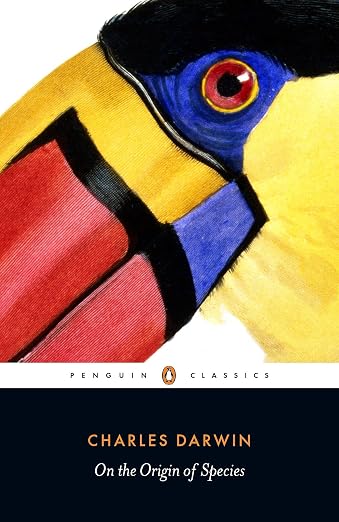
On the Origin of Species by Charles Darwin is one of the most important books in the history of science, and is certainly one of the best books on evolution. In it, Darwin outlined his theory of evolution by natural selection, which would come to form the foundation of modern biology. The book was controversial at the time of its publication, as many people were not yet ready to accept the idea that humans had descended from apes.
However, Darwin’s theory eventually won out, and today it is considered one of the cornerstones of our understanding of the natural world. Even if you don’t agree with all of Darwin’s ideas, there’s no doubt that On the Origin of Species is a fascinating and groundbreaking work that continues to shape our understanding of the world around us.

Neural Darwinism is a theory of brain function proposed by Gerald Edelman. The theory states that the brain is constantly evolving, with new neural connections being formed and old ones being discarded. This process is similar to natural selection, with the fittest connections surviving and being strengthened.
The theory has been highly influential in cognitive science and has helped to shape our understanding of how the brain works. Neural Darwinism is an important book for anyone interested in cognitive science or the evolution of the brain. Gerald M. Edelman was considered one of the nation’s leading neuroscientists.

The book, Why Evolution Is True by Jerry A. Coyne, is about the theory of evolution and its supporting evidence. Coyne starts by explaining what evolution is and how it works. He then goes on to dispel some common myths about evolution, such as the idea that it is just a theory or that it is contradicted by religious beliefs. Next, Coyne addresses some of the most common objections to evolution, such as the argument that it is impossible for complex life forms to have arisen through natural selection.
Finally, he provides a wealth of evidence for evolution, from fossil records to DNA comparisons. By the end of the book, readers will have a better understanding of evolution and why it is considered to be one of the most important scientific theories of our time.

There are few greater thinkers than Charles Darwin, whose findings on evolution have shaped the way we understand the natural world. In his groundbreaking book, Darwin Comes to Town, Dutch biologist Menno Schilthuizen takes a close look at how evolution is playing out in the urban environment. By studying a wide range of species that have adapted to city living, from rats to pigeons to cockroaches, Schilthuizen offers a unique and insightful perspective on the process of evolution.
In addition to providing an accessible overview of Darwin’s theory, the book also highlights the importance of conservation efforts in preserving urban biodiversity. As cities continue to grow and evolve, Darwin Comes to Town provides an essential guide to understanding how these changes are taking place.

Genome is a book about evolution by Matt Ridley. The book looks at how the human genome has evolved over time and how this can be used to understand the history of the human species. Ridley uses data from the Human Genome Project to show how humans have changed over time, and how these changes have led to the development of different diseases.
He also looks at how our understanding of evolution can help us to treat these diseases. The book is an interesting and thought-provoking read for anyone interested in evolution or human history. The genome’s been mapped and Matt Ridley is here to explain what that means, how it works and what it means for the future.

Charles Darwin: Voyaging is the first volume of a two-part biography of Charles Darwin, one of the most influential figures in the history of science. Written by Janet Browne, a leading Darwin scholar, this book chronicles Darwin’s formative years and his five-year journey around the world on the HMS Beagle. Browne draws on a wealth of previously unpublished material, including Darwin’s own notebooks and letters, to provide a detailed account of his early life and his development as a thinker.
She also offers insights into the origins of his theory of evolution, which would ultimately revolutionize our understanding of the natural world. Though Darwin was not the first to propose the idea of evolution, he was the first to develop a convincing scientific case for it. His work would go on to have a profound impact on both science and society, and Charles Darwin: Voyaging provides an essential introduction to the man and his ideas.

The Selfish Gene is a book about evolution. More specifically, it is about how evolution works at the level of genes. Dawkins argues that the driving force of evolution is not the individual organism, but rather the gene. This may seem like a small distinction, but it has important implications for our understanding of evolution. For one thing, it means that evolution is not necessarily driven by the need to survive and reproduce. Instead, evolution can be driven by the need to propagate one’s genes.
This can lead to some seemingly altruistic behaviour, such as sacrificing one’s life for the sake of one’s offspring. In Dawkins’ view, evolution is all about genes trying to replicate themselves, and everything else is secondary. This perspective provides a fresh and interesting way of thinking about evolution, and The Selfish Gene is well worth reading for anyone interested in the topic.

What Evolution Is by Ernst Mayr is a book about evolution. The book begins with a definition of evolution and then looks at the evidence for evolution and the mechanisms of evolution. Mayr also discusses the history of evolutionary thought and the major figures in the field.
He argues that evolution is not just a theory, but a fact that is supported by overwhelming evidence. The book is both informative and engaging, making it an essential read for anyone interested in learning more about evolution. Ernst Mayr was one of the most influential biologists of the 20th century and his book is considered required reading for many biology students around the world.

Ever Since Darwin is a book about evolution, written by Stephen Jay Gould. The book focuses on the history of the theory of evolution, tracing its development from early concepts to modern understanding. Gould also covers popular misconceptions about evolution and debunks common myths.
In addition, he discusses the implications of evolution for our understanding of life on Earth. Ever Since Darwin is an accessible and engaging introduction to one of the most important scientific theories of all time. This book, the first from Stephen Jay Gould, has sold more than a quarter of a million copies.
While the theory of evolution is well-established, there is still a great deal of misunderstanding and misinformation surrounding it. One way to help encourage people to learn more about evolution is by reading. The best books on evolution can provide information on the topic in an accessible and engaging way. They can also help to dispel myths and misunderstandings about evolution. In addition, reading about evolution can help to foster a greater appreciation for the natural world and the incredible diversity of life on Earth. By encouraging people to read about evolution, we can help to promote understanding and acceptance of this important scientific theory.
If you enjoyed this reading list of the best books on evolution, you may also want to check out the most important psychology books.
As an Amazon Associate we earn from qualifying purchases made through links on this page.


