Michael Shermer: A Scientific Masterclass of Books
Michael Shermer’s reading list
23 books mentioned in this interview
- The Inevitable: Understanding the 12 Technological Forces that will Shape Our Future · Kevin KellyRecommended 3 times
- The Mutiny on the Bounty Trilogy · Charles Nordhoff and James Norman Hall
- Daniel Loxton’s books on dinosaurs
- Letters to a Young Contrarian · Christopher Hitchens
- Guns, Germs, and Steel · Jared DiamondRecommended 7 times
- The Origin of Species · Charles DarwinRecommended 5 times
- The Better Angels of Our Nature · Steven PinkerRecommended 3 times
- Principia · Isaac Newton
- The Language Instinct
- The Blank Slate
- How the Mind WorksRecommended 3 times
- Atlas Shrugged · Ayn RandRecommended 9 times
- The Panda’s Thumb
- The Flamingo’s Smile
- Time’s Arrow
- Time’s Cycle
- Demon-Haunted World · Carl SaganRecommended 5 times
- Human Action
- The Fatal Conceit
- The Dragons of Eden · Carl Sagan
- The Mismeasure of Man · Stephen Jay Gould
- The Selfish Gene · Richard DawkinsRecommended 7 times
- To Know a Fly · Vincent Dethier
Books by Michael Shermer: The Moral Arc: How Science and Reason Lead Humanity Towards Truth, Justice and Freedom
Dr. Michael Shermer is the Founding Publisher of Skeptic magazine, as well as a monthly contributor for Scientific American, Time.com, as well as a Presidential Fellow at Chapman University. Michael is also a published author, and his most recent book The Moral Arc: How Science and Reason Lead Humanity Towards Truth, Justice and Freedom is receiving great reviews. Dr. Michael Shermer has been teaching as a college professor since 1979, having taught at Occidental College, Glendale College and Claremont Graduate University. His essays can be found in the Wall Street Journal, the Los Angeles Times, Science, Nature, amongst others. Dr. Michael Shermer may also be recognisable to you as he has appeared on TV shows such as The Colbert Report, 20/20, Dateline, Charlie Rose, and Larry King Live. If you’re not impressed yet; Dr. Michael Shermer has also given two TED talks, seen by millions of viewers and ranking in the top 100 of all time. It is my pleasure to introduce my interview with Dr. Michael Shermer…

When someone asks you ‘what do you do for a living?’ – How do you respond?
Science writer, editor, book author, professor, and researcher, but not necessarily in that order.
What are you reading at the moment?
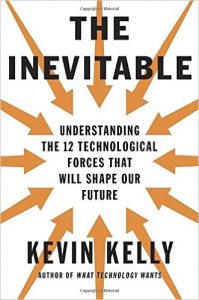
The Inevitable: Understanding the 12 Technological Forces that will Shape Our Future by Kevin Kelly. Kelly is one of the founders of Wired magazine and a thoughtful futurist who realizes that predictions are hard to make, especially about the future.
What’s your earliest memory of reading?
This is probably a false first memory, but it might be The Mutiny on the Bounty Trilogy by Charles Nordhoff and James Norman Hall. Men Against the Sea, Pitcairn’s Island, a very impressionistic tale on a young mind filled with adventure. Then there are the Ian Fleming Bond books series. I read them all in the 1960s as the Bond films were being produced. As much as I loved the films, the books (as usual) are much better stories than conveyed on the silver screen.

If you could encourage young people to read one book in particular, what would it be?
It depends on what you mean by young. For young children I’m favourable to Daniel Loxton’s books on dinosaurs for kids, richly illustrated with fun stories. Prometheus Books publishes many books for grammar-school and middle-school age kids on science, skepticism, and critical thinking. Bill Nye’s books on science are geared for school-age children, and he is beloved kids everywhere and all ages. But if I had to pick one for older young people, Letters to a Young Contrarian by Christopher Hitchens is excellent and a good primer on thinking critically about social, political, religious, and ideological beliefs. A true work of skepticism.


What is the worst job you’ve ever had?
Cleaning the bathrooms of the men’s dorm I lived in at Pepperdine University as an undergraduate in order to earn a little spending money. It didn’t hurt that this was in Malibu, California near the beach, but it was the jock’s dorm, and athletes’ can be particularly dirty and disgusting. Equally bad was taking care of the lab animals at Cal State Fullerton during graduate school—rats and pigeons—made horrifyingly worse by the fact that I also had to dispose of them after the experiments were complete. As I describe it in the chapter on animal rights in my book The Moral Arc:
This was not a pleasant task, made all the worse by the fact that we named our rats after the Los Angeles Dodgers baseball team of that era—Ron Cey, Davey Lopes, Bill Russell, Steve Garvey, Don Sutton, and the rest. You get to know your lab animals, and they get to know you. But then the experiment is over and the time comes to dispose of the subjects, which in the case of the rats was done by…I can barely type the words…gassing them with chloroform in a large plastic trash bag. I wanted (and asked) if I could take them up into the local hills and let them go, figuring that death by predation or starvation was surely better than this. But my suggestion was rejected in no uncertain terms because what I was proposing was actually illegal. So I exterminated them. With gas. The very words used to describe this act—exterminating a group of sentient beings by gassing them—are uncomfortably close to those I wrote in my holocaust book to describe what the Nazis did to their captives. No wonder naming your lab animals is considered taboo in science. I thought it was to encourage objectivity, but I now suspect that it has as much to do with remaining emotionally detached so as to be morally blameless.
Do you read as much as you’d like to?
Of course not! I’d like to read several more hours a day than I do. But that’s probably true of anyone who loves to read. Fortunately, I read a lot for my job as a writer, editor, and researcher, so I cannot really complain.
What books do you feel are important reading for people on your career path?
Science books. Anything by: Carl Sagan, Jared Diamond, Richard Dawkins, Steven Pinker, Alison Gopnik, Sam Harris, Carol Tavris, Lawrence Krauss, Janna Levin, Brian Greene, Lisa Randall, Sean Carroll, Stephen Jay Gould, Stephen Hawking, Leonard Mlodinow, Robert Wright, Matt Ridley, and others on bookshelves you usually find near these authors’ books. These are examples of “third culture” books, as described by the literary agent, editor, and author John Brockman—books that bridge the gap between the two cultures of science and the humanities, books that are not just written for the general public, but for everyone, professional scientists and scholars included. Guns, Germs, and Steel by Jared Diamond for example, which won the Pulitzer Prize, is not the popular version of his technical theory for why civilizations developed at differential rates around the world throughout history; it is the only version available and it can be read and understand by anyone. It is the same with The Origin of Species by Charles Darwin, and many other titles.

Is there a book that you’ve read more than once? What is it and why did you revisit it?
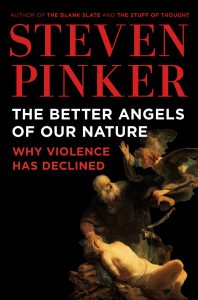
The Better Angels of Our Nature by Steven Pinker. For my money, this is the most important social science book ever written, comparable to Principia by Isaac Newton in the physical sciences and The Origin of Species by Charles Darwin in the biological sciences. It is packed with data in a highly readable narrative story. It should have won the Pulitzer Prize. Since that can’t happen now, the Nobel Prize in literature—which has never gone to a scientist or science writer—should be awarded to Pinker for his body of work that also includes The Language Instinct, The Blank Slate, and How the Mind Works, all important contributions to social science, cognitive science, and psychology.
- The Better Angels of Our Nature by Steven Pinker
 The Better Angels of Our Nature by Steven Pinker
- Principia by Isaac Newton
 Principia by Isaac Newton
- The Origin of Species by Charles Darwin
 The Origin of Species by Charles Darwin
- The Language Instinct
 The Language Instinct
- The Blank Slate
 The Blank Slate
- How the Mind Works
 How the Mind Works
What book have you recommended the most to friends and family?
In my youthful 20s it was Atlas Shrugged by Ayn Rand. After that, Stephen Jay Gould’s essay collections, such as The Panda’s Thumb, The Flamingo’s Smile, and his short treatise Time’s Arrow, Time’s Cycle. Later, Demon-Haunted World by Carl Sagan. Now, The Better Angels of Our Nature by Steven Pinker.
- Atlas Shrugged by Ayn Rand
 Atlas Shrugged by Ayn Rand
- The Panda’s Thumb
 The Panda’s Thumb
- The Flamingo’s Smile
 The Flamingo’s Smile
- Time’s Arrow
 Time’s Arrow
- Time’s Cycle
 Time’s Cycle
- Demon-Haunted World by Carl Sagan
 Demon-Haunted World by Carl Sagan
- The Better Angels of Our Nature by Steven Pinker
 The Better Angels of Our Nature by Steven Pinker
What’s your favourite genre of book?
Science nonfiction and science fiction.
What do you think a world without books would be like?
Empty.
Is there an author whose writing you’re such a fan of, that you’ll read everything they release?
Outside of the science writers mentioned above, anything by Jon Krakauer. He’s such a marvellous storyteller and wordsmith.
Do you think digital books will ever completely replace real books?
No. I think it will get to ~50/50 and level out there, ± 5.
What book do you feel humanity needs right now?
Outside of the aforementioned The Better Angels of Our Nature by Steven Pinker, the works of the Austrian economists Ludwig von Mises (e.g., Human Action) and Friedrich Hayek (e.g., The Fatal Conceit), because the world runs on economies and these authors explain how the world really works better than most.


What is the book that you feel has had the single biggest impact on your life?
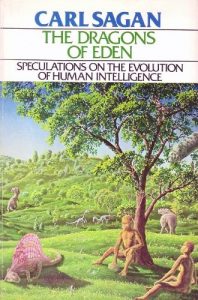
No one book has had that much impact, but I would say The Dragons of Eden by Carl Sagan, The Mismeasure of Man by Stephen Jay Gould, and The Selfish Gene by Richard Dawkins influenced my thinking about science in my 20s and 30s and still resonate today.


Are there any books you haven’t mentioned that you feel would make your reading list?
To Know a Fly by Vincent Dethier. It’s out of print but one of the best short treatises on how science really works, and the wonder and beauty of discovering truths about nature I have ever read. In fact, I think I may see if I can purchase the rights to bring it out in print again. It is such a wonderful book that I read in my second year in college upon the recommendation of the most influential professor I had in undergraduate school, Richard Hardison. I may start assigning it to my students in my Chapman University course, Skepticism 101: How To Think Like a Scientist.

What books or subject matter do you plan on reading in the next year?
Mostly science books, although I plan to return to reading more economics books because that field explains more about how the world works than probably any other genre.
If you were to write an autobiography – what would it be called?
I Wonder: The Unauthorized Autobiography of Michael Shermer.
If you’d like to learn more about Michael Shermer, you can do so by checking out his website, Facebook and Twitter.
As an Amazon Associate we earn from qualifying purchases made through links on this page.