An Interview with David Sinclair
David Sinclair’s reading list
15 books mentioned in this interview
- The Intelligence Trap – Why Smart People Make Dumb Mistakes · David Robson
- Winnie the Pooh · A.A. MilneRecommended 8 times
- Talking to Robots: A Brief Guide to Our Human-Robot Futures · David Ewing Duncan
- The Blind Watchmaker · Richard Dawkins
- How the Mind Works · Steven PinkerRecommended 3 times
- Black Holes and Time Warps: Einstein’s Outrageous Legacy · Kip Thorn
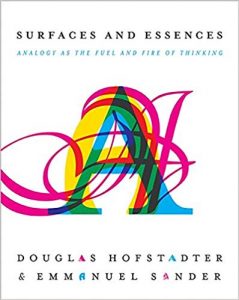
- Surfaces and Essences · Douglas Hofstadter
- A Brief History of Time · Stephen HawkingRecommended 5 times
- On the Origin of Species · Charles DarwinRecommended 4 times
- A Walk in the Woods · Bill Bryson
- The Advancement of Learning · Sir Francis Bacon
- The Black Swan · Nassim Nicholas TalebRecommended 4 times
- The Structure of Scientific Revolutions · Thomas KuhnRecommended 3 times
- The Eighth Day of Creation · Horace Freeland Judson
- The Big Picture · Sean Carroll
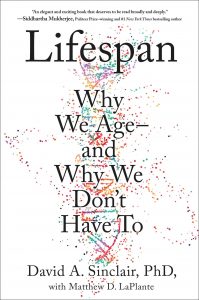
Books by David Sinclair: Lifespan
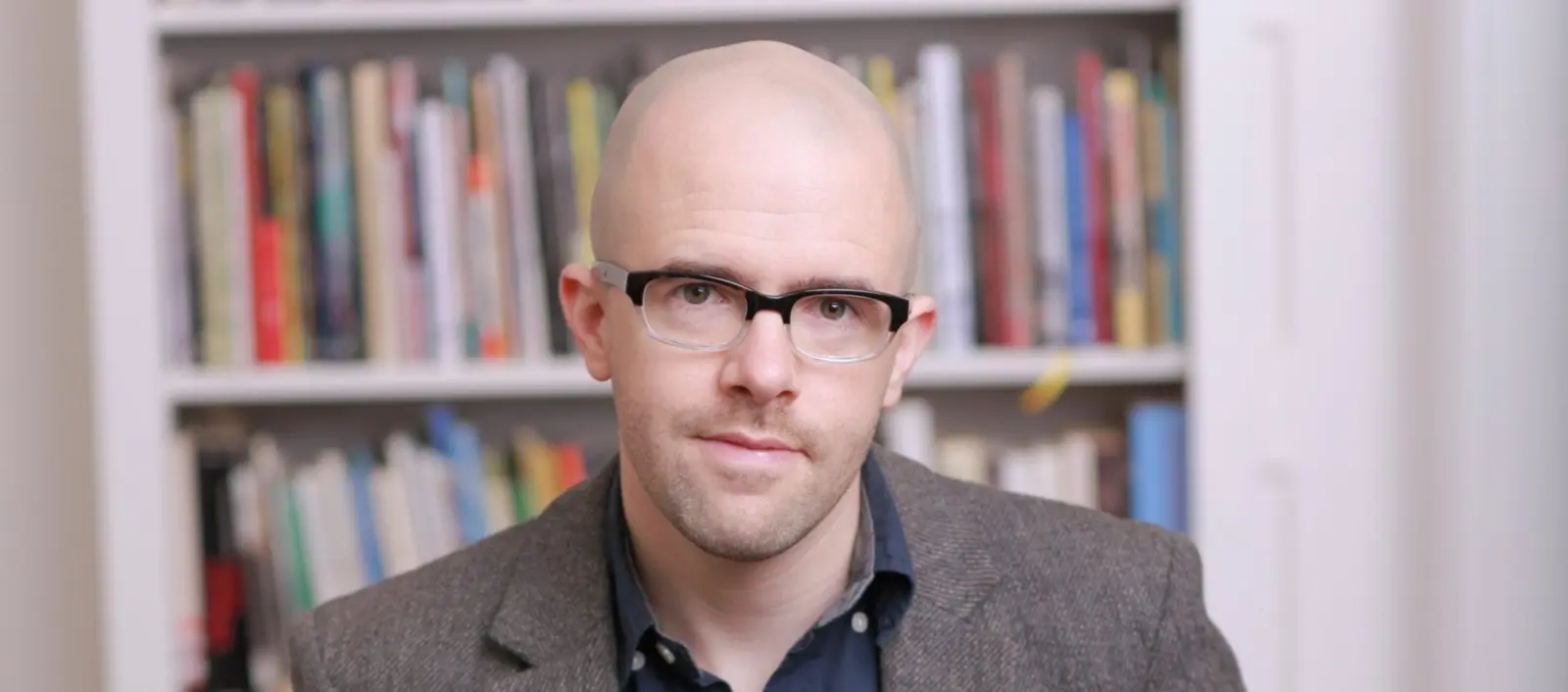
David Sinclair is a professor in the Department of Genetics and co-director of the Paul F. Glenn Center for the Biology of Aging at Harvard Medical School, where he and his colleagues study sirtuins—protein-modifying enzymes that respond to changing NAD+ levels and to caloric restriction—as well as chromatin, energy metabolism, mitochondria, learning and memory, neurodegeneration, cancer, and cellular reprogramming. David Sinclair has suggested that aging is a disease—and that we may soon have the tools to put it into remission—and he has called for greater international attention to the social, economic and political risks and benefits of a world in which billions of people can live much longer and much healthier lives.
David Sinclair is the co-founder of several biotechnology companies and is on the boards of several others. He is also co-founder and co-chief editor of the journal Aging. He is an inventor on 35 patents and has received more than 35 awards and honors. In 2014, he was on Time Magazine’s list of the “100 Most Influential People in the World,” and listed as Time’s Top 50 in healthcare in 2018. The most recent book from David Sinclair is entitled Lifespan, a paradigm shifting book on aging. Please enjoy our interview with David Sincliar.

How do you describe your occupation?
“Occupation” doesn’t really capture what I do. I am a teacher, scientist, entrepreneur, advisor, and communicator. My day job is training students and working with a team of brilliant people whose goal is to make giant leaps in knowledge that will impact humanity. As an entrepreneur and innovator, my job is to bring teams of people together and find enough resources to allow them to make practical use of scientific discoveries.
What is something about you that people might find surprising?
I like to draw. I drew all 28 characters in my book Lifespan. I also have a workshop at home where I build things – decks, stairs, boardwalks. I have a sign at the door that says “this is my happy place.”
What are you reading at the moment and what made you want to read it?
I usually read multiple books at the same time. The latest one is The Intelligence Trap – Why Smart People Make Dumb Mistakes by David Robson. My father gave it to me for my 50th birthday. I think he was trying to send me a message.

What was your favourite book as a child and why?
At the age of 6 my favorite book was Winnie the Pooh by A.A. Milne. It featured in my new book. My grandmother, who lived in Hungary during World War Two and its aftermath would tell me “Six is the best age. Never grow up. Adults ruin everything. Remain childlike and optimistic, like Christopher Robin.”

When did you fall in love with reading?
I have devoured books since I was four. I started reading encyclopedias and any science or technical book I could get my hands on.
What was the last book you purchased, and why did you buy it?
I buy a book about one every 2 weeks. The last one was Talking to Robots: A Brief Guide to Our Human-Robot Futures by David Ewing Duncan. I was at David’s book launch and have loved David’s writing over the past 20 years.

What are perfect reading conditions for you?
Quiet. At home, with three kids and three dogs, I have been known to wear earplugs and noise-cancelling headphones.
What book have you found most inspiring, what effect did it have on you?
At the age of 18, I fell in love with The Blind Watchmaker by Richard Dawkins, for its novelty, clarity and rationality. It taught me that scientists can write amazing books and inspired me to write one. How the Mind Works by Steven Pinker was another big influence.


What’s the most obscure book you own; how did you discover it?
My wife and I collect old books from the 16th century onward. We have a collection of the works of Aristotle printed in 1570, which was given as a prize to student at my wife’s school in Germany in 1740, when it was already a very old book.
What’s the best book you’ve read in the last 6 months?
Black Holes and Time Warps: Einstein’s Outrageous Legacy by Kip Thorn. I read this to my children out loud. It’s perfect for young minds.

What is your proudest achievement?
Career-wise it has been making discoveries about what makes the aging clock tick and how to reverse it. Getting knighted in my home country of Australia. I’m also very proud of my family – my wife and my three children.
If you were trying to impress a visitor, which book that you own would you leave on the coffee table?
Surfaces and Essences by Douglas Hofstadter. It’s a brilliant synthesis of style, form, function and science that baffles the mind.
If an alien landed in your garden; which three books would you gift them to showcase humanity in the best possible way?


What is the book that you feel has had the single biggest impact on your life? What impact did it have?
The Advancement of Learning by Sir Francis Bacon. The book that launched the Age of Enlightenment.

Are there any books you haven’t mentioned that you feel would make your reading list?


Which book sat on your shelf are you most excited about reading next and why?
The Big Picture by Sean Carroll. I heard Sean give a speech and I’m curious what goes on in his big brain.

If you’d like to learn more about David Sinclair, you can find him on his website and on Twitter.
Photo Credit: Rick Groleau and Jake Miller
As an Amazon Associate we earn from qualifying purchases made through links on this page.