
Sarah Brosnan: A Sense of Fairness
Sarah Brosnan’s reading list
16 books mentioned in this interview
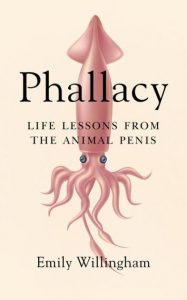
- Phallacy: Life Lessons from the Animal Penis · Emily Willingham
- Pippi Longstocking books · Astrid Lindgren
- The Once and Future Witches · Alix Harrow
- Fundamental Concepts of Inorganic Chemistry · Esmarch Gilreath
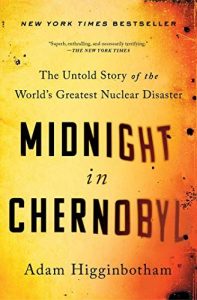
- Midnight in Chernobyl: The untold story of the world’s greatest nuclear disaster · Adam Higginbotham
- Cooperation and Conflict: The interaction of opposites in shaping social behavior
- The Book of Joy: Lasting Happiness in a changing world by the Dalai Lama, Archbishop Desmond Tutu, and Douglas Abrams
- A History of the World in 100 Objects · Neil MacGregor
- The Complete Calvin and Hobbes · Bill Watterson
- Passions Within Reason: The strategic role of the emotions · Robert Frank
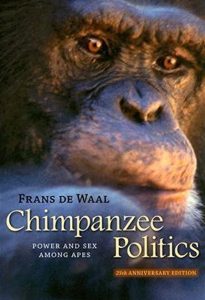
- Chimpanzee Politics · Frans de Waal
- How Monkeys See the World · Dorothy Cheney and Richard Seyfarth
- Manipulative Monkeys: The capuchins of Lomas Barbudal · Susan Perry and Joseph Manson
- Animal Social Complexity: Intelligence, Culture and Individualized Societies · Frans de Waal and Peter Tyack
- Primate Psychology · Dario Maestripieri
- The Constant Rabbit · Jasper Fforde
Dr. Sarah Brosnan is a Distinguished University Professor in the departments of psychology and philosophy and the Neuroscience Institute at Georgia State University, Co-Director of the Language Research Center, and Director of the 2CI in Primate Social Cognition, Evolution and Behavior Fellows program. Sarah’s research has been funded by NSF, NIH, the National Academies Keck Futures Initiative (NAKFI), the Templeton World Charity Fund, the John Templeton Foundation, and the Austrian Science Foundation. She is an Editor for Proceedings of the Royal Society of London, Series B and the American Journal of Primatology, and serves on several editorial boards. Sarah Brosnan has published more than 150 papers and chapters in outlets
Sarah Brosnan is a Fellow of the APA and SESP and was a fellow to both the Kavli/NAS Chinese and German American Frontiers in Science programs, sitting on the organizing committee for the Chinese Frontiers. Sarah Brosnan has served in several capacities for the APA. She has won numerous awards for her mentoring and research. In 2009, Sarah Brosnan was named one of the 150 most influential alumni in the 150-year history of her alma mater, Baylor University.
Please enjoy my interview with Sarah Brosnan…
How would you describe what you teach to a 7-year-old?
Have you ever been working on a project or a task and thought that it would be easier if you could work together with someone else? Or been working with one person and thought that someone else would help you even more? I study what makes people and monkeys decide who they want to cooperate with and when they want to find another partner to work with instead. It is really important to study other animals, like monkeys and apes, in part because it is fun to learn what other animals can do, and in part to better understand why we evolved to be so good at cooperation.
One question that I’m particularly interested in is how we keep working together when someone else is getting more than we are. Think about how mad you would be if your teacher asked you and a friend to help tidy the art supplies, and then gave your friend a huge chocolate bar as a thank you and all you got was an M&M. You’d probably get pretty upset because that isn’t fair at all! It turns out that some animals react this way, too; if you give one monkey a grape and another a piece of cucumber for doing the same task, the one who got the cucumber piece will refuse to keep working, even though they normally like cucumbers (although as I’m betting you guessed, they like the grapes better than cucumbers). This is really important for us to study because often when we are working together, one person gets more, so how do we keep cooperating even if we’re upset that we got less? My research suggests that it matters a lot whether your partner tries to make things fair – if they do, you will keep cooperating even if you got less this time and maybe things will work out better next time.
What is something about you that people might find surprising?
I never listen to music or podcasts in the car. I spend so much of my day around other people, whether it is my students, my colleagues, or my kids, that the car is about the only place I can have complete silence. I usually spend my car rides thinking about my newest research project or a paper I am writing because I can do it with no distractions at all.
What are you reading at the moment and what made you want to read it?
I have just started reading Phallacy: Life Lessons from the Animal Penis by Emily Willingham. I got it as a present and so far, it is fantastic. It combines animal behaviour, fun facts and illustrations, and a serious discussion about how humans fit into the animal kingdom with a fun writing style and good science. It’s hard to ask for a better book than that!

What was your favourite book as a child and why?
There were a lot of books that I read over and over, but if I had to pick one, it would be the Pippi Longstocking books by Astrid Lindgren. I loved Pippi! She was independent and fearless, and always had an idea for something fun to do. I would have loved to have been like Tommy and Annika, who got to go with Pippi on all of her adventures.

A lot of your research involves primates; what is the most amazing discovery you have found during this research?
My favorite result so far is finding that some other primates care when they get treated inequitably, at least in certain circumstances, just like humans do. In some sense it’s not surprising at all; the main reaction of many people to whom I speak is to wonder why this was ever in question in the first place, as it seems so obvious to them. But having a sense of fairness is such a quintessential human feature that finding that other species share elements of it drives home the similarity between us and the other primates. It also emphasizes how important the sense of fairness is for humans; we don’t just expect equity because our kindergarten teachers told us to share, but because this expectation is so important for cooperation that it is apparently broadly present in the animal kingdom.
What was the last book you purchased, and why did you buy it?
The Once and Future Witches by Alix Harrow. With the pandemic, I rarely get the chance to go to a real bookstore, but I did recently and got to spend some time quietly browsing. I was looking for a fun fiction book, and the story sounded fantastic (it was!), but I have to admit, too, that part of what attracted me in the first place was that it has a great cover.

What are the perfect reading conditions for you?
In the summer, I like to be sprawled in the sun in a comfortable chair with something cold to drink, and in the winter, curled up under a blanket on the couch, in front of the fireplace, with a mug of hot tea. Ideally, I will have hours to get immersed in the book with no distractions. That doesn’t happen very often in my life, but I cherish the times it does.
You’ve achieved a lot in your career already, what would you say is your proudest achievement?
I love mentoring, and a few years ago when I won my College’s inaugural Graduate Mentoring Award. To be recognized for doing such a good job, amid so many of my colleagues who are also excellent mentors, was amazing, but what meant the most was that I was nominated by my students.
What’s the most obscure book you own; how did you discover it?
Fundamental Concepts of Inorganic Chemistry by Esmarch Gilreath. Esmarch was my great uncle, and I knew he was a chemistry professor, but I didn’t realize until I was an adult that he published several books, too. I found this one on a shelf when we were cleaning out my grandmother’s house (he was her brother-in-law). It was published so long ago that it probably is largely outdated, but it is a lot of fun to have around.

What’s the best book you’ve read in the last 6 months?
Oh, that’s really tough because I’ve read a lot of good ones recently! If I have to pick, my favorite was Midnight in Chernobyl: The untold story of the world’s greatest nuclear disaster by Adam Higginbotham. I thought I knew the story of the Chernobyl disaster, but reading about the series of human errors that both initiated and then exacerbated it was astonishing. It makes it clear why we need transparency and multiple layers of accountability to try to minimize the incidence of – and impact of – mistakes. The good news is that, according to Higginbotham’s findings, the long term impacts have been less severe than feared. Aside from being a compelling book, it is extremely well written.

I really enjoyed your TED talk on why monkeys (and as a consequence, humans) are wired for fairness. Who wants cucumber when you can have grapes, right?! How did this discovery change how you viewed the world?
Thank you! That talk was a lot of fun to do. And absolutely, the desire to have the same as everyone else is so fundamental to humans – no one wants a cucumber when everyone else is getting a grape! Although a lot of scientists didn’t think that other primates were attuned enough to their partners’ outcomes to notice, much less care, if their partner got more, to me, fairness always seemed to be basic to humans, a trait that was shaped by culture and experience, of course, but not dependent on it. Thus, finding that even monkeys care enough to reject a food they normally like when someone else gets something better emphasizes the biological importance of the behavior. Although I have always cared about fairness, this has made me even more attuned to it. Of course, I can’t make everything perfectly fair; everyone sees the world differently and puts different weight on different aspects of the situation, so that would be impossible to do. But I am very careful to assess the situations I have control over, for instance with my kids or my students, to see whether they are being mediated as equitably as possible, and at least explain my rationale for my decisions. They still may not agree with me, but they know that I thought about it and tried, which I think is important.
If you were trying to impress a visitor, which book that you own would you leave on the coffee table?
I have to admit, it would be mine! I co-edited a book with my late colleague Walt Wilczynski, Cooperation and Conflict: The interaction of opposites in shaping social behavior that was just published this month.

If an alien landed in your garden; which three books would you gift them to showcase humanity in the best possible way?
First, I’d give them The Book of Joy: Lasting Happiness in a changing world by the Dalai Lama, Archbishop Desmond Tutu, and Douglas Abrams. It encapsulates the resilience of the human spirit and the amazing forgiveness and altruism people can find for others, even in the case of seemingly insurmountable trials. This represents the best impulses of humanity, even in the face of the worst.
Second, I would give them A History of the World in 100 Objects by Neil MacGregor to summarize the history of the human species. Really any number of history books would be excellent, but I picked this one because it is global in scope and focuses on human invention, which is a strength of humanity.
Finally, I would give them The Complete Calvin and Hobbes by Bill Watterson. To me, this book showcases the importance of imagination and play in humans better than any other book I can think of, not to mention that, along with A History of the World, it highlights the impressive creativity and artistry of humans.
- The Book of Joy: Lasting Happiness in a changing world by the Dalai Lama, Archbishop Desmond Tutu, and Douglas Abrams
 The Book of Joy: Lasting Happiness in a changing world by the Dalai Lama, Archbishop Desmond Tutu, and Douglas Abrams
- A History of the World in 100 Objects by Neil MacGregor
 A History of the World in 100 Objects by Neil MacGregor
- The Complete Calvin and Hobbes by Bill Watterson
 The Complete Calvin and Hobbes by Bill Watterson
What is the book that you feel has had the single biggest impact on your life? What impact did it have?
One of the books I read early in graduate school was Passions Within Reason: The strategic role of the emotions by Robert Frank. At the time, it was one of the few books arguing that one of the main drivers of decision making was our emotional reactions, which was consistent with what I was observing in the monkeys, whose responses seemed to be driven by frustration, enjoyment, or the like, not some sort of calculation of their available options. Frank’s view shaped how I considered decision-making as I developed my research program and interpreted the data I collected.

What are your favourite books on the study of primate behaviour?
There are so many good ones! One of the best is Chimpanzee Politics by Frans de Waal. This book tells the saga of three males’ struggle for dominance in the chimpanzee colony at Berger’s Zoo in Arnhem, the Netherlands. Two of the males formed an alliance that allowed them to maintain dominance over the strongest male, but that only lasted so long as they could get along. It reads almost like a soap opera of their relationships, but you will learn an enormous amount about primate behaviour along the way.
How Monkeys See the World by Dorothy Cheney and Richard Seyfarth is another excellent one. They pioneered field experiments of cognition, and this first of their two books documents their original work using playback experiments to understand what vervet monkeys knew about their social world.
Manipulative Monkeys: The capuchins of Lomas Barbudal by Susan Perry and Joseph Manson is an entertaining account of the social behavior and cognition of their population of capuchins in Costa Rica. They have followed them for years and have documented some unique behaviors, including culturally transmitted “games” that appear to function to cement social bonds.
For anyone who wants to read a bit deeper, there are several excellent edited volumes that cover a broader range of topics, with chapters written by experts in each area. Two of my favourites are Animal Social Complexity: Intelligence, Culture and Individualized Societies by Frans de Waal and Peter Tyack and Primate Psychology by Dario Maestripieri.
- Chimpanzee Politics by Frans de Waal
 Chimpanzee Politics by Frans de Waal
- How Monkeys See the World by Dorothy Cheney and Richard Seyfarth
 How Monkeys See the World by Dorothy Cheney and Richard Seyfarth
- Manipulative Monkeys: The capuchins of Lomas Barbudal by Susan Perry and Joseph Manson
 Manipulative Monkeys: The capuchins of Lomas Barbudal by Susan Perry and Joseph Manson
- Animal Social Complexity: Intelligence, Culture and Individualized Societies by Frans de Waal and Peter Tyack
 Animal Social Complexity: Intelligence, Culture and Individualized Societies by Frans de Waal and Peter Tyack
- Primate Psychology by Dario Maestripieri
 Primate Psychology by Dario Maestripieri
Which book sat on your shelf are you most excited about reading next and why?
The Constant Rabbit by Jasper Fforde. I have been a fan of Fforde’s for a long time, and I have had it for a few months, but am waiting for a calm weekend when I can read this one in one sitting. The fact that the storyline relates to my research interests makes it all the better!

If you’d like to learn more about Sarah Brosnan and her fascinating research, head to her website or find her on Twitter.
As an Amazon Associate we earn from qualifying purchases made through links on this page.
You might also like

Christine Carter: Books that Provide Inspiration and Hope
Interview · 10 April 2021

Michael Pitts: The Intensity Of Filmmaking
Interview · 29 July 2017

Kayla Rae Whitaker: More Journey Than Destination
Interview · 26 June 2017
Daniel Oppenheimer: More Magical Than Previously Believed
Interview · 21 March 2018