Sam Guglani: Reading Is A Gift
Sam Guglani’s reading list
9 books mentioned in this interview
- On Balance · Sinead Morrissey
- The Book of Dust · Philip Pullman
- H(A)PPY · Nicola Barker
- Tom’s Midnight Garden · Philippa Pearce
- The Selfish Gene · Richard DawkinsRecommended 6 times
- The Passion · Jeanette Winterson
- Four Quartets · T.S. Eliot
- The Bhagavad GitaRecommended 3 times
- The Essex Serpent · Sarah PerryRecommended 3 times
Books by Sam Guglani: Histories
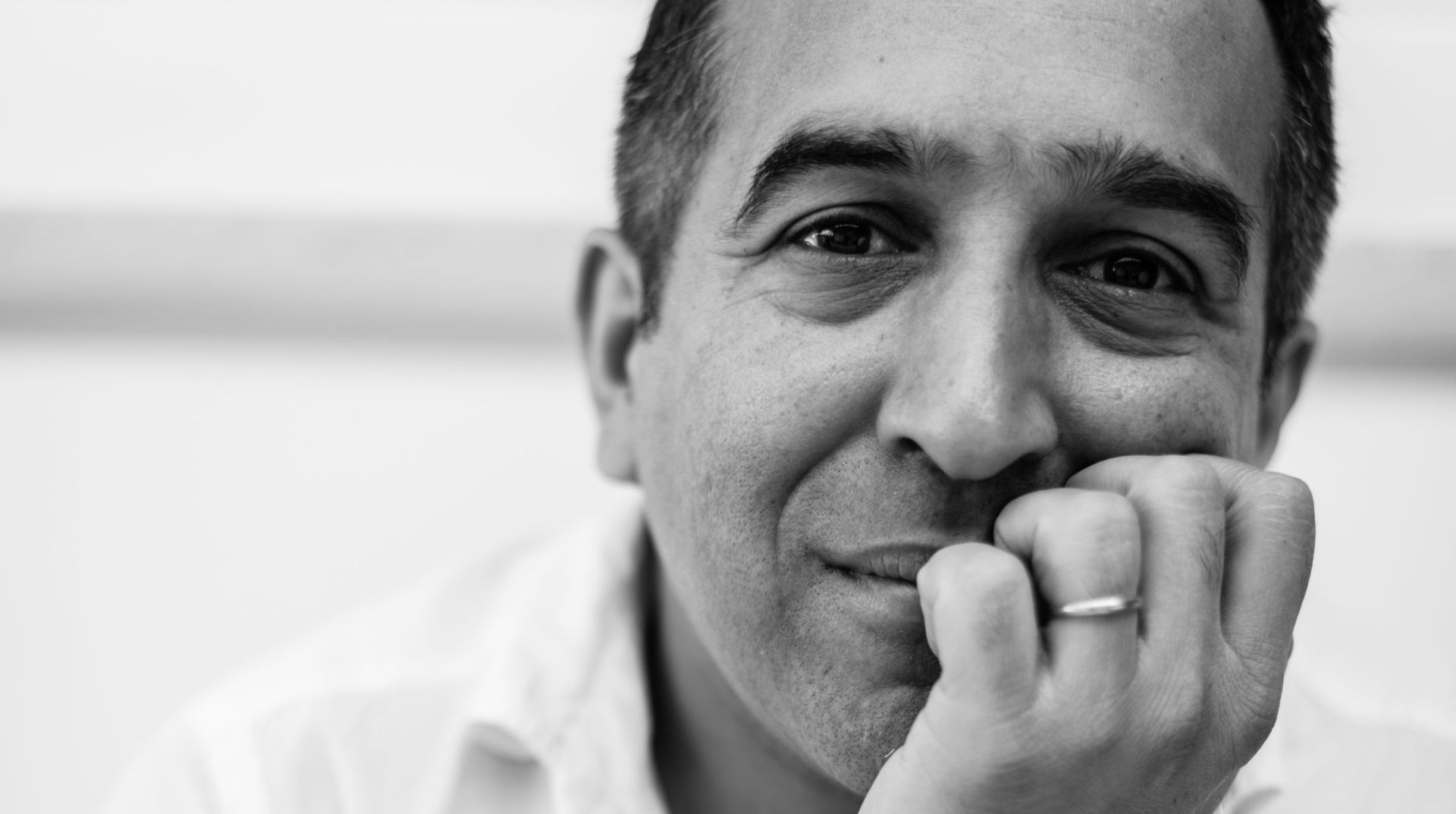
Sam Guglani is a doctor and writer. He is Director and Curator of Medicine Unboxed, a project he founded in 2009 to engage health professionals and the public in conversation around medicine, illuminated through the arts. Sam Guglani is a Consultant Clinical Oncologist in Cheltenham. His debut fiction, Histories, published by riverrun, a new imprint of Quercus Books, has received positive reviews. Please enjoy my interview with Sam Guglani.

When someone asks you ‘what do you do for a living?’ – How do you respond?
I say I’m a doctor, which still comes out with an apologetic cough, twenty years in. I’m unlikely to ever manage ‘writer.’ To me, medicine and writing are both necessary explorations of meaning in the world.
What are you reading at the moment?
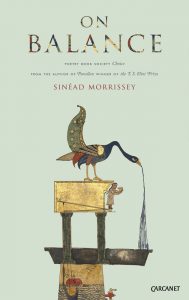
On Balance by Sinead Morrissey; The Book of Dust by Philip Pullman; H(A)PPY by Nicola Barker. But there’s a shelf of books waiting to be read. Then, downstairs, another room of them. I’m caught between terror and joy around all the things waiting to-be-read.


When you think about your childhood, what book comes to mind?
Tom’s Midnight Garden by Philippa Pearce. I was completely gripped by it, its maze of time and memory. I remember being very moved at the end, perhaps for the first time by a book, which was, in hindsight, precious and transforming. There was also this picture book, when I was much younger, in which a boy’s bed takes flight with his birthday balloons attached to it. It was beautiful, wondrous. I wish I knew its name and could find it again.

Can you remember the first non-fiction book you loved?
The Selfish Gene by Richard Dawkins. I read this when I was 17, studying for my Biology A’ Level and applying to medical school. It blew me away then, in its rendition of life and – whatever disparate arguments there are now around Dawkins ideas – the presentation of tectonic forces and layers beneath the pedestrian surface of humanity and the meaning we attach to it. It was dizzying.

What did you want to be when you were growing up?
Always a doctor (once I’d got over flight). But there was a particularly formative moment at school – the most formative moment? – when I was 14 and my English teacher read my short story out to the class. I felt, briefly, solid and connected, like I had a voice, and writing felt essential and important as a means towards this.
What do you think your school aged self would think of the present day you?
I used to think he’d feel disappointment but, more recently, I think he’d feel recognition, maybe even love. As T. S Eliot says: The end of all our exploring/ Will be to arrive where we started/ And know the place for the first time.
If you could wrap up a single book and gift it to yourself as you left education – which book would it be and why?
The Passion by Jeanette Winterson: for its incitement to language, the idea and possibility of love, the belief in fairy tales, and the demonstration that life is both beautiful and cruel.

Does your reading have routine? Is there a particular time or place that you like to read?
Not really! For me, the best reading (and writing) happens in accidental, almost stolen moments. I love the train, though, for both.
Can you talk us through your research process when preparing for a new book?
I haven’t one. It’s fitted and slotted around the day job and family life. Ideas and possibilities arrive half way through a long run or walk (or train journey!) – these things have a way of loosening rigid neural structures, finding metaphors and connections.
Which book has had the biggest impact on your career so far? How did it impact it?
Four Quartets by T.S. Eliot. It showed me that there are numerous ways of interrogating reality, and that language has force even ahead of its rational content.

What two pieces of advice would you give a young aspiring writer?
-
Actually do it: write. That sounds straightforward but … gosh! … the defences we mount against sitting down and doing that, exposing ourselves in that way, both to ourselves and others!
-
As per W.S. Graham’s advice, in his poem Johann Joachim Quantz’s Five Lessons: Do not expect applause.
Do you have any books that you strongly associate with someone important in your life?

What book have you recommended the most to friends and family?
So many, depending on where I’m at, where they’re at. Books can be like drugs in that way, particular and precise and targeted.
Do you prefer fiction or non-fiction?
Fiction. It’s so much truer.
Do you think reading is important?
Yes. Reading is a gift and, if you think about it, such a miracle, that we have it: marks on a page that reveal worlds, reveal us to ourselves, reveal others to us.
What’s the best book you’ve read in the last 6 months?
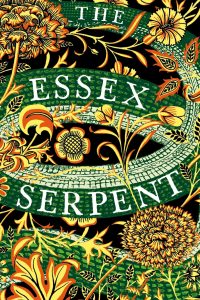
The Essex Serpent by Sarah Perry: its sheer immersive storytelling, the amazing cast of characters, the Victorian world it inhabits which – surprise, surprise! – isn’t so different from ours, its brazen engagement with politics, its exploration of fear, and its love story which – to me, at heart – is one between science and religion, both gazing in wonder at an unfathomable world.

Do you prefer real books or digital books?
Are they not both real? But I prefer the physical object of a book, its paper: the touch and smell and weight of it, that it is a thing in the world, an opened Pandora’s Box.
Are there any books you haven’t mentioned that you feel would make your reading list?
So many, probably everything I’m still to read
What books or subject matter do you plan on reading in the next year?
Huge piles of to-be-reads.
If you were to write an autobiography – what would it be called?
‘Apologies.’
If you’d like to learn more about Sam Guglani, you can find him on his Twitter.
Image credit: Diana Patient
As an Amazon Associate we earn from qualifying purchases made through links on this page.