Rebecca Goldstein: An Exhilaratingly Expansive Experience
Rebecca Goldstein’s reading list
13 books mentioned in this interview
- All-Of-A-Kind Family · Sydney Taylor
- The Republic · PlatoRecommended 13 times
- Meditations on First Philosophy · DescartesRecommended 3 times
- Inquiry Concerning Human Understanding · David Hume
- Middlemarch · George EliotRecommended 11 times
- What Maisie Knew · Henry James
- To the Lighthouse · Virginia WoolfRecommended 4 times
- Spinoza’s Ethics
- Betraying Spinoza: The Renegade Jew Who Gave Us Modernity
- Truth and Truthfulness · Bernard Williams
- Enlightenment Now: The case for Reason, Science, Humanism, and Progress · Steven PinkerRecommended 8 times
- Off The Charts: The Hidden Lives and Lessons of American Child Prodigies · Ann Hulbert
- 36 Arguments for the Existence of God: A Work of Fiction
Books by Rebecca Goldstein: The Mind-Body Problem, Plato at The Googleplex: Why Philosophy Won’t Go Away
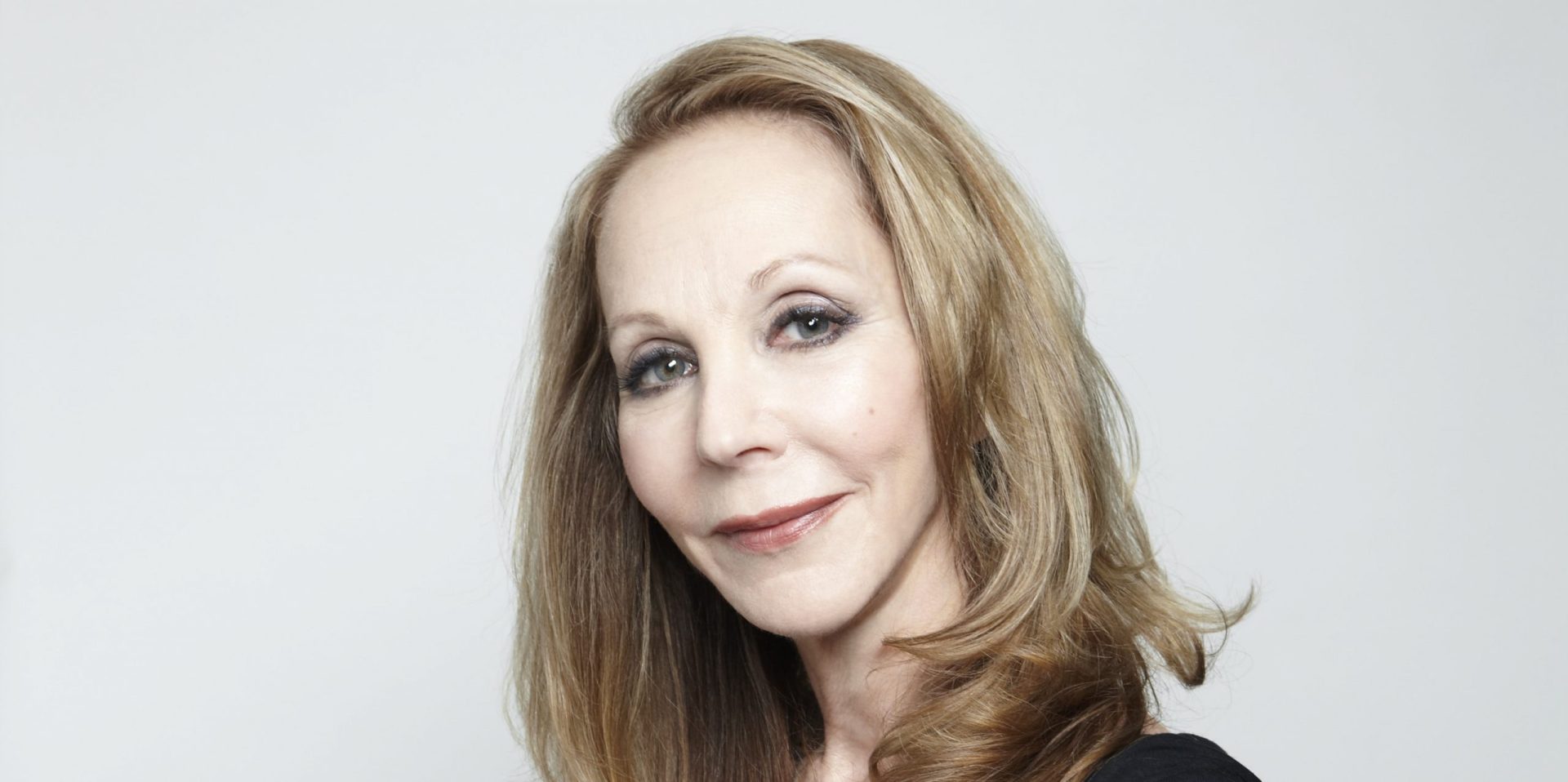
Rebecca Goldstein grew up in White Plains, New York, and graduated summa cum laude from Barnard College, receiving the Montague Prize for Excellence in Philosophy, and immediately went on to graduate work at Princeton University, receiving her Ph.D. in philosophy. While in graduate school Rebecca Goldstein was awarded a National Science Foundation Fellowship and a Whiting Foundation Fellowship. After earning her Ph.D. she returned to her alma mater, where she taught courses in philosophy of science and philosophy of mind and philosophy of mathematics. It was some time during her tenure at Barnard that, again to her own surprise, Rebecca used a summer vacation to write her first novel, The Mind-Body Problem. Rebecca Goldstein has gone on to write numerous more novels. However, her latest work of non-fiction is Plato at The Googleplex: Why Philosophy Won’t Go Away. In 1996, Rebecca Goldstein became a MacArthur Fellow, receiving the prize which is popularly known as the “Genius Award.” In September of 2015, she was awarded the National Humanities Medal by President Obama in a ceremony at the White House. The citation reads “for bringing philosophy into conversation with culture. Please enjoy my interview with Rebecca Goldstein.


How do you describe your occupation?
I’m a professor of philosophy and a novelist.
Talk us through a typical day for you…
I don’t have any typical days. I’m an obsessive, so whatever has grabbed my attention gets my whole attention, usually for days and days.
What are you reading at the moment and what made you want to read it?
I’m reading all the works of the 20th century, British philosopher Bernard Williams because I find his intuitions extremely useful to the topics I’m thinking about right now in moral philosophy. In particular, Williams detested the moral theory known as Utilitarianism. In fact, he detested all moral theories, since he felt that none could do full justice to the most morally salient of all facts, which is the importance of the individual, richly understood. Moral theories tend to look at humans at a very abstract level, aggregating over them in such a way as to wipe out their individuality.

Can you remember the first book you read by yourself?
My family was poor, and we didn’t own many books. There was only one book suitable for a child, and it was All-Of-A-Kind Family by Sydney Taylor. It was about a poor Jewish family living on the Lower East Side of New York City. There were five daughters and they had lots of adventures I could relate to. I still can recite many pages of that book by heart.

Are you a page folder or a bookmarker?
Bookmarker.
When did you fall in love with reading?
My mother had the idea that children shouldn’t learn to read before they went to school, or else they would become disciplinary problems in school. Supposedly, this had happened to one of the cousins. But my older sister, Mynda, took pity on me and tentatively taught me my letters and how to make the sounds of them blend together. So, of course, I loved reading from the very beginning, since it was my secret. I did sometimes get yelled at in school for dreaming when I was supposed to be listening, but I’m not sure that wouldn’t have happened anyway.
What are perfect reading conditions for you?
Not having a young child nearby distracting me.
For someone starting out in your career, which three books would you make required reading and why?
I have two quite different careers, as a philosopher and as a novelist. It’s easier to assign three books for the first. They would be The Republic by Plato, Meditations on First Philosophy by Descartes, and Inquiry Concerning Human Understanding by David Hume. As far as becoming a novelist, I have no specific suggestions other than to read widely, deeply, passionately. There are so many different kinds of novelists, so find the three books that represent, for you, the very pinnacle of the art, and read them, again and again, to see what makes them so enchanting. For me, it would be Middlemarch by George Eliot, What Maisie Knew by Henry James, and To the Lighthouse by Virginia Woolf.
- The Republic by Plato
 The Republic by Plato
- Meditations on First Philosophy by Descartes
 Meditations on First Philosophy by Descartes
- Inquiry Concerning Human Understanding by David Hume
 Inquiry Concerning Human Understanding by David Hume
- Middlemarch by George Eliot
 Middlemarch by George Eliot
- What Maisie Knew by Henry James
 What Maisie Knew by Henry James
- To the Lighthouse by Virginia Woolf
 To the Lighthouse by Virginia Woolf
If you could invite 5 authors (dead or alive) to a dinner party – who would they be and why?
Plato, Baruch Spinoza, David Hume, George Eliot, William James (and I’d ask him to bring along his brother Henry as his date).
What was the last book you purchased, and why did you buy it?
It’s a guide to reading Spinoza’s Ethics by Beth Lord, simply called Spinoza’s Ethics. I purchased it because somebody who had read my book Betraying Spinoza: The Renegade Jew Who Gave Us Modernity, was inspired to read Spinoza for himself, but, finding it quite difficult, had purchased Lord’s book and then wrote to me, asking if I thought it was any good. Well, I hadn’t read it, so I ordered it so that I could respond to him.


What is your favourite thing about reading?
That’s like asking me what’s my favourite thing about being alive.
What’s the best book you’ve read in the last 6 months?
Truth and Truthfulness by Bernard Williams. It’s a brilliant corrective to the kinds of reckless theories about truth that have been afloat for several years in the academy—the kinds of theories that festoon the word truth with ironic scare quotes, in order to convey a supercilious irony toward the whole idea of objective truth. Truth and Truthfulness is particularly relevant right now since these reckless ideas have escaped the Academy and are now out in the public square, making mischief in such notions as “post-truth” and “alternative facts.”

If you could insert yourself into any book, which would you pick and why?
Middlemarch by George Eliot, because I would like to see myself presented by the subtle and capacious intelligence of George Eliot. There is nothing that would remain hidden to her, so it would take courage.
Name a book that you feel everyone would benefit from reading and explain why.
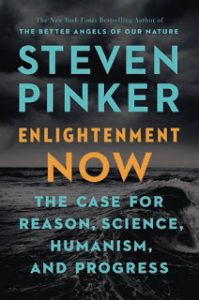
Enlightenment Now: The case for Reason, Science, Humanism, and Progress by Steven Pinker. We have a great tendency to take for granted the progress that we’ve made, over the course of human history. Pinker argues that it’s been science and reason, including moral philosophy, which have steadily and cumulatively improved conditions for human flourishing. I honestly believe I’d recommend this book even were Steven Pinker, not my beloved husband.

What is the book that you feel has had the single biggest impact on your life? What impact did it have?
Ethics by Spinoza. This is the work that I most love to teach, because something transformative happens to the class over the course of the semester, as they slowly make their way into his radical ways of seeing the world and seeing themselves, of seeing themselves in relation to the world. The work is written in such a way as to hide the great emotional impact that it slowly builds toward, and it’s my responsibility, as the teacher, to take them past the seeming rigidity of its formal proofs into its fiercely beating heart, and show them its relevance to their own lives. It’s an exhilaratingly expansive experience, and seeing it in my students, I relive it again.
Which book sat on your shelf are you most excited about reading next and why?
Off The Charts: The Hidden Lives and Lessons of American Child Prodigies by Ann Hulbert. I’m terrifically interested in prodigies, particularly math and music prodigies. My last novel, 36 Arguments for the Existence of God: A Work of Fiction, had featured a mathematical prodigy. There is something profoundly fascinating and moving about the power of genius coupled with the vulnerability and innocence of the child. It is one of those outlying phenomena highlighting the infinite potentials of human nature.


If you’d like to learn more about Rebecca Goldstein, you can find her on her website and Twitter.
As an Amazon Associate we earn from qualifying purchases made through links on this page.


