MM McCabe: Fast Stories and Slow Philosophy
MM McCabe’s reading list
26 books mentioned in this interview
- The Wardrobe Mistress · Patrick McGrath
- Stories from the Iliad
- Meno · PlatoRecommended 4 times
- Physics · Aristotle
- Paradoxes
- Morality
- The RepublicRecommended 13 times
- Into the Heart of Borneo · Redmond O’Hanlon
- Just So Stories · Rudyard KiplingRecommended 3 times
- A Room of One’s Own · Virginia WoolfRecommended 3 times
- The Handmaid’s Tale · Margaret AtwoodRecommended 20 times
- The Theaetetus of Plato · Myles Burnyeat
- Ethics and the Limits of Philosophy · Bernard Williams
- Word and Object
- Jokes, Philosophical Thoughts on Joking Matters
- These Old Shades
- The Murder of Roger Ackroyd
- The Heart is a Lonely Hunter · Carson McCullers
- If This Is a Man · Primo LeviRecommended 3 times
- What Maisie Knew · Henry James
- Free Speech · Timothy Garton Ash
- Why I’m No Longer Talking To White People About Race · Reni Eddo-Lodge
- Belonging · Simon Schama
- An Odyssey, A Father, a Son and an Epic · Daniel Mendelsohn
- Life in the Garden · Penelope Lively
- The Secret Barrister: Stories of the Law and How It Is Broken
Books by MM McCabe: Plato on Punishment, Plato’s Individuals, Plato and his Predecessors: The Dramatisation of Reason, Platonic Conversations
MM McCabe works on ancient philosophy, ethics and the philosophy of medicine. Her publications focus on Plato, Aristotle and the pre-Socratics, with the occasional foray into Stoicism. MM McCabe is the author of Plato on Punishment (1981); Plato’s Individuals (1994); Plato and his Predecessors: The Dramatisation of Reason (2000); and Platonic Conversations, a collection of published essays, will be published by Oxford University Press in 2015. She was educated at Oxford High School for Girls and Newnham College Cambridge. From 1981-1990 MM McCabe was Fellow in Classics at New Hall, University of Cambridge; she moved to King’s College London in October 1990; she retired in 2014. MM McCabe has spent some extended periods in the USA: at Harvard, at the Center for Hellenic Studies in Washington DC, and at Princeton. From 2005-2008 she was a Leverhulme Trust Major Research Fellow. MM McCabe was also President of the British Philosophical Association 2009-12, and she will be President of the Mind Association 2016-7. She is the general editor of the Cambridge University Press series Studies in the Dialogues of Plato. Please enjoy my interview with MM McCabe.


How do you describe what you do for a living?
Well, I suppose I don’t quite have an occupation now, since I am retired; but it seems as though I am still doing pretty much what I have always done, but without teaching (which I loved) and without the grim bits of contemporary academic life (which I often loathed). So I think of myself as a philosopher, or rather as an ‘ancient philosopher’, doing philosophy in the company of ancient texts — especially Plato and Aristotle. So it certainly doesn’t feel like retirement.
What are you reading at the moment and what made you want to read it?
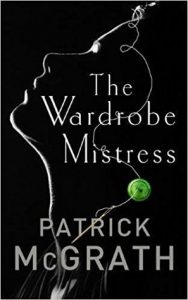
So here I have to disclose an interest: I have just finished my cousin’s book, The Wardrobe Mistress by Patrick McGrath. It is an extraordinary and strange story of a period of British history I knew almost nothing of, London just post war: and the covert activities of the residue of the British Union of Fascists during that difficult period. It works with a shifting narrative voice, which I love — a chorus of narrators whose role in the story is never direct. Very creepy and very atmospheric.

Can you remember the very first book you owned?
(This is horrendously precocious): my mother was a classicist, and the first book she bought me was a tiny children’s ‘Stories from the Iliad, illustrated with wonderful pre-Raphaelite style pictures by Heath Robinson. It was the Lang Leaf and Myers translation, and so beautifully Victorian (‘And Achilles, fleet of foot, donned his armour and went forth onto the plain…’) so that I was already hooked in primary school. I thought Achilles was wonderful, and found Hector rather worthily dull — hardly surprising that when, twenty five years later I came to write about the Iliad, it was Achilles I wrote about.

Page folder or a bookmarker?
Neither, mostly. I have a very bad habit of thinking that it will be obvious when I start reading again where I got to last time. This is a very wasteful approach….. If I am aware that I might get lost, then I use the cover; in dire straits, I turn the page. I am also a shocking marginalia writer…. in pencil, to mitigate the crime, but still. I know this is supposed to be a crime… but I don’t really feel guilty about it: I am helped by the visual clues when I want to find material to think about again; and I don’t think that the physical object, the book itself, is what matters. My texts of Plato are a mess — but I am terrified that if I lose them I shall also lose all the marginalia, and so will have to start all over again.
What would you say is your favourite thing about reading?
I don’t think I have a single answer to this question. I love the process of reading and thinking and disagreeing — especially the slow careful process that goes with reading philosophy. And I love stories — have loved stories all my life, the banal structure of beginning and middle and end (I think this is probably deeply suspect in my thinking about all sorts of other stuff: so I have to keep an explicit grip on it!). But these two things can cut across each other — the stories have their own drive, and I read them fast; if I am reading philosophy I read slowly. Sometimes this means that something that needs a middle-sized reading speed I find the settling to it rather tricky. But that then is part of the excitement, perhaps, figuring out just where I stand.
What advice would you give a novice, looking for an introduction to philosophy?
There is only one way, I think, to be introduced to philosophy — that is to do it. So I rather avoid ‘introduction to philosophy’ books if someone asks me this kind of question: far better to find something engaging and learn on that what I described the long and slow process of reading and thinking and going back and over and over. If someone asks me where to start in ancient philosophy I would suggest something like Meno by Plato, or the second book of Physics by Aristotle, which is direct and challenging without being so difficult as to be impossible to access. In contemporary philosophy, it needs to be done, I think, by coming at individual ideas or theories or arguments: and sometimes this can be driven by puzzlement — one obvious mode of access is through paradox (I mentioned Mark Sainsbury’s accessible and sane Paradoxes) or challenge (a good example here is Bernard Williams short ‘Morality‘). Mark Sainsbury — who was my Head of department many years ago — used to say that philosophy doesn’t have a shallow end. That seems right to me, but not necessarily a problem, so long as those coming to it new are patient and slow. Philosophy does not read at the speed of anything else, I think. So what I said briefly yesterday about reading The Republic is part of the same thought: and it reflects also the answer I gave you about my occupation — there are those who think that ‘ancient philosophy’ is about recording what some old blokes (they are almost always blokes) said. For me, it is a different business: that of engaging in detail and with care with ideas that are unexpected and complex and often alien, where that very difference is what allows us the perspective that philosophy demands.


What’s your favourite book, Mary?
This has to be The Republic by Plato. It is the object of one of my major campaigns, to persuade people that the Republic is so carefully and brilliantly written to make philosophical capital out of every word (I call this ‘Plato wrote nothing in vain’) — so that we need to read much more carefully to understand, for example, what is being suggested here about vision, or about knowledge, or about how best to live (much of which is predicated on thinking of thinking in terms of conversation).
Is there a book you’ve gifted to others most?
Into the Heart of Borneo by Redmond O’Hanlon. It is the account (written by someone I knew when I was at school and he was a very cool undergraduate at Balliol, I hero-worshipped him because he was so humane and so funny) of an improbable explorer, going to Borneo in search of the white rhino. His adventures are brilliantly funny, and always with a deep sense of humanity. This is good especially for people who are sad in hospital!
Second book I give to friends most often: Just So Stories by Rudyard Kipling — they capture all sorts of aspects of the human condition, in wonderful language. The story of the rhinoceros is a perfect analogy for how there are people one encounters in institutional life who are just like the cake-crumbs under the rhinoceros’ skin: impossibly infuriating, and deeply powerful.
Also ran: A Room of One’s Own by Virginia Woolf. Wonderful, familiar account of that sense of being not quite entitled to anything, lurking round the outside of what my daughter calls the patriarchy (and for feminist books, The Handmaid’s Tale by Margaret Atwood goes a long way to nail what other more worthy texts fail to do: although there is some brilliant feminist philosophy that has started to come out recently).
- Into the Heart of Borneo by Redmond O’Hanlon
 Into the Heart of Borneo by Redmond O’Hanlon
- Just So Stories by Rudyard Kipling
 Just So Stories by Rudyard Kipling
- A Room of One’s Own by Virginia Woolf
 A Room of One’s Own by Virginia Woolf
- The Handmaid’s Tale by Margaret Atwood
 The Handmaid’s Tale by Margaret Atwood
Other than Plato, what are some other Philosophy books you’d recommend?
There are many of these, and which ones I enjoy vary from season to season. The master, I think, is The Theaetetus of Plato by Myles Burnyeat. I especially enjoy Ethics and the Limits of Philosophy by Bernard Williams, although it is so allusive that I have to read it once a year. I very much like Mark Sainsbury’s book Paradoxes; and am also a Quine fan, Word and Object. But there are many more… Honourable mention to Ted Cohen’s Jokes, Philosophical Thoughts on Joking Matters which has the extra feature of printing the jokes in bold.
- The Theaetetus of Plato by Myles Burnyeat
 The Theaetetus of Plato by Myles Burnyeat
- Ethics and the Limits of Philosophy by Bernard Williams
 Ethics and the Limits of Philosophy by Bernard Williams
- Paradoxes
 Paradoxes
- Word and Object
 Word and Object
- Jokes, Philosophical Thoughts on Joking Matters
 Jokes, Philosophical Thoughts on Joking Matters
Have you ever given up on a book and not finished it?
Proust… (I deal badly, incidentally, with the ‘genius’ cultivation of Proust or of James).
Which books do you turn to as a guilty pleasure?
(Not sure even now I am prepared to admit this) Georgette Heyer (especially These Old Shades) who is my comfort read, easy and well-shaped and funny (‘who else can get away with attributing to a character ‘you are as drunk as a wheelbarrow’), supplemented by the wonderful Dorothy Dunnett Lymond novels which require quite a lot more attention than Heyer because the plots are impossibly complicated, but the historical context is great. Other guilty pleasures are detective stories, which I prefer in the old-fashioned mode — Dorothy Sayers (not Agatha Christie, apart from The Murder of Roger Ackroyd) especially.


Apart from Philosophy books; which books have had a big impact on your life?
I think The Heart is a Lonely Hunter by Carson McCullers. It is a sometimes desolate, sometimes just matter of fact account of the strange life of a mute living in an isolated US southern town. There is a girl who is the looker-on; McCullers anticipates, and surely inspired, Harper Lee — but she also knocks Henry James into a cocked hat. It seems rather odd for a transformative text; but for me the spare prose, the sense of place and the awful alienation is completely devastating.
If This Is a Man by Primo Levi is the most stunning account of what passed for life in Auschwitz. It has a deep and terrifying moral challenge — do any of our moral emotions survive that kind of dehumanising cruelty? I think that it is essential reading for everyone, especially as some of the lessons of the last century seem not to have been learned — ‘First they came for the [socialists or whoever in whatever version] and I did not speak out because I was not a [socialist] etc.’ This book should, perhaps, be on everyone’s reading list, starting at adolescence; I have been thinking so hard about saying that to you that I forgot to say it in our first conversation.


Are there any books you particularly dislike?
What Maisie Knew by Henry James. Too bloody entitled by half.

Which book sat on your shelf are you most excited about reading next and why?
I have a bad habit of reading too many things at once. At the moment I have a collection of things:
Free Speech by Timothy Garton Ash (I am half way through: challenging and exciting material, defending ten principles to govern public speech in what he calls Cosmopolis, the global world in which we communicate now);
Belonging by Simon Schama, a history of the Jews since the fifteenth century (I am trying to understand the pernicious nature of antisemitism and its horrible ubiquity. Schama is frighteningly knowledgeable, and the story he tells is a fascinating one);
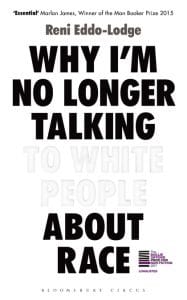
Why I’m No Longer Talking To White People About Race by Reni Eddo-Lodge (I have yet to begin this, but am completely sure that the biases and prejudice that beset us can only be dealt with by understanding just where and when we may stand in a position of advantage. That is banal to say, of course; but the process of uncovering one’s own implicit bias is hard and made harder, I think, by the limitations of what Garton Ash thinks of as cosmopolis — in fact we have as many cosmopoleis as there are people, and we restrict access in whatever ways make us most comfortable — while getting rid of our implicit biases requires us to be *uncomfortable*);
An Odyssey, A Father, a Son and an Epic by Daniel Mendelsohn (again I declare an interest: Daniel is an old friend who writes beautifully about things I care about. I have read some excerpts of this, but have not yet started at the beginning);
Life in the Garden by Penelope Lively (this is comfort reading: my parents grew a magical garden and I find gardens places of peace and excitement too — Penelope Lively writes beautifully about her own gardens, about the history of gardens, and about plants to dream about).
The Secret Barrister: Stories of the Law and How It Is Broken. This is an account of how the UK legal system works; and a fierce and detailed description of just where it has become deformed and made unfit for those who need it: as she or he puts it, it is ‘to explore why criminal justice matters, and to show how I think we are getting it so wrong’.
- Free Speech by Timothy Garton Ash
 Free Speech by Timothy Garton Ash
- Why I’m No Longer Talking To White People About Race by Reni Eddo-Lodge
 Why I’m No Longer Talking To White People About Race by Reni Eddo-Lodge
- Belonging by Simon Schama
 Belonging by Simon Schama
- An Odyssey, A Father, a Son and an Epic by Daniel Mendelsohn
 An Odyssey, A Father, a Son and an Epic by Daniel Mendelsohn
- Life in the Garden by Penelope Lively
 Life in the Garden by Penelope Lively
- The Secret Barrister: Stories of the Law and How It Is Broken
 The Secret Barrister: Stories of the Law and How It Is Broken
If you’d like to learn more about MM McCabe, you can find her on her website and Twitter.
As an Amazon Associate we earn from qualifying purchases made through links on this page.