Naomi Duguid: Trying To Understand The World
Naomi Duguid’s reading list
33 books mentioned in this interview
- Casting Off · Jane Howard
- Son of a Trickster · Eden Robinson
- Empires of the Silk Road · Christopher Beckwith
- A Life of H.L.A. Hart · Nicola Lacey
- The Compleat Naturalist: A Life of Linnaeus · Wilfred Blunt
- Catcher in the RyeRecommended 26 times
- Nine Stories · J.D. SalingerRecommended 3 times
- A Wrinkle in Time · Madeleine L’EngleRecommended 9 times
- His Dark MaterialsRecommended 5 times
- The New Oxford Book of Food Plants · J.G. Vaughan and C. Geissler
- The New Book of Middle Eastern Food · Claudia Roden
- Honey from a Weed · Patience Gray
- European Peasant Cookery · Elisabeth Luard
- Food in England · Dorothy Hartly
- Orlando
- Mrs. Dalloway · Virginia Woolf
- In an Antique Land · Amitav Ghosh
- Paris 1919: Six Months That Changed The World · Margaret MacMillan
- Hope in the Dark
- The Diviners · Margaret Laurence
- One Hundred Years of Solitude · Gabriel Garcia MarquezRecommended 18 times
- The Tin Drum
- Dog Years · Gunter Grass
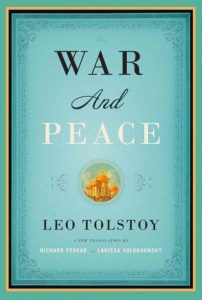
- War and Peace · Leo TolstoyRecommended 20 times
- Madame BovaryRecommended 4 times
- A Simple Heart · Gustave Flaubert
- The Brothers KaramazovRecommended 8 times
- Crime and Punishment · Fyodor DostoyevskyRecommended 12 times
- Barchester Towers · Anthony Trollope
- The White Goddess · Robert Graves
- Behind The Beautiful Forevers · Katherine BooRecommended 4 times
- The Language of Food · Dan Jurafsky
- Sapiens · Yuval Noah HarariRecommended 19 times
Books by Naomi Duguid: Burma: Rivers of Flavor, Taste of Persia: A Cook’s Travels Through Armenia, Azerbaijan, Georgia, Iran and Kurdistan
Naomi Duguid is a food writer and photographer, based in Toronto. She has also co-authored six wonderful cookbooks that have helped people cook great food all over the globe. In 2012, Naomi Duguid released her first solo publication, entitled Burma: Rivers of Flavor. Naomi attended Queen’s University in Kingston, Ontario and proceeded through law school. Following this, Naomi Duguid travelled around the world, experiencing a wide variety of exciting and exotic cuisines. In 1995, she quit her job as a lawyer and began writing cookbooks; many of which became huge successes. In 1996 and 2001, Naomi won Cookbook of the Year from the James Beard Foundation. More recently, Naomi Duguid has released her ultra successful book, Taste of Persia: A Cook’s Travels Through Armenia, Azerbaijan, Georgia, Iran and Kurdistan. Please enjoy my interview with Naomi Duguid…


When someone asks you ‘what do you do for a living?’ – How do you respond?
I say I write about food as an aspect of culture, and I take photographs, and that I’m lucky to be able to combine those two and make cookbooks.
What are you reading at the moment?
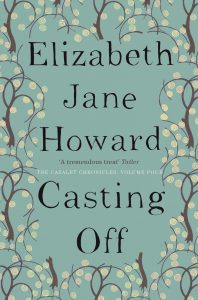
Several books, some that I dip in and out of and others that I read fairly straight through. The straight through ones tend to be novels, at present two of them: Casting Off by Jane Howard, the fourth volume of her 5-volume Cazalet series; and the just recently published book Son of a Trickster by Eden Robinson. Ongoing reading includes Empires of the Silk Road by Christopher Beckwith, A Life of H.L.A. Hart by Nicola Lacey, and a book about The Compleat Naturalist: A Life of Linnaeus by Wilfred Blunt.
- Casting Off by Jane Howard
 Casting Off by Jane Howard
- Son of a Trickster by Eden Robinson
 Son of a Trickster by Eden Robinson
- Empires of the Silk Road by Christopher Beckwith
 Empires of the Silk Road by Christopher Beckwith
- A Life of H.L.A. Hart by Nicola Lacey
 A Life of H.L.A. Hart by Nicola Lacey
- The Compleat Naturalist: A Life of Linnaeus by Wilfred Blunt
 The Compleat Naturalist: A Life of Linnaeus by Wilfred Blunt
What’s your earliest memory of cooking?
My mother always made bread. And probably watching her, then sometimes putting breads in the oven, are the earliest food memories, also her jam-making in late summer/early fall (blueberry, damson) and midwinter (marmalade with Seville oranges). On my own I remember making an apple crisp, because we’d made one in my Home-Ec cooking class, when I was eleven. I forgot to grease the dish, so had to slide my hand and butter-greased paper under the chopped apples after the dish was assembled. But I wonder now whether it really had to be greased… My Cooking teacher Mrs McMillan disliked me because I was not precise and orderly (I stuck my finger into the heating milk to check its temperature, for example, rather than taking out a little with a spoon and pouring it onto my wrist to see if it was lukewarm yet.) So silly.
If you could encourage young people to read one book in particular, what would it be?
Not sure, perhaps Catcher in the Rye or Nine Stories by J.D. Salinger; or A Wrinkle in Time by Madeleine L’Engle; or another in the YA category, the fabulous trilogy by Philip Pullman called His Dark Materials.


As a child, who influenced your taste in food?
My mother through her good instinctive cooking, unselfconscious cooking, using home-made or garden-grown ingredients mostly. And my parents’ friends had an impact. At one house of friends there’d be Indian food or Chinese food, because they had lived a long time in Malaysia and had a large repertoire. My father who loved good cheese, and would buy what little of that there was in Ottawa in that era: several kinds of blue cheese, the traditional Oka cheese, a good aged cheddar. Later when I was seventeen I had the good luck to live in France, in Tours, for a year (late September to June) and the food I ate en pension was an education. I’d stand in the kitchen, leaning on the small frig, and talk to “Madame” as she cooked. She was a fabulous cook. Also there were some students from Cambodia who lived in the same house and more who came to lunch. They cooked a few dishes at Chinese New Year (they were Chinese-Cambodian) and for a birthday, and they often talked about food, so that’s where I had a first early glimpse of Southeast Asian foods and flavour patterns.
What is the worst job you’ve ever had?
Working as a clerk in the Canadian civil service, a summer job when I was 16. It was so tedious that I would regularly fall asleeep. So they gave me the job of messenger and errand-runner, which got me out on the air and kept me moving, so I didn’t drowse off.
Can you remember the first meal you ever cooked?
Not the whole meal, but I do remember when I was ten, my mother was very ill with a serious infection in her foot. A business friend of my fathers was visiting from Italy and had been invited to dinner. And so she instructed me how to make what she’d planned to make, which was some kind of beef dish, like a braise, but cooked in the oven, and it had a pastry crust. I don’t remember the rest. But I do remember that it turned out well, surprisingly.
Do you read as much as you’d like to?
I lost reading for awhile, I mean I was reading muh less. But then I took hold, pushed back on the time I was spending online, so that now I am back to reading more, though not still as much as I’d like to.
What books do you feel are important reading for people on your career path?
I can’t say. I just think a curiosity about the world and how it works in a social, economic, and agricultural way is what pushes me. I am interested in people and how they manage to survive. And as a result really all reading, from novels to many kinds of non-fiction, are grist for my mill. For others? Probably the The New Oxford Book of Food Plants by J.G. Vaughan and C. Geissler.
What two pieces of advice would you give a young aspiring chef?
Pay attention to everything! Have respect for home cooks. Travel, not in a whirlwind, but slowly. Hang around in a foreign place and tune in to how people cook, and also pay attention to farming and the labour involved with food at the stages before it comes into the kitchen.
If you could only own three cookbooks, which would you pick and why?
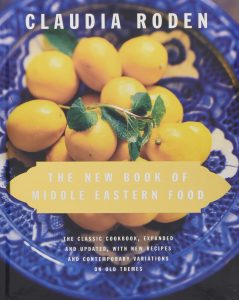
None of my picks are because I would want them to cook from them; I don’t cook from cookbooks. Picking just three is unfair, so I’m giving honourable mentions to: Diana Kennedy’s Mexican books, and The New Book of Middle Eastern Food by Claudia Roden, and so on. But some cookbooks are wonderful reading, including these:
Honey from a Weed by Patience Gray: It is full of delights, from information about rural Mediterranean plants to local beliefs there. I hear her voice as I read it.
European Peasant Cookery by Elisabeth Luard, because it is rich in literary and historical writings, and explores the old European traditions in an open way, ranging widely.
Food in England by Dorothy Hartly, which dates from 1954, again wonderful because of its historical range and also its drawings…
- The New Book of Middle Eastern Food by Claudia Roden
 The New Book of Middle Eastern Food by Claudia Roden
- Honey from a Weed by Patience Gray
 Honey from a Weed by Patience Gray
- European Peasant Cookery by Elisabeth Luard
 European Peasant Cookery by Elisabeth Luard
- Food in England by Dorothy Hartly
 Food in England by Dorothy Hartly
Is there a book that you’ve read more than once? What is it and why did you revisit it?
I’ve read many books more than once, mostly not for a serious reason, but as I’d wear an old sweater over and over. When I was younger I read all of Sherlock Holmes every year or two. That lasted ten years. I found it relaxing and familiar. I read who-dunnits, from Ngaio Marsh to Jo Nesbo, passing by Michael Dibdin and Barbara Nadel etc. Also Dick Francis. Often I don’t remember whether I’ve read the book before, and so find myself rereading, say ten years after the first time. That said, I have reread George Elliot, Jane Austen, Orlando and Mrs. Dalloway by Virginia Woolf, and other ‘classics’, but can’t remember them all.


What book have you recommended the most to friends and family?
In an Antique Land by Amitav Ghosh. Fabulous. Eye-opening about history and connection. And heart-breaking too in a way, an elegy for a lost cosmopolitan world. And Paris 1919: Six Months That Changed The World by Margaret MacMillan, and The New Oxford Book of Food Plants by J.G. Vaughan and C. Geissler.
- In an Antique Land by Amitav Ghosh
 In an Antique Land by Amitav Ghosh
- Paris 1919: Six Months That Changed The World by Margaret MacMillan
 Paris 1919: Six Months That Changed The World by Margaret MacMillan
- The New Oxford Book of Food Plants by J.G. Vaughan and C. Geissler
 The New Oxford Book of Food Plants by J.G. Vaughan and C. Geissler
If you weren’t in food, what do you think you’d be doing?
Not sure, I think I’d still be photo-documenting and poking around trying to understand the world and trying to communicate its wonders to others.
What’s your favourite genre of book?
See above: good novels, and for airplanes and that kind of reading, who-dunnits and certain kinds of thriller, especially those set outside North America. And then history that engages with details on the ground and context. Braudel comes to mind, and Margaret MacMillan and Barbara Tuchman. And some science too, from plants to medicine to anthropology and archeology.
What do you think a world without books would be like?
Flat, and we’d all lose the capacity for concentrated thinking and imagining.
Is there an author whose writing you’re such a fan of, that you’ll read everything they release?
Oliver Sacks, Amitav Ghosh, Alice Munro, Elena Ferrante, Rebecca Solnit and Donna Leon.
Do you think digital books will ever completely replace real books?
No it’s not possible. Books are so sensual and satisfying.
What book do you feel humanity needs most right now?
I couldn’t presume… I do think Rebecca Solnit on the need for hope and optimism is a possible. The book is called Hope in the Dark. Mostly I think people need to slow down and pay attention to each other in a thoughtful way. Reading can help with that process of slowing down the pace and engaging thoughtfully with whatever interests you. Social justice and environmental justice are vital issues, and it’s important to try to not be discouraged and instead keep plugging away at pushing for change and improvement.

What is the book that you feel has had the single biggest impact on your life?
I can’t say. When I read The Diviners by Margaret Laurence I was twenty, and realised it was that the novels I’d read until then were all male and mostly foreign (not Canadian) and that reading her rich story, set in Canada, with a woman’s point of view, was entirely new and thrilling. It made me aware, ever after, of the influence of point of view and setting. One Hundred Years of Solitude by Gabriel Garcia Marquez was a big one, read in my twenties as were The Tin Drum and Dog Years by Gunter Grass, and Heinrich Boll’s novels.


Are there any books you haven’t mentioned that you feel would make your reading list?
I love the nineteenth century novels from France and Russia, again the classics known to all, such as Madame Bovary and A Simple Heart by Gustave Flaubert, The Brothers Karamazov and Crime and Punishment by Fyodor Dostoyevsky, War and Peace by Leo Tolstoy. I’d also like to mention Barchester Towers by Anthony Trollope, which is a real pleasure. Frans Fanon is so important and had a big impact, as well as The White Goddess by Robert Graves. Finally, I’d also include Behind The Beautiful Forevers by Katherine Boo.
- Madame Bovary
 Madame Bovary
- A Simple Heart by Gustave Flaubert
 A Simple Heart by Gustave Flaubert
- The Brothers Karamazov
 The Brothers Karamazov
- Crime and Punishment by Fyodor Dostoyevsky
 Crime and Punishment by Fyodor Dostoyevsky
- War and Peace by Leo Tolstoy
 War and Peace by Leo Tolstoy
- Barchester Towers by Anthony Trollope
 Barchester Towers by Anthony Trollope
- The White Goddess by Robert Graves
 The White Goddess by Robert Graves
- Behind The Beautiful Forevers by Katherine Boo
 Behind The Beautiful Forevers by Katherine Boo
What books or subject matter do you plan on reading in the next year?
Whatever I come across that seems interesting and that relates to historical trading routes, salt, agricultural labour, Central Asia, cultural contact zones. And then novels that I encounter, new and old, that catch my eye or that others have told me about. I know that I want to find and read The Language of Food by Dan Jurafsky. I should have read it earlier! But that can be said of many books. Sapiens by Yuval Noah Harari is on my list too.


If you were to write an autobiography – what would it be called?
Curious and Curiouser.
If you’d like to learn more about Naomi Duguid, you can find her on her website, Facebook and Twitter.
As an Amazon Associate we earn from qualifying purchases made through links on this page.