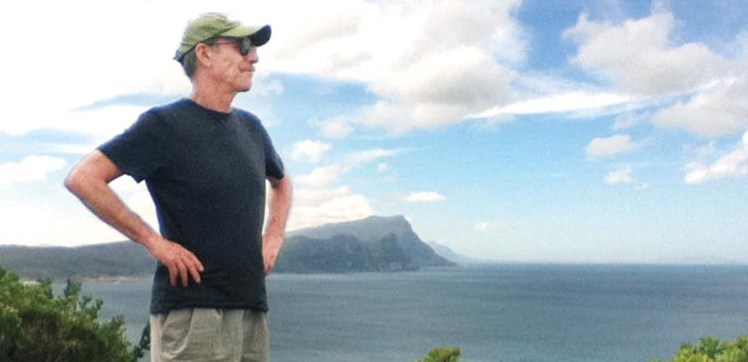
Joseph Mazur: Peering into the Window of Another World
Joseph Mazur’s reading list
21 books mentioned in this interview
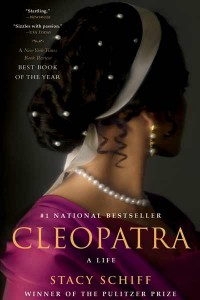
- Cleopatra: A Life · Stacy Schiff
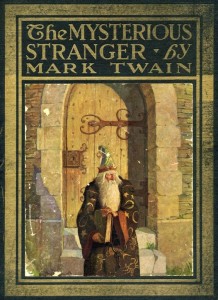
- The Mysterious Stranger · Mark Twain
- Number: The Language of Science · Tobias Dantzig
- Euclid in the Rainforest
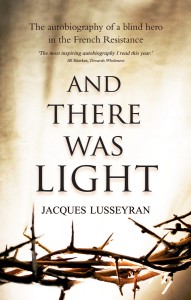
- And There Was Light · Jacques Lusseyran
- The Castle Cross the Magnet Carter · Kia Corthron
- Growth of the Soil · Knut Hamson
- HungerRecommended 4 times
- War and Peace · Leo TolstoyRecommended 20 times
- Night · Elie WieselRecommended 5 times
- Moby Dick · Herman MelvilleRecommended 18 times
- Crime and Punishment · Fyodor DostoyevskyRecommended 12 times
- Behind the Beautiful Forevers · Katherine BooRecommended 4 times
- A Woman in Berlin
- Agent Zigzag · Ben Macintyre
- Night Train to Lisbon · Pascal Mercier
- 11/22/63 · Stephen King
- The Witches · Stacy Schiff
- All the Light We Cannot See · Anthony DoerrRecommended 11 times
- Far Afield · Susanna Kaysen
- How to Read a Poem and Fall in Love with Poetry · Edward Hirsch
Books by Joseph Mazur: Fluke: The Math and Myth of Coincidence
Joseph Mazur is Professor Emeritus of Mathematics at Marlboro College in Vermonth; he was born in the Bronx in 1942 and holds a Ph.D in Mathematics from M.I.T. So respected is Joseph’s work, he has been featured in many respected publications including: Nature, The New York Times, The Guardian, The Wall Street Journal and Sciences, among others. He has authored many books, which have been translated into over 12 languages. His most recent book, Fluke: The Math and Myth of Coincidence, a book that has delved into the mathematics of our poetic twists of fate.To have the chance to talk books with a mathematician and writer, the calibre of Joseph Mazur is a real honour. Please enjoy, my interview with Joseph Mazur…

When someone asks you ‘what do you do for a living?’ – How do you respond?
Mathematician. Sometimes writer. When I do say “I’m a writer” I say it bashfully, since I know some pretty fantastic writers and don’t have the confidence that I merit the distinction of being one of them. Also, I’ve been a mathematician for so many years that it seems odd to me to dump my old title for a new one. I feel that way with cars and suits. I like my old cars and suits, sometimes better than my new ones.
What are you reading at the moment?
Cleopatra: A Life by Stacy Schiff. I’m learning so much about the ancient world from the book.

When you think about your childhood, what book comes to mind?

What did you want to be when you were growing up?
Lots of things: A pilot, a ship captain, an architect or an engineer. I spent my childhood taking things apart and putting them back together. I grew up in the Bronx, and as a kid I spent most of the warmer days on the streets playing ball or building rockets. I did want to be a rocket scientist, but architecture got the better of me; so I spent my first two years in college as an architecture student. I took a year abroad in Paris to study more math (telling myself it was math for architecture), but I returned to major in math.
What do you think your school aged self would think of the present day you?
Amazed that I’m a writer, since I was a terrible speller when I was young. That’s possibly because I was a very fast reader. I learned to scan a whole line at a time and got some sense of what the whole paragraph was about before hitting the next paragraph. I had pretty good retention, but the words were merely symbols – like musical notes to a musician.
Does your reading have routine? Is there a particular time or place that you like to read?
I wish. Too often, some chore that needs to be done interrupts my reading. Most of my reading is academic technical papers. That’s my day job. By the time I get a chance to read a book for enjoyment, it’s late at night. So I mostly read in bed.
Which book has had the biggest impact on your career so far?
If by your question you mean which book got you interested in your career I would have to say Number: The Language of Science by Tobias Dantzig. I hope that’s what you mean by your question. Otherwise, the list is enormous. I always felt that Dantzig’s book must have been instrumental in persuading young people to think about a career in mathematics. So, in 2005, when I learned that Number was out of print I told my publisher that if he bought the rights I would edit a new version for him. He got the rights. I edited it. And for a few years is was a leading seller in popular math and science. It is a great book. I only wish it was I who wrote it. Of course, one other book that had a big impact on my career was the first book I wrote, Euclid in the Rainforest, which was launched to great critical acclaim and prizes. It was the launch of my career as a writer.


Do you have any books that you strongly associate with someone important in your life?
I have lots of friends who are writers, some are best selling authors. I have relatives (a brother, two sisters-in-law) who have written books. They are important in my life, and so I strongly associate their books with them.
What book have you recommended the most to friends and family?
And There Was Light by Jacques Lusseyran. It is an amazingly well structured and well-written autobiography of a WWII blind French resistance fighter.

Do you prefer fiction or non-fiction?
I read both. The preference depends on my mood. Sometimes I will go for months reading only fiction. Sometimes I switch.
Do you think reading is important?
Of course! Reading is like peering into the window of another world. Sometimes that window is to another person’s brain, sometimes it is to a magical world that does not exist. I answered your third question with The Mysterious Stranger by Mark Twain. I think it was the first young adult book I ever read cover to cover. Reading that book was a window opened to a non-existent world, a world that was not my own in reality, but could be my own in imagination. So reading gives us more than one life. We have a life to live. And we have imaginary lives that are like alternative universes that we are in for the moments when we have those precious times to read.

What’s the best book you’ve read in the last 6 months?
The Castle Cross the Magnet Carter by Kia Corthron. It’s a first novel by a magnificent playwright about two sets of brothers in parallel storylines, one growing up in rural Alabama, the other in Maryland. It’s an epic (800 pages) that moves us to witness the color line as something we have never seen before.

Do you prefer real books or digital books?
I do prefer real books. You can read a real book while taking a warm bath. But when traveling, nothing beats having six books with you on an iPad.
Name a book that you feel every human should have to read by law.
By law? Wow! That’s extreme. I hope we don’t make laws about what to read or not read. When I was in grade school in New York City every student in the city was required to read particular books. Growth of the Soil by Knut Hamson. I hated that book, but loved Hunger, another book by Knut Hamson. If the question were phrases as “by strong recommendation” I would say War and Peace by Leo Tolstoy. Besides learning something about society, War and Peace is one of those great books that puts the reader into the heads of the characters. There is no other book quite like it.


What is the book that you feel has had the single biggest impact on your life?
Every well-written book has an impact. I still feel that The Mysterious Stranger by Mark Twain had the biggest impact because it brought me to the joy of reading. If the question is more about adult books, then I would have to say Night by Elie Wiesel. That book should have an impact on any life.

Are there any books you haven’t mentioned that you feel would make your reading list?
Moby Dick by Herman Melville, Crime and Punishment by Fyodor Dostoyevsky, and Behind the Beautiful Forevers by Katherine Boo, A Woman in Berlin, Agent Zigzag by Ben Macintyre, and Night Train to Lisbon by Pascal Mercier.
- Moby Dick by Herman Melville
 Moby Dick by Herman Melville
- Crime and Punishment by Fyodor Dostoyevsky
 Crime and Punishment by Fyodor Dostoyevsky
- Behind the Beautiful Forevers by Katherine Boo
 Behind the Beautiful Forevers by Katherine Boo
- A Woman in Berlin
 A Woman in Berlin
- Agent Zigzag by Ben Macintyre
 Agent Zigzag by Ben Macintyre
- Night Train to Lisbon by Pascal Mercier
 Night Train to Lisbon by Pascal Mercier
What books or subject matter do you plan on reading in the next year?
Like everyone else, I have a stack. 11/22/63 by Stephen King, The Witches by Stacy Schiff, All the Light We Cannot See by Anthony Doerr, Far Afield by Susanna Kaysen, and How to Read a Poem and Fall in Love with Poetry by Edward Hirsch.
- 11/22/63 by Stephen King
 11/22/63 by Stephen King
- The Witches by Stacy Schiff
 The Witches by Stacy Schiff
- All the Light We Cannot See by Anthony Doerr
 All the Light We Cannot See by Anthony Doerr
- Far Afield by Susanna Kaysen
 Far Afield by Susanna Kaysen
- How to Read a Poem and Fall in Love with Poetry by Edward Hirsch
 How to Read a Poem and Fall in Love with Poetry by Edward Hirsch
If you were to write an autobiography – what would it be called?
I did write an autobiography. I spent a year writing it as a present to my two daughters. At the time, one was 4 and the other 8. Each night for a year I would spend a few late hours typing on a typewriter the story of my life from birth to my 13th birthday. Its title was simply 1804, because that was the number of the apartment house I grew up in.
If you’d like to learn more about Joseph Mazur, you can find him on his website and Twitter.
As an Amazon Associate we earn from qualifying purchases made through links on this page.
You might also like
Naomi Duguid: Trying To Understand The World
Interview · 15 June 2017

Luciano Floridi: Only Thinking Is More Important
Interview · 19 May 2017

Jeremy Zuckerman: A Clear Moment Of Empowerment
Interview · 6 December 2016

Andrew Knoll: Books Enable Us To Communicate Across Generations
Interview · 11 January 2017