Lewis Gordon: Cultivating The Ability To Learn
Lewis Gordon’s reading list
58 books mentioned in this interview
- The Physicist and Philosopher: Einstein, Bergson, and the Debate that Changed Our Understanding of Time · Jimena Canales
- Religion and Nothingness · Keiji Nishitani
- Gender Trouble · Judith Butler
- Creolizing Political Theory · Jane Anna Gordon
- The Metaphysics of Modern Existence · Vine Deloria Jr
- New Treatise on the Uniqueness of Consciousness · Xiong Shili
- The Ink of Scholars · Souleymane Bachir Diagne
- The Hidden Life of Trees · Peter Wohlleben
- The Autobiography of Malcolm XRecommended 4 times
- If Beale Street Could Talk · James Baldwin
- A Dreamer’s Journey · Morris Cohen
- Confessions · Jean-Jacques Rousseau
- Frankenstein · Mary ShelleyRecommended 4 times
- Notes from Underground · Fyodor DostoyevskyRecommended 4 times
- Birth of Tragedy from the Spirit of Music · Friedrich Nietzsche
- Revolution in Guinea · Amilcar Cabral
- Black Skin, White Masks
- Wretched of the Earth · Frantz Fanon
- CandideRecommended 4 times
- Being and Nothingness
- Africans and Their History · Joseph Harris
- SymposiumRecommended 6 times
- Apology · PlatoRecommended 5 times
- The Golden Ass · Apuleius
- My Bondage and My Freedom · Frederick Douglass
- The Autobiography of W.E.B. Du Bois: A Soliloquy on Viewing My Life from the Last Decade of Its First Century
- Black Jacobins · C.L.R. James
- The Simone Weil Reader
- Gravity and Grace
- What Is the Name of This Book? · Raymond Smullyan
- the Complete Works of ShakespeareRecommended 4 times
- The Future Evolution of Man · Sri Aurobindo
- Social Contract · Jean-Jacques Rousseau
- The Communist Manifesto · Karl Marx and Friedrich Engel
- Fear and Trembling · Soren Kierkegaard
- The Ethics of Ambiguity · Simone de BeauvoirRecommended 3 times
- Three Critiques · Immanuel Kant
- Phenomenology of Spirit · G.W.F. Hegel
- Man and Islam · Ali Shariati
- Pedagogy of the Oppressed · Paulo FreireRecommended 3 times
- I Write What I Like · Steve Biko
- Prison Notebooks · Antonio Gramsci
- The Equality of the Races · Antenor Firmin
- Relativity: The Special and General Theory · Albert Einstein
- Life Among the Piutes: Their Wrongs and Claims · Sarah Winnemucca Hopkins
- The Time Machine · H.G. WellsRecommended 5 times
- Why I Write · George Orwell
- Philosophy of Symbolic Forms · Ernst Cassirer
- Cartesian Meditations · Edmund Husserl
- Phenomenology of the Social World · Alfred Schütz
- Critique of Dialectical Reason · Jean-Paul Sartre
- The World as Will and Representation · Arthur Schopenhauer
- Civilization and Its Discontents · Sigmund FreudRecommended 4 times
- Philosophy of Existence · Karl Jasper
- Cultural Universals and Particulars · Kwasi Wiredu
- Echoes of the Old Darkland · Charles Finch
- Caliban’s Reason · Paget Henry
- Women, Race, and Class · Angela Y. Davis
Books by Lewis Gordon: What Fanon Said: A Philosophical Introduction To His Life And Thought
Lewis Gordon is an American philosopher who works in the areas of Africana philosophy, philosophy of human and life sciences, phenomenology, philosophy of existence, social and political theory, postcolonial thought, theories of race and racism, philosophies of liberation, aesthetics, philosophy of education, and philosophy of religion. Lewis Gordon has written particularly extensively on race and racism, postcolonial phenomenology, Africana and black existentialism, and on the works and thought of W. E. B. Du Bois and Frantz Fanon. Lewis Gordon graduated in 1984 from Lehman College, CUNY, through the Lehman Scholars Program, with a B.A., magna cum laude and as a member of Phi Beta Kappa. He completed his MA and M. Phil. in philosophy in 1991 at Yale University, and received his PhD with distinction from the same university in 1993. Following the completion of his doctoral studies, Lewis Gordon taught at Brown University, Yale, Purdue University, and Temple University, where he was the Laura H. Carnell Professor of Philosophy in the Department of Philosophy with affiliations in Religious and Judaic Studies. Lewis Gordon is currently Professor of Philosophy and Africana Studies, with affiliations in Judaic Studies and Caribbean, Latino/a, and Latin American Studies, at the University of Connecticut at Storrs. His most recent book is titled: What Fanon Said: A Philosophical Introduction To His Life And Thought. Please enjoy my interview with Lewis Gordon…

How do you describe your occupation?
I am a professor of philosophy. In addition to developing theories of the human relationship with reality, I teach in a variety of disciplines. When I teach, I attempt to cultivate my students’ ability to learn in the hope that they would continue doing so for the rest of their life.
Talk us through a typical day for you…
I take it you mean the days I teach. On Tuesdays, I teach my large lecture class on varieties of existentialism, which is a blast. It’s really a class on global existentialism, so we’ve examined ideas from nearly every continent. I enjoy teaching large lecture classes. This one has 320 students. The students love that the course addresses problems they are thinking about since I work from religious existential to secular and atheist ones, and we address problems of freedom, maturation, meaning, and challenges to what it means to be human. In the afternoon, I teach my doctoral seminar on the philosophy of social science. It’s a wonderful course with students from anthropology and education joining the group from philosophy. It’s an intense seminar addressing crucial problems of contemporary thought often overlooked in philosophy courses locked in the ideological split between analytical and continental. As I reject the divide, this course draws upon resources also from pragmatism, Africana philosophy, feminist theory, and more in contemporary thought. Classic works in phenomenology, critical theory, structuralism and poststructuralism made the list as well.
I hate offices. So I meet my students at the university art museum’s coffee shop. I go there right after my morning class and then again after my afternoon class. In addition to students, I have meetings with colleagues there. On other days, such as Wednesdays or the first Monday of each month, I’m in committee meetings for the Faculty Senate or I attend our department’s brown bag speaker series (held on Wednesday afternoons). Our university is teeming with speakers and events every day. So, I often catch lectures and on some occasions present my own. I have quite a number of doctoral students, so meetings are many. The large undergraduate course has, as well, led to meeting with many undergraduates to discuss ideas and their work.
What are you reading at the moment and what made you want to read it?
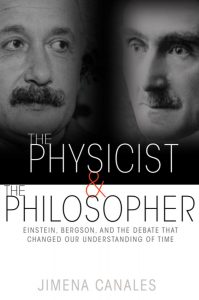
I’m doing two sets of readings. The first are re-readings, as I’m teaching courses. I’m re-reading Religion and Nothingness by Keiji Nishitani for my undergraduate lecture course. For the doctoral seminar, I’m re-reading Gender Trouble by Judith Butler and Creolizing Political Theory by Jane Anna Gordon. The second are books I’m simply reading because of my ongoing research and theorizing. I also work in physics and music, though I’m a professor of philosophy. My collaborative work with the Stephon Alexander, the physicist and musician at Brown University, involves concerns of cosmology, methods of theorizing physical reality (especially time), and what I call “multidimensional theory.” Anyhow, some concerns in music led to my returning to research on time and I ended up wondering about the terrible encounter between Henri Bergson and Albert Einstein. As I know the theories of both, I became curious about why the two ended up despising each other. So I picked up The Physicist and Philosopher: Einstein, Bergson, and the Debate that Changed Our Understanding of Time by Jimena Canales. It’s an enjoyable read revealing more about Bergson than I expected. Indeed, reading it has me thinking Bergson was much misunderstood in that debate primarily because many who assess it work either from a positivist conception of physics or a vitalist prejudice. Phenomenological considerations raise some crucial issues.
For instance, Einstein’s insistence on there being only physical time and psychological time is redundant from a phenomenological perspective since psychology ultimately appeals to some form of naturalism, which for phenomenologists point back to physics. Some may distinguish psychophysiology from psychology, but I’m reminded of Husserl’s wonderful essay, Philosophy as a Rigorous Science, in which he addresses psychologism and historicism, among other formulations. Anyhow, I find the scale of Bergson’s reputation at the time astonishing. For many, during the height of his fame, the greatest philosophers of what is called western philosophy were Socrates-Plato, Aristotle, Descartes-Kant, and then Bergson! Anyhow, I’m enjoying that book. The other is The Metaphysics of Modern Existence by Vine Deloria Jr. It’s connected to a book I’m writing on global existentialism. I also love the other writings of Deloria and am delighted to explore his existential thought. Next is New Treatise on the Uniqueness of Consciousness by Xiong Shili. Same reason as with Deloria’s text. Next is The Ink of Scholars by Souleymane Bachir Diagne. I’m reading that one in preparation for a Festschrift on Diagne’s work. I have read his work on Boolean logic and African art, in addition to some of his work on Sufism. This recent text rounds things out. Finally, The Hidden Life of Trees by Peter Wohlleben, because I’ve experienced some of what the author says about trees. (I’m always reading several texts at once.)
- Religion and Nothingness by Keiji Nishitani
 Religion and Nothingness by Keiji Nishitani
- Gender Trouble by Judith Butler
 Gender Trouble by Judith Butler
- Creolizing Political Theory by Jane Anna Gordon
 Creolizing Political Theory by Jane Anna Gordon
- The Physicist and Philosopher: Einstein, Bergson, and the Debate that Changed Our Understanding of Time by Jimena Canales
 The Physicist and Philosopher: Einstein, Bergson, and the Debate that Changed Our Understanding of Time by Jimena Canales
- The Metaphysics of Modern Existence by Vine Deloria Jr
 The Metaphysics of Modern Existence by Vine Deloria Jr
- New Treatise on the Uniqueness of Consciousness by Xiong Shili
 New Treatise on the Uniqueness of Consciousness by Xiong Shili
- The Ink of Scholars by Souleymane Bachir Diagne
 The Ink of Scholars by Souleymane Bachir Diagne
- The Hidden Life of Trees by Peter Wohlleben
 The Hidden Life of Trees by Peter Wohlleben
Can you remember the first book you read by yourself?
Yes. It was an illustrated book of fairy tales. Though I learned to write earlier, I was about five years old with this one. The ritual of reading to children wasn’t part of my infancy. Instead, there was the art of storytelling. I remember listening to stories and recounting them before I could walk.
Are you a page folder or a bookmarker?
I was neither until recent years. I used to have a near eidetic memory, so I had no markings on my books or folding of pages. My memory began to fade over the past decade, however, and I now make markings and fold pages.
When did you fall in love with philosophy?
The problem with falling in love with philosophy is discovering one has always been in love with philosophy. I just didn’t know what it was. The kind of philosophy I’ve been in love with is marked by wonder. I remember being four years old lying in the grass at night in an open soccer field in Jamaica. Kingston was darker at night in the 1960s, so the stars shone brightly in the sky. The scale was wondrous, and I remember thinking about that concept—of scale—and then switched to the oddness of sound and continuity. There seemed to be a tone to reality, and its reverberations seem to produce light. I wondered what it was “in” everything that kept it all together. The “what” didn’t make sense to me as something independent but instead something interacting or flowing through all there is. So, I would say that ontology and the sublime spoke to me in a wondrous way. It’s no doubt why I also love physics. I loved astronomy, too, and the connection with music is no doubt connected to those reverberations. Reality, it struck me, does something. I read a lot during my childhood. I loved almost everything. I would leaf through science books, fiction, histories, etc. Encyclopedias, whenever I could get a hold of them, was a joy. I also loved black liberation books, which my uncles would bring home. Mythologies intrigued me, and I loved going through religious books of any kind mostly because they were mythologies. I also loved comics. I had loads of them. The books I loved in middle school were The Autobiography of Malcolm X, If Beale Street Could Talk by James Baldwin, and, believe it or not, excerpts from the writings of Hegel and Marx that my social studies teacher introduced to me. I played music in high school while spending a lot of time writing. I read mostly to write during those years and was more interested in biographies of musicians and scientists. I also struggled through magazines and books in other languages. I remember trying my best at a magazine written in Mandarin.
I realized I was in love with philosophy when I was in college. I was taking at times 8 classes each semester. When I went to register a few semesters later, I was informed I could complete my degree in a short time, but I didn’t have a major. I asked about which areas I had the most credits in, and I was informed: philosophy, political science, and a bunch in classics. So, I took those. By then I realized the connection back to those childhood years of looking up at the stars, thinking about the reality of things, and so forth, but more: It seemed to me that philosophy was addressing something fundamental about how we—human beings—relate to reality. I began to buy philosophy books at library sales, which sometimes offered books by the pound. I often bought autobiographical philosophical books. I particularly loved A Dreamer’s Journey by Morris Cohen, and others such as Confessions by Jean-Jacques Rousseau and the autobiographical sections of The Library of Living Philosophers. Philosophical novels such as Frankenstein by Mary Shelley and Notes from Underground by Fyodor Dostoyevsky offered much as well. Though I read ancient Greek philosophy and drama (Aeschylus, Sophocles, and Euripides), Roman writers such as Apuleius, Catullus, and Virgil, and German idealists, what I loved most were Rousseau’s writings. Every sentence was marked by genius. It was during those years I also began reading Freud, and similarly, I loved more than his ideas. I loved his writing. The same with regard to Birth of Tragedy from the Spirit of Music by Friedrich Nietzsche (a text to which I return in many of my writings). Revolution in Guinea by Amilcar Cabral was one of my favorites, even though I had Black Skin, White Masks and Wretched of the Earth by Frantz Fanon. I looked through them and realized I lacked the proper reference for much of what was being said except for the demand for social change. Though I don’t like Voltaire, I loved his novel Candide. I purchased Being and Nothingness in those years, but I couldn’t get past page the first 3 pages. I just kept thinking about those pages and Sartre’s remarks on appearance. It wasn’t until graduate school that those thoughts, kept at the back of my mind, came forth in a flurry of understanding. (Had I simply skipped over, I would have read those wonderful, graphic and detailed examples of bad faith, etc.) Reading philosophy books, I quickly learned, is an art of re-reading over and over.
- The Autobiography of Malcolm X
 The Autobiography of Malcolm X
- If Beale Street Could Talk by James Baldwin
 If Beale Street Could Talk by James Baldwin
- A Dreamer’s Journey by Morris Cohen
 A Dreamer’s Journey by Morris Cohen
- Confessions by Jean-Jacques Rousseau
 Confessions by Jean-Jacques Rousseau
- Frankenstein by Mary Shelley
 Frankenstein by Mary Shelley
- Notes from Underground by Fyodor Dostoyevsky
 Notes from Underground by Fyodor Dostoyevsky
- Birth of Tragedy from the Spirit of Music by Friedrich Nietzsche
 Birth of Tragedy from the Spirit of Music by Friedrich Nietzsche
- Revolution in Guinea by Amilcar Cabral
 Revolution in Guinea by Amilcar Cabral
- Black Skin, White Masks
 Black Skin, White Masks
- Wretched of the Earth by Frantz Fanon
 Wretched of the Earth by Frantz Fanon
- Candide
 Candide
- Being and Nothingness
 Being and Nothingness
If you could gift yourself books at age 16 and age 25 – what would they be and why?
I was 13 when Ms. Fierman, my 8th grade social studies teacher, gave me The Autobiography of Malcolm X. Whether 13 or 16, I would give that book. The others would be Africans and Their History by Joseph Harris, Symposium and Apology by Plato, The Golden Ass by Apuleius, Frankenstein by Mary Shelley, My Bondage and My Freedom by Frederick Douglass, The Autobiography of W.E.B. Du Bois: A Soliloquy on Viewing My Life from the Last Decade of Its First Century, Black Jacobins by C.L.R. James, and The Simone Weil Reader or, if not that collection, her Gravity and Grace. Neruda’s collected poems, Gabriel Garcia-Marquez’s collections of short stories, the Complete Works of Shakespeare, Confessions by Jean-Jacques Rousseau and The Future Evolution of Man by Sri Aurobindo. Each book offers portraits of struggles to grow and exquisite writing. I would also add What Is the Name of This Book? by Raymond Smullyan. It’s a great introduction to Gödel’s theorem. I would round it out with Social Contract by Jean-Jacques Rousseau, The Communist Manifesto by Karl Marx and Friedrich Engel, Black Skin, White Masks, The Wretched of the Earth by Frantz Fanon, Fear and Trembling by Soren Kierkegaard, Being and Nothingness by Jean-Paul Sartre, The Ethics of Ambiguity by Simone de Beauvoir, Three Critiques by Immanuel Kant, Phenomenology of Spirit by G.W.F. Hegel, Man and Islam by Ali Shariati, Religion and Nothingness by Keiji Nishitani, Pedagogy of the Oppressed by Paulo Freire, I Write What I Like by Steve Biko, Prison Notebooks by Antonio Gramsci, The Equality of the Races by Antenor Firmin, Relativity: The Special and General Theory by Albert Einstein. It’s hard to say what I would give at age 25 since nearly every book I’ve listed from the beginning of this interview is one I read or at least started to read before I was 20.
- The Autobiography of Malcolm X
 The Autobiography of Malcolm X
- Africans and Their History by Joseph Harris
 Africans and Their History by Joseph Harris
- Symposium
 Symposium
- Apology by Plato
 Apology by Plato
- The Golden Ass by Apuleius
 The Golden Ass by Apuleius
- Frankenstein by Mary ShelleyFrankenstein by Mary Shelley
- My Bondage and My Freedom by Frederick Douglass
 My Bondage and My Freedom by Frederick Douglass
- The Autobiography of W.E.B. Du Bois: A Soliloquy on Viewing My Life from the Last Decade of Its First Century
 The Autobiography of W.E.B. Du Bois: A Soliloquy on Viewing My Life from the Last Decade of Its First Century
- Black Jacobins by C.L.R. James
 Black Jacobins by C.L.R. James
- The Simone Weil Reader
 The Simone Weil Reader
- Gravity and Grace
 Gravity and Grace
- What Is the Name of This Book? by Raymond Smullyan
 What Is the Name of This Book? by Raymond Smullyan
- the Complete Works of Shakespeare
 the Complete Works of Shakespeare
- Confessions by Jean-Jacques RousseauConfessions by Jean-Jacques Rousseau
- The Future Evolution of Man by Sri Aurobindo
 The Future Evolution of Man by Sri Aurobindo
- Social Contract by Jean-Jacques Rousseau
 Social Contract by Jean-Jacques Rousseau
- The Communist Manifesto by Karl Marx and Friedrich Engel
 The Communist Manifesto by Karl Marx and Friedrich Engel
- Black Skin, White MasksBlack Skin, White Masks
- The Wretched of the Earth by Frantz FanonThe Wretched of the Earth by Frantz Fanon
- Fear and Trembling by Soren Kierkegaard
 Fear and Trembling by Soren Kierkegaard
- Being and Nothingness by Jean-Paul SartreBeing and Nothingness by Jean-Paul Sartre
- The Ethics of Ambiguity by Simone de Beauvoir
 The Ethics of Ambiguity by Simone de Beauvoir
- Three Critiques by Immanuel Kant
 Three Critiques by Immanuel Kant
- Phenomenology of Spirit by G.W.F. Hegel
 Phenomenology of Spirit by G.W.F. Hegel
- Man and Islam by Ali Shariati
 Man and Islam by Ali Shariati
- Religion and Nothingness by Keiji NishitaniReligion and Nothingness by Keiji Nishitani
- Pedagogy of the Oppressed by Paulo Freire
 Pedagogy of the Oppressed by Paulo Freire
- I Write What I Like by Steve Biko
 I Write What I Like by Steve Biko
- Prison Notebooks by Antonio Gramsci
 Prison Notebooks by Antonio Gramsci
- The Equality of the Races by Antenor Firmin
 The Equality of the Races by Antenor Firmin
- Relativity: The Special and General Theory by Albert Einstein
 Relativity: The Special and General Theory by Albert Einstein
If you could invite 5 authors (dead or alive) to a dinner party – who would they be and why?
I’ll go for these (though I would prefer at least 10): Hypatia, Jean-Jacques Rousseau, Mary Shelley, Henri Bergson, Albert Einstein, Jean-Paul Sartre, Sri Aurobindo, and Malcolm X: For their passion and genius.
What was the last book you purchased, and why did you buy it?
Life Among the Piutes: Their Wrongs and Claims by Sarah Winnemucca Hopkins. My wife is researching on settler colonialism and the struggles of First Nation peoples. I research in that area as well, so I ordered it for both of us. The other is The Hidden Life of Trees by Peter Wohlleben.

What is your favourite thing about reading?
Learning/pleasure.
What’s the best book you’ve read in the last 6 months?
Best re-reading, The Future Evolution of Man by Sri Aurobindo and Being and Nothingness by Jean-Paul Sartre. Best first reading: An unpublished m.s. that I hope soon will be in print: Mabogo More’s Looking through Philosophy in Black: Memoirs.
If you could insert yourself into any book, which would you pick and why?
The Time Machine by H.G. Wells. Why? Traveling through time.

What advice would you give a novice, looking for an introduction to philosophy?
Read “The Letter of Antef,” Symposium by Plato, and The Treatise of Zera Yacob. I prefer primary texts focused on stimulating curiosity and wonder.
What is the book that you feel has had the single biggest impact on your life? What impact did it have?
The Autobiography of Malcolm X. I read it when I was 13. Malcolm X’s understanding of education, of learning to learn, as a manifestation of freedom, love, and the courage it demands spoke to me. The responsibility for such is in the back of my mind with everything I read.
Who would you say are the three philosophers that continue to inspire you?
I must say four: Rousseau, Aurobindo, Sartre, Fanon.
Are there any books you haven’t mentioned that you feel would make your reading list?
Too many, but, here are twelve:
Philosophy of Symbolic Forms by Ernst Cassirer, Cartesian Meditations by Edmund Husserl, Phenomenology of the Social World by Alfred Schütz, Critique of Dialectical Reason by Jean-Paul Sartre, The World as Will and Representation by Arthur Schopenhauer, Why I Write by George Orwell, Civilization and Its Discontents by Sigmund Freud, Philosophy of Existence by Karl Jasper, Cultural Universals and Particulars by Kwasi Wiredu, Echoes of the Old Darkland by Charles Finch, Caliban’s Reason by Paget Henry, Women, Race, and Class by Angela Y. Davis.
- Why I Write by George Orwell
 Why I Write by George Orwell
- Philosophy of Symbolic Forms by Ernst Cassirer
 Philosophy of Symbolic Forms by Ernst Cassirer
- Cartesian Meditations by Edmund Husserl
 Cartesian Meditations by Edmund Husserl
- Phenomenology of the Social World by Alfred Schütz
 Phenomenology of the Social World by Alfred Schütz
- Critique of Dialectical Reason by Jean-Paul Sartre
 Critique of Dialectical Reason by Jean-Paul Sartre
- The World as Will and Representation by Arthur Schopenhauer
 The World as Will and Representation by Arthur Schopenhauer
- Civilization and Its Discontents by Sigmund Freud
 Civilization and Its Discontents by Sigmund Freud
- Philosophy of Existence by Karl Jasper
 Philosophy of Existence by Karl Jasper
- Cultural Universals and Particulars by Kwasi Wiredu
 Cultural Universals and Particulars by Kwasi Wiredu
- Echoes of the Old Darkland by Charles Finch
 Echoes of the Old Darkland by Charles Finch
- Caliban’s Reason by Paget Henry
 Caliban’s Reason by Paget Henry
- Women, Race, and Class by Angela Y. Davis
 Women, Race, and Class by Angela Y. Davis
Which book sat on your shelf are you most excited about reading next and why?
If you’d like to learn more about Lewis Gordon, you can find him on his website and Twitter.
As an Amazon Associate we earn from qualifying purchases made through links on this page.