John Sellars: Reading For Range And Depth
John Sellars’ reading list
22 books mentioned in this interview
- The Rise and Fall of the House of Medici · Christopher Hibbert
- Meeting with Remarkable Manuscripts · Christopher De Hamel
- Asterix books · Rene Goscinny
- Walden · Henry David ThoreauRecommended 5 times
- The Lives of the Artists · Giorgio Vasari
- The Gutenberg Bible
- Philosophy as a Way of Life · Pierre Hadot
- The Handbook of Epictetus
- Petrarch: Everywhere a Wanderer · Christopher Celenza
- ApologyRecommended 5 times
- Meditations · DescartesRecommended 3 times
- The Notebooks of Leonardo Da Vinci
- Piranesi’s Vedute di Roma
- Hypnerotomachia Poliphili · Francesco Colonna
- The Complete Essays · Michel de Montaigne
- On the Nature of Things · Lucretius
- Jacques the Fatalist · Denis Diderot
- Candide · VoltaireRecommended 4 times
- The Confessions · Jean-Jacques Rousseau
- A Wicked Company · Philipp Blom
- Gargantua and Pantagruel · Francois Rabelais
- The Divine ComedyRecommended 5 times
Books by John Sellars: The Art of Living: The Stoics on the Nature and Function of Philosophy, Stoicism, The Routledge Handbook of the Stoic Tradition, Hellenistic Philosophy
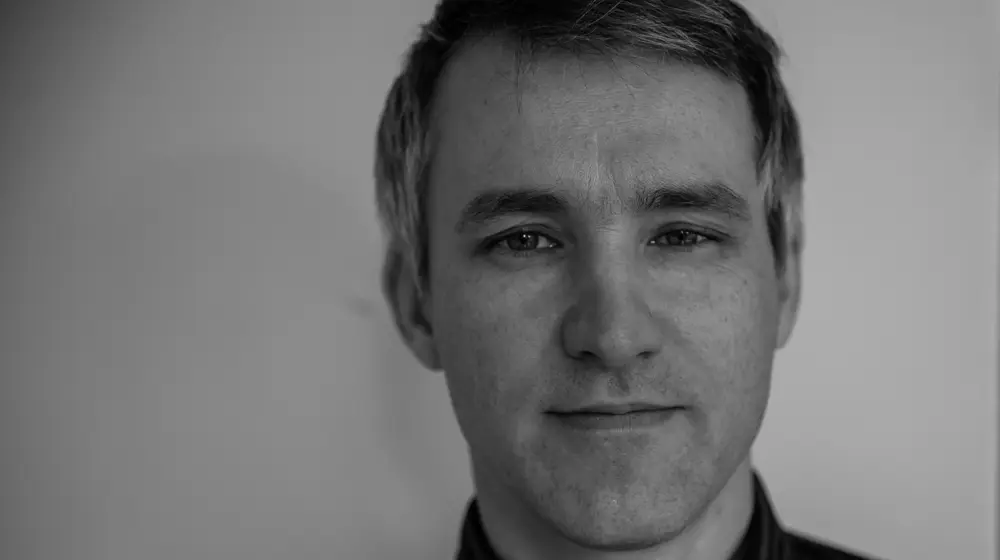
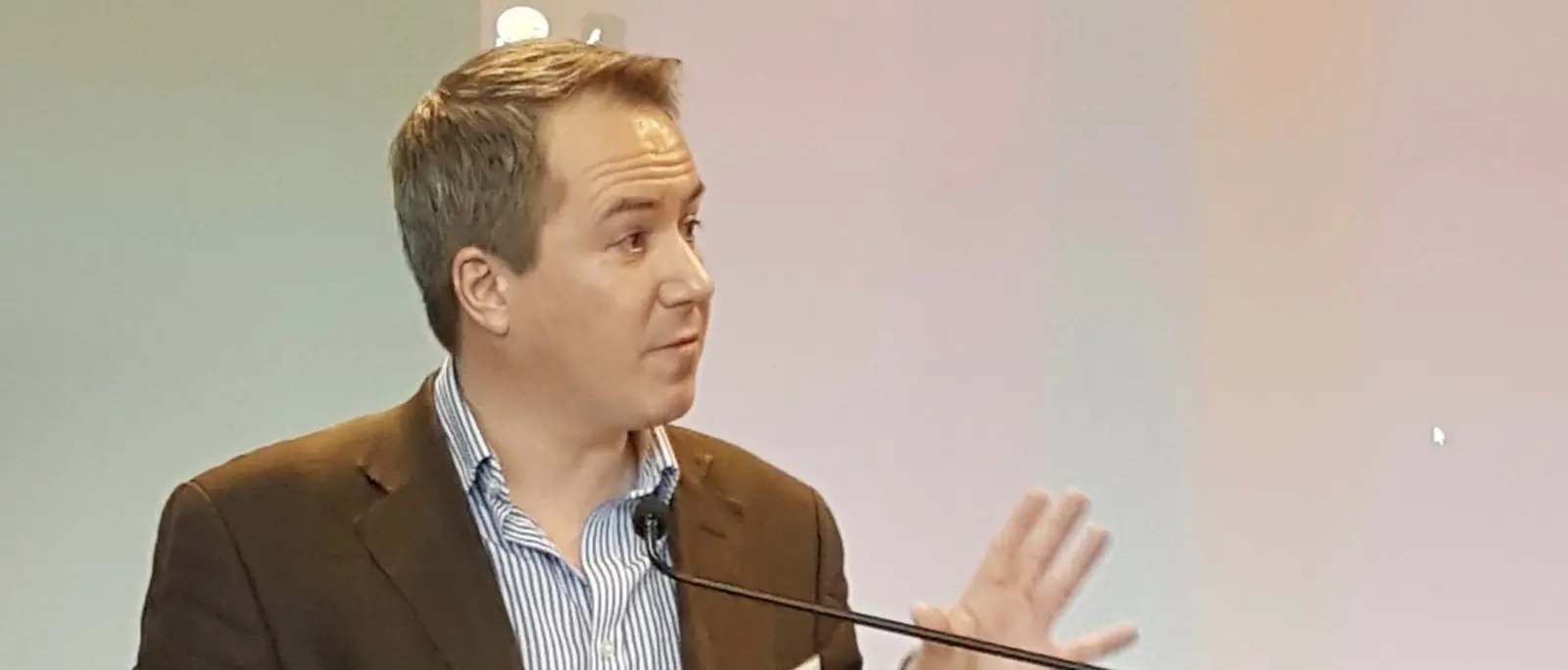
John Sellars is a Lecturer in Philosophy at Royal Holloway, University of London, a Visiting Research Fellow at King’s College London, and a member of Wolfson College, Oxford. John Sellars first studied Philosophy at St David’s University College, part of the University of Wales, and, founded in 1822, the oldest university in England and Wales after Oxbridge. He completed his MA and PhD at the University of Warwick. John Sellars is the author of The Art of Living: The Stoics on the Nature and Function of Philosophy, Stoicism, and editor of The Routledge Handbook of the Stoic Tradition. His next book, Hellenistic Philosophy, will be published by Oxford University Press in 2018. The central focus of his research has been Stoicism and its subsequent reception, with a particular interest in Roman Stoicism. Please enjoy my interview with John Sellars.


How do you describe your occupation?
Usually, I say that I’m an Academic, and perhaps sometimes that I’m a writer, given that I write books. I try to avoid saying ‘I’m a philosopher’.
What is something about you that people might find surprising?
That’s a very difficult question to answer, because what people might find surprising will depend in part on their image of me, and that image will no doubt vary depending on whether they know me, have just read a few things I’ve written, and so on. I have very little sense of how other people see me.
What are you reading at the moment and what made you want to read it?
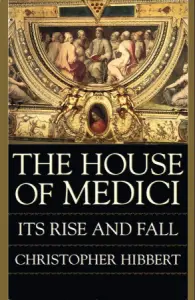
At any one time, I have at least half a dozen books on the go, some connected to research and teaching, others just for pleasure. Right now I’m reading The Rise and Fall of the House of Medici by Christopher Hibbert. I’ve become fascinated by the Renaissance in recent years and have started writing a few things about philosophy during the Renaissance, so I thought it would be good to learn more about the history of the period. Reading this particular book, though, was prompted by watching the series The Medici on Netflix! That book is in effect nested within a number of others that I was already reading and have paused to fit it in. Among those is Meeting with Remarkable Manuscripts by Christopher De Hamel, which I have been really enjoying. At the moment I’m reading mainly history rather than literature, although I’ve gone through periods of reading much more literature than I have been recently.

What was your favourite book as a child and why?
I didn’t read a huge amount as a child. I only really became an avid reader of books in my late teens, after I had left school. But as a young child I do remember reading Asterix books by Rene Goscinny from the library and having a few of my own at home. I think I pretty much read all of them. That was my introduction to the ancient world. When, later, I started reading avidly one book that really struck a chord with me was Walden by Henry David Thoreau. I can still remember the experience of reading it, but I’ve deliberately never revisited it, as I don’t want to undermine the incredible first impression it created.


When did you fall in love with philosophy?
I think I only really fell in love with it once I had started my undergraduate degree. That’s when I started to get a real sense of the subject, its range and its depth. I’d encountered bits and pieces before then but didn’t really have a sense of the subject as a whole. Obviously, I’d read a bit about the subject before deciding to do the degree, but I think I remained a bit unsure about precisely what I was signing up for. It’s worth noting that this was before the internet had taken over, so it was only when I was physically at university, with access to an academic library, that it was possible to explore the subject in any depth. Up until that point, the only philosophy books I had access to were the few Penguin paperbacks stocked by local bookshops.
What was the last book you purchased, and why did you buy it?
I’m buying books all the time, not quite every day but certainly every week; certainly, more than I can ever realistically read. Yesterday we went to a second-hand bookshop that was sadly having a closing-down sale and I came back with a dozen books. Some of these were also Renaissance related and included a copy of The Lives of the Artists by Giorgio Vasari. But the most recent book will have to be the one delivered about 20 minutes ago, which is Taschen’s new facsimile of The Gutenberg Bible. I have a longstanding interest in the history of printing and have a couple of facsimiles of fifteenth-century books; this one I just had to have. Of course, it’s not really a book to read, but it has come with a commentary volume outlining the history of its production, and I certainly hope to read that.


Who would you say are the three philosophers that continue to inspire you?
Hmm. Two philosophers that inspired me early on were Nietzsche and, a little later, Spinoza. It was via those two that I first because interested in Stoicism, but neither of them figures so prominently in my work right now. I suppose one figure that has been a continuing inspiration is Socrates. I deliberately say Socrates rather than Plato, because it’s the figure of Socrates, both in Plato’s early dialogues but also elsewhere, that I’ve found a continual point of reference. I’ve always been a bit suspicious of Plato, which is a legacy of reading Nietzsche early on, and he can so often be infuriating, though it goes without saying that he remains one of the greatest philosophers ever. Perhaps now is the time to put all that to one side and accept that in fact, it’s Plato who is the inspiring one. I’ll go with Socrates/Plato, Spinoza, and Nietzsche, but there are so many others for whom I could make a case, not least various Stoics.
What book have you found most inspiring, what effect did it have on you?
Around the time I finished my undergraduate degree and was starting my Masters degree, I read Philosophy as a Way of Life by Pierre Hadot, which had just come out. This book really joined lots of dots for me. At the time I had been studying and reading widely in European philosophy and literature – Goethe, Nietzsche, Bergson, among others – but also becoming more and more interested in ancient philosophy, particularly Stoicism and Epicureanism, and their very practical approach to the subject. Hadot’s book brought all these interests together and articulated a number of things I had been struggling to work out for myself. It laid the foundations for my PhD and, by extension, everything that I’ve done since. If I hadn’t read it at that particular moment in my life, I might never have delved further into ancient philosophy.

What’s the most obscure book you own; how did you discover it?
I have a bibliography of French translations of The Handbook of Epictetus, published in 1826 in 50 copies. I found it on eBay.

What’s the best book you’ve read in the last 6 months?
I’ve dipped in and out of many good books but one I read cover to cover and really enjoyed was Petrarch: Everywhere a Wanderer by Christopher Celenza. I’ve become fascinated by Petrarch and this is not the first biography of him I’ve read, but I think Chris (whom I’ve met at one or two academic conferences) has done a really good job of both telling the story of his life and capturing his character – or at least what I imagine it to have been like.

What is your proudest achievement?
I think I’ve felt quite proud about a number of things I’ve done at the time. The most recent would be writing a book for Oxford University Press, Hellenistic Philosophy, which comes out this summer. That fulfils quite a longstanding ambition and I’m looking forward to seeing the final product.
What advice would you give a novice, looking for an introduction to philosophy?
I work on the history of philosophy because I came to the view some time ago that philosophy from the past is often more inspiring than much recent philosophy. So, I would definitely recommend some classic texts: any of Plato’s early dialogues, which are so easy to read but open up such big questions, along with the Apology, which gives an iconic image of the figure of the philosopher; Meditations by Descartes are also very easy to read, indeed beautifully written, and deal with so many big philosophical questions. There’s a reason why these are set texts in the first year of almost all philosophy degrees.


If you were trying to impress a visitor, which book that you own would you leave on the coffee table?
How about my 1557 folio of the works of Seneca, or a 1594 edition of Diogenes Laertius, or my 1541 edition of Cicero’s philosophical works. I’ve been collecting early printed books for a while, so these would be the natural talking point.
If an alien landed in your garden; which three books would you gift them to showcase humanity in the best possible way?
I’d be inclined to focus on the visual arts, which to my mind incorporate some of the most impressive human achievements. The Notebooks of Leonardo Da Vinci might be one candidate, which would also communicate something about the history of anatomy, science, and technology; Piranesi’s Vedute di Roma could be another, which would also give a window into antiquity. For the third, how about the Hypnerotomachia Poliphili by Francesco Colonna, often described as the most beautiful book printed in the fifteenth century, with its wonderful illustrations.


Are there any books you haven’t mentioned that you feel would make your reading list?
If you mean books that have been important to me and that I’d recommend to others, well there are so many! I’d have to mention the works of all three of the Roman Stoics – Seneca, Epictetus, and Marcus Aurelius. Then there’s On the Nature of Things by Lucretius. I thoroughly enjoyed reading Jacques the Fatalist by Denis Diderot, Candide by Voltaire, and The Confessions by Jean-Jacques Rousseau. Not that long ago I read A Wicked Company by Philipp Blom which is group biography of the philosophes in eighteenth century Paris and puts those works in context. The Complete Essays by Michel de Montaigne remains an old favourite, while Gargantua and Pantagruel by Francois Rabelais, for me, a genuine laugh-out-loud read.
- The Complete Essays by Michel de Montaigne
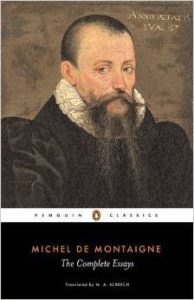 The Complete Essays by Michel de Montaigne
- On the Nature of Things by Lucretius
 On the Nature of Things by Lucretius
- Jacques the Fatalist by Denis Diderot
 Jacques the Fatalist by Denis Diderot
- Candide by Voltaire
 Candide by Voltaire
- The Confessions by Jean-Jacques Rousseau
 The Confessions by Jean-Jacques Rousseau
- A Wicked Company by Philipp Blom
 A Wicked Company by Philipp Blom
- Gargantua and Pantagruel by Francois Rabelais
 Gargantua and Pantagruel by Francois Rabelais
Which book sat on your shelf are you most excited about reading next and why?
I’ve been building up for a while to reading Dante. I’ve read a couple of biographies, have bought more than one translation, and last year visited the Dante House Museum during a brief visit to Florence. Everything I’ve read about The Divine Comedy emphasises its endless depths and the way in which it operates at multiple levels at once. It’s one of those important books where I feel I need quite a bit of background knowledge before I’ll be able to appreciate it fully.

If you’d like to learn more about John Sellars, you can find him on his website and Twitter.
As an Amazon Associate we earn from qualifying purchases made through links on this page.