Kieran Healy: Books on The Science of Social Life
Kieran Healy’s reading list
18 books mentioned in this interview
- The Origins of Unfairness · Cailin O’Connor
- Law and Revolution · Harold Berman
- The Quest for Corvo · A.J.A. Symons
- Pensées · Blaise Pascal
- The Romance of the Three Kingdoms · Luo Guanzhong
- The Hoboken Chicken Emergency · Daniel Pinkwater
- The Meaning of Liff · Douglas Adams and John Lloyd
- The Social Construction of Reality · Peter Berger and Thomas Luckmann
- Racecraft · Karen Fields and Barbara Fields
- The Sources of Social Power · Michael Mann
- Power in the Blood: Popular Culture and Village Discourse in Early Modern Germany · David Warren Sabean
- The Visual Display of Quantitative Information · Edward Tufte
- Visualizing Data · William S. Cleveland
- The Elements of Graphing Data
- Visual Thinking for Design · Colin Ware
- Transformative Experience · L.A. Paul
- The Presentation of Self in Everyday Life
- Behavior in Public Places
Books by Kieran Healy: Data Visualization: A Practical Introduction
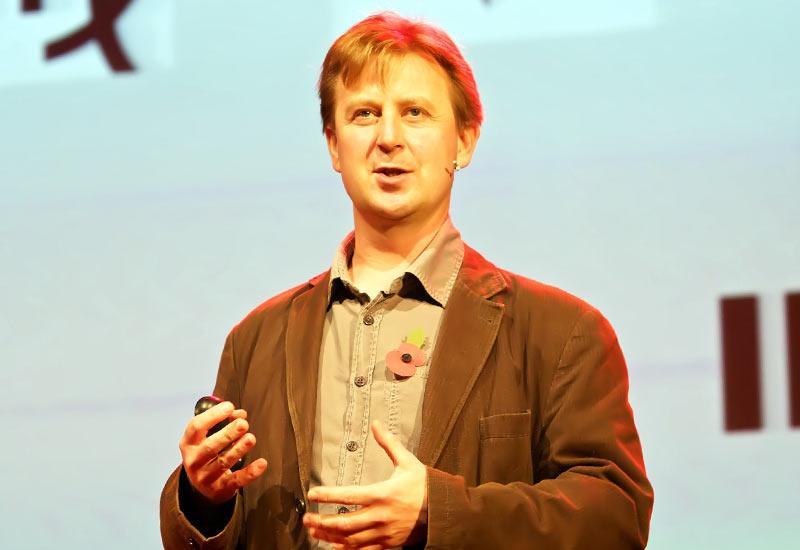
Kieran Healy is a Professor of Sociology at Duke University. Much of his research has been about the social organization of exchange in human blood and organs, cultural goods, software, and ideas. Kieran Healy states his current work focuses on the moral order of market society, the effect of models and measurement on social classification, and the link between those two topics, especially in the consumer credit market. He also works on techniques and methods for data visualization, and some problems in social theory. The most recent book from Kieran Healy is Data Visualization: A Practical Introduction, in which he aims to provide an accessible primer on how to create effective graphics from data.

Please enjoy our interview with Kieran Healy.
How would you explain what Sociology is to a 7-year-old?
A question like this invites me to conjure up a fantasy where I, a Wise Person, am approached by a cheeky but curious child. I take a momentary break from thinking Wise Thoughts, look into the middle distance, and say, “Well, Sociology is the science of social life. Sociologists ask questions about how people’s lives together are organized. Not just organized on purpose, but also organized by half-hidden rules and expectations we share or impose on one another.” I pause, quite pleased with myself. “Now, child, you may ask, how is that different from a discipline like History, or Psychology, or Anthropology, or Economics? To answer that question we must inquire into the development of academic fie—” I look around. The child has run away.
What are you reading at the moment?
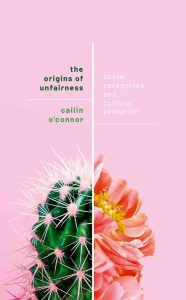
I am currently reading Law and Revolution by Harold Berman, The Origins of Unfairness by Cailin O’Connor and The Quest for Corvo by A.J.A. Symons.


If you could encourage young people to read one book in particular, what would it be and why?
Again with this fantasy where I shape the mind of a youth. “Child, during my earlier discourse you fled, but you have underestimated my ability to track you down. Let me push into your infant hands this copy of Pensées by Blaise Pascal or this edition of The Romance of the Three Kingdoms by Luo Guanzhong. May they entertain you as they did me when I was a boy!” I think the last book I really did encourage a young person to read was The Hoboken Chicken Emergency by Daniel Pinkwater. It’s very good.


What is the worst job you’ve ever had?
As jobs go, most of the ones I’ve had have been perfectly fine. Even the relatively bad ones were mostly just boring. The Meaning of Liff by Douglas Adams and John Lloyd, defines a “pulverbatch” as the collection of menial jobs an author claims to have had before becoming famous. My pulverbatch is weak. My prospects for literary fame are therefore dim.

What’s your favourite thing about teaching Sociology?
For me, the most enjoyable parts of teaching are not very pedagogically sophisticated. For example, sometimes I teach people about data visualization. It is very enjoyable to give someone a tangible skill or technique that they were unaware of before, that they can grasp quickly, and that they can immediately see will be useful to them. That’s a good feeling! But I also teach social theory. I think it’s an interesting and important topic, but this is a minority view. For various reasons, students often resent being made to learn and think about it. Many eventually come to understand why you put them through it, which is another way of saying that you successfully educated them. But this tends to happen after the course is done and by then they are far away.
What books do you feel are important reading for people on your career path and why?
On my specific career path of being a sociologist, the books I feel are important to read are the ones I teach in my courses. This is one of the main benefits of being an academic! You can take books like, say, The Social Construction of Reality by Peter Berger and Thomas Luckmann, or Racecraft by Karen Fields and Barbara Fields, or The Sources of Social Power by Michael Mann, and say “Read this!” and then they have to read it. It’s great.
- The Social Construction of Reality by Peter Berger and Thomas Luckmann
 The Social Construction of Reality by Peter Berger and Thomas Luckmann
- Racecraft by Karen Fields and Barbara Fields
 Racecraft by Karen Fields and Barbara Fields
- The Sources of Social Power by Michael Mann
 The Sources of Social Power by Michael Mann
Is there a book that you’ve read more than once? What is it and why did you revisit it?
It would be very strange to have never read any book more than once. I re-read books constantly, either because I’m teaching it or because I’m trying to understand something better. One of the best things that a good undergraduate class can teach you is how to re-read something properly. For example, I don’t know anything about early modern German history, but I had to read Power in the Blood: Popular Culture and Village Discourse in Early Modern Germany by David Warren Sabean, very slowly, carefully and repeatedly as part of a Sociology of Community course as a third-year undergraduate. I learned a tremendous amount in the process. The cases are fascinating: a girl who is branded as a witch; a man who publicly refuses to say his prayers; the ritual burial of a bull at a crossroads. For me, it was the first academic monograph whose structure and argument I really grasped. In the process, I came to understand how hard it must be to write a book that good.

What’s your favourite genre of book?
I am bad at favourites, I’m afraid.
What books played a role in your research/inspiration for your latest book Data Visualization?
The physical layout of the book is directly inspired by The Visual Display of Quantitative Information by Edward Tufte. A book I knew already and really wanted to emulate in some ways is Visualizing Data by William S. Cleveland. That book (and another one of his, The Elements of Graphing Data) is one of those classics that aren’t widely known out in the world but which every expert in a field has sitting on their shelf. And a book I did not know before starting to write mine, but which I learned a great deal from, is Visual Thinking for Design by Colin Ware. There were many others besides these, of course.
- The Visual Display of Quantitative Information by Edward Tufte
 The Visual Display of Quantitative Information by Edward Tufte
- Visualizing Data by William S. Cleveland
 Visualizing Data by William S. Cleveland
- The Elements of Graphing Data
 The Elements of Graphing Data
- Visual Thinking for Design by Colin Ware
 Visual Thinking for Design by Colin Ware
- transformative experience - kieran Healy
 transformative experience - kieran Healy
What book do you feel humanity needs right now?
What humanity needs right now cannot be delivered in book form.
What is the book that you feel has had the single biggest impact on your life?
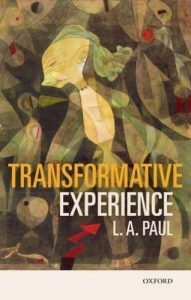
Transformative Experience by L.A. Paul, because of the effect it had on its author.

What books or subject matter do you plan on reading in the next year?
I’m tempted to say The Presentation of Self in Everyday Life or Behavior in Public Places, both by Erving Goffman, because like many people over the past year I have forgotten how to do these things and will need to brush up on my skills. Everyone should read more Goffman.


If you were to write an autobiography – what would it be called?
The idea of me writing an autobiography is laughable. Good autobiographies are written by people whose lives are filled with notable or entertaining events, who are unselfconscious enough to be candid, but self-aware enough not to be tedious. I fail on all these counts.
If you’d like to learn more about Kieran Healy, you can find him on his website and on Twitter.
As an Amazon Associate we earn from qualifying purchases made through links on this page.