Todd Zywicki: How To Read And Think
Todd Zywicki’s reading list
25 books mentioned in this interview
- 12 Rules for Life · Jordan Peterson
- The Boxcar Children · Gertrude Chandler Warner
- Hardy Boys books · Franklin W. Dixon
- Animal Farm · George OrwellRecommended 8 times
- A Conflict of Visions · Thomas Sowell
- Law and Revolution · Harold Berman
- Law, Legislation, and Liberty, Volume 1: Rules and Order · F.A. Hayek
- Atlas ShruggedRecommended 9 times
- Lonesome DoveRecommended 5 times
- We the Living
- The Fountainhead
- Anthem
- Spe Salvi · Pope Benedict the XVI
- The Rhythm of Life
- The Seven Levels of Intimacy
- Please Understand Me II · David Keirsey
- The Righteous Mind: Why Good People are Divided by Politics and Religion · Jonathan HaidtRecommended 3 times
- The Five Love Languages · Gary ChapmanRecommended 3 times
- iGen
- The Road to Serfdom · F.A. HayekRecommended 3 times
- The Last Lion · William Manchester and Paul Reid
- The Red Queen
- The Origins of Virtue
- White Guilt · Shelby Steele
- Les Miserables · Victor HugoRecommended 4 times
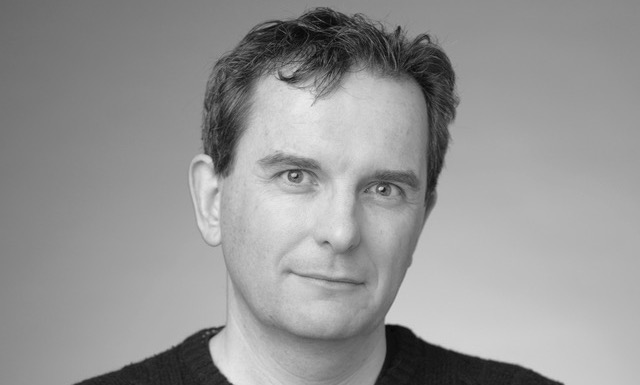
Todd Zywicki is George Mason University Foundation Professor of Law at George Mason University School of Law, teaching in the areas of bankruptcy and contracts. Zywicki graduated from East Side High School in Greenville, SC in 1984. Todd Zywicki attended Dartmouth College, graduating in 1988 A.B. cum Laude with High Honors in Government Major. At Dartmouth, he was a member of Zeta Psi Fraternity. Zywicki attended Clemson University, graduating in 1990 with an M.A. Economics. Todd Zywicki attended University of Virginia School of Law. He is a member of the Board of Directors of the Bill of Rights Institute, and the governing board of the Financial Services Research Program at The George Washington University School of Business. Todd Zywicki is also a senior fellow of the James Buchanan Center for Political Economy Program on Philosophy, Politics, and Economics at George Mason University, a senior fellow of the Goldwater Institute, a senior scholar of the Mercatus Center at George Mason University, and a fellow of the International Centre for Economic Research in Turin, Italy. Todd Zywicki is the author of more than 50 articles in law reviews and economics journals. Please enjoy my interview with Todd Zywicki.
When someone asks you ‘what do you do for a living?’ – How do you respond?
Primarily a law professor… but I also wear a lot of hats!

What are you reading at the moment?
I finally succumbed to the buzz and had to find out for myself what it was all about so I just started reading 12 Rules for Life by Jordan Peterson.

What’s your earliest memory of reading?
When I was in elementary school I had the best librarian ever. I had read just about every book in the library and so she knew me as a “regular.” She brought in the whole set of The Boxcar Children by Gertrude Chandler Warner and donated them to the library since her kids were done with them. After I was done with those, she brought in her kids Hardy Boys books by Franklin W. Dixon. What a kind woman!


If you could encourage young people to read one book in particular, what would it be and why?
What a great question! My daughter is 12 years old and has been a voracious reader since she was little (I wonder where she got that from?). For me, the one that impacted me the most was reading Animal Farm by George Orwell in 9th grade. The concept of the book is brilliant, of course, but it also opens a new perspective on understanding history and the nature of humanity.

What is the worst job you’ve ever had?
Working the night shift (8 pm-8 am) on a production line producing plastic Nyquil bottles.
Do you read as much as you’d like to?
No—does anyone? Then again, I love my job and I get to read a lot of fascinating academic work for that so I don’t have much cause to complain.
What books do you feel are important reading for people on your career path and why?
I have two interwoven career paths—as both a lawyer and as a professor. Lawyers jobs are relatively trade-oriented with a lot of specialized reading. Law professors should be broader read and have a greater understanding of the overall structure and history of the legal system and especially the common law. I would recommend three books as especially important:
A Conflict of Visions by Thomas Sowell: The fault lines between what can broadly be described as “conservative” and “liberal” approaches to law are described in that book. Professors too often implicitly assume that students experience the world the same way that they do. To reach every student in the class the teacher needs to be able to speak multiple different “languages” in terms of approaching issues from different foundational priors and modes of reasoning. Sowell is an excellent introduction to that reality in the context of application to law specifically.
Law and Revolution by Harold Berman: A big, thick book, but it lays out the conceptual foundation for the rule of law and understanding of the historical roots of the rule of law and limited government.
Law, Legislation, and Liberty, Volume 1: Rules and Order by F.A. Hayek: Hayek’s concept of “spontaneous order” and its application to understanding the evolved nature of the common law with no central designer is the best conceptualization of the common law, especially to appreciate how it fundamentally differs from legislation and regulation.


Is there a book that you’ve read more than once? What is it and why did you revisit it?
As a law professor, I have read Law, Legislation, and Liberty, Volume 1: Rules and Order by F.A. Hayek multiple times. The idea of spontaneous order—or order without design—is the single most important insight in all of social science, with applications far beyond the law.
Two other books I’ve read more than once are more conventional. First, I have read the Lonesome Dove tetralogy twice. The series is the single greatest meditation on male friendship that I have come across. I’ve read each of Ayn Rand’s novels (We the Living, The Fountainhead, Atlas Shrugged, and Anthem) three times each—once in my 20s, 30s, and 40s. I expect to re-read them again in my 50s. These are books that have spoken to me in different ways at various stages of my life and continue to challenge and even inspire me.
Although you asked for one book I will put three more on the list that I have returned to repeatedly as sources of spiritual enrichment and nourishment. The first is Spe Salvi by Pope Benedict the XVI, which lays out the fundamental challenge of being human in the world. Two books by Matthew Kelly, The Rhythm of Life and The Seven Levels of Intimacy have provided remarkably clear and inspiring applications of those more abstract lessons on how to live on a day-to-day basis.
- Atlas Shrugged
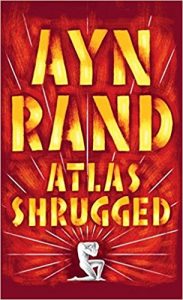 Atlas Shrugged
- Law, Legislation, and Liberty, Volume 1: Rules and Order by F.A. Hayek
 Law, Legislation, and Liberty, Volume 1: Rules and Order by F.A. Hayek
- Lonesome Dove
 Lonesome Dove
- We the Living
 We the Living
- The Fountainhead
 The Fountainhead
- Anthem
 Anthem
- Spe Salvi by Pope Benedict the XVI
 Spe Salvi by Pope Benedict the XVI
- The Rhythm of Life
 The Rhythm of Life
- The Seven Levels of Intimacy
 The Seven Levels of Intimacy
What book have you recommended the most to friends and family?
If I have to pick one, over time I would say Please Understand Me II by David Keirsey. Although given the ongoing political and social friction of recent years The Righteous Mind: Why Good People are Divided by Politics and Religion by Jonathan Haidt has probably been the book I have recommended most in the last 12-18 months. The Five Love Languages by Gary Chapman is a book that I recommend almost constantly as relevant to everybody’s lives at the most basic level.
- Please Understand Me II by David Keirsey
 Please Understand Me II by David Keirsey
- The Righteous Mind: Why Good People are Divided by Politics and Religion by Jonathan Haidt
 The Righteous Mind: Why Good People are Divided by Politics and Religion by Jonathan Haidt
- The Five Love Languages by Gary Chapman
 The Five Love Languages by Gary Chapman
What’s your favourite genre of book?
Evolutionary Psychology.
What do you think a world without books would be like?
Increasingly it would be like the world is becoming today, where people lack the attention span and focus to read and think deeply about complex ideas that required extended attention and thought. Instead, we would be limited to ideas that can be expressed in a blog post or 140 characters. In my 20 years as a law school professor, I have already seen “experts” advise us that we should cater to students by providing shorter, more multimedia class assignments. Maybe once the Supreme Court stops issuing 85-page opinions I’ll consider taking that advice. Until then, I think it’s my job to teach my students how to read and think.
Is there an author whose writing you’re such a fan of, that you’ll read everything they release?
No. I’ve read most everything that Evelyn Waugh, Graham Greene, and Tom Wolfe wrote… but I don’t expect them to be releasing anything new (at least in this life). Of contemporary authors, my friend and fellow law professor Richard Epstein is probably the closest in terms of someone of whom I am a fan and read just about everything he releases.

Do you think digital books will ever completely replace real books?
They probably will, I’m afraid. I just read Jean Twenge’s insightful book iGen, which documents an explosive migration of kids away from print books, magazines, and newspapers. I had thought it was somewhat linear—what she shows is a complete collapse in traditional media. It is hard to see what causes a reversal in that trend in later generations.

What book do you feel humanity needs right now?

What is the book that you feel has had the single biggest impact on your life?
Spe Salvi by Pope Benedict the XVI. But it is hard to distinguish that from about 12 others, so ask me again tomorrow and I might give you a different answer.
Are there any books you haven’t mentioned that you feel would make your reading list?
The Last Lion by William Manchester and Paul Reid, Volumes 1 and 2. The story of Churchill is the story of how one man changed the course of history. I also would be remiss if I didn’t add two books by Matt Ridley, The Red Queen and The Origins of Virtue, which are terrific introductions to the insights of evolutionary psychology (which, in turn, transformed my thinking about the world). White Guilt by Shelby Steele is a fascinating essay on the underlying dynamics of many of the social and political trends that increasingly have been tearing apart the fabric of American society over the past few decades. Finally, I was blown away by Les Miserables by Victor Hugo, which is a great story on multiple levels, not the least of which is its unrivalled depiction of the special bond of father-daughter love.


What books or subject matter do you plan on reading in the next year?
The last 18 months or so for me have been a pretty tumultuous period for me and the two years immediately preceding that were periods of a highly intense and busy work schedule. I intend to spend this year following where the winds blow me. I also have two books that I plan to write myself over the next two years or so, one on behavioural economics and one on the economics and regulation of higher education, so I expect to be spending a lot of time immersed in those fields. As if I didn’t have enough books that I already wanted to read, 12 Rules for Life have already added about 6 more books to my list—and I’m only halfway through!
If you were to write an autobiography – what would it be called?
Zywickipedia: The Encyclopedic Wanderings of a Restless Mind and Soul.
If you’d like to learn more about Todd Zywicki, you can find him on his faculty page.
As an Amazon Associate we earn from qualifying purchases made through links on this page.