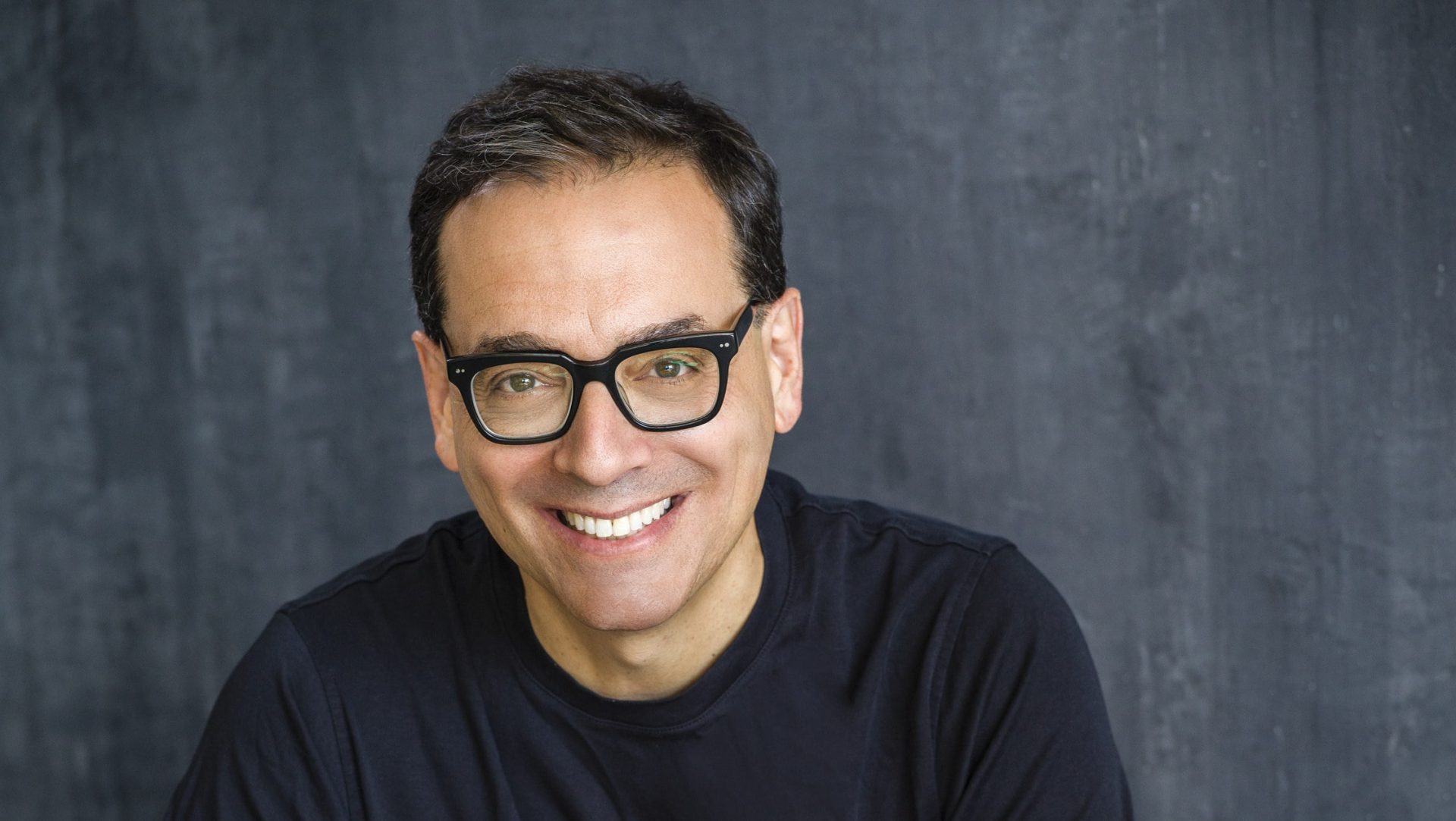
George Berkowski: The Hunger To Learn And Adapt
George Berkowski’s reading list
5 books mentioned in this interview
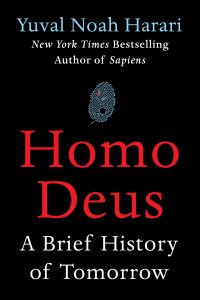
- Homo Deus: A Brief History of Tomorrow · Yuval Noah HarariRecommended 7 times
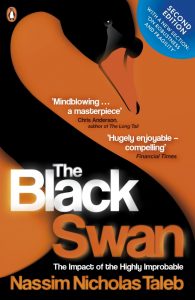
- The Black Swan · Nicholas Nassim TalebRecommended 4 times
- A Prayer for Owen Meany · John IrvingRecommended 7 times
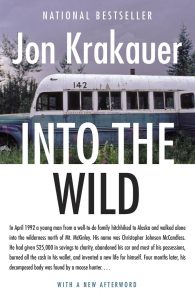
- Into the Wild · Jon Krakauer
- Man’s Search for Meaning · Viktor FranklRecommended 29 times
George Berkowski is a well respected entrepreneur who has made a name for himself by building businesses in manned space flight, online dating, transportation and mobile apps. George’s latest venture is DeepAR.ai, a deep learning AI startup that provides a powerful SDK that allows any app or website to incorporate Snap-like masks, lenses, filters and special effects in a matter of minutes. George Berkowski is one of the minds behind the successful taxi hailing app Hailo, where he led a product team and launched the app in 13 cities, helping to drive the first $150 million in revenue. George Berkowski attended at the Massachusetts Institute of Technology, where he studied rocket science and economics. He was also the Chairman of MIT’s Enterprise Forum in the UK and is heavily involved in the UK and US startup scenes, spending some of his time in London and some of his time in Silicon Valley. Please enjoy my interview with George Berkowski…
When someone asks you ‘what do you do for a living?’ – How do you respond?
That’s a great question. I have replied to that question differently over the years. I still think that Rocket Scientist is a favourite. Right now I reply that I am lucky enough to be able to say that I build products that people love.
What are you reading at the moment?
I’m reading Homo Deus: A Brief History of Tomorrow by Yuval Noah Harari. I am fascinated by massive societal and technological changes over the last 200 years and how they are transforming what it means to be human. Adaption and education have never been as critical to our survival as they are today.

What’s your earliest memory of reading?
My parents used to read to me a lot as a child. I used to love to a series of children’s books called Golden Books when I was very young. It was a collection of tales that seemed to be never-ending.
If you could encourage young people to read one book in particular, what would it be?
Tough question since there are so many things you people need to read. I think a combination of the classics, economics and scientific journals should be required … so that young people can latch onto something they find interesting.
Can you remember your first demonstration of entrepreneurial ability?
I do. It was back in primary school when we had to set up a stall for a school carnival with the goal of raising money. I roped my mother into baking all kinds of cupcakes, and then created a production line to jazz up relatively standard little cakes, into highly decorated, and all individually decorated little treats (I had to do that part since my mother refused to put in the additional effort, understandably). I then recruited a friend in my class to man the stand, we both dressed in full miniature chef outfits, and I ended up selling to every person walking by. It gave me my first taste of creating something that people really enjoyed and wanted to pay money for.
What is the worst job you’ve ever had?
Working in a local fried chicken takeaway.
Do you read as much as you’d like to?
No. But I read a tonne everyday. You need to read continually just to stay afloat in the tech world.
What books do you feel are important reading for people on your career path?
I think people wishing to work in the tech world, and especially those with an entrepreneurial bent, need to understand and appreciate a few subtle concepts. The first is that you really have to understand technology – that means software. That means understanding and communicating with machines of one sort or another. Secondly, I think people need to understand that products and services are essentially bought and not sold, and therefore understanding people and how they consume technology is critical to understand. Thirdly, people need to understand that most of life is luck, turning up, and perseverance. The media loves to re-enforce various cognitive biases we have – over-emphasizing the causation of the success of the most successful tech entrepreneurs – when most, if not all, have acknowledged that luck and timing were responsible in large part for where they have ended up.
To that end, reading The Black Swan by Nicholas Nassim Taleb helps put all that into context.

When you think of success in the business world, who is the first person that comes to mind?
Jeff Bezos is a new kind of entrepreneur. I love what he has achieved with Amazon – and especially Amazon Web Services. The latter is only one of a couple “businesses” that has hit $10 Billion in under 10 years (Google being the other). His ability to evolve an eCommerce company into a pure tech and infrastructure company, and now into a platform to build new businesses, is astounding. I think the flywheel he has created – infrastructure / tech / commerce / user purchase intent – will spin out numerous new billion-dollar businesses.
Is there a book that you’ve read more than once? What is it and why did you revisit it?
Apart from my own (which I had to while writing), no.
What book have you recommended the most to friends and family?
A Prayer for Owen Meany by John Irving. One of the most moving, memorable, original and powerful books I have read.

What two pieces of advice would you give a young aspiring entrepreneur?
Stop talking about it, and get out there and do it (you learn most from doing – struggling – and ultimately course-correcting). Understand people as much as you can, research their problems, and address them. A passion for solving people’s problems and making them happy differentiates the real entrepreneurs from the rest.
What’s your favourite genre of book?
I don’t have favourites. I am more of a mood-reader.
What do you think a world without books would be like?
Dull.
Is there an author whose writing you’re such a fan of, that you’ll read everything they release?
John Irving and Haruki Murakami. Their ability to create characters, generate empathy and project you into someone else’s mind is astounding.
Do you think digital books will ever completely replace real books?
Yes. I don’t know when, but I think eBooks, audiobooks, are all just formats to communicate stories, experiences, information and insights. In the next decade – the post iPhone decade – we’re headed to more intuitive, integrated and powerful human machine interfaces – think Mixed and Augmented Reality (MR/AR). I think story telling and experience sharing will change massively. When the first generation of children goes through school with MR / AR in place of books, that format will start to disappear.
What book do you feel humanity needs most right now?
Both the hunger, and ability to learn and adapt. Our world is changing so fast, that most people are being left behind. People, understandably, are clinging to a simple, non-technological past. I don’t think that’s an option for anyone. So helping people develop both the passion – and capacity – to help themselves adapt is critical.
What is the book that you feel has had the single biggest impact on your life?
Impossible to say. Life is a not a serious of “big impacts” – it is a collection of tiny, medium and large experiences which are all intertwined. A passion for asking questions, the confidence to search for answers, and the patience to explain things to other people, have impacted me the most (thanks to my parents for instilling that early on).
What’s the worst advice you hear given to young people looking to start their own business?
I think advice is easy to give. Pithy, succinct quotes sound nice and make business sound simple. It’s not. It’s not about perseverance, or “just having” great idea at the right time. Starting a business is a complex, interdependent process with lots of variables. There is nothing simple about it.
Avoid people who make everything sound simple and avoid lists that encapsulate “10 Golden Rules”. Acknowledge that it’s going to be tough, you’re going to have to continually learn and adapt, and that only by really loving what you do have a decent chance of success.
Are there any books you haven’t mentioned that you feel would make your reading list?
While many books have had a profound impact on me, I would highlight 2 that really packed a punch. I think Into the Wild by Jon Krakauer presents a beautifully crafted work of self-discovery that ends in a combination of tragedy, beauty and poignancy. One of my favourite phrases as a result of that book is “Happiness shared”. Those two words, and the narrative that leads to that simple, yet profound realisation is one that I keep in front of mind.
Man’s Search for Meaning by Viktor Frankl is the second tale of human perseverance and the essence of what it is to be human (and inhuman). Again, it is a simple tale that forced me to open my eyes to the reality of war and atrocity – and the beauty of human resilience.


What books or subject matter do you plan on reading in the next year?
More books on AI and conscientiousness. There are also a few Murakami books I haven’t yet read (really looking forward to 1Q84)
If you were to write an autobiography – what would it be called?
Never a Dull Moment.
If you’d like to learn more about George Berkowski, you can find him on his website, Facebook and Twitter.
As an Amazon Associate we earn from qualifying purchases made through links on this page.