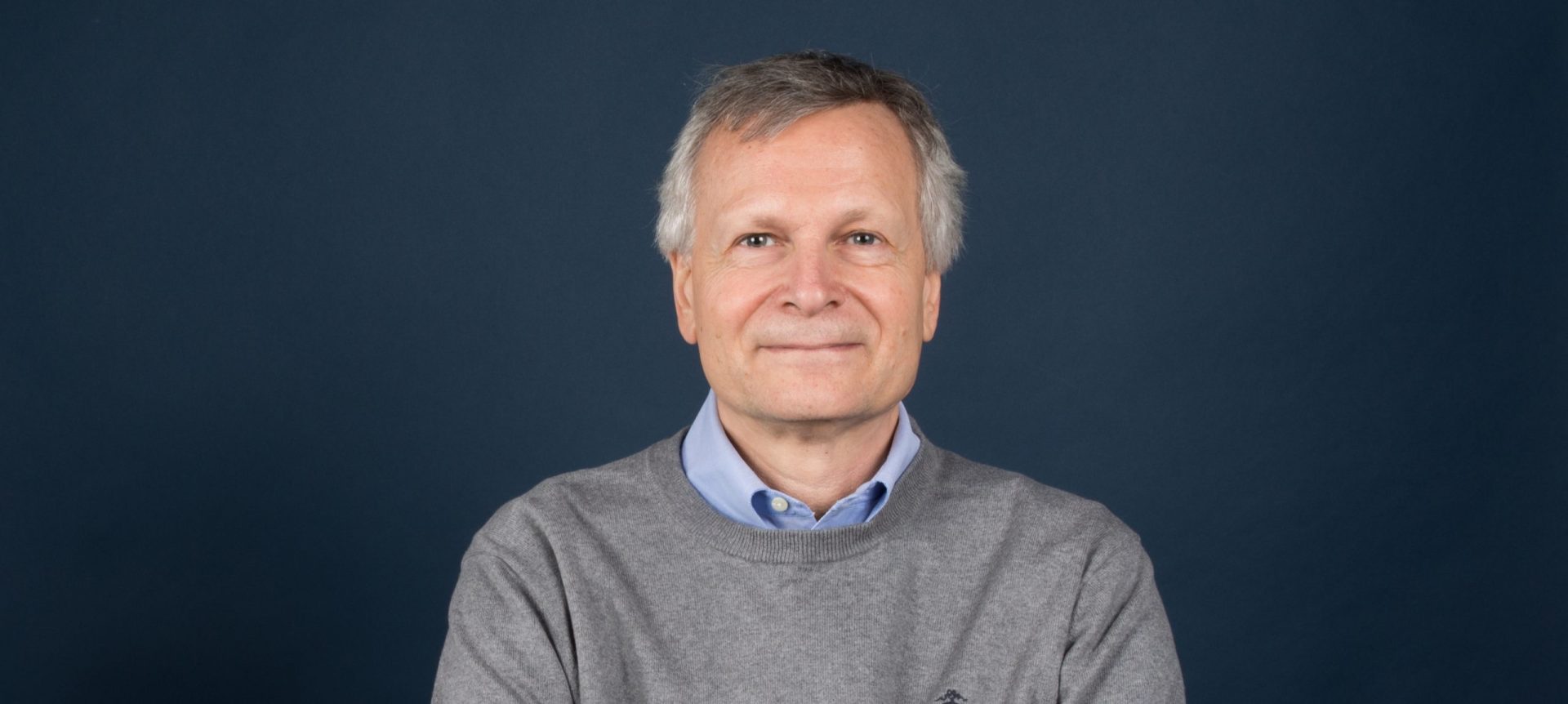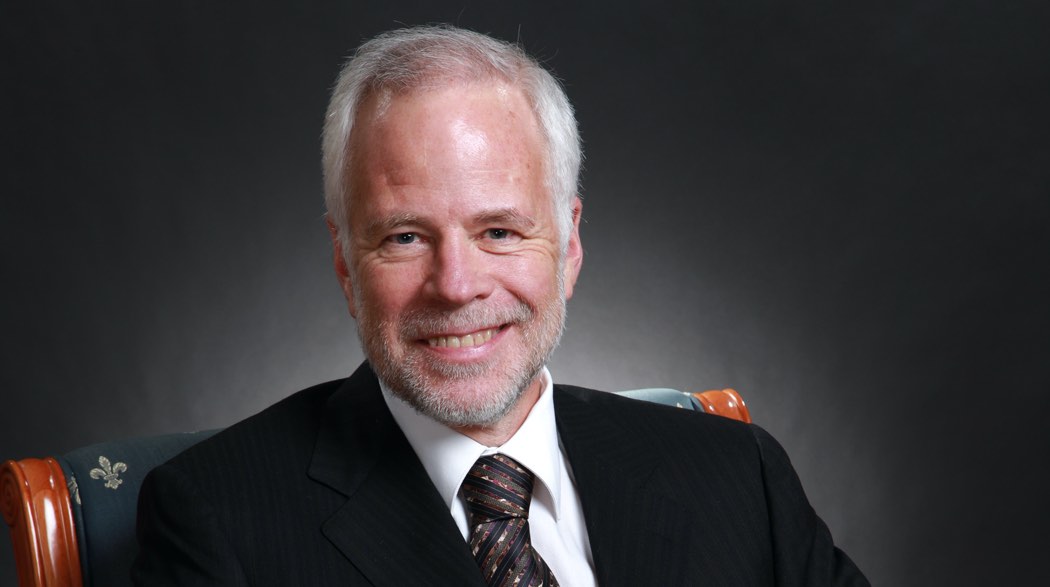
Barry Eichengreen: Putting Pen to Paper for Understanding
Barry Eichengreen’s reading list
15 books mentioned in this interview
- The Silent World · Jacques CousteauRecommended 3 times
- A Promised Land · Barack ObamaRecommended 3 times
- The Broken Heart of America: St. Louis and the Violent History of the United States · Walter Johnson
- Veeck as in Wreck
- Deaths of Despair and the Future of Capitalism · Anne Case and Angus Deaton
- Culture and Prosperity: The Truth about Markets · John Kay
- The Big Short
- Winter War: Hoover, Roosevelt, and the First Clash Over the New Deal · Eric Rauchway
- Life on Two Levels: An Autobiography · Josephine Whitney Duveneck
- The Great Demographic Reversal: Ageing Societies, Waning Inequality and an Inflation Revival · Charles Goodhart and Manoj Pradhan
- The Wealth of Nations · Adam SmithRecommended 11 times
- General Theory of Employment, Interest and Money · John Maynard Keynes
- The Great Transformation · Karl Polanyi
- A Monetary History of the United States, 1867-1960 · Milton Friedman and Anna Schwartz
- The Boundless Sea: A Human History of the Oceans · David Abulafia
Books by Barry Eichengreen: The Populist Temptation: Economic Grievance and Political Reaction in the Modern Era
Barry Eichengreen is the George C. Pardee and Helen N. Pardee Professor of Economics and Professor of Political Science at the University of California, Berkeley, where he has taught since 1987. He is a Research Associate of the National Bureau of Economic Research (Cambridge, Massachusetts) and Research Fellow of the Centre for Economic Policy Research (London, England).
Professor Barry Eichengreen has held Guggenheim and Fulbright Fellowships and been a fellow of the Center for Advanced Study in the Behavioral Sciences (Palo Alto) and the Institute for Advanced Study (Berlin). From 2004 to 2020 he served as convener of the Bellagio Group of academics and officials. Barry Eichengreen is a regular monthly columnist for Project Syndicate. His most recent book is The Populist Temptation: Economic Grievance and Political Reaction in the Modern Era.
Professor Barry Eichengreen was awarded the Economic History Association’s Jonathan R.T. Hughes Prize for Excellence in Teaching in 2002 and the University of California at Berkeley Social Science Division’s Distinguished Teaching Award in 2004. He is the recipient of a doctor honoris causa from the American University in Paris, and the 2010 recipient of the Schumpeter Prize from the International Schumpeter Society. He was named one of Foreign Policy Magazine’s 100 Leading Global Thinkers in 2011.

Please enjoy my interview with Barry Eichengreen.
How do you describe your occupation?
As a professor of economics and kindred disciplines, which means teaching, researching and mentoring, but also as something of a public intellectual. I try to write books and columns for nonspecialist readers. When my wife dips into these, she reminds me that I need to try harder.
What is something about you that people might find surprising?
How much time I spend in the water. Lots of other forms of exercise get harder as you get older. Swimming and scuba diving, not so much. The classic reference is, of course, The Silent World by Jacques Cousteau, the inventor of modern scuba.

What are you reading at the moment and what made you want to read it?
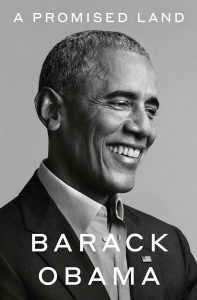
A Promised Land by Barack Obama, because I was interested in how he perceived the economic challenges of his administration (and because he wrote it himself). The Broken Heart of America: St. Louis and the Violent History of the United States by Walter Johnson, because it’s an example of the so-called “New History of Capitalism,” because it’s a history of institutional racism in the United States, and because I was interested in how one could write a history of the country, from independence to the present day, through the lens of a single city.


What was your favourite book as a child and why?
Depends on what ages you think qualify as childhood. I’m going to say Veeck as in Wreck, Bill Veeck’s autobiography. It’s a great baseball book, and baseball was a childhood passion. But with hindsight, I also see that it’s probably the best book ever about baseball economics and entrepreneurship more generally. Veeck was the first club owner to use modern promotion to turn out crowds. He sent a midget up to bat. He invented the exploding scoreboard. And that was only the beginning.

Which three books would you recommend for a complete novice who wants to learn about economics?
Here I’m going to avoid textbooks and books about the methodology on the grounds that even a complete novice should be entertained. I’d recommend Deaths of Despair and the Future of Capitalism by Anne Case and Angus Deaton, to introduce the data economists analyse, how they analyse it, and why it matters. Culture and Prosperity: The Truth about Markets by John Kay, is a fine introduction to the different way economies are organized. The Big Short, by my neighbour Michael Lewis, is an entertaining and economically literate read about how financial markets function and malfunction.


What was the last book you purchased, and why did you buy it?
Winter War: Hoover, Roosevelt, and the First Clash Over the New Deal by Eric Rauchway. It’s about the interregnum between the 1932 presidential election in which Roosevelt defeated Hoover and the 1933 inauguration of FDR. I bought it because I was using it for teaching and it wasn’t available online (true confession). But I was struck by the incredible parallels between the 1932-3 transition of presidential power and the 2020-1 “handoff” from Trump to Biden. Rauchway also fights back, successfully in my view, against the conventional wisdom literature that FDR was a “serial experimenter” who lacked a clear program and agenda on taking office and that he succeeded despite this fact.

What book have you found most inspiring, what effect did it have on you?
Life on Two Levels: An Autobiography by Josephine Whitney Duveneck. The story of a New York Whitney who moved to California, started the Peninsula School, established a nature conservancy, ran a summer camp bringing together kids from the inner city and suburbs, and engaged in other public-spirited works. She changed hundreds of lives, including mine when she hired me as a dishwasher and then a swimming instructor – the counselling experience that led me to go into education.

What inspired you to write your most recent book ‘The Populist Temptation’?
Shock and incomprehension over the triumph of Leave in the Brexit referendum and of Donald Trump in the 2016 presidential election. Clearly, there was something about the impact of economic disturbances on people’s lives and about the political reaction that I didn’t fully understand. And when I don’t understand something I tend to “put pen to paper” (or fingers to keyboard) as a way of ordering my thoughts.
What’s the best economics book you’ve read in the last 6 months?
The best economics book was The Great Demographic Reversal: Ageing Societies, Waning Inequality and an Inflation Revival by Charles Goodhart and Manoj Pradhan (‘best book’ doesn’t mean that I necessarily agree with their forecasts and policy conclusions!).

What is your proudest achievement?
I’m going to limit this to my proudest professional achievement. (The personal is too personal.) I’d point to the undergraduates I’ve mentored who’ve gone on to graduate school, and the Ph.D. students I’ve directed who’ve gone on to successful and distinguished careers in academia and public service. Nothing is more gratifying.
What’s the greatest book on economics ever written?
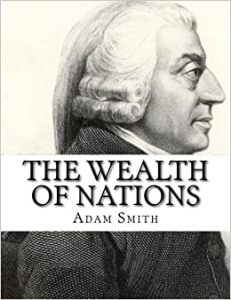
There’s an impossible question. It’s similarly impossible not to start with The Wealth of Nations by Adam Smith. Smith is known for his cogent analysis of how markets work, and of how they enable prosperity by facilitating exchange, specialization and division of labor. But the book contains much more. For instance, I’ve recently been working on the history of public debt, and Smith has cogent things to say about its origins and implications.
If you restrict me to the 20th century, I would point (naturally) to General Theory of Employment, Interest and Money by John Maynard Keynes, which changed the way we think about macroeconomics (which, in a sense, invented the subdiscipline of macroeconomics). I’d point to The Great Transformation by Karl Polanyi, the Hungarian-American political economist, which changed the way we think about the connections between markets, society and the state. I’d point to A Monetary History of the United States, 1867-1960 by Milton Friedman and Anna Schwartz, which showed how history, theory and statistics could be combined to advance an economic argument and, in so doing, rehabilitated monetary policy as a tool of macroeconomic stabilization.
- The Wealth of Nations by Adam Smith
 The Wealth of Nations by Adam Smith
- General Theory of Employment, Interest and Money by John Maynard Keynes
 General Theory of Employment, Interest and Money by John Maynard Keynes
- The Great Transformation by Karl Polanyi
 The Great Transformation by Karl Polanyi
- A Monetary History of the United States, 1867-1960 by Milton Friedman and Anna Schwartz
 A Monetary History of the United States, 1867-1960 by Milton Friedman and Anna Schwartz
If you were trying to impress a visitor, which book that you own would you leave on the coffee table?
We’re not much into impressing visitors. Even if we were, there are no visitors due to Covid 19. We currently have on the coffee table Hekiunsō: The Nomura Villa of Kyoto. I guess that’s what you take out to look at when you’re temporarily unable to travel.
If you could only teach the youth of today one thing about economics, what would it be and why?
While people respond to incentives (the neoclassical economist’s favorite point), their responses are also shaped by social convention (peer pressure and internalized feelings of what is right) and by prior experience (the notoriously high saving and conservative investment behaviour subsequently of people who had experienced the Great Depression as young adults springs to mind as an example). The task for the economist (or anyone else) seeking to understand economic behaviour is to understand how incentives, social convention and historical experience combine.
Which book on your shelf are you most excited about reading next and why?
The Boundless Sea: A Human History of the Oceans by David Abulafia. I got to know the author a little bit during a sabbatical to Cambridge. I’m both attracted to the topic (see scuba-diving comments above) and staggered by how a single scholar can write a book of such scope and ambition.

If you’d like to learn more about Barry Eichengreen, you can find him on his faculty page and on Twitter.
As an Amazon Associate we earn from qualifying purchases made through links on this page.