John Ashcroft: Always Challenge Established Thinking
John Ashcroft’s reading list
17 books mentioned in this interview
- A Higher Loyalty · James Comey
- How to Turn Down a Billion Dollars: The Snapchat Story · Billy Gallagher
- My Family and Other Animals · Gerald Durrell
- In Search of Excellence · Tom Peters
- Economics · Mark Taylor and Gregory Mankiw
- Macroeconomics · Rudiger Dornbusch and Stanley Fischer
- Balance of Payments: Theory and Economic Policy · Robert M. Stern
- Ripples from the Zambezi · Ernesto Sirolli
- Who’s your City? · Richard Florida
- The Wealth of Nations · Adam SmithRecommended 11 times
- Trump Revealed · Michael Kranish and Marc Fisher
- Fire and Fury · Michael Wollf
- How to Win Friends and Influence PeopleRecommended 18 times
- Where Are All the Customers’ Yachts · Fred Schwed Jr
- China’s Growth · Linda Yueh
- The New Silk Road · Ben Simpfendorfer
- What the US can Learn from China · Ann Lee
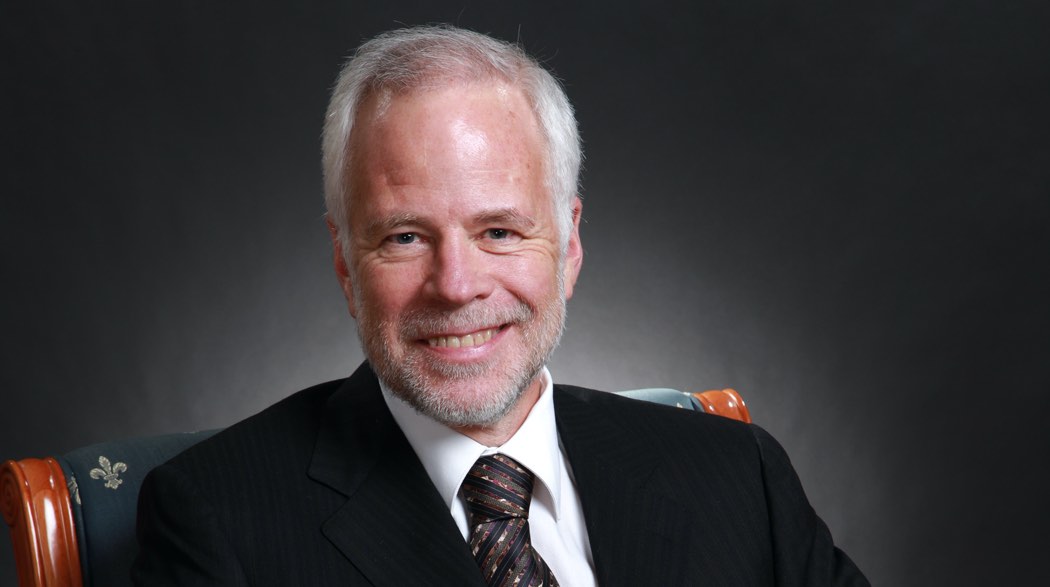
John Ashcroft is an economist and author of The Saturday Economist. He also publishes the Sunday Times and Croissants, weekly insights into headline news and the week’s top stories. John Ashcroft is Chief Executive of pro.manchester, a Director of Marketing Manchester, a member of the GM Chamber of Commerce Council and the AGMA Business Leadership Council. John Ashcroft is a visiting professor at MMU Business School, specializing in Economics, Corporate Strategy, Business and Financial Modelling and an occasional lecturer at Manchester and Salford Business Schools. He is a regular public speaker at conferences, lunches and evening events. Check out the schedule of recent and upcoming events for details. John Ashcroft was educated at the London School of Economics, London Business School and with a PhD in economics from Manchester Metropolitan Business School, John is a fellow of the Royal Society of Arts, a Companion of the British Institute of Management and a member of the Society of Business Economists. With extensive experience of business and corporate finance, in the 1980s John Ashcroft was regarded as one of Margaret Thatcher’s favorite businessmen and a regular visitor to Downing Street. He was Guardian Young Businessman of the year in 1986 and voted (along with Richard Branson), one of the Top 40 Businessmen under 40 in 1987. Please enjoy my interview was John Ashcroft.
When someone asks you ‘what do you do for a living?’ – How do you respond?
I am CEO of pro- Manchester and author of the Saturday Economist. I specialise in economics, corporate strategy and social media.
What are you reading at the moment?
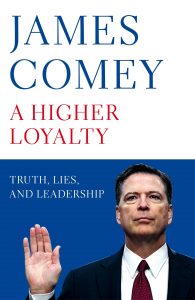
I am currently reading A Higher Loyalty by James Comey and How to Turn Down a Billion Dollars: The Snapchat Story by Billy Gallagher. Developments in the White House make for better viewing than a soap opera. Snapchat because I have written several case studies including Apple, Lego, Twitter and Yahoo. Snapchat is on the list of case studies I would love to write up soon.

When you think about your childhood, what book comes to mind?
My Family and Other Animals by Gerald Durrell. I just loved those animal stories. I loved reading and would make a point of reading the dictionary to expand my working vocabulary. Rather sad that last bit!

What did you want to be when you were growing up?
I wanted to be in business as a line marketing manager and CEO at some stage. In the sixties, I was involved in music and several “groups”. Our big breakthrough moment was a gig to support Chuck Berry at the Cavern. Alas, the Bass Guitarist’s mother wouldn’t let him go, he had to attend a cousin’s wedding. Business became the priority.
What do you think your school-aged self would think of the present day you?
Achieved quite a lot but could have done much more.
If you could wrap up a single book and gift it to yourself as you left education – which book would it be and why?
The yet to be written, “Barbarians at the Gate The Fall of RJR Nabisco”. A classic story of how deal fever can infect boardrooms in the middle of bid battles. A warning and a guideline for some of the really big deals in which we were involved in the eighties.
Does your reading have routine? Is there a particular time or place that you like to read?
I do not have a routine. I am a binge reader. A good book and the right phase in my reading cycle and I can burn a book in a prolonged binge session.
Which book has had the biggest impact on your career so far? How did it impact it?
In Search of Excellence by Tom Peters – a great analysis of business success. The principals established were to form the basis of our own management culture in the eighties and later.

Which three books would you recommend for a complete novice who wants to learn about economics?
My introduction to economics began with A-level studies in 1964. Our first textbooks were Paul Samuelson and Richard Lipsey. The foundations are important.


Balance of Payments: Theory and Economic Policy by Robert M. Stern a classic to be read critically.

Do you have any books that you strongly associate with someone important in your life?
Ripples from the Zambezi by Ernesto Sirolli. Who’s your City? by Richard Florida. The books marked my return to Manchester in 2008 with my wife. This was the start of a new phase in my life working with pro-manchester. One of the first projects was on stimulating entrepreneurial growth and new business in the city, published in 2010.


What book have you recommended the most to friends and family?
I rarely recommend books to anyone. I don’t much like it when people recommend books to me.
Do you prefer fiction or non-fiction?
I never read fiction.
What’s the greatest book on economics ever written?
The Wealth of Nations by Adam Smith. Only an economist could get excited about eighteen steps to complicate the process of making a pin.

Do you think reading is important?
I love reading. I think it is essential and should be much encouraged.
What’s the best book you’ve read in the last 6 months?
Some great books on the White House, with Trump Revealed by Michael Kranish and Marc Fisher a favourite. Fire and Fury by Michael Wollf is a great fun read.


Do you prefer real books or digital books?
I love books in hardback physical form for serious reading. I have an iPad and the Kindle App but give me a hardback addition to my library anytime.
Name a book that you feel everyone would benefit from reading and explain why.
The Dale Carnegie Classic, How to Win Friends and Influence People, first published in 1936. Over 30 million books sold worldwide. First principles still apply in the world of social media.

What is the book that you feel has had the single biggest impact on your life? What impact did it have?
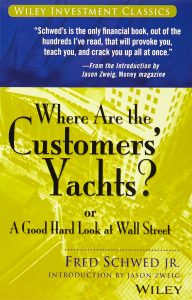
Where Are All the Customers’ Yachts by Fred Schwed Jr. What everyone should understand about corporate finance and investment banking. It’s a great insight into working with the top investment banking houses in New York and London.
If you could only teach the youth of today one thing about economics, what would it be and why?
Keep an open mind and always challenge established thinking. The world is changing fast as new technologies impact on employment and patterns of trade. The old rules will not always apply, in some cases we can never be sure they did.
Are there any books you haven’t mentioned that you feel would make your reading list?
Great background reading on China and the return of the Middle Kingdom. How China will become the largest economy in the world within the next ten years.
China’s Growth by Linda Yueh (see Linda Yueh’s reading list),


What books or subject matter do you plan on reading in the next year?
More case studies on corporate business especially in the digital tech space. Some interesting material to emerge on Korean unification, I am sure.
If you were to write an autobiography – what would it be called?
A mind forever wandering through strange fields of thought alone. With apologies to William Wordsworth of course.
If you’d like to learn more about John Ashcroft, you can find him on his website, Facebook and Twitter.
As an Amazon Associate we earn from qualifying purchases made through links on this page.