The Best Magical Realism Books
In this list
10 books
- One Hundred Years of Solitude · Gabriel Garc
- The House of the Spirits · Isabel Allende Isabel Allende’s de
- Beloved · Toni Morrison Toni Morrison’s Pulitzer Prize-winning
- Kafka on the Shore · Haruki Murakami Haruki Murakami’s
- Like Water for Chocolate · Laura Esquivel Set du
- The Ocean at the End of the Lane · Neil Gaiman Neil Gaiman’s
- Midnight’s Children · Salman Rushdie Salman Rushdie’s Booker Prize-winning
- The Wind-Up Bird Chronicle · Haruki Murakami In
- The Snow Child · Eowyn Ivey Set
- The Night Circus · Erin Morgenstern Erin Morgenstern’s de
There’s something utterly captivating about opening a book and finding yourself in a world that feels intimately familiar yet tinged with the impossible. That’s the enchanting promise of magical realism, a genre that has captured readers’ imaginations for generations and shows no signs of losing its spell.
Unlike fantasy, which builds entirely new worlds with their own rules, magical realism includes elements of the extraordinary within the everyday. It’s the genre where a woman might ascend to heaven while doing the laundry, where a child is born with a pig’s tail as consequence of family history, or where the scent of roses follows a woman wherever she goes. These magical elements aren’t questioned or explained—they simply exist, woven seamlessly into otherwise realistic narratives about love, loss, family, and identity. Characters don’t gasp in wonder at magical occurrences; they accept them as naturally as the sunrise.
The genre has been shaped by literary giants like Gabriel García Márquez, whose One Hundred Years of Solitude became synonymous with magical realism, and Isabel Allende, who brought her own luminous voice to the tradition. Toni Morrison infused her novels with magical elements that spoke to African-American experiences, while Haruki Murakami brought a distinctly Japanese sensibility to the genre. Today, authors like Salman Rushdie, Laura Esquivel, and a new generation of diverse voices continue to expand and reimagine what magical realism can be.
Whether you’re a longtime devotee or curious newcomer, these essential magical realism novels offer the perfect entry points into worlds where the magical and the mundane dance together in perfect harmony.

No list of magical realism would be complete without the novel that defined the genre for the modern world. García Márquez’s masterpiece follows seven generations of the Buendía family in the fictional Colombian town of Macondo, where the miraculous occurs with the same regularity as the rain. A woman ascends to heaven while folding sheets, a plague of insomnia threatens to erase the town’s collective memory, and a character is followed by a cloud of yellow butterflies wherever she goes.
What makes this book extraordinary isn’t just its magical elements, but how García Márquez uses them to capture the entire sweep of Latin American history—colonialism, civil war, modernization—through one family’s cyclical rise and fall. The prose is lush and dreamlike, pulling you into a world where time moves differently and the past never quite releases its grip on the present. It’s a challenging read at times, with its recurring family names and sprawling timeline, but it’s absolutely worth the journey. You’ll fall in love with García Márquez’s ability to make the fantastical feel inevitable and to find profound beauty in both creation and decay.
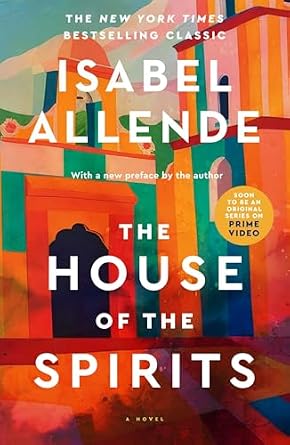
Isabel Allende’s debut novel is a sweeping multi-generational saga that follows the Trueba family through decades of Chilean history. At its center is Clara, a clairvoyant woman who can move objects with her mind and predict the future, though she remains largely detached from the political turmoil swirling around her. Her gifts are passed down through the family in different forms, shaping the destinies of her children and grandchildren against the backdrop of social upheaval and political violence.
What makes The House of the Spirits so beloved is Allende’s ability to blend the personal and the political into something deeply moving. The magical elements—Clara’s notebooks that write themselves, a rain of roses, spirits that comfort the living—serve to illuminate the characters’ emotional truths and the wounds of Chilean history. Allende writes with warmth and intimacy, making you feel like you’re hearing the family’s story directly from a beloved relative. The novel is both heartbreaking and hopeful, exploring how love, memory, and resilience can survive even the darkest of times.
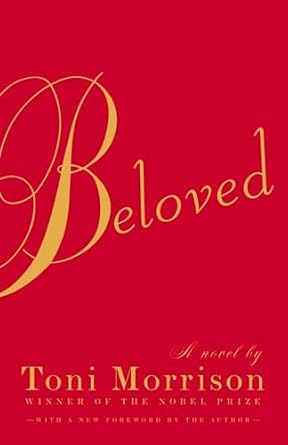
Toni Morrison’s Pulitzer Prize-winning novel is a haunting exploration of slavery’s legacy, told through the story of Sethe, a formerly enslaved woman living in post-Civil War Ohio. When a mysterious young woman named Beloved appears at Sethe’s door, she brings with her the weight of unspeakable trauma and a past that refuses to stay buried. The ghost that haunts Sethe’s home at 124 Bluestone Road is both literal and metaphorical, representing the memories and wounds that cannot be exorcised.
Beloved uses magical realism to give voice to the unspeakable horrors of slavery and the long shadow it casts over survivors and their descendants. Morrison’s prose is poetic and powerful, moving fluidly between past and present, reality and memory, the living and the dead. The supernatural elements aren’t mere literary devices—they’re essential to understanding how trauma lives in the body and the soul, how the past can quite literally haunt the present. This is a demanding but essential read, one that stays with you long after you’ve turned the final page.
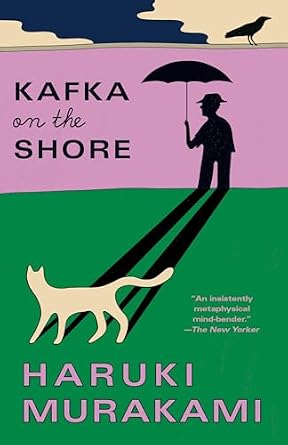
Haruki Murakami’s mesmerizing novel follows two parallel narratives that seem impossibly connected. Fifteen-year-old Kafka Tamura runs away from his Tokyo home to escape a dark Oedipal prophecy, while Nakata, an elderly man who lost the ability to read and write after a mysterious childhood incident but gained the ability to talk to cats, begins his own journey. As their paths wind toward each other, the novel fills with fish falling from the sky, a metaphysical sanctuary in a forest, and a Colonel Sanders who may or may not be real.
What makes Murakami’s brand of magical realism so enchanting is his distinctly dreamlike atmosphere. The boundary between the conscious and unconscious worlds grows increasingly blurred, yet the story never feels random or arbitrary. Everything, no matter how strange, serves the novel’s exploration of identity, fate, and the search for connection. Murakami writes with a cool, measured prose that makes even the most surreal events feel entirely natural. Readers love getting lost in his labyrinthine plots and the way he captures the loneliness and longing of modern life while offering glimmers of transcendence. It’s a novel that invites interpretation and discussion, where the mystery is part of the magic.

Set during the Mexican Revolution, Laura Esquivel’s beloved novel tells the story of Tita, the youngest daughter in a family bound by the tradition that she must remain unmarried to care for her mother until death. When Tita falls deeply in love with Pedro, who marries her sister to stay close to her, Tita’s emotions begin to manifest in the food she prepares—her tears turn a wedding cake into a feast of longing that makes all the guests violently ill, her passionate desires infuse quail in rose petal sauce with aphrodisiac powers.
Like Water for Chocolate is structured around monthly installments, each beginning with a recipe that plays a key role in that chapter’s events. Esquivel uses this framework to create a story that engages all the senses, where food becomes a language of emotion and magic. The novel celebrates female strength, creativity, and desire in the face of oppressive traditions, all while maintaining a warmth and humor that makes it an absolute pleasure to read. Esquivel combines romance, family drama, and Mexican culinary traditions into something that feels both intimately personal and mythically universal. It’s a novel that reminds us how cooking—and loving—can be acts of both rebellion and magic.

Neil Gaiman’s haunting novella follows an unnamed narrator who returns to his childhood home and finds himself drawn to the farmhouse where his friend Lettie Hempstock once lived. As he sits by the pond that Lettie called an ocean, memories flood back of the otherworldly terror that invaded his family when he was seven years old—a malevolent entity that fed on his loneliness and nearly destroyed everything he loved. Lettie and her mother and grandmother, who seem to be as old as time itself, were the only ones who could protect him.
What makes this slim novel so powerful is Gaiman’s ability to capture both the wonder and the terror of childhood, when the barrier between the mundane and the magical feels permeable. The story explores how children experience trauma, how memory works, and how the people who save us are sometimes forgotten by our conscious minds even as they remain essential to who we become. Gaiman’s prose is deceptively simple, but underneath flows a deep current of myth and meaning. It’s a book about growing up and forgetting, but also about the part of us that never forgets.

Salman Rushdie’s Booker Prize-winning masterpiece tells the story of Saleem Sinai, born at the exact moment of India’s independence from British rule—midnight on August 15, 1947. Saleem discovers he’s one of 1,001 children born in that magical hour, each endowed with supernatural abilities. Saleem’s gift is telepathy, which allows him to connect with the other “midnight’s children” and become tangled in the fate of the newly independent nation itself.
Rushdie uses magical realism to explore the birth of modern India, weaving together personal and national history in an epic that spans decades and continents. The novel is exuberant, overwhelming, and brilliantly inventive, packed with wordplay, political commentary, and fantastical events that mirror the chaos and promise of a nation finding its identity. Saleem’s life becomes a metaphor for India itself—complicated, contradictory, scarred by partition and violence, yet resilient and full of possibility. Rushdie captures the cacophony of voices, religions, and dreams that make up the Indian subcontinent. It’s a read that demands your full attention but rewards it with an unforgettable journey through history, memory, and magic.

In this hypnotic novel, Toru Okada’s seemingly ordinary life in suburban Tokyo unravels when his cat disappears, followed shortly by his wife. His search for both leads him into a surreal underworld of World War II veterans with haunting stories, clairvoyant sisters, a teenage girl with her own mysteries, and a dry well that serves as a portal to another realm. As Toru descends deeper into this strange world, the line between reality and dream becomes impossible to distinguish.
Murakami crafts a mystery that’s less about finding answers than exploring the hidden depths beneath everyday existence. The novel touches on Japan’s wartime atrocities, the emptiness of modern life, and the ways trauma echoes across generations, all while maintaining an atmosphere of mounting strangeness. The magical elements—psychic connections, alternate realities, inexplicable physical transformations—feel like natural extensions of Toru’s psychological journey. Murakami’s prose has a meditative quality that pulls you into Toru’s increasingly isolated world.

Set in 1920s Alaska, Eowyn Ivey’s debut tells the story of Mabel and Jack, a childless couple struggling to survive their first brutal winter homesteading in the wilderness. One evening, in a moment of whimsy, they build a snow child in their yard—and the next morning, discover a young, blonde girl running through the trees with a red fox at her heels. Is Faina a flesh-and-blood child living wild in the forest, or is she something more magical, born from their longing and the snow itself?
Ivey draws on the Russian fairy tale of Snegurochka, the snow maiden, to create a story that’s equal parts frontier survival tale and magical fable. The novel’s genius lies in its ambiguity—Ivey never definitively answers whether Faina is real or magical, allowing readers to hold both possibilities simultaneously. The Alaskan wilderness becomes a character itself, beautiful and harsh, a place where the extraordinary feels entirely possible. What makes The Snow Child so beloved is its emotional core—the story of a couple learning to hope again, to open their hearts despite fear of loss, and to find family in unexpected places.

Erin Morgenstern’s debut novel unfolds within Le Cirque des Rêves, a magical circus that appears without warning and opens only at night. The circus is actually the venue for a competition between two young magicians, Celia and Marco, bound since childhood to a duel they don’t fully understand. As they create increasingly wondrous attractions—a garden made entirely of ice, a tent where you can visit your dearest memories, a carousel that seems alive—they begin to fall in love, even as they realize only one of them can survive.
What makes The Night Circus so captivating is Morgenstern’s gorgeous, immersive world-building. Every detail of the circus feels tangible and magical—you can practically smell the caramel and woodsmoke, hear the rustle of striped tents, taste the impossible flavors of the treats sold within. The novel’s non-linear structure adds to its dreamlike quality, jumping through time as we follow the circus’s creation and the deepening connection between Celia and Marco. While technically more fantasy than pure magical realism, the novel shares the genre’s sense of wonder and its focus on the transformative power of beauty and love. Readers lose themselves in the atmospheric prose and the romance that unfolds amid impossible wonders. It’s a book that makes you believe in magic while breaking your heart, perfect for anyone who’s ever wanted to run away and join the circus—especially if that circus is a place where dreams become real.
Magical realism offers readers something precious: permission to believe in the extraordinary while remaining grounded in the emotional truths of our everyday lives. These novels remind us that magic doesn’t have to mean escaping reality. Sometimes the most powerful enchantment comes from seeing our world through a slightly different lens, where the impossible becomes a way of understanding what’s deeply, painfully real.
Whether you’re drawn to García Márquez’s lush family epics, Morrison’s powerful explorations of historical trauma, Murakami’s dreamlike mysteries, or any of the other masterworks on this list, you’ll find stories that linger long after you’ve closed the book. These are novels that work on your imagination and your heart simultaneously, that make you see the magic hidden in ordinary moments. So choose your favorite, find a comfortable spot, and prepare to enter worlds where yellow butterflies signal true love, where the dead visit the living, where food carries emotion, and where the boundary between the possible and impossible dissolves like morning mist.
As an Amazon Associate we earn from qualifying purchases made through links on this page.