The Best Books on Olympians
In this list
8 books
- The Hard Parts: A Memoir of Courage and Triumph · Oksana Masters
- The Boys in the Boat: Nine Americans and Their Epic Quest for Gold at the 1936 Berlin Olympics · Daniel James Brown This
- Butterfly: From Refugee to Olympian—My Story of Rescue, Hope, and Triumph · Yusra Mardini Yusra Mardini
- Triumph: The Untold Story of Jesse Owens and Hitler’s Olympics · Jeremy Schaap In
- Eddie the Eagle: My Story · Eddie Edwards Not
- For the Glory: Eric Liddell’s Journey from Olympic Champion to Modern Martyr · Duncan Hamilton Most
- Picabo: Nothing to Hide · Picabo Street
- No Limits: The Will to Succeed · Michael Phelps
With the 2026 Winter Olympics just around the corner, it feels like the perfect time to dive into the remarkable stories of Olympic heroes—athletes who’ve captivated the world with their talent, determination, and humanity. These books go far beyond the podium, revealing the struggles, sacrifices, and triumphs that define Olympic greatness. From gold medal champions to athletes whose stories matter for entirely different reasons, here are some of the most compelling books about Olympians ever written.

Born in Ukraine in 1989, three years after the Chernobyl nuclear disaster, Oksana Masters entered the world with severe birth defects believed to be caused by radiation exposure. Missing weight-bearing bones in her legs, with webbed fingers and no thumbs, and suffering unimaginable abuse in orphanages, her early life was marked by darkness. But at age seven, salvation came when Gay Masters adopted her and brought her to the United States.
What followed was years of surgeries, including the amputation of both legs (her left leg at age nine and her right leg at age fourteen), and a journey to find her place in the world. That place turned out to be at the pinnacle of Paralympic sports. Masters has now won nineteen Paralympic medals across four different sports: rowing, biathlon, cross-country skiing, and cycling. Her story is one of extraordinary resilience, showing how sports became her lighthouse through violent storms.
What makes this book so remarkable is Masters’ unflinching honesty about her trauma and her refusal to let the hard parts define her. It’s a testament to the power of a mother’s love and an individual’s determination to transform pain into purpose. For anyone who has ever felt they don’t fit in, Masters’ message is clear: you can find a place where you excel, where you have worth.

This is the story you didn’t know you needed to read. In the depths of the Great Depression, nine working-class boys from the University of Washington—sons of loggers, shipyard workers, and farmers—came together to form an eight-oar rowing crew that would stun the world.
At the heart of the narrative is Joe Rantz, a young man abandoned by his family who found belonging through rowing. Daniel James Brown brilliantly weaves together the personal struggles of these young men with the larger historical context of 1930s America and the rise of Nazi Germany. When the crew traveled to Berlin in 1936, they faced Adolf Hitler’s heavily favored German team on the world’s biggest stage.
The book reads like a thriller, with the final race sequences so gripping you’ll find yourself holding your breath even though you know the outcome. But it’s about so much more than winning gold. It’s about teamwork, trust, and finding wholeness through connection with others. Brown’s evocative prose brings Depression-era Seattle vividly to life, and his portrait of boat-builder George Pocock’s artistry adds a lyrical dimension to this tale of grit and determination. Now a major motion picture directed by George Clooney, the book remains far richer than any film adaptation could capture.

Yusra Mardini was a talented young swimmer in Damascus, Syria, training for Olympic glory. Then war shattered her world. In 2015, at just seventeen, she and her sister Sarah fled Syria, joining millions of refugees seeking safety in Europe.
The journey was perilous. Somewhere between Turkey and Greece, the engine on their overcrowded dinghy failed. Without hesitation, Yusra and Sarah jumped into the dark Aegean Sea and, along with two others, pushed and pulled the sinking boat for over three hours until they reached the shores of Lesbos. They saved the lives of everyone on board.
Less than a year later, Yusra competed as part of the first-ever Refugee Olympic Team at the 2016 Rio Olympics. Her story shines a powerful spotlight on the refugee experience, reminding us that refugees are ordinary people forced into extraordinary circumstances by forces beyond their control. Mardini went on to become a UNHCR Goodwill Ambassador, using her platform to advocate for millions who don’t have a voice. This is a story of courage, hope, and the transformative power of sport—a must-read that will inspire and educate readers from every background.

In 1936, at the Berlin Olympics staged by Adolf Hitler to showcase supposed Aryan superiority, an African-American son of sharecroppers won four gold medals and shattered Nazi propaganda. Jesse Owens’ performance that August week transcended sports and became one of the most significant moments in Olympic history.
Jeremy Schaap’s meticulously researched biography draws on unprecedented access to the Owens family and previously unpublished interviews to tell the full story of this remarkable athlete. The book captures not only Owens’ athletic brilliance but also the complex racial dynamics he faced both in Nazi Germany and back home in America. Ironically, Owens was treated better by Germans than he was by his own government—President Roosevelt never invited him to the White House.
What makes this book essential reading is how Schaap balances the mythic with the human. We see Owens’ friendship with German long jumper Luz Long, his struggles after Olympic fame faded, and his dignity in the face of discrimination. This is Olympic history at its finest, showing how one man’s courage and talent delivered a powerful rebuke to tyranny.
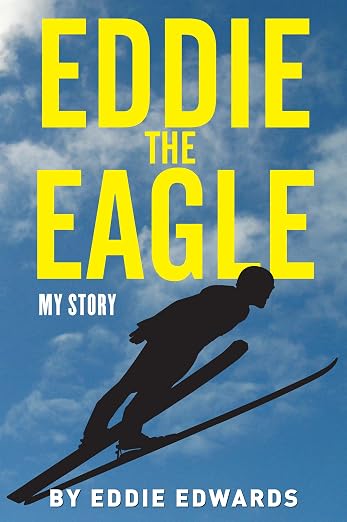
Not every Olympic story is about winning gold. Sometimes the greatest stories are about simply making it to the Games against impossible odds. Eddie “The Eagle” Edwards became a global sensation at the 1988 Calgary Winter Olympics—not for winning, but for his sheer determination to compete.
Short, stocky, and sporting thick glasses that constantly fogged up, Eddie was nobody’s idea of an elite ski jumper. Yet through struggle, sacrifice, and near-starvation, this British plasterer made his Olympic dream a reality. He worked menial jobs to fund his training, learned to ski jump with minimal coaching, and qualified for the Olympics when Britain had virtually no ski jumping tradition.
Eddie’s autobiography reveals the man behind the headlines—his childhood stunts that built his physical courage, the mockery he endured from officials and media, and his unwavering belief in himself. The book shows that Olympic glory isn’t always measured in medals. Sometimes it’s measured in heart, determination, and the courage to chase a dream when everyone tells you it’s impossible. Eddie’s story inspired the 2016 film starring Hugh Jackman and Taron Egerton, but the real story is even more remarkable than Hollywood’s version.

Most people know Eric Liddell from the Oscar-winning film Chariots of Fire—the Scottish runner who refused to race on Sunday at the 1924 Paris Olympics because of his religious convictions and went on to win gold in the 400 meters. But that’s just the beginning of his story.
Duncan Hamilton’s masterful biography reveals what happened after the Olympic triumph, when Liddell left athletic glory behind to become a missionary in China, the country of his birth. For two decades, he taught, preached, and served with humility and grace. Then came World War II and Japanese occupation. Liddell spent his final years in a civilian internment camp, where he became the moral center of an unbearable world—counseling prisoners, organizing games for children, and giving up his own meager food rations to help others.
He died of a brain tumor in 1945, just months before the war’s end. What makes this book so powerful is Hamilton’s portrait of a man whose faith wasn’t just words but action. Liddell ran for the glory of God, and he lived the same way. This is a story that extends far beyond the track, showing how one person’s integrity and compassion can illuminate even the darkest circumstances.

With a name as unforgettable as her skiing, Picabo Street burst onto the world stage at the 1994 Lillehammer Olympics, winning silver in the downhill and capturing hearts with her free-spirited personality. She was a new kind of female athlete—outspoken, fearless, and unapologetically herself.
Born to countercultural parents in tiny Triumph, Idaho (and not given a name until she was three years old), Picabo grew up as a rebellious tomboy who became the first American woman to win the World Cup downhill season title, achieving the feat twice. She followed up with Olympic gold in the super-G at Nagano in 1998.
But success came at a steep price. Just one month after her gold medal triumph, Street suffered a devastating crash in Switzerland that shattered her left femur and tore ligaments in her knee. In this powerful autobiography, she reveals the pressures from sponsors, her battles with depression, and the grueling rehabilitation that tested her spirit. She doesn’t hide from the difficult parts—the weight fluctuations, the fear of failure, the struggle to rebuild herself physically and mentally. This is an honest, intimate portrait of what it truly takes to reach the pinnacle of sport and what it costs to stay there.

Michael Phelps is the most decorated Olympian in history, with 28 medals including 23 golds. But behind the record-breaking performances lies a deeply human story of struggle, perseverance, and the relentless pursuit of excellence.
Written after his extraordinary performance at the 2008 Beijing Olympics, where he won eight gold medals in eight events, No Limits takes readers inside Phelps’ journey from a hyperactive kid diagnosed with ADHD to becoming swimming’s greatest champion. He opens up about his parents’ divorce, the mental and physical preparation required to achieve the impossible, and the people who shaped his dreams and pushed him to greatness.
What makes this book compelling is Phelps’ honesty about the challenges behind the glory. He details the grueling training regimen—swimming over 50 miles per week, the strict diet, the psychological pressure of carrying a nation’s expectations. He also shares the tactics and strategies that went into each race, giving readers an unprecedented look at the mind of a champion. This isn’t just a swimming book; it’s a master class in goal-setting, dedication, and what it takes to push beyond perceived limits.
This reading list offers something for every reader—stories of triumph and tragedy, of ordinary people achieving extraordinary things, and of athletes whose impact extends far beyond their sports. Whether you’re a dedicated sports fan or simply love a great human story, these Olympic memoirs and biographies will inspire, move, and remind you of the incredible heights the human spirit can reach. As we prepare to cheer for the next generation of Olympic heroes, these books help us appreciate the sacrifices, dreams, and determination that make the Olympics so much more than just a sporting event.
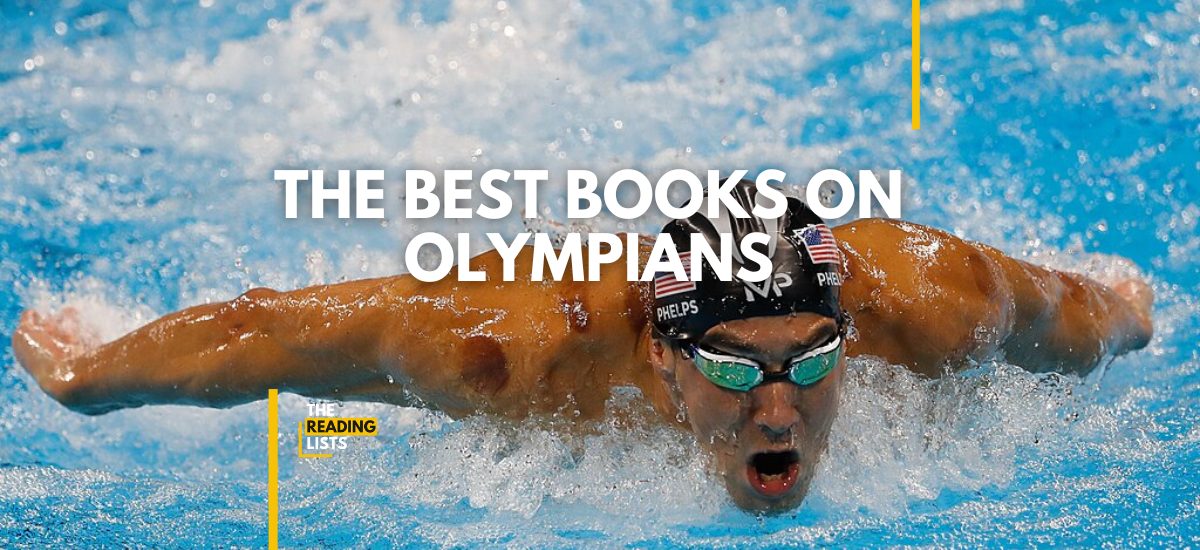
Image of Michael Phelps courtesy of: Fernando Frazão/Agência Brasil, CC BY 3.0 BR https://creativecommons.org/licenses/by/3.0/br/deed.en, via Wikimedia Commons
As an Amazon Associate we earn from qualifying purchases made through links on this page.