The Best Books on Emotional Intelligence
In this list
14 books
- Emotional Intelligence · Daniel GolemanRecommended 3 times
- Permission to Feel · Marc Brackett
- Emotional Intelligence for the Modern Leader · Christopher D. Connors
- Go Suck A Lemon: Strategies for Improving Your Emotional Intelligence · Michael Cornwall
- EQ Applied: The Real-World Guide to Emotional Intelligence · Justin Bariso
- The EQ Interview: Finding Employees with High Emotional Intelligence · Adele Lynn
- Primal Leadership: Unleashing the Power of Emotional Intelligence · Daniel Goleman, Richard E. Boyatzis and Annie McKee
- Emotional Intelligence for Dummies · Steven J. Stein
- Emotional Intelligence 2.0 · Travis Bradberry and Jean Greaves
- Raising An Emotionally Intelligent Child · John Gottman and Joan Declaire
- Emotional Intelligence for Sales Success · Colleen Stanley
- The Language of Emotional Intelligence · Jeanne Segal
- The Emotionally Intelligent Manager · David R. Caruso and Peter Salovey
- Working with Emotional Intelligence · Daniel Goleman
Given the importance of this topic, we felt it only appropriate to put together this reading list of the best books on emotional intelligence. Emotional intelligence is the ability to recognize and understand your own emotions, as well as the emotions of others. It is a crucial skill for success in both personal and professional relationships, and can help individuals to communicate effectively, solve problems, and make informed decisions. Developing emotional intelligence requires self-reflection, empathy, and the ability to manage one’s own emotions and behavior.
There are many books available that can help individuals to improve their emotional intelligence. These books often include exercises and techniques to help readers understand and manage their own emotions, as well as tips for navigating and understanding the emotions of others. Some books focus on specific aspects of emotional intelligence, such as empathy or self-regulation, while others offer a more comprehensive approach to developing these skills.
In this article, we will be discussing some of the best books on emotional intelligence. These books have been selected based on their popularity, effectiveness, and overall quality. Whether you are looking to improve your emotional intelligence for personal or professional reasons, these books can provide valuable insights and guidance.
Let’s dive into the best books on emotional intelligence…

“Emotional Intelligence” by Daniel Goleman is widely regarded as the most influential book on the topic of emotional intelligence. In it, Goleman explores the ways in which our rational and emotional minds intersect and influence our success and well-being. Drawing on research in psychology and neuroscience, he argues that qualities such as self-awareness, self-discipline, and empathy, known collectively as emotional intelligence, can be just as important as traditional measures of intelligence in determining success.
This updated 25th anniversary edition includes a new introduction from Goleman, addressing the challenges and opportunities of our increasingly digital world. “Emotional Intelligence” suggests that emotional intelligence can be developed and improved upon throughout one’s lifetime, leading to improved health, relationships, and work performance. It is an essential read for anyone seeking to better understand and enhance their emotional intelligence.

“Permission to Feel” is written by Marc Brackett, a professor at Yale University’s Child Study Center and the founding director of the Yale Center for Emotional Intelligence. In this book, Brackett shares the results of his decades of research on emotional well-being and presents his system for understanding and managing emotions called RULER. RULER has been implemented in thousands of schools and has been shown to reduce stress, improve school climate, and enhance academic achievement.
Brackett’s approach to emotions is influenced by his own childhood experiences and the support he received from an uncle who recognized and validated his feelings. He argues that by giving ourselves and others permission to feel and by learning to understand and use our emotions wisely, we can improve our success and well-being. “Permission to Feel” combines science, personal anecdotes, and practical strategies to help readers develop their emotional intelligence and reduce suffering. It is a valuable resource for anyone looking to improve their emotional well-being and the well-being of those around them.

“Emotional Intelligence for the Modern Leader” by Christopher D. Connors is a guidebook designed to help business professionals develop their emotional intelligence (EQ) and enhance their ability to lead. The book discusses the importance of EQ in business success and provides practical exercises and self-assessment tools to help readers improve their self-awareness, empathy, and other key components of emotional intelligence.
The book explores the concept of emotionally intelligent leadership and how it can be incorporated into an organization’s culture. It also includes a discussion of different leadership styles and their impact on others. Whether you are a seasoned leader or just starting out in your career, this book can help you develop your EQ and become a more effective and inspiring leader.

In “Go Suck A Lemon,” Michael Cornwall explores the concept of emotional intelligence (EI) and how it can be improved upon. EI is the ability to perceive, control, and evaluate emotions, and it is often considered a crucial aspect of social intelligence. Some researchers believe that EI can be learned and strengthened, while others argue that it is an inherent trait.
Cornwall offers cognitive skill-building techniques to help readers improve their EI and create a more enriching experience when dealing with emotions. The book aims to provide readers with strategies for better understanding and managing their own emotions and the emotions of others.

“EQ Applied” by Justin Bariso is a book that examines the importance of emotional intelligence (EQ) in today’s world. Bariso combines scientific research with personal stories and high-profile examples to illustrate the practical application of EQ in various situations. In the book, readers can learn how to control their emotional reactions, break bad habits, and use emotional intelligence to influence others.
The book also explores the potential dark side of EQ and offers strategies for protecting oneself from manipulation. By learning to make emotions work for them, rather than against them, readers can improve their EQ and navigate the challenges of modern life with greater success.

In “The EQ Interview,” Adele Lynn provides business leaders with the tools they need to assess candidates’ emotional intelligence (EQ) and determine whether they are the right fit for the job. The book explains the five key areas of EQ and how these competencies can enhance job performance. It also includes more than 250 behavior-based questions specifically designed to help hiring managers evaluate applicants’ past use of EQ skills.
This guidebook helps hiring managers and business professionals spot the right candidates for the job, analyze and interpret answers to predict future success, and avoid costly hiring mistakes by identifying “EQ frauds.” With insightful examples and bonus resources, “The EQ Interview” shows how to go beyond evaluating job qualifications and consider the fundamental value of emotional intelligence in the hiring process.

“Primal Leadership” is a book that introduced the concept of emotional intelligence to the business world and established it as a crucial skill for leaders. The book has been widely adopted by managers and professionals around the globe, and its ideas are now used in universities, business schools, medical schools, and professional training programs, as well as by professional coaches.
This updated edition, with a new preface by the authors, highlights the importance of self-aware, empathic, motivating, and collaborative leadership in a rapidly changing and complex world. “Primal Leadership” is a must-read for anyone in a leadership role or aspiring to lead, written by bestselling authors Daniel Goleman, Richard Boyatzis, and Annie McKee.

“Emotional Intelligence For Dummies” by Steven J. Stein is a straightforward guide to developing emotional intelligence and using it to achieve success in both professional and personal endeavors. The book covers how to identify and manage emotions, read and understand the emotions of others through facial cues and body language, find a job that’s right for you, develop leadership skills, and build and maintain meaningful relationships.
It also includes advice on how to use emotional intelligence to raise emotionally intelligent children and achieve personal happiness. Full of practical exercises and anecdotes, this book is a valuable resource for anyone looking to improve their emotional intelligence and achieve their goals.

“Emotional Intelligence 2.0” by Travis Bradberry and Jean Greaves is a practical guide to developing and improving emotional intelligence (EQ). In today’s fast-paced, competitive world, EQ is a critical skill that can help us manage, adapt, and succeed. The book offers a step-by-step program for increasing EQ through four core skills: self-awareness, self-management, social awareness, and relationship management.
These skills can help individuals achieve their full potential and improve their personal and professional lives. “Emotional Intelligence 2.0” has received praise for its clear and concise explanation of how to effectively use emotions and intelligence to benefit ourselves and others.

“Raising an Emotionally Intelligent Child” by John Gottman and Joan Declaire is a guidebook for parents on teaching children to understand and regulate their emotions. The book argues that emotional intelligence is just as important as intellectual intelligence and can lead to increased self-confidence, better physical health, improved school performance, and healthier social relationships.
It provides a five-step “emotion coaching” process that teaches parents how to be aware of their child’s emotions, listen empathetically, validate feelings, label emotions in terms the child can understand, and help the child find appropriate ways to deal with problems or upsetting situations. Written for parents of children of all ages, “Raising an Emotionally Intelligent Child” aims to strengthen the bond between parent and child and help children grow into emotionally healthy adults.
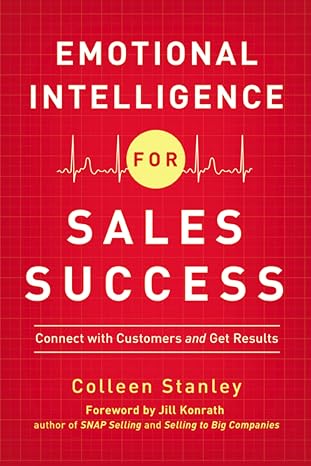
“Emotional Intelligence for Sales Success” by Colleen Stanley is a guidebook for salespeople on how to use emotional intelligence to improve their performance and achieve success. The book cites studies showing that emotional intelligence is a strong predictor of sales success and offers tips on how to increase emotional intelligence skills such as impulse control, empathy, and the ability to build relationships and solve problems.
Stanley argues that emotional intelligence is a key differentiator in the sales process, from business development to closing deals, and can help salespeople overcome tough selling situations and stand out in a world where customers can easily find product information and price comparisons online.

“The Language of Emotional Intelligence” by Jeanne Segal is a practical guidebook for learning and applying the skills of emotional intelligence in everyday life. Written by a renowned expert in the field, the book offers a step-by-step program for incorporating the five basic tools of emotional intelligence to enhance relationships in the workplace, at home, and in all areas of life.
These tools include the ability to “read” other people, make powerful connections, defuse conflicts, repair wounded feelings, and understand nonverbal cues. The book includes simple exercises, self-quizzes, and calming techniques, as well as real-life examples to help readers master the language of emotional intelligence and build stronger, more satisfying relationships.

The Emotionally Intelligent Manager by David R. Caruso and Peter Salovey challenges the notion that emotions should be suppressed in the workplace, and instead asserts that they are an integral part of effective decision-making and problem-solving. This book presents a practical framework of four emotional skills: identifying emotions, using emotions to facilitate thinking, understanding emotions, and managing emotions.
Through this framework, the authors demonstrate how to measure, learn, and develop these skills to improve problem-solving abilities and succeed in the workplace. The Emotionally Intelligent Manager argues that emotion is not a hindrance to intelligence, but rather an essential component of it.

Emotional intelligence is a critical factor in success in the workplace, and in Working with Emotional Intelligence, Daniel Goleman explores the skills that make up emotional intelligence and how they can be developed. He argues that emotional intelligence is even more important than IQ or technical expertise in determining star performance, and demonstrates how it is a key factor in hiring and firing decisions at top corporations.
Goleman also provides guidelines for creating emotionally intelligent organizations, showing how emotional intelligence can be learned and how it can drive success in the competitive business world. With research from over 500 organizations and access to business leaders around the globe, Working with Emotional Intelligence is a comprehensive and essential guide for anyone looking to improve their performance and advance their career.
What is Emotional Intelligence?
Emotional intelligence, also known as emotional quotient (EQ), refers to an individual’s ability to recognize, understand, and manage their own emotions, as well as the emotions of others. It involves the ability to perceive, express, and interpret emotions accurately, as well as the ability to use emotions to facilitate thought, decision-making, and problem-solving. Emotional intelligence is a key factor in successful relationships, both personal and professional, and is linked to various positive outcomes such as better communication, conflict resolution, and leadership skills.
Emotional intelligence can be divided into five main competencies: self-awareness, self-regulation, motivation, empathy, and social skills. Self-awareness refers to the ability to recognize and understand one’s own emotions and how they influence thoughts and behaviors. Self-regulation involves the ability to manage and control one’s own emotions, rather than being overwhelmed by them. Motivation involves the ability to use emotions to drive and direct one’s actions towards a goal. Empathy involves the ability to understand and respond to the emotions of others, and social skills refer to the ability to effectively communicate and interact with others.
Research has shown that emotional intelligence can be developed and improved over time through training and practice. It is a crucial skill for individuals to have in order to effectively navigate relationships and succeed in personal and professional endeavors. Emotional intelligence is increasingly being recognized as an important factor in business, with many organizations now assessing candidates’ EQ during the hiring process.
Why is Emotional Intelligence important in everyday life?
Emotional intelligence, or EQ, is the ability to recognize, understand, and manage your own emotions as well as the emotions of others. It is an important skill to have in everyday life as it can greatly impact your relationships and overall well-being.
Having a high EQ can help you form deeper, more meaningful connections with others, as it allows you to empathize with and understand the feelings of others. It can also help you better navigate and resolve conflicts, leading to more harmonious relationships. Emotional intelligence can also help you better regulate your own emotions, leading to improved mental and physical health.
It can allow you to manage stress and negative emotions more effectively, leading to a more positive overall outlook on life. In addition, having a high EQ can improve your performance in school or at work, as it allows you to better collaborate and communicate with others, solve problems, and make sound decisions. Overall, emotional intelligence is an essential skill to have in order to lead a more fulfilling and successful life.
How can reading books on Emotional Intelligence help your career?
Emotional intelligence plays a crucial role in how successful you are in your career. It refers to your ability to recognize and understand your own emotions, as well as the emotions of others. People with high emotional intelligence tend to be more self-aware, self-regulated, and able to effectively communicate and build relationships with others. These skills are essential for success in the workplace, as they allow you to navigate social situations effectively, communicate clearly, and form strong relationships with coworkers and clients.
Additionally, emotional intelligence can help you manage your own emotions, particularly in stressful or challenging situations. This can help you stay calm and focused, even under pressure, and make more rational decisions rather than letting your emotions cloud your judgement. Overall, having a high emotional intelligence can help you be a more effective and respected leader, build better relationships with coworkers and clients, and navigate the challenges of the workplace more effectively.
Who coined the term ‘Emotional Intelligence’?
The term “emotional intelligence” was coined by psychologists Peter Salovey and John Mayer in the late 1980s. In a series of articles and eventually a book, Salovey and Mayer defined emotional intelligence as “the ability to monitor one’s own and others’ emotions, to discriminate among them, and to use the information to guide one’s thinking and actions.”
They proposed that emotional intelligence is a distinct form of intelligence, separate from cognitive intelligence or IQ. The concept of emotional intelligence has gained widespread popularity in the decades since it was first introduced, and it has been the subject of much research and discussion in the fields of psychology, business, and education.
If you enjoyed this reading list of the best books on emotional intelligence, you may also want to check out our interview with Daniel Goleman.
As an Amazon Associate we earn from qualifying purchases made through links on this page.