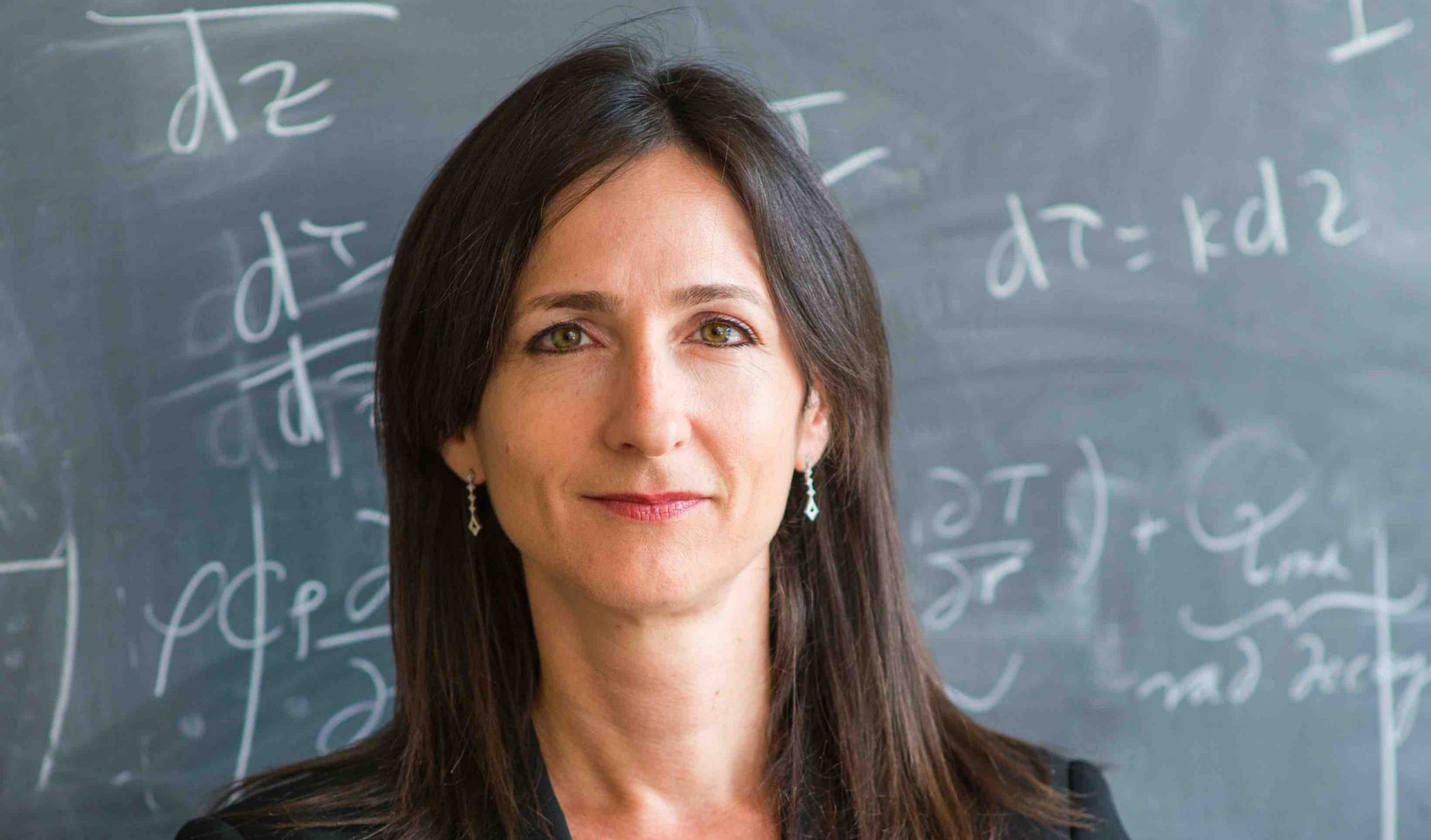
Sara Seager: Searching for Alien Life
Sara Seager’s reading list
8 books mentioned in this interview
- All Creatures Great and Small · James Herriot
- Anne of Green Gables · Lucy Maud MontgomeryRecommended 11 times
- The Backyard Astronomer’s Guide · Terence Dickinson and Alan Dyer
- The Giver · Lois LowryRecommended 3 times
- Stellar Atmospheres · Dimitri Mihalas
- The Smallest Lights in the Universe
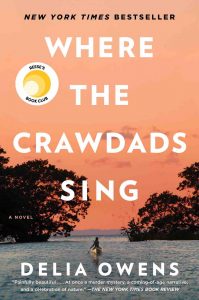
- Where the Crawdads Sing · Delia OwensRecommended 3 times
- Sleeping Island: A Journey to the Edge of the Barrens · P.G. Downes
Sara Seager is the Class of 1941 Professor of Planetary Science, Professor of Physics, and Professor of Aeronautics and Astronautics at the Massachusetts Institute of Technology. Her past research is credited with laying the foundation for the field of exoplanet atmospheres, while her current research focuses on exoplanet atmospheres and the future search for signs of life by way of atmospheric biosignature gases. Professor Sara Seager has been involved with a number of space-based exoplanet searches including as the past Deputy Science Director for the MIT-led NASA mission TESS, as the PI for the on-orbit JPL/MIT CubeSat ASTERIA (2017-2019), and as a lead for Starshade Rendezvous Mission (a space-based mission concept under technology development for direct imaging discovery and characterization of Earth analogs).
Before joining MIT in 2007, Professor Sara Seager spent four years on the senior research staff at the Carnegie Institution of Washington preceded by three years at the Institute for Advanced Study in Princeton, NJ. Her PhD is from Harvard University, and her BSc from the University of Toronto. Among other accolades, Professor Sara Seager is a member of the National Academy of Sciences and a 2013 MacArthur Fellow. Sara Seager has also given a fascinating TED talk on the search for planets beyond our solar system.
Please enjoy our interview with Sara Seager…
How would you describe your occupation to a 7-year-old?
My job is to search for alien life. Not little green humanoids, but rather for signs of life by way of gases in a planet atmosphere that “do not belong”, gases that might be produced by life. Every star is a sun and we call planets orbiting stars other than the Sun exoplanets. There are thousands of exoplanets and some of them are small rocky worlds whose atmospheres we will be able to study for signs of life with upcoming new telescopes.
What are you reading at the moment?
I’m actually cleaning out my small home library and reading old favorites before giving them away. At the moment I am reading All Creatures Great and Small by James Herriot.

When you think about your childhood, what book comes to mind?
The book Anne of Green Gables by Lucy Maud Montgomery immediately comes to mind. This fictional story of the struggles, adventures, and joy of an orphaned girl who finds a forever home has been a classic children’s novel for over a century. I still vividly remember receiving the book at age 9, as a holiday gift, with its bright yellow hardcover and the new book smell, and the promise of many hours of (challenging for me) reading ahead. The book was striking, not just because of the compelling story, but also because it was the first book that showed me all a book could be.

What did you want to be when you were growing up?
I did not have any specific ideas or plans, until I turned 16 and found out, to my surprise, that “astronomer” was an actual job.
For someone looking to pick up some beginner-friendly books on the subject of space and planetary science, what would you recommend?
For anyone who has ever wanted to learn more about the night sky and possibly invest in binoculars or a telescope of any kind, I recommend The Backyard Astronomer’s Guide by Terence Dickinson and Alan Dyer.

If you could wrap up a single book and gift it to yourself as you turned 18 – which book would it be and why?
One of the best books I have ever read is The Giver by Lois Lowry. This book describes a futuristic utopian society through the eyes of a boy, who, coming of age, discovers his world might be the opposite of what it appears. The Giver reminds us in an eye-opening way to take a good look beyond our cultural blinkers. While designated a young adult novel, this is a book everyone should read; I would make sure the adult me had a chance to read this book because the book did not yet exist when I was younger.

I’ve enjoyed watching your TED talks, in particular the one at Coconut Grove regarding potential life on other planets. What are the most exciting recent discoveries in this area?
The most exciting thing is just the sheer number and variety of exoplanets being continually discovered is mind-boggling.
Which book has had the biggest impact on your career so far? How did it impact it?
There is not a single book that comes to mind but if I had to choose one it is a beautifully, artfully written textbook that is both highly technical and clear, Stellar Atmospheres by Dimitri Mihalas. The words “artful” and “technical textbook” do not usually go together but because they did in this case, the book enabled me to learn the foundations of my research speciality.

Do you have any books that you strongly associate with someone important in your life?
As young children, my sister and I had a favorite book, The Second Margaret Mahy Story Book by Margaret Mahy. Each night we spent at our Dad’s house, we were allowed to choose one precious bedtime story and he would read to us while we fell asleep. I tear up when I think of his tenderness during that storytime.
You’ve achieved a lot in your career, is there one thing that stands out as your proudest achievement?
My proudest achievements are my brand-new creations that influenced the direction of my research field. One such achievement was the formulation of the “transit transmission spectra method” a technical term that summarizes the method astronomers have used to observe the atmospheres of dozens of exoplanets today.
Do you prefer fiction or non-fiction?
Fiction.
What inspired you to write your memoir, The Smallest Lights in the Universe?
Living the life of a young widow and mother was full of surprises, some astonishingly adventurous and others ironically joyful, all amidst near paralyzing grief. I was initially inspired to capture and share that journey, and then the book grew into much more.

What’s the best book you’ve read in the last 6 months?

What is the book that you feel has had the single biggest impact on your life? What impact did it have?
While attending the Wilderness Canoe Association Symposium in Toronto for the first time while in my early 20s, an acquaintance took me aside at the book sale table and said “these two books will change your life”. One of the books did just that, Sleeping Island: A Journey to the Edge of the Barrens by P.G. Downes. The book describes the author’s 1939 journey to a remote and unmapped part of northern Canada, where he travelled by canoe and portage from the boreal forest up past the tree line into the so-called Barren Lands. The author movingly captures what was to be a vanishing way of life by the native Canadians and Inuit he befriended along the way. This book struck a deep chord, inspiring me to follow part of the same route called The Old North Trail, which started me on many years of serious canoe adventure travel and a life-long love of the deep wilderness.

What books or subject matter do you plan on reading in the next year?
I love fiction that involves time travel, no matter how illogical the plotline has to be. I am hoping to discover a new book or a book series in this genre.
If you were to write an autobiography – what would it be called?
I’ve written a memoir, which is similar to an autobiography, and the title is, The Smallest Lights in the Universe: A Memoir.
If you’d like to learn more about Sara Seager, head to her website or find her on Twitter.
As an Amazon Associate we earn from qualifying purchases made through links on this page.