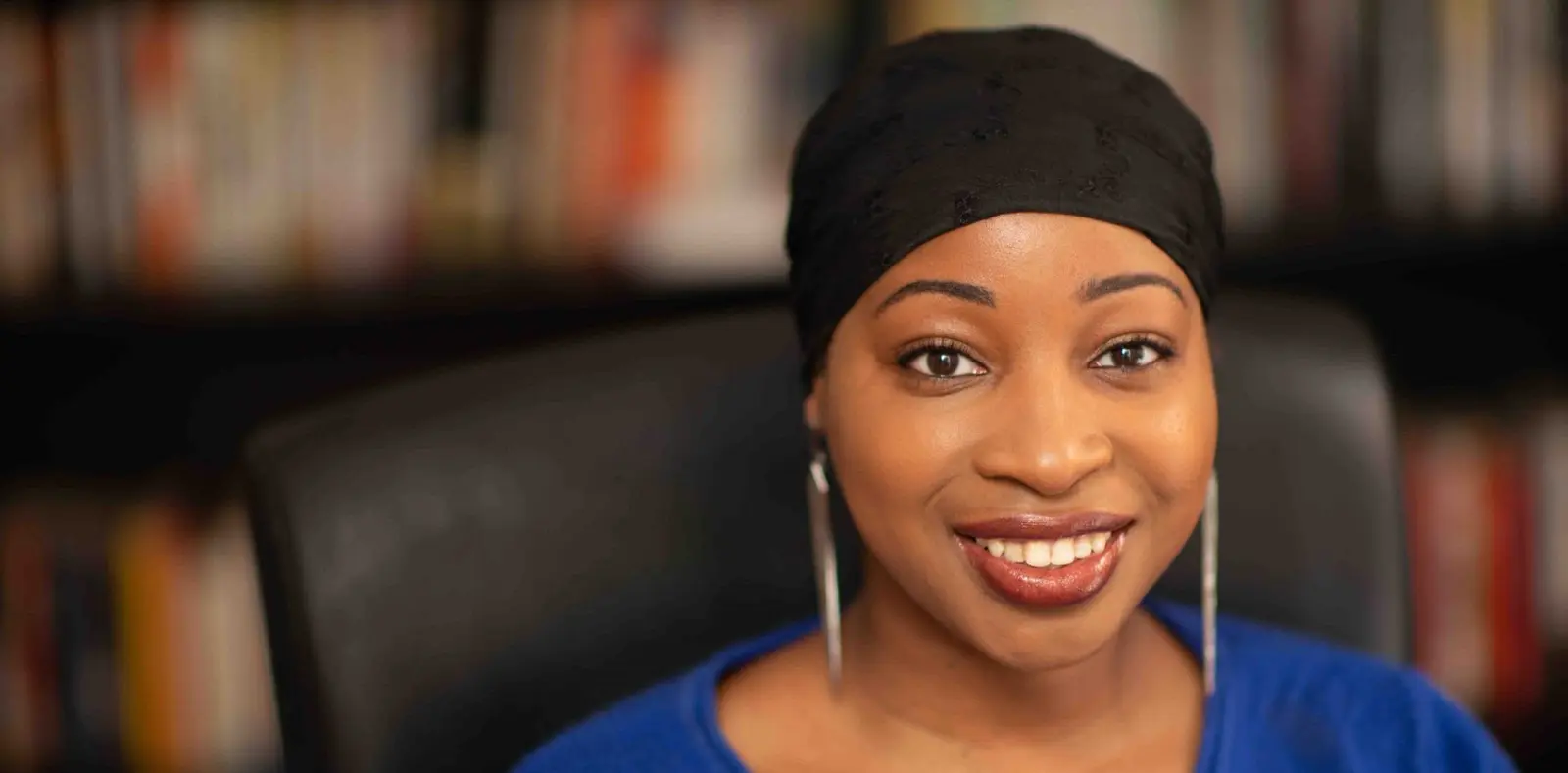
Sakinah Hofler: Going Where the Wind Blows
Sakinah Hofler’s reading list
14 books mentioned in this interview
- No Visible Bruises: What We Don’t Know About Domestic Violence Can Kill Us · Rachel Louise Snyder
- Seed to Harvest
- Zen in the Art of Writing · Raymond BradburyRecommended 3 times
- On Writing · Stephen KingRecommended 32 times
- The Bluest EyeRecommended 8 times
- Song of SolomonRecommended 3 times
- Black No More
- Octavia’s Brood: Science Fiction Stories from Social Justice Movements · Walidah Imarisha and Adrienne Maree Brown
- Girl, Woman, Other · Bernadine EvaristoRecommended 3 times
- The Poet’s Companion · Kim Addonizio
- Norton Anthology of Contemporary and Modern Poetry
- The Giver · Lois LowryRecommended 3 times
- Broken Earth trilogyRecommended 3 times
- How Long ‘Til Black Future Month
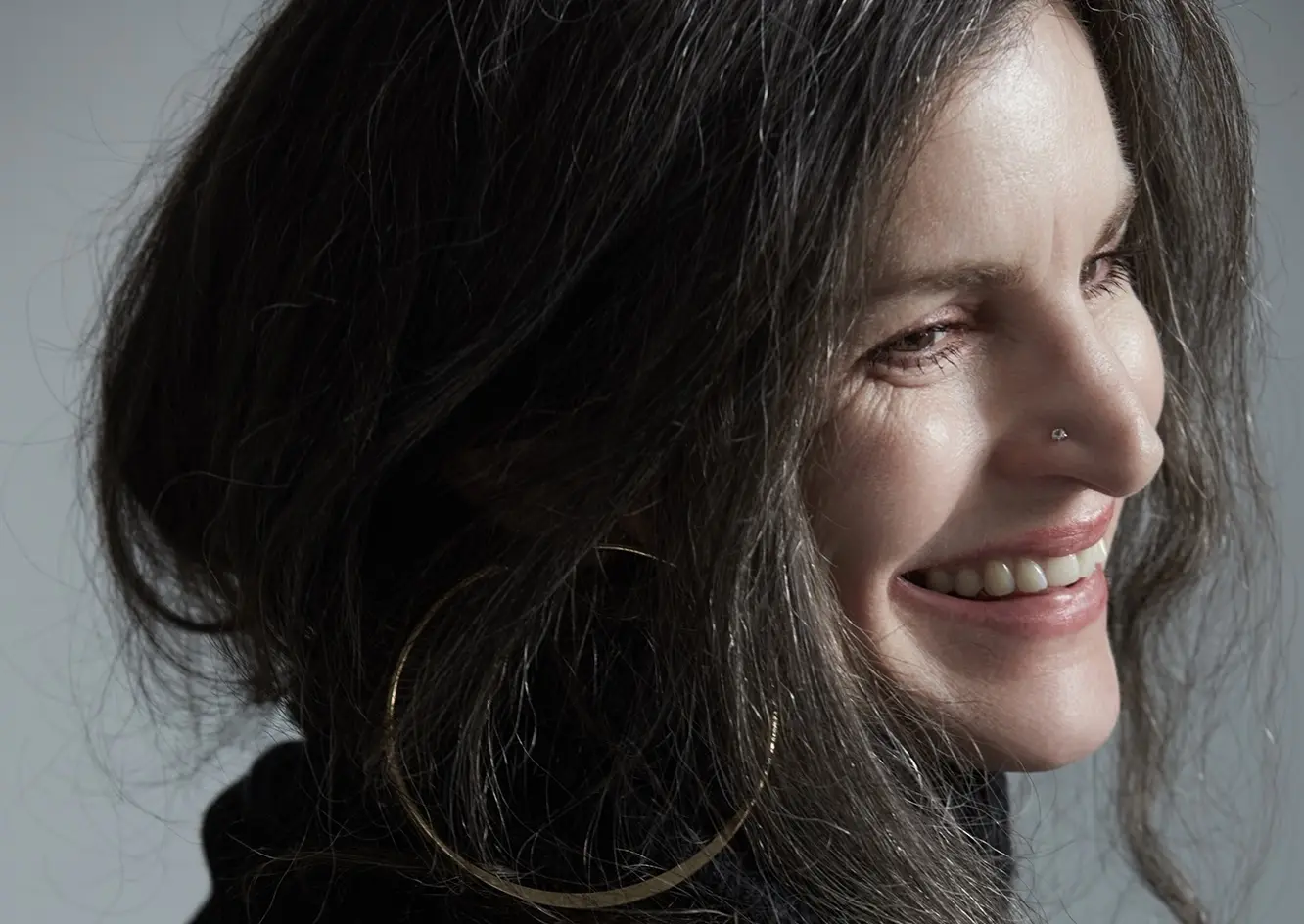
Sakinah Hofler is a fiction writer, poet, and playwright. She has won the Hurston/Wright Award for College Writers in Fiction, the Manchester Fiction Prize, and the Sherwood Anderson Fiction Award. Sakinah Hofler has been a recipient of an Edward H. and Mary C. Kingsbury Fellowship, a Charles Phelps Taft Dissertation Fellowship, and a P.E.O. Scholar Award. Her work has appeared or is forthcoming in Kenyon Review Online, Hayden’s Ferry Review, Mid-American Review, and elsewhere. A former chemical and quality engineer for the United States Department of Defense and hailing from the great city of Newark, NJ, Sakinah Hofler is currently a PhD Candidate and an Albert C. Yates Fellow at the University of Cincinnati and at work on her first novel. Sakinah Hofler also gave a brilliant TED talk on how creative writing can help you through life.
Please enjoy my interview with Sakinah Hofler…
You are known as a fiction writer, poet and playwright – do you prefer doing one over the other two?
They give me different joys!! Fiction lets me create entire worlds and characters. I get to live in these worlds and play and render them as I see fit. Poetry is probably the closest I’ll get to pulling from myself. When I write fiction, I tend to have a story or an idea in mind. Poetry is like a high, I’m going where the wind blows. Playwriting allows me to play with voices, and it’s also collaboration, so I have to think about how other people will bring these characters to life. I think I have a lot of stories to tell and I try to find the right genre for them. I’ve had stories that work better as plays, poems that worked better as stories, etc.
Talk us through a typical day for you…
Ah! There are pre-baby and post-baby days. Before my son was born in October of last year, I would wake up at 8, read for an hour, work on my dissertation/novel for three hours, prepare my applications for academic jobs for three hours, workout for forty-five minutes, and then get ready for the baby’s arrival. (I have a couple of dissertation fellowships for 2020-2021 that thankfully, thankfully gave me time off to write!)
Now that my son is here and fresh out of the newborn-crying-every-hour phase, I stay up after his second-night feeding, try to write until he’s up for the third feeding (after that, he’s up for the day). I spend my days taking care of him and either read or workout during his naps. After my husband gets off work, I write as fast as I can for two hours. My schedule will change drastically once I start my post-graduate job, so I’m enjoying all the time I have now to raise my child and read and write.
What are you reading at the moment and what made you want to read it?
I’m reading a nonfiction book called No Visible Bruises: What We Don’t Know About Domestic Violence Can Kill Us by Rachel Louise Snyder. I’m currently working on a novel about forced prostitution, and I’ve found one of the links between the two is the question of “Why don’t they just leave?” Snyder’s book is an expansive exploration of how our current society fails both victims and perpetrators.
I really enjoyed your TED talk, how important do you think creative writing is?
Very important! I’m so glad you enjoyed it. I feel humans are natural storytellers. When we tell people about our days, we tell stories; when we go on interviews, we tell stories; when we go on dates, we tell stories. How do politicians appeal to us? Through stories.
It is my desire to see everyone incorporate some type of writing practice in their lives. It helps us slow down, cope, work through emotions, live, remember, and relive. Too often, we’re so focused on the job at hand, we don’t take breaks, we react, and we don’t reflect. Writing gives us the space to do so.
Are you a page folder or a bookmarker?
Page folder!
If you could gift yourself books at age 16 and age 25 – what would they be and why?
The entire oeuvre of Octavia Butler. I always knew I wanted to write, but I was often unsure of what I wanted to write about. During my MFA, when I was supposed to be working on a paper, I picked up Seed to Harvest, her Patternist series, and I did not put it down (or work on the paper) the entire weekend! There were black characters, but the main premise of the book wasn’t their blackness, instead, it was about how they used and misused their superpowers. I LOVED it! It felt like the book I’d been waiting to find my entire life. I’d always been into dystopian and speculative fiction, but I never thought I could write it until I read her works.

What is your proudest achievement to date?
Two things (I feel like having my son is a wonderful given so I’m not counting that):
First, quitting my job in engineering to pursue writing. I had a well-paying, secure career and lived in the city I wanted to stay in forever, but I wanted to try to follow my heart. It sounds cliché and actually crazy in today’s COVID-stricken market, but it was so worth it. Moving away from home and surviving on a modest stipend, I learned how to budget my money, I learned how to cook, I learned how to challenge myself, I learned how to take chances, and I learned how to micromanage my time. And I met some fantastic people who I might have never come across if I stayed in my Jersey bubble.
Second, was February 2020, the month I gave the TED Talk. I started the month off in Manchester, UK where I participated in an awards ceremony. Came back and went to a conference as a delegate for my university. Took my written preliminary exams for my PhD the following week, gave the TED Talk two days later, and then the oral exams two days after that. (And found out I was pregnant the day after that). I questioned if I should give the TED Talk in the midst of my exams, but my husband was like “When else will get a chance to give a TED Talk?” So I managed my time. And it worked!
For someone starting out in your career, which three books would you make required reading and why?
Zen in the Art of Writing by Raymond Bradbury and On Writing by Stephen King are two craft books where each writer discusses how they entered writing. Both Bradbury’s whimsical approach to writing what he’s inspired by (as well as his 1,000 words/day habit) and King’s discussion of how long it took for him to break through are helpful for writers, especially those who are just starting out. I think the third book should be the reader’s choice…reread the book that made you either love reading or want to start writing in the first place.


If you could invite 5 authors (dead or alive) to a dinner party – who would they be and why?
Octavia Butler – to thank her for her imagination and originality in science fiction.
Toni Morrison – because she’s a queen and I love The Bluest Eye and Song of Solomon.
Raymond Bradbury – I love how his writing transcends genre.
George S. Schuyler – because Black No More was the craziest book I’ve ever picked up
Haruki Murakami – he’s so prolific and his imagination is on a level I’m trying to get to


What was the last book you purchased, and why did you buy it?
Octavia’s Brood: Science Fiction Stories from Social Justice Movements by Walidah Imarisha and Adrienne Maree Brown. I forget how I came across it (probably from my obsession with Butler), but it sounds right up my ally…science fiction? Social justice? Together? Yes, please.

If you don’t mind me asking, what are you currently working on that has you most excited?
My short story collection. I’ve got a story about a prophet who comes to “save” the inner city, a story about a certain demographic of people disappearing from society, a story about a collective society where we’re all one global nation, a story about a woman who buys a robotic version of her deceased daughter and has to keep paying for upgrades, a story about a woman trying to stop her sister from uploading her consciousness to a collective system. Currently, I’m in the middle of a story inner-city school children being forced to try memory implants in order to “help” them – what could possibly go wrong? I LOVE speculative fiction and how we can continue to remake and reimagine our present and the near-distant future.
What’s the best book you’ve read in the last 6 months?
Girl, Woman, Other by Bernadine Evaristo. It follows the lives of a number of women characters, many of whom are Black and British, trying to navigate their lives through different time periods in England and the USA. The narrator is SO funny and really drives the entire book.

If you could insert yourself into any book, which would you pick and why?
I’m going to have to go with Butler’s Patternist series again, Seed to Harvest, specifically Mind of My Mind. I would like to live in Southern California, enjoy the sun and beach, and have superpowers.
How do you go about finding inspiration for your poetry?
In everything. I keep a journal of things, funny quotes, odd interactions, random thoughts, etc. When I write stories, I usually have a strong idea of what I would like to write. For poems, I read classical poetry for an hour, contemporary poetry for an hour, and then I sit there for a couple of hours with a blank page and a pen and wait for words to come. It’s absolute torture. I sometimes use Bradbury’s approach to word association to get started. Every single thing I’ve written has come from something I’ve jotted down in the past. I don’t let myself out of the room until I’ve written something.
For someone looking to ‘get into’ poetry, what books would you recommend?
Oh, The Poet’s Companion by Kim Addonizio. I feel like a lot of poetry craft books tend to talk about the craft before talking about content and it’s the content, no matter what you want to write about, that’s more important. The Poet’s Companion allows you to dig into what’s important and teaches you how to collect from your daily life and your memory in order to write poems. Then she talks about form and how to shape it. It allows you to first try to write the poems then, through practice, figure out how to truly craft them.
Then an anthology, perhaps the Norton Anthology of Contemporary and Modern Poetry. You have to read a lot of poems to discover what type of poems bring you joy. One way to do so is to invest in an anthology so that you can read a few poems from different poets rather than buying hundreds of poetry books.
The third is not a book, but an old series on HBO called Def Poetry Jam. It was a spoken word poetry series that brought beautiful poetry into my living room.


What is the book that you feel has had the single biggest impact on your life? What impact did it have?
The Giver by Lois Lowry. I’ve read this book every year since I was a teenager. When I was younger, I saw it as a world that had solved a lot of society’s problems and it made me question if Jonas’s world was better than the one we live in. As an adult, I realized it was much deeper than that; this is a world wherein order to achieve the utopic, we must give up everything. In order to remove hate from the world, we have to give up love. In order to remove anger, we must also remove happiness. What do we have to get rid of to achieve true equality and happiness? Is it worth it?

Which book sat on your shelf are you most excited about reading next and why?
N.K. Jemisin’s Broken Earth trilogy. I first read her short story collection How Long ‘Til Black Future Month and I was like oh hell yes. I need more Jemisin in my life, so I ordered her Hugo-Award winning trilogy. Looking forward to diving in.


If you’d like to learn more about Sakinah Hofler, head to her website and Twitter.
As an Amazon Associate we earn from qualifying purchases made through links on this page.