
Richard Johnson: A Historically Inflected Approach
Richard Johnson’s reading list
22 books mentioned in this interview
- Sir Harold Wilson: Yorkshire Walter Mitty · Andrew Roth
- Freedom’s Detective
- To Kill a Mockingbird · Harper LeeRecommended 23 times
- East of Eden · John SteinbeckRecommended 6 times
- Le Petit Nicolas series · René Goscinny
- The Sexual Lives of Savages in North-Western Melanesia · Bronislaw Malinowski
- Home Style: House Members in their Districts · Richard Fenno
- Claudius the God · Robert Graves
- I, ClaudiusRecommended 3 times
- No Place Like Home: A Black Briton’s Journey Through the American South · Gary Younge
- Confederates in the Attic: Dispatches from the Unfinished Civil War · Tony Horowitz
- In Place of Fear · Nye Bevan
- The Future of Socialism · Tony Crosland
- The Labour Party in Perspective · Clement Attlee
- Parliamentary Socialism · Ralph Miliband
- The Soul of Indiscretion · Francis Wheen
- Closet Queens · Michael Bloch
- Killers of the Flower Moon · David GrannRecommended 4 times
- Richard Nixon: The Life · John Farrell
- Downing Street Diary · Bernard Donoghue
- Barbara Castle’s diaries
- Ruling Passions
Books by Richard Johnson: The End of the Second Reconstruction
Richard Johnson joined Queen Mary as Lecturer in US Politics & Policy in 2020. Previously, he was a lecturer at Lancaster University. He has held visiting research and teaching positions at Yale University, Cambridge University, and Beijing Foreign Studies University. Richard Johnson studied at Cambridge and Oxford.
With a focus on race and American democratic development, Richard Johnson has written about African American candidates in predominantly white contexts, the ‘two Reconstructions’, liberal Republicans and civil rights, school segregation, the racial politics of Barack Obama’s Chicago, the fundraising strategies of working-class candidates, racially polarised partisanship, and the racial policies of the Obama and Trump administrations. Current projects include an analysis of US foreign policy through the lens of its domestic institutions, the ‘favourite son’ effect of presidents in their home state, and American populist traditions.
Richard Johnson is also the author of The End of the Second Reconstruction. Anyone interested in seeing the Trump presidency in wider historical context, from students of race, politics and history in the US to the interested general reader, will find this book an essential and sobering guide to our past – and, if we’re not careful, our future.

Please enjoy our interview with Richard Johnson…
When someone asks you ‘what do you do for a living?’ – How do you respond?
I am a lecturer in US Politics & Policy at the School of Politics and International Relations, Queen Mary University of London.
What are you reading at the moment?
I was reading and greatly enjoying the irreverent 1977 biography of Harold Wilson, Sir Harold Wilson: Yorkshire Walter Mitty by Andrew Roth, but I left it on a train bound for Glasgow. While I await its replacement, I’m reading Charles Lane’s new, engaging book Freedom’s Detective. It’s about Hiram Whitley, the head of the Secret Service under President Ulysses Grant who helped to infiltrate the Ku Klux Klan in the 1870s and bring about its dismantling through the prosecution of thousands of Klan members and leaders. Many were brought to trial in front of racially integrated juries.


What’s your earliest memory of reading?
My maternal grandma used to give me books about the Royal Family, and I remember enjoying one in particular about the Royal Family’s pets. I identified strongly with Lady Diana Spencer, who was a keen guinea pig lover as a child. As I had several guinea pigs, I felt she must be a good person. It was for this reason that I was devastated by her death.
If you could encourage young people to read one book in particular, what would it be and why?
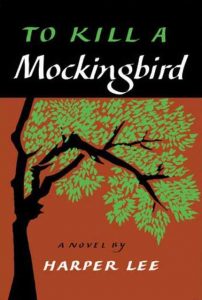
The summer months were my favourite time as a teenager to get lost in reading for the sake of pure pleasure, which just wasn’t possible during the school year. A luscious summer read for a teenager, I think, has to be To Kill a Mockingbird by Harper Lee. It was my favourite book – so beautifully written and with a powerful message. East of Eden by John Steinbeck is another novel I remember becoming completely immersed in.
This probably isn’t very helpful, but if a young person is trying to learn French, I strongly recommend Le Petit Nicolas series by René Goscinny. They are narrated by a naughty but fundamentally sweet 1950s French schoolboy called Nicolas who is enormously but unintentionally hilarious.


What is the worst job you’ve ever had?
Door-to-door knife salesman or selling hoover demonstrations over the phone to vulnerable old people.
Do you read as much as you’d like to?
I read, for pleasure, every day on the bus to and from work. It means I probably get about 30 or so minutes of pleasure reading in each day, which isn’t as much as I’d like, but it’s better than nothing.
What books do you feel are important reading for people on your career path and why?
Not a book, but the most important article I ever read was Quentin Skinner’s ‘Meaning and Understanding in the History of Ideas’. It demonstrated to me clearly the importance of placing ideas and political actors in their historical contexts in order to understand fully the claims they made. It has strongly influenced my historically inflected approach to the study of politics.
A book which had a big influence on my intellectual development as an undergraduate was the 1929 classic The Sexual Lives of Savages in North-Western Melanesia by Bronislaw Malinowski. As you might infer from the title, it is a ‘problematic’ text of old-school social anthropology, but it was important because it underscored to me how there is no such thing as ‘natural’ or ‘innate’ knowledge. Everything is learned from those around us and through inherited cultures. There’s an important passage in the book where it becomes clear that the islanders Malinowski studied did not draw any connection between sexual intercourse and pregnancy – they saw them as unrelated. This finding really stayed with me. It made me extremely suspicious of grand, universalising claims on behalf of ‘humanity’.
A final book which was influential on my ideas about the study of politics was Home Style: House Members in their Districts by Richard Fenno. It’s a wonderful work of political ethnography – probably the best – in which Fenno embeds himself with about a dozen members of Congress over several years and observes how they each behave when they ‘go home’ to their districts. An intimate but deeply analytical book about the practice of politics and the electoral pressures members face.


Is there a book that you’ve read more than once? What is it and why did you revisit it?
I don’t think I’ve ever re-read a book for pleasure intentionally. I think I accidentally re-read Claudius the God by Robert Graves, but to this day I am not sure if it was actually the second reading, as I was so familiar with the story from the wonderful BBC series and the first book I, Claudius.


What book have you recommended the most to friends and family?
When people ask me what books about America they should read, I recommend No Place Like Home: A Black Briton’s Journey Through the American South by Gary Younge and Confederates in the Attic: Dispatches from the Unfinished Civil War by Tony Horowitz. They are both wonderful pieces of historically and politically sensitive travel writing, written at about the same time (the 1990s) on similar topics, but from the perspectives of a black British man and an American Jew.
- No Place Like Home: A Black Briton’s Journey Through the American South by Gary Younge
 No Place Like Home: A Black Briton’s Journey Through the American South by Gary Younge
- Confederates in the Attic: Dispatches from the Unfinished Civil War by Tony Horowitz
 Confederates in the Attic: Dispatches from the Unfinished Civil War by Tony Horowitz
What’s your favourite genre of book?
Historical non-fiction – I probably enjoy biography the most.
What do you think a world without books would be like?
Full of people looking at their phones and tablets – has the future arrived?
Is there an author whose writing you’re such a fan of, that you’ll read everything they release?
Not exactly. There are some academics whose scholarship I greatly respect, and when they have a new book out, I want to make sure I read it – Paul Frymer, Megan Ming Francis, Rick Valelly, Theda Skocpol, Suzanne Mettler, Desmond King, Lisa Miller, and many others.
Do you think digital books will ever completely replace real books?
I hope not.
What book do you feel humanity needs right now?
Hard to prescribe something for the whole of humanity, but I think people should stay away from certain books, especially those which are hysterical about Brexit or make grand, universalising claims.
What is the book that you feel has had the single biggest impact on your life?
When I was 18, my paternal grandmother gave me some books which belonged to my grandfather who joined the Labour Party in 1935 and was an active member for over four decades. I read In Place of Fear by Nye Bevan, The Future of Socialism by Tony Crosland, The Labour Party in Perspective by Clement Attlee, and Parliamentary Socialism by Ralph Miliband. And while I wouldn’t have agreed with them all (impossible!), they were very influential in shaping my own political ideas.
- In Place of Fear by Nye Bevan
 In Place of Fear by Nye Bevan
- The Future of Socialism by Tony Crosland
 The Future of Socialism by Tony Crosland
- The Labour Party in Perspective by Clement Attlee
 The Labour Party in Perspective by Clement Attlee
- Parliamentary Socialism by Ralph Miliband
 Parliamentary Socialism by Ralph Miliband
Are there any books you haven’t mentioned that you feel would make your reading list?
There are so many, but I’ll limit myself to ones I’ve read for pleasure recently and which I’ve greatly enjoyed: The Soul of Indiscretion by Francis Wheen, a biography of the outrageous Labour MP, journalist, and possible traitor Tom Driberg; Closet Queens by Michael Bloch, a gossipy history of closeted gay men in Parliament; Killers of the Flower Moon by David Grann, the horrific history of the killings of the Osage Native Americans in the 1920s, who became some of the wealthiest people in the world when oil was discovered on their tribal lands; Richard Nixon: The Life by John Farrell, a highly readable portrait of a deeply flawed but compelling American politician.
- The Soul of Indiscretion by Francis Wheen
 The Soul of Indiscretion by Francis Wheen
- Closet Queens by Michael Bloch
 Closet Queens by Michael Bloch
- Killers of the Flower Moon by David Grann
 Killers of the Flower Moon by David Grann
- Richard Nixon: The Life by John Farrell
 Richard Nixon: The Life by John Farrell
What books or subject matter do you plan on reading in the next year?
I’ve been encouraged to try reading some political diaries and memoirs. I have Downing Street Diary by Bernard Donoghue and Barbara Castle’s diaries on my shelf. I think I should also read Tom Driberg’s autobiography Ruling Passions, which caused an enormous stir when it was published after his sudden death in the back of a taxi cab in 1976.


If you were to write an autobiography – what would it be called?
I wouldn’t find a publisher.
If you’d like to learn more about Richard Johnson you can find him on his faculty page and on Twitter.
As an Amazon Associate we earn from qualifying purchases made through links on this page.


