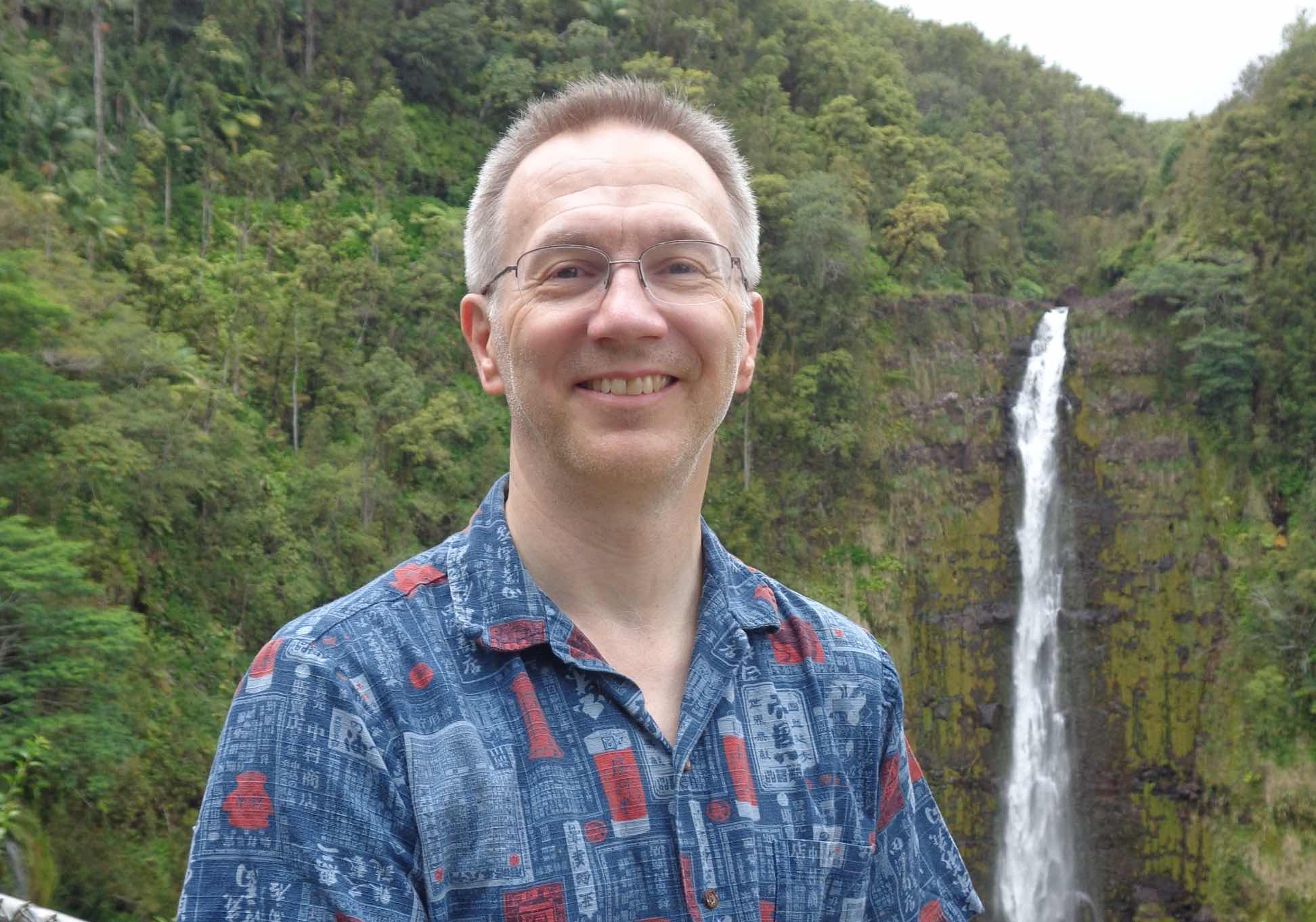
Nick Higham: Making Notes in the Margin
Nick Higham’s reading list
12 books mentioned in this interview
- Humble Pi · Matt Parker
- Writing Tools · Roy Peter Clark
- The Princeton Companion to Mathematics
- The American Heritage Dictionary of the English Language
- Changing Places
- The Art of Computer Programming
- The Revenge of Analog · David Sax
- Matrix Computations · Golub and Van Loan
- Alan Turing: The Enigma · Andrew Hodges
- Off to the Races: 25 Years of Cycling Journalism · Samuel Abt
- The Cycling Anthology series edited · Ellis Bacon and Lionel Birnie
- The Ivington Diaries · Monty Don
Books by Nick Higham: Accuracy and Stability of Numerical Algorithms, Functions of Matrices: Theory and Computation, Handbook of Writing for the Mathematical Sciences, MATLAB Guide, The Princeton Companion to Applied Mathematics
Nick Higham is a Royal Society Research Professor and Richardson Professor of Applied Mathematics in the School of Mathematics at the University of Manchester. Nick’s research area is numerical analysis, focusing on numerical linear algebra. For more on his research see his website. Nick Higham has written four books: two research monographs, Accuracy and Stability of Numerical Algorithms, and Functions of Matrices: Theory and Computation, as well as Handbook of Writing for the Mathematical Sciences, and MATLAB Guide. Nick Higham also edited and wrote about 100 pages of The Princeton Companion to Applied Mathematics. Please enjoy my interview with Nick Higham.
- Accuracy and Stability of Numerical Algorithms
 Accuracy and Stability of Numerical Algorithms
- Functions of Matrices: Theory and Computation
 Functions of Matrices: Theory and Computation
- Handbook of Writing for the Mathematical Sciences
 Handbook of Writing for the Mathematical Sciences
- MATLAB Guide
 MATLAB Guide
- The Princeton Companion to Applied Mathematics
 The Princeton Companion to Applied Mathematics
When someone asks you ‘what do you do for a living?’ – How do you respond?
I am a mathematician, but also a writer – I spend as much time writing as doing mathematics. In fact, much of the time I am doing both at the same time, writing research papers, books, reviews, or lecture notes and exams.
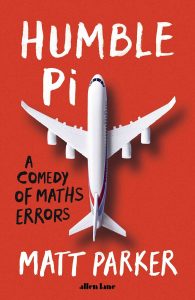
What are you reading at the moment?
Humble Pi by Matt Parker, which is about how errors people make in mathematics and computation can affect daily life. I knew some of the stories, and have mentioned them in one of my own books, but there are many here that were unfamiliar to me. Parker has done a superb job of making this material understandable and entertaining for a general audience.

What’s your earliest memory of reading?
My strongest memory is of taking part in a summer reading contest at my local library when I was around 10. Small prizes were awarded based on how many books you read. I remember reading series such as Biggles and Just William, as well some detective series whose names I’ve forgotten.
If you could encourage young people to read one book in particular, what would it be and why?
I won’t choose a science book, but rather a book on writing, because being able to express yourself well in writing is such a vital skill and one that scientists receive little training in. Of many excellent books on writing, I will pick out Writing Tools by Roy Peter Clark, as it is broken into short, easily digested chapters and is full of excellent advice. Moreover, it has an index – something that is all too lacking in many nonfiction books.

What is the worst job you’ve ever had?
I’m fortunate never to have had a job I didn’t like.
Do you read as much as you’d like to?
Yes. And I appreciate the way that modern technology allows me to download content and read it anywhere.
What books do you feel are important reading for people on your career path and why?
I’d advise someone considering a career in mathematics to look at The Princeton Companion to Applied Mathematics (2015) and The Princeton Companion to Mathematics (2008). Both contain accessible articles by leading experts on a wide variety of topics and can help the reader to decide what areas of mathematics they would like to specialize in.

Is there a book that you’ve read more than once? What is it and why did you revisit it?
A dictionary! I have lots of dictionaries and refer to them regularly, usually to make sure I am using a word in the right way, to check US versus British spelling (my publishers are in the USA), or to check etymology (most recently for the confusing word quintillion). As I browse, something interesting always pops up, especially in those dictionaries that contain encyclopedic entries. A recent acquisition is The American Heritage Dictionary of the English Language (fifth edition, 2018), which is ridiculously big and heavy. It has illustrations down the side of each page and the entry words are in blue: quirky but enticing.

What’s your favourite genre of book?
In the past, I have enjoyed reading comic novels related to university life (a genre knows as campus novels), notably those by David Lodge (starting with his Changing Places (1975)) but nowadays it’s hard for me to find the time to read novels.

Is there an author whose writing you’re such a fan of, that you’ll read everything they release?
Donald Knuth, who is arguably the world’s leading computer scientist. His The Art of Computer Programming series of books, which he started in the 1960s and is still working on, has been hugely influential. The books are about algorithms and their mathematical analysis and efficient implementation. Among many other achievements, Knuth developed TeX, which is a freely available system for typesetting mathematics used by scientists of all ages all around the world. It is now possible to run TeX in a browser using Overleaf.

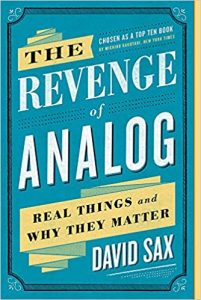
Do you think digital books will ever completely replace real books?
No. Digital books became popular once e-book readers were readily available, but real books have made a comeback. Nothing beats being able to hold a book in your hand, turn the pages, make notes in the margin, flip between two pages, and instantly see where you are in the book. This is brilliantly explained in The Revenge of Analog by David Sax.

What is the book that you feel has had the single biggest impact on your life?
The book Matrix Computations by Golub and Van Loan was published at the time I was an MSc student. It was the first modern, graduate-level treatment of the whole subject and was beautifully written and original. It was partly responsible for me changing my research topic from differential equations to matrix computations. I talk about it in more detail on my website.

Are there any books you haven’t mentioned that you feel would make your reading list?
Alan Turing: The Enigma by Andrew Hodges is my favorite biography. It’s superbly researched and a thrilling read. It was published before Turing became widely known to the general public. One reviewer described it as “one of the finest pieces of scholarship to appear in the history of computing”.
I’ve enjoyed excellent writing on cycling, such as Off to the Races: 25 Years of Cycling Journalism by Samuel Abt and The Cycling Anthology series edited by Ellis Bacon and Lionel Birnie, and on gardening, notably The Ivington Diaries by Monty Don.
- Alan Turing: The Enigma by Andrew Hodges
 Alan Turing: The Enigma by Andrew Hodges
- Off to the Races: 25 Years of Cycling Journalism by Samuel Abt
 Off to the Races: 25 Years of Cycling Journalism by Samuel Abt
- The Cycling Anthology series edited by Ellis Bacon and Lionel Birnie
 The Cycling Anthology series edited by Ellis Bacon and Lionel Birnie
- The Ivington Diaries by Monty Don
 The Ivington Diaries by Monty Don
If you’d like to learn more about Nick Higham, you can find him on his website.
As an Amazon Associate we earn from qualifying purchases made through links on this page.