An Interview with Megan Collins
Megan Collins’ reading list
15 books mentioned in this interview
- Vox · Christina Dalcher
- The Monster at the End of This Book · Jon Stone
- Daisy Jones and The Six · Taylor Jenkins ReidRecommended 3 times
- Novel Ideas: Contemporary Authors Share the Creative Process · Barbara Shoup and Margaret Love-Denman
- Save the Cat! Writes a Novel · Jessica BrodyRecommended 3 times
- Beloved · Toni MorrisonRecommended 11 times
- The Collected Poems of Sylvia Plath
- Anna Karenina · Leo TolstoyRecommended 12 times
- The Bell Jar · Sylvia PlathRecommended 10 times
- Extremely Loud and Incredibly Close · Jonathan Safran Foer
- The God of Small Things · Arundhati RoyRecommended 8 times
- Night Film · Marisha Pessl
- Station Eleven · Emily St. John MandelRecommended 3 times
- Hidden Bodies · Caroline Kepnes
- You
Books by Megan Collins: The Winter Sister
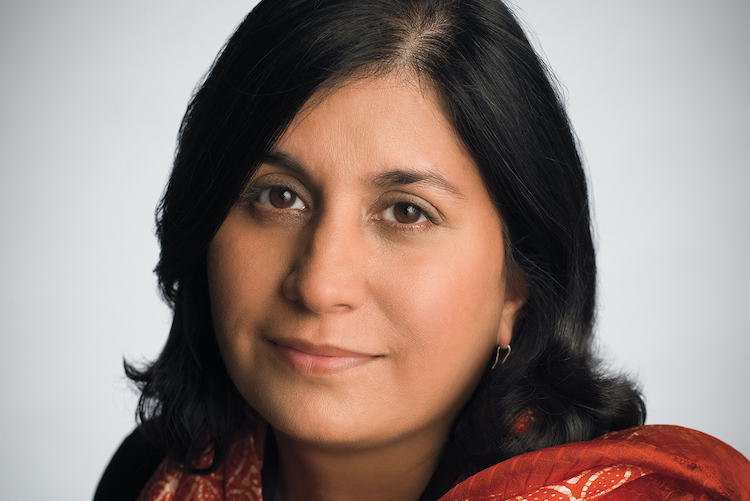
Megan Collins is the author of The Winter Sister, a book that has been described as ‘a haunting debut: suspenseful, atmospheric, and completely riveting’. Megan Collins received her B.A. in English and Creative Writing from Wheaton College in Norton, Massachusetts, and she holds an M.F.A. in Creative Writing from Boston University, where she was a teaching fellow. Megan Collins has taught creative writing at the Greater Hartford Academy of the Arts and Central Connecticut State University, and she is Managing Editor of 3Elements Review. A Pushcart Prize and two-time Best of the Net nominee, her work has appeared in many print and online journals, including Compose, Linebreak, Off the Coast, Spillway, Tinderbox Poetry Journal, and Rattle. Please enjoy my interview with Megan Collins.

How do you describe your occupation?
I am an author of psychological thrillers, a creative writing teacher at an arts magnet high school, and the managing editor of 3Elements Review. I spend my days immersed in creativity and language—and it’s such a gift.
What is something about you that people might find surprising?
I’m not a huge fan of going outside. Yes, there are flowers and trees and soft grass out there—but also, insects! Sunburns! Unpredictable weather! No thanks. I’ll stay inside and read.

What are you reading at the moment and what made you want to read it?
Right now, I’m reading Vox by Christina Dalcher. This book, which explores a dystopian society in which women are only allowed to speak 100 words per day, has been on my radar for a while, and now that I finally have my hands on it, I am racing through it. It’s terrifying and darkly funny, and it’s a stark warning about the dangerous possibilities of the misogyny that still exists today.

What was your favourite book as a child and why?
When I was really young, my favorite was The Monster at the End of This Book by Jon Stone. It was narrated by Sesame Street’s Grover, who gets increasingly anxious as the book proceeds because he’s been told that there’s a monster at the end of the book and the reader (you, me, all of us) keeps turning the page, getting him closer and closer to that terrifying end. He tries everything to get the reader to stop—tying the pages down, bricking them up—but still, the reader keeps turning and turning until, finally, we see that the “monster” was really just Grover all along. For a young reader, that book has everything: drama, suspense, humour, a loveable protagonist, a teeth-clenching climax, and a sweet, happy ending.

Can you remember the first story you ever wrote?
The very first story I ever wrote was called “The Bad Cats.” I was six years old. A few years later, I wrote a story called “The Mischievous Dog,” so I guess I have a thing for misbehaving animals.
What was the last book you purchased, and why did you buy it?
Daisy Jones and The Six by Taylor Jenkins Reid. I purchased a physical copy of it after listening to the audiobook. I don’t think it’s hyperbole to say that the audiobook was a life-changing experience for me. I’m in awe of the novel’s writing, storytelling, characters, and world-building, and it’s pretty much all I ever want to talk about now. The audiobook was amazing because it had a full cast of voice actors for all the band members and other characters “interviewed” in the book, but I loved it so much that I knew I had to have it on my bookshelf as well.

For someone starting out in your career, which three books would you make required reading and why?
For inspiration and interviews about the process from other authors in the trenches, I’d require Novel Ideas: Contemporary Authors Share the Creative Process by Barbara Shoup and Margaret Love-Denman. For a craft text that pays particularly close attention to the ins and outs of plotting, I’d require Save the Cat! Writes a Novel by Jessica Brody. And because it’s exquisite and perfect, I’d require Beloved by Toni Morrison (more on that one later).
- Novel Ideas: Contemporary Authors Share the Creative Process by Barbara Shoup and Margaret Love-Denman
 Novel Ideas: Contemporary Authors Share the Creative Process by Barbara Shoup and Margaret Love-Denman
- Save the Cat! Writes a Novel by Jessica Brody
 Save the Cat! Writes a Novel by Jessica Brody
- Beloved by Toni Morrison
 Beloved by Toni Morrison
What book have you found most inspiring, what effect did it have on you?
I know I would not be the writer I am today without The Collected Poems of Sylvia Plath. I first read it when I was in high school, and it completely transformed the way I wrote. Before that, I’d been writing very flat, vague poetry, and after, I saw the power that words really have: to make us see familiar things in a completely fresh way. Inspired by Plath, I began to study how to craft strong and memorable images. I took the rhythm of her poems into my bones and worked on training my ear to hear the cadence in a piece of writing. All of these lessons have served the writing I do every single day.

What’s the most obscure book you own; how did you discover it?
This question has made me realize that I don’t think I own anything too obscure—but now I’ll be on the lookout!

What’s the best book you’ve read in the last 6 months?
I’m double dipping with a previous answer, but Daisy Jones and The Six by Taylor Jenkins Reid. It’s structurally inventive, beautifully written, and contains some of the best monologues I’ve read in a very long time—if not ever. I finished the book days ago, but I’m still thinking about it all the time, hearing the characters’ voices in my head and missing them fiercely. And the ending—oh my God, the ending. If nothing else, please read this book so you can experience its stunning, tender, redemptive conclusion.
What is your proudest achievement?
I spent my whole life working toward getting a novel published, so the fact that I’ve achieved that dream is definitely my proudest achievement. And within that achievement, I’m also proud of how many people have reached out to me to tell me what the book meant to them. It’s a beautiful reminder of how connected we all are, even with people we’ve never met. I wrote The Winter Sister as a metaphor (disguised as a thriller and murder mystery) for a truth I had discovered—and it’s amazing to hear that the story resonates with some readers in the same way it does with me.
Can you talk us through your writing process, from the first spark of an idea, to having your first completed draft?
My novel ideas always begin with a “What if” that really interests me. For example, with The Winter Sister, I wondered: what if in the Greek myth of Persephone and Demeter, Demeter had had another daughter, someone who she’d presumably have to try to hold it together for in the wake of losing Persephone? What if Demeter didn’thold it together, though? What if she fell apart just as completely as she does in the myth? What would happen to that other daughter? How would she navigate her childhood and her transition into adulthood? What would an adult version of that neglected girl look like? Sylvie, the narrator of The Winter Sister, became my answer to that question. From there, I started to see the parts of the story I’d need to get to—the turning points, the twists, the reveals, the climax, the answer to the novel’s mystery of who murdered Persephone—and I created a general outline based on those ideas. Then, before beginning each chapter, I wrote a detailed outline of everything that needed to happen in those pages. Then I repeated that process until I had my completed first draft.
If you were trying to impress a visitor, which book that you own would you leave on the coffee table?
I think I’ve stopped believing in there being a hierarchy of impressiveness when it comes to books. When I was younger, I might have said Anna Karenina by Leo Tolstoy, or something just as heavy and classic. But I’m done with the idea that a book’s length or age or genre or presence in the literary canon ascribes it with more value than a funny, moving, well written rom-com that you find on the New Fiction table at Barnes & Noble. But also—maybe my very early edition of The Bell Jar by Sylvia Plath.


What two pieces of advice would you give a young aspiring writer?
First of all, read everything you can get your hands on—things in your genre (to know the kind of literary conversation you’re a part of) and outside of it (to be inspired by different subjects, styles, and voices). Second, don’t ever give up—and I know that that’s easier said than done. You will be rejected. You will face massive disappointments. It’s just a part of the journey, and it isn’t personal. You might hear “No” so many times that you want to banish the word from the English language—but try to remember that it only takes one yes.
If an alien landed in your garden; which three books would you gift them to showcase humanity in the best possible way?
Strangely enough, my three answers also showcase humanity in the worst possible way. Extremely Loud and Incredibly Close by Jonathan Safran Foer takes place in the wake of 9/11, but it follows a huge-hearted, hilarious young boy as he finds connection and healing in the most unexpected places. Beloved by Toni Morrison is about a former slave haunted by the ghost of a child she killed so that the child would not become a slave herself, but it also illustrates the astounding power of a mother’s love. The God of Small Things by Arundhati Roy explores the idea that love cannot be shackled or limited in any way—and it does so through a story that examines the dangers and horrors of the caste system in India.


Are there any books you haven’t mentioned that you feel would make your reading list?
Two of my favorite books from the last decade are Night Film by Marisha Pessl and Station Eleven by Emily St. John Mandel. Night Film is a literary thriller that I simply devoured, barely coming up for air or food or sleep as I blasted through the pages*. Station Eleven* is a haunting, lyrical exploration of what it means to be human, especially in a world in which so much of humanity, and humans themselves, has been destroyed.


Which book sat on your shelf are you most excited about reading next and why?
I’ve had Hidden Bodies by Caroline Kepnes, the sequel to her electric and fascinatingly disturbing You, on my shelf for a few months now, but I haven’t gotten to it yet. I’m eager to dive into it so I can continue Joe’s story—even as I’m almost afraid to.


If you’d like to learn more about Megan Collins, you can find her on her website and on Twitter.
As an Amazon Associate we earn from qualifying purchases made through links on this page.