Lawrence Krauss: Humanity’s Ability To Wonder
Lawrence Krauss’ reading list
11 books mentioned in this interview
- The Darkening Age: The Christian Destruction of the Classical World · Catherine Nixey
- Modern Classical Physics · Kip Thorne and Roger Blandford
- God is Not Great · Christopher HitchensRecommended 3 times
- The Origins of Knowledge and Imagination · Jacob Bronowski
- The First Three Minutes · Steven Weinberg
- Catch 22 · Joseph HellerRecommended 12 times
- The Temptation to Exist · E. M. Cioran
- Nutshell · Ian McEwanRecommended 4 times
- The Rise and Fall of Adam and Eve · Stephen Greenblatt
- A Universe from Nothing
- The Doomsday Machine · Daniel Ellsberg
Books by Lawrence Krauss: The Greatest Story Ever Told—So Far
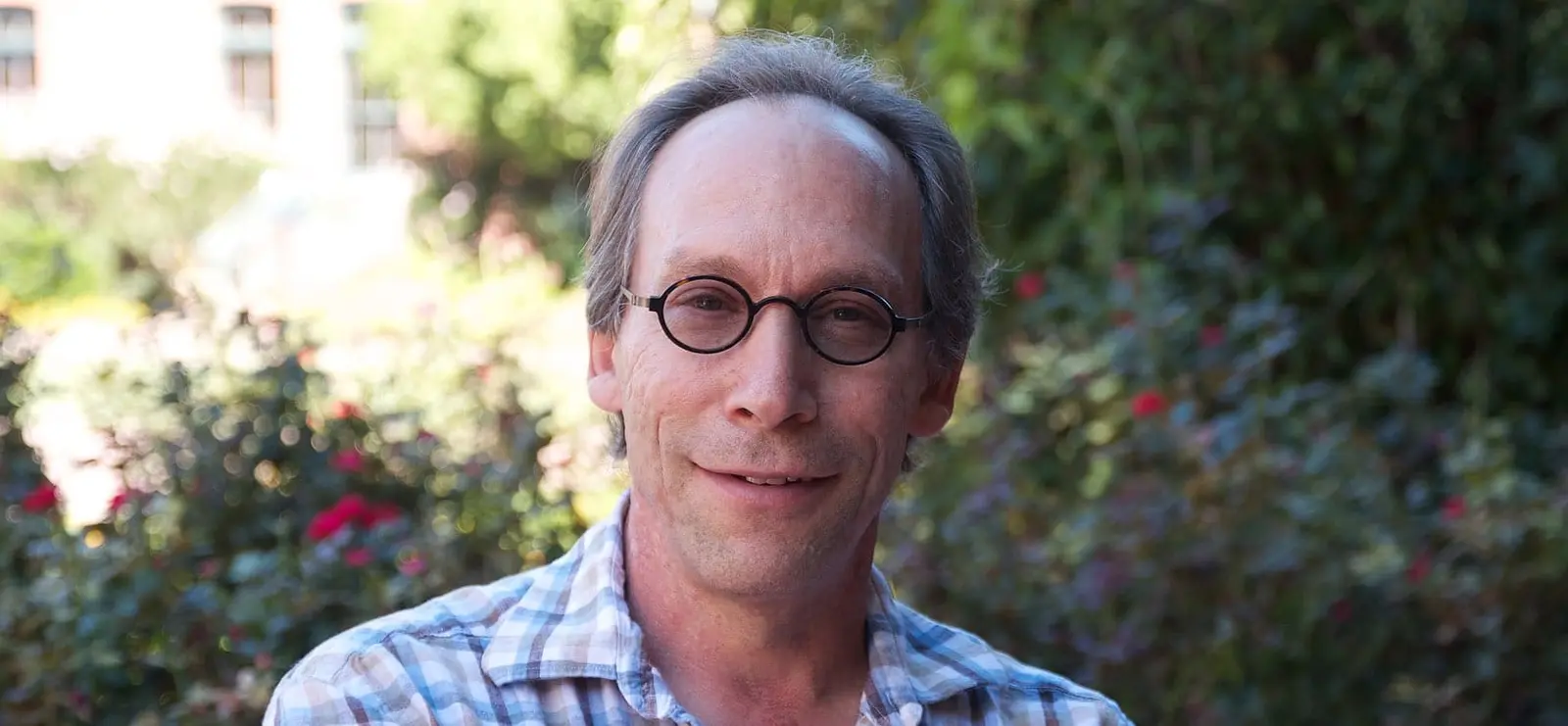
Lawrence Krauss is an internationally known theoretical physicist and bestselling author, as well as being an acclaimed lecturer. He has also appeared regularly on radio and television, as well as in several feature films. His wide research interests have focused on the interface between elementary particle physics and cosmology, including the origin and evolution of the Universe and the fundamental structure of matter. Lawrence Krauss served as Director of Arizona State University’s Origins Project, and Foundation Professor for a decade from 2008-2018, and also as Chair of the Board of Sponsors of the Bulletin of the Atomic Scientists from 2006-2018. In 2008, Lawrence Krauss created and served for a decade as Inaugural Director of the Origins Project, a national center for research and outreach on origins issues, from the origins of the universe, to human origins, to the origins of the consciousness and culture. Lawrence Krauss has written over 500 publications and 10 popular books, including his latest book, The Greatest Story Ever Told—So Far. Among his numerous awards are included the three major awards from all 3 US physics societies and the 2012 Public Service Award from the National Science Board for his contributions to the public understanding of science. Please enjoy my interview with Lawrence Krauss.

What is something about you that people might find surprising?
I read voraciously when I was pretty young, but I also watched TV voraciously. I didn’t start my homework until Johnny Carson went off the air at 1 am. I think I learned a lot about culture and history from TV.
What are you reading at the moment and what made you want to read it?
The Darkening Age: The Christian Destruction of the Classical World by Catherine Nixey. My friend Noam Chomsky recommended it to me when we were discussing the evils of modern religion, and I had also heard about it online. It describes in harrowing detail how Christianity in the first few centuries AD makes ISIS look like a kindergarten bully.

Can you talk us through your research process when preparing for a new book?
I don’t have any routine that is universal, as it depends very much on the type of book I am writing. One thing I often do, in preparation for writing my books, which thus far have been nonfiction books, is to read fiction books. Perhaps the writing styles inspire me to be more lyrical. Next, I tend to read very broadly and deeply on almost all subjects related to the book so I can get a sense of what questions, in general, I want to answer when I write the book, and which areas are most confusing, most relevant, etc. Then, once I have a general idea of where I want to go, I start exploring various subjects intensively. I return to them once I start writing, and it is during that latter phase when I don’t stop until I feel I understand what I need to write about.
What was the last book you purchased, and why did you buy it?
Modern Classical Physics by Kip Thorne and Roger Blandford: It is a 1400 page presentation of topics in modern physics that are not normally taught to undergraduates, written by two friends of mine, and I thought it might be fun to work through it periodically to update and fine tune some of my skills in areas I haven’t worked in.

For someone starting out in your career, which three books would you make required reading and why?
In the aspect of my career as a non-fiction writer, rather than a physicist, I would say, God is Not Great by Christopher Hitchens, The Origins of Knowledge and Imagination by Jacob Bronowski, and The First Three Minutes by Steven Weinberg. Each provides different bits of inspiration that impacted upon me. The Hitchens book is simply a bold and beautiful piece of writing confronting much conventional wisdom. The Bronowski book is an inspiring treatise on the beauty of science and nature, and the Weinberg book is a great example of simple, cogent, science writing, for the layperson on a difficult subject.


What book have you found most inspiring, what effect did it have on you?
Catch 22 by Joseph Heller. I read it perhaps 5 times while I was growing up. It poignantly reminded me of the absurdity of life, and the importance of resisting authority. At the same time, it taught me as a writer, and a public speaker, of the importance of the use of odd juxtaposition in order to throw readers or listeners a curveball that causes them to rethink their assumptions.

What’s the most obscure book you own; how did you discover it?
The Temptation to Exist by E. M. Cioran. It was given to me by a good friend.

What’s the best book you’ve read in the last 6 months?


What is your proudest achievement?
I don’t think in those terms. I rarely put things in hierarchical order, and I don’t think it is up to me to judge my achievements. I do what I can, and what I think is important, and that is what guides me.
What was your inspiration for writing your most recent book, ‘The Greatest Story Ever Told – So Far’?
I wanted to extend the effort I began making in my earlier book, A Universe from Nothing, which described the often unheralded revolutions in our thinking about the Universe on the largest scales over the past 50 years or so, and which addressed a question that had been usurped by religion, namely, ‘why there is something rather than nothing’. With my latest book, The Greatest Story Ever Told — So Far, I wanted to describe how our understanding of the Universe on its smallest scales was revolutionized over the past 100 years in ways that have also been unheralded, and address another question usurped by religion, namely, Why are we here? In both cases, science has completely changed our understanding of the questions, and possible answers, and has served to further make the notion of a supernatural being guiding the universe more irrelevant.


If an alien landed in your garden; which three books would you gift them to showcase humanity in the best possible way?
I am not sure I would want to do that, but I might give them the three books I alluded to in my required reading list. The first would warn them about religion, and the fact that not everyone on earth buys into that nonsense. The second would celebrate humanity’s ability to wonder, and the third would give them some idea of how well we think about the universe.
Which book sat on your shelf are you most excited about reading next and why?
The Doomsday Machine by Daniel Ellsberg. I think this will provide important insights into nuclear war planning over the years, a subject that as the former Chair of the Board of Sponsors of the Bulletin of the Atomic Scientists, which sets the Doomsday Clock each year, is important to me.

If you’d like to learn more about Lawrence Krauss, you can find him on his website and on Twitter.
As an Amazon Associate we earn from qualifying purchases made through links on this page.