
Julian Zelizer: Books Born from My Intellectual Passions
Julian Zelizer’s reading list
14 books mentioned in this interview
- The Fierce Urgency of Now )
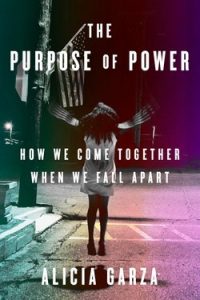
- The Purpose of Power · Alicia Garza
- A Promised Land · Barack ObamaRecommended 3 times
- The Machiavellian Moment · J.G.A. Pocock
- The Age of Reform · Richard Hofstadter
- Master of the Senate · Robert Caro
- Jews and Judaism in a Midwestern Community: Columbus, Ohio, 1840-1975 · Marc Lee Raphael
- Vanguard: How Black Women Broke Barriers, Won the Vote, and Insisted on Equality for All · Martha Jones
- Beloved · Toni MorrisonRecommended 11 times
- The Sabbath · Abraham Joshua Heschel
- God in Search of Man · Abraham Joshua Heschel
- The Insecurity of Freedom · Abraham Joshua Heschel
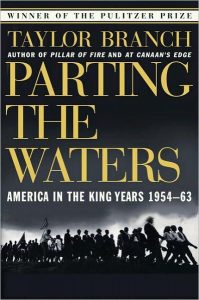
- Parting the Waters · Taylor Branch
- Nine Days: The Race to Save Martin Luther King Jr. and Win the 1960 Election · Paul Kendrick and Stephen Kendrick
Books by Julian Zelizer: Burning Down the House: Newt Gingrich, the Fall of a Speaker, and the Rise of the New Republican Party, Taxing America
Julian Zelizer has been one of the pioneers in the revival of American political history. He is the Malcolm Stevenson Forbes, Class of 1941 Professor of History and Public Affairs at Princeton University and a CNN Political Analyst and a regular guest on NPR’s “Here and Now.” Julian Zelizer is the author of many celebrated books on political history with his most recent published book is Burning Down the House: Newt Gingrich, the Fall of a Speaker, and the Rise of the New Republican Party. It documents the story of how Newt Gingrich and his allies tainted American politics, launching an enduring era of brutal partisan warfare. Julian Zelizer was a Guggenheim Fellow and a Brookings Institution Research Fellow. The New York Times named the book as an Editor’s Choice and one of the 100 Notable Books in 2020.
His first book, Taxing America, was awarded the 2000 Ellis Hawley Prize and the 1998 D.B. Hardeman Prize. In addition to his scholarly articles and book chapters, Julian Zelizer is a frequent commentator in the international and national media on political history and contemporary politics. Zelizer, who has published over 1000 op-eds, has received fellowships from the Brookings Institution, the Guggenheim Foundation, the Russell Sage Foundation, the New-York Historical Society, and New America. He also co-hosts a popular podcast called Politics & Polls. The History News Network once named Professor Julian Zelizer as one of the top young historians in the country.
Please enjoy our interview with Julian Zelizer…


How would you describe your occupation to a 7-year-old?
I teach and write about how American democracy works as well as its dysfunction.
What is something about you that people might find surprising?
We have a five-pound Maltese named Lyndon. He is the first dog that I ever owned so I didn’t realize the comedic element when I suggested naming him after President Lyndon Johnson (who I was writing a book about, The Fierce Urgency of Now) who was over 230 pounds.

What are you reading at the moment and what made you want to read it?
The Purpose of Power by Alicia Garza. In the fall, I taught a graduate course at Princeton’s SPIA school about the history of civil rights leadership. We started in the early twentieth century and ended with Black Lives Matter. I am looking forward to reading about Garza’s insights into the use of power and how it compares with previous leaders in the movement.

What was your favourite book as a child and why?
Stephen King novels. From the very first book, I loved the page-turning suspense and craft of the genre.
What was the last book you purchased, and why did you buy it?
A Promised Land by Barack Obama. I am very interested in learning how the former president narrates his own journey from emerging as a leader in 2004 who promised to overcome “red versus blue” American into someone grappling with a radicalized Republican Party.

What are the perfect reading conditions for you?
Any beach is a perfect condition.
For someone looking to explore American political history, which three books would you recommend as a starting point?


What’s the most obscure book you own; how did you discover it?
Jews and Judaism in a Midwestern Community: Columbus, Ohio, 1840-1975 by Marc Lee Raphael. My late grandfather, Nathan Zelizer, was a Rabbi in Columbus, Ohio. I found this local history in our family collection which contains fascinating information about his work in this important midwestern city.

What’s the best book you’ve read in the last 6 months?

What is your writing process? How do you decide if a topic has what it takes to become a book?
I write constantly. Every day, I make certain to write a little bit after the research phase of a project has been completed. With the benefit of immense self-discipline, I am fortunate to be able to be productive in almost any environment—from the solitude of a library to a crowded subway. Importantly, I am the kind of writer that works through many drafts. Rather than attempting to get everything right the first time around, I enjoy working through multiple versions of manuscripts as I attempt to craft the narrative and argument.
Each new book topic usually grows out of previous research or articles. Throughout my career, I have only picked topics that grow out of my intellectual passions rather than professional calculations. While I have a relatively good feel for what would be an interesting book project, I like to run through many ideas with my wife and friends before deciding on what will stick. In addition, my agent and editors can be enormously helpful in sensing what would be viable. But the ultimate litmus test comes when I put paper to pen (so to speak) in drafting a formal book proposal.
If you were trying to impress a visitor, which book that you own would you leave on the coffee table?
Beloved by Toni Morrison. Signed copy from my college days at Brandeis University. She spoke and signed books after. I’ll never forget that.

If an alien landed in your garden; which three books would you gift them to showcase humanity in the best possible way?
The Sabbath by Abraham Joshua Heschel; God in Search of Man by Abraham Joshua Heschel; The Insecurity of Freedom by Abraham Joshua Heschel. I’ve just finished writing a biography of Heschel (Forthcoming, Yale University Press). I believe that his work showcases humanity and the aspirations to live a pious life more than almost anything else published.
- The Sabbath by Abraham Joshua Heschel
 The Sabbath by Abraham Joshua Heschel
- God in Search of Man by Abraham Joshua Heschel
 God in Search of Man by Abraham Joshua Heschel
- The Insecurity of Freedom by Abraham Joshua Heschel
 The Insecurity of Freedom by Abraham Joshua Heschel
- parting the waters - Julian Zelizer interview
 parting the waters - Julian Zelizer interview
What is the book that you feel has had the single biggest impact on your life? What impact did it have?
Parting the Waters by Taylor Branch. Reading this book in college was pivotal to my gaining an interest in general non-fiction historical writing.

Tell us more about your new book, Burning Down the House – what is it about and what inspired you to write it?
After writing several books about political polarization since the 1970s and the rightward turn of the Republican Party, I wanted to better understand how this happened. Rather than focusing on the sorts of macro explanations that are common in journalism and political science—the sorting of voters, gerrymandering, legislative rules, etc—I wanted to look at specific individuals and specific moments that moved us toward our current state of affairs.
I came to understand that Newt Gingrich’s rise to power in the 1980s was central to the transformation of the GOP with its embrace of smashmouth, no guardrails partisanship. Gingrich’s takedown of the Speaker of the House, Jim Wright, in 1989 was a pivotal moment because it was at that point that he moved from being a maverick and bomb-thrower to officially becoming part of the GOP leadership. The rest, as they say, was history. It is also a riveting story, a real-life House of Cards thriller which offered me to write about the history of partisanship in a way that could engage readers.
Which book sat on your shelf are you most excited about reading next and why?
Nine Days: The Race to Save Martin Luther King Jr. and Win the 1960 Election by Paul Kendrick and Stephen Kendrick. I am starting research on a project about the civil rights movement in the 1960s and I’m interested in different narrative structures that are being used to explore this period in new ways.

If you’d like to learn more about Julian Zelizer, head to his website and be sure to follow him on Twitter.
As an Amazon Associate we earn from qualifying purchases made through links on this page.


