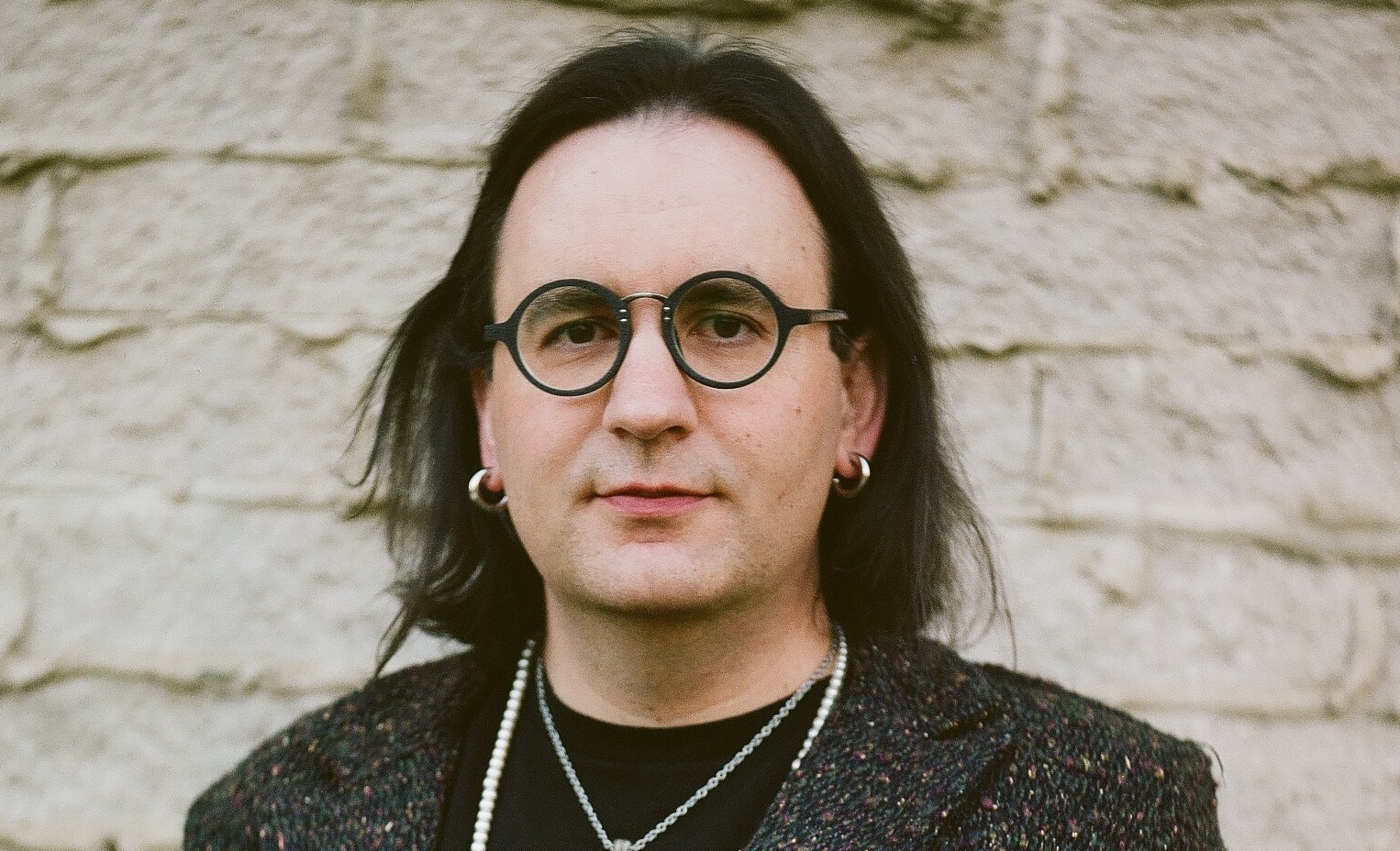
An Interview with Gina Marie Guadagnino
Gina Marie Guadagnino’s reading list
19 books mentioned in this interview
- The Donegal Woman · John Throne
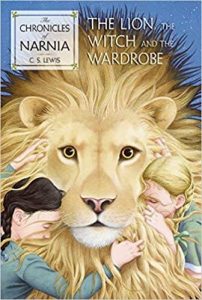
- The Lion, the Witch, and the Wardrobe · C.S. LewisRecommended 9 times
- Dreams of Sex and Stage Diving · Martin Millar
- Gods of Gotham · Lyndsay Faye
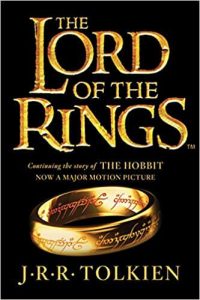
- The L ord of the Rings · J.R.R. Tolkien
- Forever · Pete Hamill
- Fingersmith · Sarah WatersRecommended 4 times
- Tipping the Velvet · Sarah Waters
- Slammerkin · Emma Donoghue
- Hild · Nicola Griffith
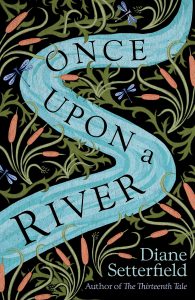
- Once Upon A River · Diane Setterfield
- Romeo and Juliet · William ShakespeareRecommended 4 times
- Northanger Abbey · Jane Austen
- Slumberland · Paul Beatty
- Middlesex · Jeffrey EugenidesRecommended 4 times
- The Blind Assassin · Margaret AtwoodRecommended 4 times
- Mistress of the Art of Death · Ariana Franklin
- The Golem and the Jinni · Helene Wecker
- The Adventures of Huckleberry Finn · Mark TwainRecommended 12 times
Books by Gina Marie Guadagnino: The Parting Glass
Gina Marie Guadagnino is an author and her debut novel, The Parting Glass, was published by Atria Books in Spring 2019. Her previously published work includes three short stories: Whisper in the Shadows, In the Sky She Floats, and From the Inbox of Madness. When not writing, Gina Marie Guadagnino practices the dark art of university administration at New York University. Gina Marie Guadagnino resides on the island of Manhattan with her family, her library, and about 1.6 million of her closest friends.
The Parting Glass by Gina Marie Guadagnino is available now.
Please enjoy my interview with Gina Marie Guadagnino.

When someone asks you ‘what do you do for a living?’ – How do you respond?
I like to babble incoherently for a minute about how that’s a complicated question, and then say I’m a writer who pays the bills by working in university administration. I think it’s really important to signal to the asker how uncomfortable I am claiming to be a novelist with only one publication to my name because I, like so many debut novelists, suffer from imposter syndrome.
What are you reading at the moment?
I just finished The Donegal Woman by John Throne. Spoilers here, but I cried over the ending – not because it’s a heartbreaking conclusion to a brutal account of personal and institutional abuse (although it is), but out of sheer relief that the protagonist died before she could suffer any further. Throne’s skill as an author lies in his ability to render something so horrifically tragic in such lyrical and evocative prose. I was just gutted.

When you think about your childhood, what book comes to mind?
The Lion, the Witch, and the Wardrobe by C.S. Lewis. I read it for the first them when I was eight, and I was instantly in love with Narnia. Predictably, this led to an obsession with reading in crawl-spaces and closets. I was constantly looking for a way to escape reality through a magic portal, and failing to find one, tended to agree with Emily Dickinson that there is no frigate like a book. To this day, it’s my dream to have a home with a spare room, containing a huge wardrobe that’s actually a secret passage to a library. How cool would that be?
Can you remember the first story you ever wrote?
Totally. It was a Berenstain Bears fan fic in which I mused at great length on the anti-feminist nature of the expression “oh brother.” I didn’t so much “write” it as have my mother record it on cassette and then transcribe it for me. She still has the cassette and likes to bring it out and torture me with it every few years, because that’s what moms do. I think I was three years old.
What did you want to be when you were growing up?
Like many toddlers, I was fairly committed to become a palaeontologist, and my dad was thrilled that I would go around telling people that I was going to go to Yale and then work at the Peabody Museum. Then, after a star turn as the titular role in my kindergarten’s production of The Little Red Hen, I decided to become an actress. It wasn’t until middle school that I finally realised I preferred writing stories to acting in them. So, I guess I was a late bloomer in that regard.
What do you think your school aged self would think of the present day you?
School-aged Gina would be pretty thrilled, I think. My suburban self always dreamed of living in New York City and telling stories, whether on the page or on the stage, and having accomplished both of those things, I think she’d forgive us for being born too late to afford the sprawling SoHo loft from Big that she coveted.
If you could wrap up a single book and gift it to yourself as you left education, which book would it be and why?
This is a trick question – I haven’t left education yet. I’m currently working on my second master’s degree! Okay, but seriously, all snarkiness aside and temporal impossibilities removed, I probably could have benefitted from a copy of Dreams of Sex and Stage Diving by Martin Millar upon the receipt of my BA. You know, assuming it had been published in 2003. Millar’s book is about a young woman in far more dire straits than I’ve ever been, who picks herself up and goes after what she wants with single-minded grit and tenacity. While she makes some terrible mistakes and dubious life choices along the way, the book’s over-arching message is one of triumph and positivity, which I really could have used in my post-graduation slump.

Does your reading have routine? Is there a particular time or place that you like to read?
I have a fairly long commute, so I read on the subway. As a result, I’m a fantastic subway surfer, even in heels. I always have a book in my purse, so whenever there’s a minute with nothing to do, I read. I read between work and class, I read at night before bed. I read first thing in the morning on the weekends, and again in the afternoons. There’s a chaise under the one widow that has decent light in my apartment, and I like to curl up on that, preferably with coffee nearby.
Can you talk us through your writing process, from the first spark of an idea, to having your first completed draft?
My writing process has evolved a lot over the years, so I’ll stick to the way I write now. I have a collection of idea sparks, all kind of bubbling and percolating and begging to be elaborated upon, so I wait for one of those to grow until it’s eclipsing all the others and seize on that. Usually, this will happen because I’ve read something that relates to one of these ideas and feels it until it’s stronger than the rest. Once I’ve got a nice, obsessive thought growing, I try to do a very rough outline of what that thought would look like as a novel with a beginning, middle, and end. Then, I start poking holes in the outline to identify the gaps in my knowledge. What do I know about this and what should I know about that? I put together a reading list based on the gaps and spend several months researching, filling in the gaps in my outline, as I go. When I’m done, a write a more robust outline with a scene-by-scene breakdown. And then I sit down and write each scene. Some get added, subtracted, or conflated along the way, but the finished product won’t differ too dramatically from the second outline.
Which book has had the biggest impact on your career so far? How did it impact it?
Reading Gods of Gotham by Lyndsay Faye was a turning point for me. I was about halfway through my first draft of The Parting Glass and had reached the point where I was really questioning why I was writing this: if anyone was ever going to care if I finished it, was there even a market for this kind of historical fiction, etc. and then I stumbled across Lyndsay’s book, which is also a gritty take on historical fiction set in the 19th century immigrant communities of New York, and I was like “oh thank God, I’m not the only one who wants to see more of this!” And that gave me the push I needed to keep going.

What two pieces of advice would you give a young aspiring writer?
The first is to just write. I know so many people who have told me they tried to write a novel, but they couldn’t finish the first draft. Hell, I was one of those people for years! I can’t even tell you how many files I have on my laptop, ranging from two pages to seventy-five pages, of abortive attempts at manuscripts. I would get hung up on the world-building, or the character development, or some element of research, and I would go down rabbit holes, and lose interest in the story along the way. (These bad habits, by the way, are what led to the development of my current writing process.) Your first draft doesn’t have to be great. It doesn’t have to even be very good. It just needs to be done.
Which brings me to my second piece of advice: edit. And when you’re done editing, get someone you trust (someone who won’t pull their punches) to read it as well, and then edit it again based on their feedback. And then find someone else you trust and do it again. And again. As many times as necessary. When people give you feedback, really listen. Giving your work to someone whose only feedback is “it’s great! I loved it!” won’t make you a better writer. Getting defensive about your choices won’t make you a better writer. It is possible to stay true to your vision while being open to improvement.
Do you have any books that you strongly associate with someone important in your life?
My brother and I are very different people who have very divergent interests, but we both read the The Lord of the Rings by J.R.R. Tolkien simultaneously, and those books will always make me think of him. He’s very tall and I . . . am not, so for many years he called me “halfling.” Any rumours that the nickname also referenced my unnaturally hairy feet are completely unfounded and I deny them categorically. We often quote the books and the movies back and forth to one another as a natural part of our conversations, so it’s hard not to associate those books with him!
What book have you recommended the most to friends and family?
Easily has to be Forever by Pete Hamill. My former boss gave me a copy and I fell in love. It sits at the nexus of all my favourite things: Ireland and the Irish diaspora, New York and its immigrant history, supernatural plot device in an otherwise mundane setting, long-simmering revenge. It is also the only book that directly references September 11th that I can read without wanting to fling it across the room. I have given it as a gift many times, and loaned it out to so many people that my copy is fairly tattered at this point. After a friend’s dog chewed on one corner of the spine, I contemplated replacing it, but I just can’t because reading it and rereading this particular copy has so many memories for me.

Do you prefer fiction or non-fiction?
At the end of the day, I prefer fiction, although reading non-fiction is deeply important to me as a writer of historical fiction, and as a scholar (see below). My favourite types of fiction tend to be similar to what I write myself: carefully and detailedly researched historical fiction. I specifically crave the type of fiction so elegantly crafted and beautifully immersive that I forget what I’m doing, miss my subway stop, and make the book my sole reality for a while. Books that fall into that category for me include Fingersmith by Sarah Waters and, also, Tipping the Velvet by Sarah Waters; Slammerkin by Emma Donoghue, and Hild by Nicola Griffith. Hild actually holds the distinction of making me miss three subway stops and I didn’t care because reversing course meant more time to read. It’s such a delightful feeling, and as I’ve never quite felt that way reading a work of nonfiction, fiction wins.


Do you think reading is important?
Vitally. I think education is important, and reading non-fiction is, of course, a crucial education tool. I think art and culture are equally as important, both in terms of the simple pleasure of consuming fiction, as well as the ways in which fiction makes people think, and feel. Fiction fosters curiosity, which very often leads to furthering one’s education in an attempt to satisfy that curiosity, which brings us back to non-fiction. Basically, I’ve just created a mental ouroboros in the effort to say that I think that all kinds of reading are important!
What’s the best book you’ve read in the last 6 months?
This is an agonising question. I have like five books vying for the top spot, and the order changes on a daily – and sometimes hourly – basis. At this particular moment, I’m going to say Once Upon A River by Diane Setterfield. With a plot that meanders like the Thames upon which it is set, and a striking array of distinct and intriguing characters, this book was so deeply alluring. I loved the way the sprawling story came together in such a perfectly satisfactory denouement without it feeling too neat or contrived. Setterfield’s narrative voice hits all the right notes, and her prose is just lovely.
Do you prefer real books or digital books?
I love a good codex! I never have to remember to recharge it.
Name a book that you feel everyone would benefit from reading and explain why.
Can I cheat a little and say Romeo and Juliet by William Shakespeare? I know it’s a play not a book, but I think it’s a foundational western text, in that so many other works of literature and art and media are based on it and make reference to it. And yet, it’s profoundly misunderstood. It’s widely perceived as an epic love story, the most romantic tale in the western world and that, quite frankly, is codswaddle. It’s a story about two hormonal teenagers who get married after meeting briefly twice so that they can have sex once, and then kill themselves after causing the deaths of multiple friends and family members. I find it embarrassing that people think this is supposed to be The Best Love Story Ever. It’s proof that, if they have even read it, they didn’t understand it at all. Not to minimise Shakespeare’s verse, though, which is actually quite romantic. It’s the plot that’s a total dumpster fire.

What is the book that you feel has had the single biggest impact on your life? What impact did it have?
I would have to say Northanger Abbey by Jane Austen. I had tried and failed to get into Jane Austen after swooning over the Emma Thompson’s adaptation of Sense and Sensibility, but I think I probably lacked the maturity to appreciate Austen’s subtle wit and humour in her renderings of drawing room manners. A couple years later, I read Northanger Abbey and finally understood Austen’s gift for sardonic observation and realised that her novels were so much more than the rehashing of the marriage plot that I had expected them to be. It completely changed how I read 19th century female authors, and how I approached writing historical fiction.

Are there any books you haven’t mentioned that you feel would make your reading list?
Lots! But in an effort to keep it brief, I’ll list Slumberland by Paul Beatty, Middlesex by Jeffrey Eugenides, The Blind Assassin by Margaret Atwood, Mistress of the Art of Death by Ariana Franklin, The Golem and the Jinni by Helene Wecker, and The Adventures of Huckleberry Finn by Mark Twain. I could go on, clearly, but that’s a taste.
- Slumberland by Paul Beatty
 Slumberland by Paul Beatty
- Middlesex by Jeffrey Eugenides
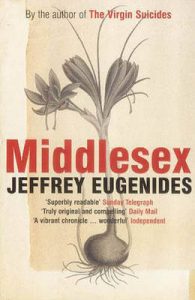 Middlesex by Jeffrey Eugenides
- The Blind Assassin by Margaret Atwood
 The Blind Assassin by Margaret Atwood
- Mistress of the Art of Death by Ariana Franklin
 Mistress of the Art of Death by Ariana Franklin
- The Golem and the Jinni by Helene Wecker
 The Golem and the Jinni by Helene Wecker
- The Adventures of Huckleberry Finn by Mark Twain
 The Adventures of Huckleberry Finn by Mark Twain
What books or subject matter do you plan on reading in the next year?
Well, as I mentioned, I’m in a graduate program for Irish Studies currently, so I imagine that the next couple of years’ reading lists will be dominated by coursework. My specific area is women in Ireland and the Irish diaspora, with a particular focus on the 19th century, and queer women’s issues.
If you were to write an autobiography – what would it be called?
Portrait of the Artist as a Young Caffeine Addict. It would open on a scene of two-year-old Gina being spoon-fed espresso by her great-grandmother. Yes, this really used to happen. Flash forward to the present, in which the barista at my local coffee shop is one of my favourite humans and got a shout out in the acknowledgements in my novel (hi Evelyn – love you!).
If you’d like to learn more about Gina Marie Guadagnino, you can find her on her website and Twitter.
Image credit: L.M. Pane
As an Amazon Associate we earn from qualifying purchases made through links on this page.