
Ernest Metzger: Recognising The Quirks Of Authorship
Ernest Metzger’s reading list
20 books mentioned in this interview
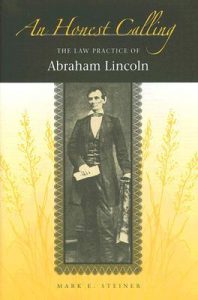
- An Honest Calling: The Law Practice of Abraham Lincoln · Mark E. Steiner
- The Collected Stories of Joseph Roth · Joseph Roth
- The Odyssey · HomerRecommended 13 times
- In Search of Lost Time · Marcel ProustRecommended 4 times
- Yertle the Turtle · Dr Seuss
- The Education of Henry Adams · Henry Adams
- Earthly Powers · Michael Burleigh
- The Impossible Exile · George Prochnik
- Summer before the Dark · Volker Weidermann
- Messages from a Lost World · Stefan Zweig
- What I Saw · Joseph Roth
- The Hotel Years · Joseph Roth
- The Reawakening · Primo Levi
- The General in his Labyrinth · Gabriel García Márquez
- The Autumn of the Patriarch · Gabriel García Márquez
- The Feast of the Goat · Mario Vargas Llosa
- Time of the Butterflies · Julia Alvarez
- The Theory of Moral Sentiments · Adam Smith
- The Invention of Law in the West
- Pontius Pilate: Deciphering a Memory
Books by Ernest Metzger: A New Outline of the Roman Civil Trial, Litigation in Roman Law
Professor Ernest Metzger joined the School of Law in the autumn of 2006. Formerly he was Professor of Civil and Comparative Law at the University of Aberdeen. His principal areas of research are Roman and civil law and in particular the law of procedure. In the United States Ernest Metzger served as a Judicial Law Clerk for the United States Court of Appeals for the Fifth Circuit, the United States District Court for the Eastern District of Texas, and the Texas Court of Appeals. He is a member of the Louisiana State Bar Association and the State Bar of Texas. Ernest Metzger is Editor-in-Chief of Roman Legal Tradition, a journal devoted to the civil law tradition in the ancient, medieval, and modern law. He is also creator and editor of IusCivile.com, an internet portal for Roman law. Ernest Metzger also serves on the council of the Scottish Universities Law Institute and the Council of the Stair Society. He manages the imprint Traditio Iuris Romani. Ernest Metzger is also the author of multiple books, including A New Outline of the Roman Civil Trial (1997) and Litigation in Roman Law (2005). Please enjoy my interview with Ernest Metzger.


When someone asks you ‘what do you do for a living?’ – How do you respond?
Historian and teacher.
What are you reading at the moment?


What’s your earliest memory of reading?
I grew up in Central Illinois in the 60s. Children’s books were available mostly in school libraries and for purchase through book catalogues distributed by the Scholastic Book Services. There was also a mobile lending service, called the Bookmobile — a blue bus that travelled from school to school. Unless you were in a large city, there were very few, if any, shops with books for children. It’s odd to think of this now.
If you could encourage young people to read one book in particular, what would it be and why?
I don’t think there’s a single book capable of launching a young person in just the right way. But there are books we’re grateful we’ve read early so that when we read them again through life we keep the memory of that powerful, juvenile reading. So: The Odyssey by Homer. If you read it as a child in, say, 2005, then in your mind the Trojan War, Circe, and the Lotus Eaters will always be among the events of 2005. Any later in life, it doesn’t work.

What is the worst job you’ve ever had?
Data entry for a local bank. The very opposite of joy.
Do you read as much as you’d like to?
Yes.
What books do you feel are important reading for people on your career path and why?
I’m an academic lawyer, so the usual advice is to immerse yourself in whatever narrow stream of ideas you’re pursuing. But I think the better advice for an academic lawyer is to read any book — legal or otherwise —in which the author is trying to convey challenging ideas. If you spend all your time with intellectual traditions and transcendent meanings and such, you won’t get enough practice recognising the quirks of authorship, and how can a person understand a text without acknowledging the author in the act of reading?
Is there a book that you’ve read more than once? What is it and why did you revisit it?
Some years ago a close colleague died and I was quite sad about it. I somehow got it into my head that I could treat my unhappiness by reading In Search of Lost Time by Marcel Proust. It was then in a recently published series, with different translators for each volume. As therapy, it worked beautifully, though I couldn’t say how. Maybe it was just the amount of time that I passed in reading it. When another close colleague died a few years later I read it again, this time in the older series translated by Scott Moncrieff. Another successful self-treatment.

What book have you recommended the most to friends and family?
Yertle the Turtle by Dr Seuss. An allegory about dictatorship.

What’s your favourite genre of book?
Precarious times: it includes fiction and nonfiction. Precarious times usually flank terrible wars, which is its own genre.
The Education of Henry Adams by Henry Adams is a model of the genre, recording the author’s bewilderment about the new world leading to WWI. Another outstanding example is Earthly Powers by Michael Burleigh (in the latter sections), which describes the adoption of religious imagery by autocratic governments, again leading to WWI.
Later, for the time between the Wars, there’s Stefan Zweig and Joseph Roth, both enjoying renewed appreciation. These are excellent reads: The Impossible Exile by George Prochnik, Summer before the Dark by Volker Weidermann, Messages from a Lost World by Stefan Zweig, What I Saw by Joseph Roth, and The Hotel Years by Joseph Roth. There are other great works by Roth I don’t mention; he was a thoughtful chronicler (and fabulist) of the break-up of the Dual Monarchy of Austria Hungary, which he saw as ushering in, first, nationalist feeling, and following closely, animal behaviour.
For the period immediately following WWII, there’s a wonderful book, not often cited, which first made me aware of the genre: The Reawakening by Primo Levi. Postwar displacement and confusion.
But for precarious times, the literature of South America is hard to match. Just to mention four: The General in his Labyrinth by Gabriel García Márquez shows Simón Bolívar surveying the failure of his independence campaigns; in The Autumn of the Patriarch by Gabriel García Márquez there’s a mythical dictator using familiar instruments of terror and repressions; The Feast of the Goat by Mario Vargas Llosa, in my opinion one of the best of the genre, recounts the end of the truly awful regime of Rafael Trujillo in the Dominican Republic, and should be read along with In the Time of the Butterflies by Julia Alvarez, at least if you can stand reading about the murder of three heroic women.
- The Education of Henry Adams by Henry Adams
 The Education of Henry Adams by Henry Adams
- Earthly Powers by Michael Burleigh
 Earthly Powers by Michael Burleigh
- The Impossible Exile by George Prochnik
 The Impossible Exile by George Prochnik
- Summer before the Dark by Volker Weidermann
 Summer before the Dark by Volker Weidermann
- Messages from a Lost World by Stefan Zweig
 Messages from a Lost World by Stefan Zweig
- What I Saw by Joseph Roth
 What I Saw by Joseph Roth
- The Hotel Years by Joseph Roth
 The Hotel Years by Joseph Roth
- The Reawakening by Primo Levi
 The Reawakening by Primo Levi
- The General in his Labyrinth by Gabriel García Márquez
 The General in his Labyrinth by Gabriel García Márquez
- The Autumn of the Patriarch by Gabriel García Márquez
 The Autumn of the Patriarch by Gabriel García Márquez
- The Feast of the Goat by Mario Vargas Llosa
 The Feast of the Goat by Mario Vargas Llosa
- Time of the Butterflies by Julia Alvarez
 Time of the Butterflies by Julia Alvarez
What do you think a world without books would be like?
If you mean the question literally: it’s a world where you have to remember everything, abandoning each person to know only what he or she can apprehend in a lifetime. But if you mean ‘how do I conceive the experience of living without books’, I’m pretty charitable. Books don’t speak to everyone, and some people gain more from art, architecture, music etc. There are obvious limits to those other forms; the ‘Brisket Symphony’ wouldn’t tell you how to cook brisket.
Is there an author whose writing you’re such a fan of, that you’ll read everything they release?
When you’re young you think those authors are everywhere, but with time you realise even the best authors write duff books, and the exercise of reading everything by an author isn’t worth it. That said, there are certainly authors you can approach with some confidence that a randomly selected book will be good — the ‘fairly safe bets’. For me, they’re: Muriel Spark, William Faulkner, Saul Bellow, and Henry James. For non-fiction: Christopher Hitchens, Tom Wolfe, Isaiah Berlin.
Do you think digital books will ever completely replace real books?
My private theory, founded on nothing, is that texts which are ‘used’ — such as academic literature, scientific papers, government documents — will be digital, while texts which are ‘enjoyed’ will remain available in paper.
What book do you feel humanity needs right now?
No single book, just a degree of self-respect that recognises it does matter what you read.
What is the book that you feel has had the single biggest impact on your life?
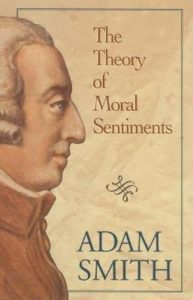
The Theory of Moral Sentiments by Adam Smith. A dull title for a very lively book that made Adam Smith an international star.

Are there any books you haven’t mentioned that you feel would make your reading list?
My professional reading is overwhelmingly specialist and technical, but I’ll mention two excellent books for a more general readership, both by Aldo Schiavone. They’re wonderful: The Invention of Law in the West, and Pontius Pilate: Deciphering a Memory.


What books or subject matter do you plan on reading in the next year?
I think I’ll be reading all of David Foster Wallace that I haven’t read so far. So I guess I wasn’t telling the truth up above.
If you were to write an autobiography – what would it be called?
Mommy Dearest. Joke.
If you’d like to learn more about Ernest Metzger, you can find him on his faculty page and on Twitter.
As an Amazon Associate we earn from qualifying purchases made through links on this page.