
Daniel Cohen: A Plethora of Philosophical Reads
Daniel Cohen’s reading list
39 books mentioned in this interview
- My Grandmother Asked Me to Tell You She’s Sorry
- A Man Called Ove
- The Invention of Science · David Wootton
- Why the World Does Not Exist · Markus Gabriel
- Why Does the World Exist? · Jim Holt
- The HobbitRecommended 16 times
- The Lord of the Rings · J.R.R TolkienRecommended 17 times
- Make Way for Ducklings · Robert McCloskey
- Tuesdays With Morrie · Mitch AlbomRecommended 4 times
- Tractatus Logico-Philosophicus · Ludwig Wittgenstein
- Consequences of Pragmatism · Richard Rorty
- We Took to the Woods · Louise Dickinson Rich
- Bachelor Brothers’ Bed and Breakfast · Bill Richardson
- The Sparrow · Mary Doria Russell
- Children of God
- Ender’s GameRecommended 8 times
- Speaker for the Dead
- The Trial and Death of Socrates: Four Dialogues · Plato
- The Problems of Philosophy · Bertrand RussellRecommended 4 times
- The Zhuangzi
- Consolation of Philosophy · Ancius Boethius
- Fifteen Dogs · André Alexis
- Green Eggs and Ham · Dr. Seuss
- Meditations on First Philosophy · Rene DescartesRecommended 3 times
- On Certainty · Ludwig Wittgenstein
- Gödel, Escher Bach · Douglas HofstadterRecommended 6 times
- The Immortal Life of Henrietta Lacks · Rebecca SklootRecommended 3 times
- The Botany of Desire · Michael Pollan
- The Eden Express · Mark Vonnegut
- The Human Stain · Philip RothRecommended 3 times
- Crime and Punishment · Fyodor DostoyevskyRecommended 12 times
- The Brothers K · David James Duncan
- The Collected Stories of Isaac Bashevis Singer · Isaac Bashevis Singer
- One Hundred Years of Solitude · Gabriel MarquezRecommended 18 times
- The Guernsey Literary and Potato Peel Pie Society · Annie Barrows and Mary Ann Shaffer
- Maus I and II · Art Spiegelman
- The Odyssey · HomerRecommended 13 times
- Thinks… · David Lodge
- The Hippopotamus · Stephen Fry
Although something of a philosophical novice, I have a reoccurring urge to explore it and seek to understand it. So, whenever I get the chance to speak with a renowned teacher of philosophy, I jump at the chance. Today’s guest is the very well respected philosophy professor, Daniel Cohen, who teaches philosophy at Colby College in Waterville, Maine. Daniel specialises in argumentation theory, which involves studying of we how we use reason to put forth our standpoints. Daniel did a wonderful TED talk on the subject which I strongly recommend giving a watch. I really enjoyed interviewing Daniel, and learning about the books that have inspired and influenced him. So, here is my interview with the renowned philosophy professor, Daniel Cohen.
When someone asks you ‘what do you do for a living?’ – How do you respond?
I often say that I’m a teacher or an educator because announcing oneself as a philosopher seems pretentious or pompous. It strikes me as an honorific title – something you’ve earned rather than a choice or a practice or a career. Being a philosopher is something I try to do; I am more confident in my teaching, so I am pretty comfortable saying that is what I do.
In a gathering of academics, however, where people are identifying themselves as sociologists or chemists or historians, then I will proudly (but not too smugly, I hope) identify myself as a philosopher.
I will sometimes write “philosopher” on official forms on the chance that it will give a bureaucrat a smile, or at least a pause.
What are you reading at the moment?
I have several books going right now. Fredrik Backman’s delightful new novel, My Grandmother Asked Me to Tell You She’s Sorry; I’m enjoying it even more than I enjoyed his previous novel, A Man Called Ove. I’m also reading The Invention of Science by David Wootton. After fiction and philosophy, histories of science might be the genre that grabs me the most.
Since it’s August, I have several other books going in preparation for the upcoming academic year. The Philosophy Department at Colby College sponsors a faculty-student reading group every semester, so I’ve dipped into a couple of books looking for likely candidates. The “Reuman Reading Group” (named after a beloved and legendary philosophy professor who taught here) is really quite remarkable, attracting faculty members from other departments as well as philosophers from other schools. Among the books I’m reading to explore the possibilities are Why the World Does Not Exist by Markus Gabriel and Why Does the World Exist? by Jim Holt.
- My Grandmother Asked Me to Tell You She’s Sorry
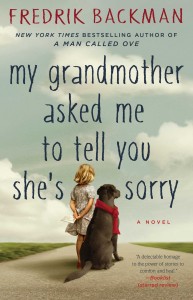 My Grandmother Asked Me to Tell You She’s Sorry
- A Man Called Ove
 A Man Called Ove
- The Invention of Science by David Wootton
 The Invention of Science by David Wootton
- Why the World Does Not Exist by Markus Gabriel
 Why the World Does Not Exist by Markus Gabriel
- Why Does the World Exist? by Jim Holt
 Why Does the World Exist? by Jim Holt
When you think about your childhood, what book comes to mind?
The Hobbit and The Lord of the Rings by J.R.R Tolkien. My mother turned me on to them in the early 1960s when I was still in elementary school. They were not yet big on the public radar, but I took to them from the first page, and I read them quite often, probably every other year, all the way through graduate school.
I have special memories from when I was a much younger child of Make Way for Ducklings by Robert McCloskey. I think it was my mother’s favourite to read-aloud.


What did you want to be when you were growing up?
It was brutally obvious very early on that my meager athletic abilities meant that roaming centerfield for the New York Yankees was not going to be part of any possible future for me, but I was very good at math and enjoyed it very much, so I imagined a career in something like engineering, like my father.
What do you think your school aged self would think of the present day you?
I suspect that he might be a little disappointed at first that I am neither fabulously wealthy nor internationally famous, but I think that my younger self would soon figure out that he should be quite pleased and maybe even impressed by the joys and satisfaction to be found in a successful life in academia. But I KNOW that he’d be blown away by my beard!
If you could wrap up a single book and gift it to yourself as you left education – which book would it be?
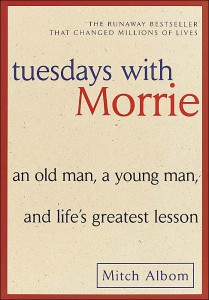
I haven’t ever left education?! OK, I’ll play along (and I’ll resist the temptation to give my earlier self a history of the last couple of decades of the stock market!). For a high school graduation present, I might give myself Tuesdays With Morrie by Mitch Albom, mostly because it might have helped me cope with the then-recent deaths of my parents (and ALS, which is what my father had). It might also work as a college graduation present because the deep appreciation and respect that Albom has for mentoring, teaching, and philosophy would have been good encouragement.
Does your reading have routine? Is there a particular time or place that you like to read?
It starts almost every morning in the summer and on weekends with a couple of hours at Jorgensen’s Coffee Shop. During the academic year, my reading is more catch-as-catch-can throughout the day without any special routine.
Which book has had the biggest impact on your career so far?
Tractatus Logico-Philosophicus by Ludwig Wittgenstein because it demonstrates that while genius may be tortuously difficult, it it not impossible. (It is the Answer Key in philsophy, although the answers are cryptic and in need of so much interpretation that it needs its own Answer Key).
Consequences of Pragmatism by Richard Rorty deserves mention because I want to disagree with it at every turn, but I have to admit that I’m not very good at it. Much as I want to, I’m not always able to disagree with him, and when I do manage to resist his arguments, I’m not always able to argue against him to my own satisfaction. No recent philosopher has been more enjoyably provocative than Rorty.

Do you have any books that you strongly associate with someone important in your life?
We Took to the Woods by Louise Dickinson Rich is one of my wife’s absolute favorites.

What book have you recommended the most to friends and family?
Bachelor Brothers’ Bed and Breakfast by Bill Richardson. Pure indulgence! The Sparrow by Mary Doria Russell: a brilliant “first-contact” novel that becomes a serious meditation on faith, the problem of evil, and personhood. The sequel, Children of God, is a tour de force follow-up that manages to get its readers to re-write everything they thought they knew from the earlier book. It is it the best novel-and-sequel combination since O. S. Card’s Ender’s Game and Speaker for the Dead.


Do you prefer fiction or non-fiction?
Fiction, but not by much (but I’m not sure where the boundaries are: in which category is philosophy? Where is poetry?).
Do you think reading is important?
No more than, say, breathing or having a sense of humor.
If you had to recommend three books to someone who was a complete beginner to philosophy, what would they be?
The Trial and Death of Socrates: Four Dialogues by Plato; The Problems of Philosophy by Bertrand Russell; The Consequences of Pragmatism by Richard Rorty*.* Honorable mention to The Zhuangzi and Consolation of Philosophy by Ancius Boethius.
- The Trial and Death of Socrates: Four Dialogues by Plato
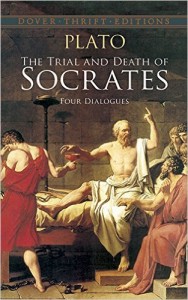 The Trial and Death of Socrates: Four Dialogues by Plato
- The Problems of Philosophy by Bertrand Russell
 The Problems of Philosophy by Bertrand Russell
- The Consequences of Pragmatism
 The Consequences of Pragmatism
- The Zhuangzi
 The Zhuangzi
- Consolation of Philosophy by Ancius Boethius
 Consolation of Philosophy by Ancius Boethius
What’s the best book you’ve read in the last 6 months?


Do you prefer real books or digital books?
There is nothing better than real books (except some of the imaginary, impossible, and other unreal ones).
Digital books do have their place. They pack better when you’re traveling and these tired old eyes appreciate the ability to adjust the font size over the course of the day.
Name a book that you feel every human should have to read by law.

What is the book that you feel has had the single biggest impact on your life?
It might actually be Meditations on First Philosophy by Rene Descartes. I read it in my first philosophy class in my first semester at college and subsequently spent many late-night hours in delightfully inconclusive arguments about the insanity and magnificence of such an impossible, foolish, and audacious project. In retrospect, I suppose it was the seemingly minor swerve that resulted in a dramatic change in the trajectory of my career path.

Are there any books you haven’t mentioned that you feel would make your reading list?
On Certainty by Ludwig Wittgenstein; Gödel, Escher Bach by Douglas Hofstadter; The Immortal Life of Henrietta Lacks by Rebecca Skloot; The Botany of Desire by Michael Pollan*;* The Eden Express by Mark Vonnegut; The Human Stain by Philip Roth; Crime and Punishment by Fyodor Dostoyevsky*, The Brothers K* by David James Duncan*; The Collected Stories of Isaac Bashevis Singer* by Isaac Bashevis Singer; One Hundred Years of Solitude by Gabriel Marquez; The Guernsey Literary and Potato Peel Pie Society by Annie Barrows and Mary Ann Shaffer; Maus I and II by Art Spiegelman; The Odyssey by Homer; Thinks… by David Lodge; The Hippopotamus by Stephen Fry*.*
Guilty indulgence department: anything by Christopher Moore.
- On Certainty by Ludwig Wittgenstein
 On Certainty by Ludwig Wittgenstein
- Gödel, Escher Bach by Douglas Hofstadter
 Gödel, Escher Bach by Douglas Hofstadter
- The Immortal Life of Henrietta Lacks by Rebecca Skloot
 The Immortal Life of Henrietta Lacks by Rebecca Skloot
- The Botany of Desire
 The Botany of Desire
- The Eden Express by Mark Vonnegut
 The Eden Express by Mark Vonnegut
- The Human Stain by Philip Roth
 The Human Stain by Philip Roth
- Crime and Punishment
 Crime and Punishment
- The Brothers K
 The Brothers K
- The Collected Stories of Isaac Bashevis Singer
 The Collected Stories of Isaac Bashevis Singer
- One Hundred Years of Solitude by Gabriel Marquez
 One Hundred Years of Solitude by Gabriel Marquez
- The Guernsey Literary and Potato Peel Pie Society
 The Guernsey Literary and Potato Peel Pie Society
- Maus I and II by Art Spiegelman
 Maus I and II by Art Spiegelman
- The Odyssey by Homer
 The Odyssey by Homer
- Thinks… by David Lodge
 Thinks… by David Lodge
- The Hippopotamus
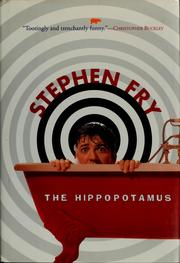 The Hippopotamus
What books or subject matter do you plan on reading in the next year?
There are still many holes in my education that desperately need to be plugged, ranging from classical rhetoric to contemporary neuroscience.
If you were to write an autobiography – what would it be called?
I Used to be an Orphan.
If you’d like to learn more about Daniel Cohen and his work, you can find him on his Colby Directory site.
As an Amazon Associate we earn from qualifying purchases made through links on this page.
You might also like
Adam Martinakis: Passion for Creation will Always Bear Fruits
Interview · 21 November 2016
Nicole Galland: The Sensory Satisfaction Of Books
Interview · 3 August 2017
Jeremy Zuckerman: A Clear Moment Of Empowerment
Interview · 6 December 2016
Brandon Daily: Helping people see and understand their world
Interview · 27 June 2026