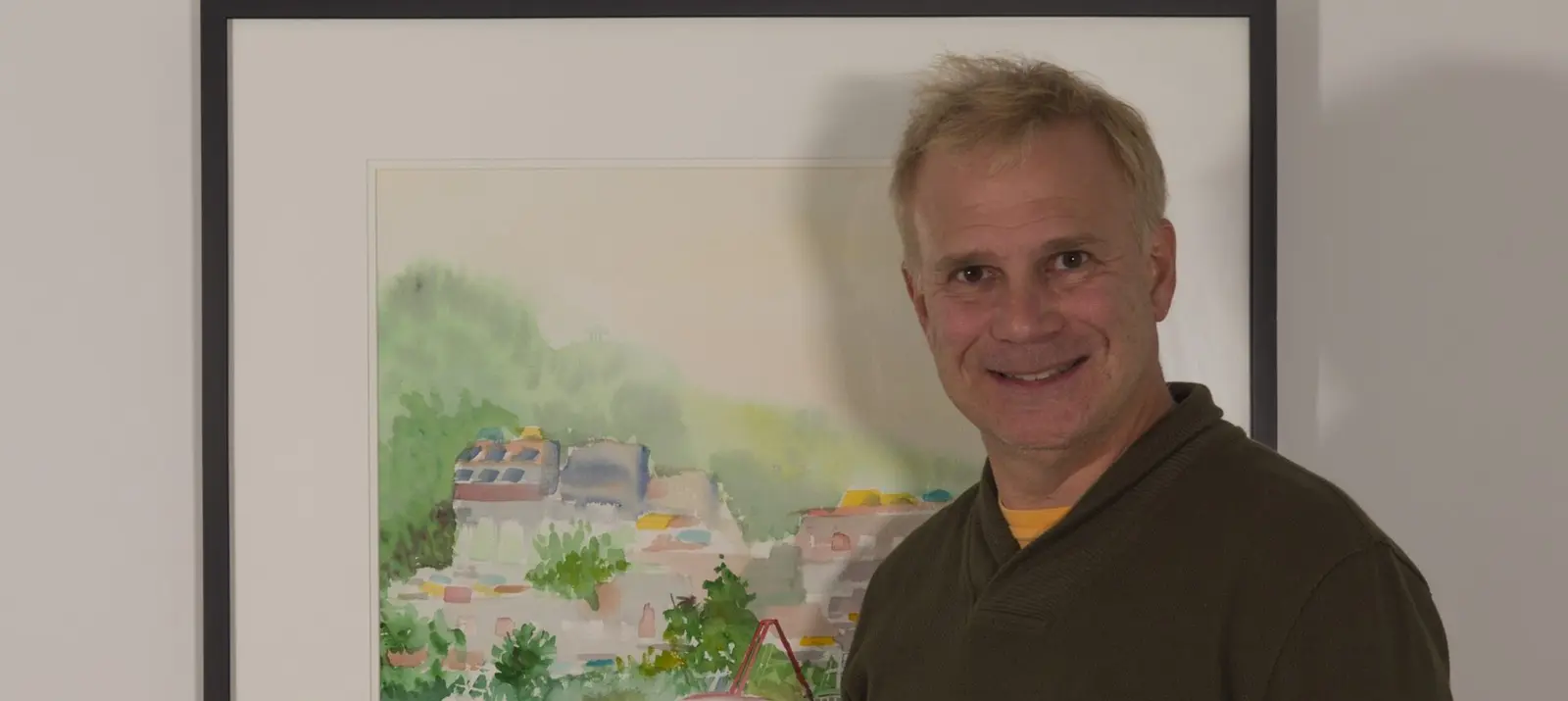
David Goldstein: Books Are Shared
David Goldstein’s reading list
15 books mentioned in this interview
- Physics of the Impossible · Michio Kaku
- The Adventures of Tom Sawyer · Mark TwainRecommended 6 times
- Robinson Crusoe · Daniel DefoeRecommended 4 times
- Johnny Tremain · Esther Hoskins Forbes
- Vision and Art: The Biology of Seeing · Margaret Livingstone
- If You Want to Write · Brenda UelandRecommended 4 times
- Education Through Art · Herbert Read
- The Book of Mistakes · Skip Prichard
- Where the Sidewalk Ends · Shel SilversteinRecommended 4 times
- Hawaii · James Michener
- Man’s Search for Meaning · Viktor E. FranklRecommended 29 times
- Type Talk · Otto Kroeger and Janet Thuesen
- The Relaxation Response · Herbert Benson
- Made to Stick · Chip and Dan HeathRecommended 4 times
- Do n’t Stop The Carnival · Herman Wouk
Books by David Goldstein: Creative You: Using Your Personality Type To Thrive
David Goldstein is a management consultant, coach, speaker and the originator of the “creative-type” concept, he speaks about how everyone can be creative in their own way using their natural strengths. David Goldstein is the author of the best-selling book: Creative You: Using Your Personality Type To Thrive, published by Simon & Schuster. David is a researcher with a science background and an M.B.A. in Management of Science, Technology and Innovation, who uncharacteristically is also an internationally recognized artist. His exhibits were featured in the South China Morning Post, Where Magazine, Orientations Magazine, and Hong Kong Magazine among others. As an entrepreneur for nearly 25 years, David Goldstein founded an early digital imaging company, pioneered one of the first Internet startups, and created an award-winning web-directory company. David Goldstein also founded a research firm specializing in intellectual property, providing clients with information on the novelty and infringement of patents. Over the years, he has served as a consultant to technology start-ups, Fortune 500 companies, universities, hospitals, and government agencies. Please enjoy my interview with David Goldstein.

How do you describe your occupation?
I’m an author, advisor, artist, researcher, speaker, entrepreneur, and dad – a different answer depending on the project and whom I’m trying to help. Each of these hats is worn under the wide umbrella of creativity.
What is something about you that people might find surprising?
With my frequent public speaking, hosting large parties, and inclination to connect people – those who know me well – as well as people who just meet me seem surprised if they learn that I’m naturally introverted. It takes plenty of energy to be putting myself “out there,” but I do it to learn and share.
What are you reading at the moment and what made you want to read it?
I aim for information from the best sources that could be found. I tend to read need-to-know nonfiction to understand my world along with some fiction to escape into other worlds. Curiously, I need to get up to speed on time travel and black holes to better curate the interests of my son. Physics of the Impossible by Michio Kaku was recommended by a young docent at the Smithsonian. Only a few chapters left! It’s opening my mind and preparing me to talk with my ten year old.

What was your favourite book as a child and why?
As I child I liked The Adventures of Tom Sawyer by Mark Twain, Robinson Crusoe by Daniel Defoe*,* and Johnny Tremain by Esther Hoskins Forbes. These were part of the common culture and all my friends seemed to be reading the same books.


When did you fall in love with reading?
I fell in love with the idea of reading before I knew how. I had to wait until I was old enough because my parents didn’t want to teach me the wrong way. My grandmother visited once a week and gave us books. Her lesson was “You can own a toy but books are shared,” so my siblings and I would take turns reading all the books she brought.
What was the last book you purchased, and why did you buy it?
That would be Vision and Art: The Biology of Seeing by Margaret Livingstone. Many years ago, I happened across this while browsing through the Central Library in Hong Kong. It wasn’t directly relevant then, but I saw potential and added it to a wish list. As an artist, I’m now interested in better understanding our visual system to design paintings that are pleasing to the eye. I’m expecting this book will give me some ideas.

What are perfect reading conditions for you?
Dream conditions for me are to read in a dry place near a body of water – like a bench by a river, hammock by the lake, or a covered porch on a rainy day by the ocean all with the luxury of clean blocks of time. In real life, unfortunately, reading is ideal for 12 ½ minutes in the carpool lane.
What book have you found most inspiring, what effect did it have on you?
If You Want to Write by Brenda Ueland, written in 1938, has inspired me by showing that everyone is talented, original, and has something to say. This is a theme I’ve been building on as I try to show everyone they can act creatively. We all have some ideas and we all can learn techniques to express our ideas.

What’s the most obscure book you own; how did you discover it?
As clear as mud, Education Through Art by Herbert Read, written in 1943, looks at children’s drawings to show different styles and temperaments. I’ve returned to his book many times in libraries before deciding I had to own my own dusty copy – that’s now stuffed with my fresh post-it notes.

What’s the best book you’ve read in the last 6 months?
I’ve enjoyed The Book of Mistakes by Skip Prichard. It’s a story that teaches life lessons toward success and I’ve underlined something useful on practically every page. I gave a pile of them away to all the millennials in my family.

What is your proudest achievement?
Of all the things I’ve done, I’m most proud of the creative types model that I’ve developed with Otto Kroeger. We show there are many different ways to be creative and we all can find the ways that work best for us by understanding our own personality strengths. I thought it would take six months to develop, but instead, it took six years. I’m honoured that our ideas have reached many thought leaders and I appreciate hearing frequently from readers about how these ideas have improved their work and home life. With constant change around us, everyone needs to act creatively and helping others act creativity is my single biggest contribution to make the world a better place.
If you were trying to impress a visitor, which book that you own would you leave on the coffee table?
I have a different way of thinking about this and I don’t use books to impress. I do have a copy of my own book Creative You: Using Your Personality Type To Thrive on the coffee table. Not to boast but to signal that I’m willing to be part of a conversation about how they can better act creatively.
If an alien landed in your garden; which three books would you gift them to showcase humanity in the best possible way?
All books cast a light into our humanity. For a primer, I’d hand the following three to our new friend. First, the human capacity to be creative and generate humor sets us apart from other forms of life as well as from Artificial Intelligence. Where the Sidewalk Ends by Shel Silverstein uses creativity and humor, in his approachable poems for children. These accessible poems can show our garden visitor that it’s best to sleep late if you’re a worm surrounded by early birds.
Secondly, Hawaii by James Michener is a story following the development of the civilization on the islands – starting with the first puff of smoke from an undersea volcano. Against all odds, all life on the islands made its way across the Pacific. Cultures were mixed and fused in a multi-generation story that shows struggle, opportunity and achievement. And thirdly, I’d give a more serious side of humanity with Man’s Search for Meaning by Viktor E. Frankl. Through his own experiences, he shows the human propensity for pure evil as well as the incredible ability for us to survive.


What is the book that you feel has had the single biggest impact on your life? What impact did it have?
Clearly, Type Talk by Otto Kroeger and Janet Thuesen had a profoundly positive effect on me – and a million other people too. I learned about myself, about how to manage my own strengths plus how to understand the behaviour of the people around me. It was my go-to book for decades whenever there was a crisis and Otto’s words have been the secret sauce on my trajectory from almost rags to almost riches.
I’ve always been the guy that people come to for advice. I realized early that what’s best for me, isn’t always what’s best for them. What I learned from Otto gave me an intuitive framework for this and I saw the tremendous power for helping others. Type Talk planted the seeds for my greatest honour in working with Otto. Expanding the human behaviour model to include what I call our “creative differences.”

Are there any books you haven’t mentioned that you feel would make your reading list?
Our health is everything and can be actively managed. I’ve found The Relaxation Response by Herbert Benson to be a simple way to improve all my numbers and I recommend this to everyone. Of course if anyone who wants to amplify a message has not read Made to Stick by Chip and Dan Heath they should do so right away.


Which book sat on your shelf are you most excited about reading next and why?
Through answering your questions, I noticed my old copy of Don’t Stop The Carnival by Herman Wouk. I remember enjoying it very much – and now enough time has passed that I don’t remember all of the story, so I’ll looking forward to finally re-reading it this summer!

If you’d like to learn more about David Goldstein, you can find him on his website and Twitter.
As an Amazon Associate we earn from qualifying purchases made through links on this page.
You might also like

James Connolly: Books To Define Your Values
Interview · 11 July 2018
Adam Martinakis: Passion for Creation will Always Bear Fruits
Interview · 21 November 2016

An Interview with L. David Marquet
Interview · 22 July 2019

An Interview with John Sibley Williams: Never, Ever Stop Writing
Interview · 8 May 2019