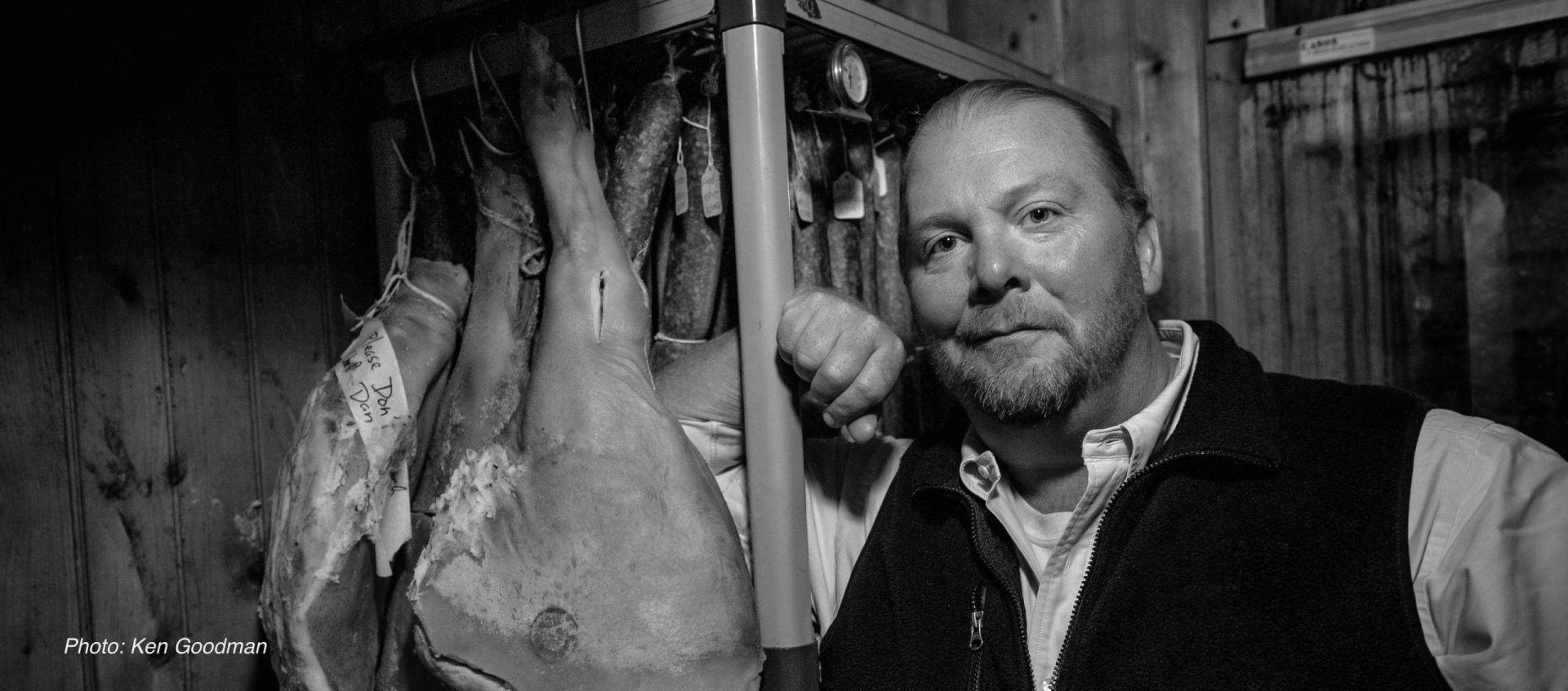
Brandon Clifford: Success Through Passion
Brandon Clifford’s reading list
13 books mentioned in this interview
- Architecture in Play · Tamar Zinguer
- Office dA · Nader Tehrani and Monica Ponce de Leon
- The Sympathy of Things · Lars Spuybroek
- A Global History of Architecture · Mark Jarzombek
- Mask of Medusa · John Hejduk
- The Alphabet and the Algorithm · Mario Carpo
- Sanford Biggers · Sanford Biggers
- Welcome to Braggsville · T. Geronimo Johnson
- Don Quixote · Miguel de CervantesRecommended 8 times
- Inca Architecture and Construction at Ollantaytambo · Jean Pierre Protzen
- The Statues that Walked · Carl Lipo and Terry Hunt
- Flatland · Edwin Abbott
- Borderwall as Architecture · Ron Real
Brandon Clifford develops creative approaches to the world’s most pressing problems. He identifies contemporary blind-spots by mining ancient knowledge that holds resonance with the topics of today. He is best known for bringing megalithic sculptures to life to perform tasks. Brandon Clifford is the director and co-founder of Matter Design. He is also an associate professor at the Massachusetts Institute of Technology. Brandon received his Master of Architecture from Princeton University and his Bachelor of Science in Architecture from Georgia Tech. He has also served as the LeFevre Fellow at the Ohio State University and the John G. Williams Distinguished Visiting Professor at the University of Arkansas. Brandon Clifford is a designer and researcher who has received recognition with prizes such as the American Academy in Rome Prize, a TED Fellowship, the SOM Prize, the Design Biennial Boston Award, and the Architectural League Prize for Young Architects & Designers. Please enjoy our interview with Brandon Clifford.
How do you describe your occupation?
I’m a designer, educator, and researcher. I teach at MIT and I run a research lab called Matter Design.
Talk us through a typical day for you…
The very first thing I do in the morning is to prepare a cappuccino for Johanna and myself. We discuss the agenda for the day and calmly wakeup. I then launch into a task for the day that requires focus. The closer lunch approaches, the more likely I am to shift to quick tasks. In the mid-day to afternoon, I have meetings with our employees to make design decisions about how our projects are progressing. Around 5 or 6 pm, I start to shut-down. I cook dinner or organize the place. I need that time before bed to unwind and refuse answering emails. If I continue to work, it is an emergency and signals something is wrong.
What are you reading at the moment and what made you want to read it?
I’m reading Architecture in Play by Tamar Zinguer because I’m curious about how physical objects can contribute to theories of childhood development in the form of play.

Can you remember the first book you read by yourself?
No, I cannot. I did not enjoy reading at all as a child. I’m a visual person and for many years felt I was missing something in my English classes. I was unable to remember details or memorize character names. Instead, I focused on a global theme, or perhaps the structure of the story. I found myself wanting to visually diagram those concepts. But I found I was tested on the details, but not the theme. Graduate school did two things for me. First, it did allow me to read faster, or liberated me to feel I could read faster and skip details in favour of intent. The second thing it did for me is it opened up my reading of the text to a plurality, instead of the singular capture that my early education focused on. This creative zone altered my perception of reading entirely.
Are you a page folder or a bookmarker?
I am certainly a bookmarker. I am the kind of person that delicately sets my books down. I don’t crack backs. My library is composed of books that look brand new and unread. This personality trait is not limited to books. I have a great passion for objects.
When did you fall in love with architecture?
I entered architecture school at Georgia Tech with the understanding that it was a nice balance between art and geometry—two subjects I performed well in. While that is true, it was the education of architecture that I really fell in love with. The focus on project-based learning and building a research agenda absolutely snapped with my talents. It became so clear to me that this is how I should be operating and I’ve been working in that manner ever since.
If you could gift yourself books at age 16 and age 25 – what would they be and why?
At 16, I would gift myself Office dA by Nader Tehrani and Monica Ponce de Leon. This is a monograph of their early design work. When I was 20, I took a road-trip up the east coast with some classmates of mine and we happened to stop at the Yale School of Architecture whereby pure coincidence had an exhibition of contemporary models and I saw a gorgeously constructed model of theirs that shocked me. I had never seen any architectural model that was so complex, precise, and composed. I realized at that moment that there was a whole other level of architect out there. I was lucky enough a few years later to work at Office dA. I would gift myself that monograph at 16 because it would have kickstarted so many aspirations in my career at an early age that weren’t lit until much later.
At 25, I would gift myself the The Sympathy of Things by Lars Spuybroek because at that moment in my career I was diving deep into the technical aspects of digital fabrication and I had not made any connections between that work and any significant past architecture. I was blindly assuming (as many of us do) that when we operate under ‘contemporary’ principles, that we are doing things for the first time ever. Spuybroek does a beautiful job of building a bridge between digital fabrication today with gothic architecture. While this link is not immediate, the connection allows us to analyse what worked and didn’t work in the past in order to better guide our future.


If you had to pick three books that would provide the best introduction to architecture, what would they be and why?
A Global History of Architecture by Mark Jarzombek is the best sourcebook to introduce the history of architecture. It tackles architecture, not through style, but through time and trade routes. It therefore de-centres the euro-centric discussion and incorporates broader architectural problems to offer the reader a deep understanding of architecture.
Mask of Medusa by John Hejduk because it offers an example of design freedom that is internal to the author, while being open enough to captivate the audience.
The Alphabet and the Algorithm by Mario Carpo is the most eloquent theoretical positioning of where architecture sits today relative to the digital revolution.
These three books cover the range of architectural knowledge—history, method, and theory.


If you could invite 5 authors (dead or alive) to a dinner party – who would they be and why?
I would want to discuss megalithic architecture with a series of experts that are incredibly knowledgeable about discrete regions. I would want to bring in Alexander Thom to discuss stone circles in Britain, and Jean Pierre Protzen to talk about Inca Architecture, Carl Lipo to talk about Easter Island, Carolyn Dean to discuss linguistics surrounding stone construction, and Bern Diebner to discuss the Obelisks of Egypt. What is fascinating about archaeology is there is so much they have to dedicate themselves to in order to fully understand a single culture, that regional boundaries can occasionally produce blind-spots to similar findings elsewhere. So when you hear archaeologists sharing stories with other regions, they tend to get extremely excited and start to talk about other strange findings. I think this dinner would be a deep dive into the strange and curious histories of our past.
What was the last book you purchased, and why did you buy it?
Sanford Biggers by Sanford Biggers because I saw an exhibition of his work in Madison Wisconsin and was blown away by the content.

What is your favourite thing about reading?
I don’t have one favourite thing, but I have a variety of reasons to read. The first is to shore up an argument in my research. Most of what I read is dedicated to building a foundation of information for my work. But there is also a portion of my reading that is dedicated to pleasure reading, and that is not typically entertainment, but it is extra-disciplinary research. I love to read archaeology findings, or philosophy of religion, or perhaps a theory of technical revolutions. I would see these readings as influencing my work, but not directly tied to it. When I am in those moments, I find the reading to be looser and more light-hearted, and enjoyable because there is so much less at stake. I could read those texts and take nothing back to my work other than just enjoyment. Or, I could read those texts with no expectations of having an impact on my research and that text could radically shift my trajectory.
What’s the best book you’ve read in the last 6 months?
Welcome to Braggsville by T. Geronimo Johnson because he plays with the English language and establishes an entirely alternative set of terms to be introduced to. I found this method to immediately bring you into the club while also distancing you from a culture he is illuminating. This meta-level of being simultaneously in and out of a story reminds me of Don Quixote by Miguel de Cervantes.


If you could insert yourself into any book, which would you pick and why?
Inca Architecture and Construction at Ollantaytambo by Jean Pierre Protzen because this seminal work of archaeology digs into the means and methods of Inca stone construction which can have incredible implications on future methods of making. To be blunt, the Inca constructed incredibly complex versions of architecture from massive stones. Today, we look at these marvels with amazement and disbelief that they could have been constructed, but what is clear is that the Inca knew so much more about how to work in that paradigm than we do. I would love to live in this book and experience these methods first hand because they have been so illuminating to my career to read that I can only imagine the impact they would have if I had a deeper sense of the scale, mass, and dust of that construction method.

What advice would you give to a young aspiring architect looking to begin their career?
Success in architecture takes many forms. My advice is to find a contribution to the field that excites you. One that you can’t wait to work on and wouldn’t get tired of. Whether it be writing, sculpting, composing, or others. Find the thing you would want to do day in and day out and do that until you produce work that distinguishes you as unique in the field. At that moment, continue to make decisions that lead you to do the kind of work you want to do. Success comes through passion, not opportunities.
What is the book that you feel has had the single biggest impact on your life? What impact did it have?
The Statues that Walked by Carl Lipo and Terry Hunt. In 2015, I read this book which outlines an alternative history to what we had known about Easter Island. These archaeologists carefully and rigorously proved that the statues of Easter Island were transported vertically in a walking manner. This brings new meaning to the supposed folklore that the statues walked themselves. But from that discovery forward, my research has been dedicated to the question of what would it mean to believe a stone is alive. My entire body of recent work has operated under that paradigmatic shift. This book was intended as a pleasure read and had apparently nothing to do with my work, but it now defines it.

In the world of architecture, what future trends are you most excited about?
I am more excited by our past than our future. I mine knowledge from the past in order to transform our future. So my level of excitement relative to architecture’s future is typically born in a pre-history example of architecture.
Are there any books you haven’t mentioned that you feel would make your reading list?
Flatland by Edwin Abbott. This book is unlike any other book I have. It merges geometric thinking with romantic narratives. What it does that is so interesting is it takes two-dimensional geometric principles and introduces a temporal narrative. It eventually gets to space and the third dimension, but in combining the temporal and experiential aspects of narration it touches on the experiential side of architectural intent. This is a topic we struggle tremendously to teach, but in this compact book, Abbott offers a lens through the medium of text.

Which book sat on your shelf are you most excited about reading next and why?
Borderwall as Architecture by Ron Real because we are currently working on initiatives at the southern border and I deeply respect Ron Real. I’m incredibly interested to read his take on interventions that bridge divisions.

If you’d like to learn more about Brandon Clifford you can find him on his website.
As an Amazon Associate we earn from qualifying purchases made through links on this page.