The Best Books on Leadership
In this list
18 books
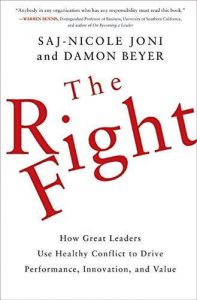
- The Right Fight · Saj-Nicole Joni
- The Effective Executive: The Definitive Guide to Getting the Right Things Done by
- Hijacked by Your Brain: How to Free Yourself When Stress Takes Over · Jon Wortmann and Julian Ford
- The Seven Habits of Highly Effective People · Stephen R. CoveyRecommended 7 times
- The Sensuous Woman · J
- A Whole New Mind · Dan Pink
- Start With Why · Simon SinekRecommended 5 times
- The Leadership Challenge: How to Make Extraordinary Things Happen in Organizations · James M. Kouzes and Barry Posner
- The Babysitters Club Series · Ann M. Martin
- Lead with a Story: A Guide to Crafting Business Narratives That Captivate, Convince, and Inspire · Paul Smith
- Team of Teams: New Rules for Engagement for A Complex World · General Stanley McChrystal
- The Advantage Why Organizational Health Trumps Everything Else In Business · Patrick Lencioni
- Give and Take · Adam Grant
- The Catcher in the Rye · J.D. SalingerRecommended 26 times
- The Elegant Pitch
- Wilful Blindness
- I Don’t Work FridaysRecommended 3 times
- Now You’re The Boss
The best approaches to leadership have been hotly contested ever since one person stood up and took charge of that day’s hunting trip, many thousands of years ago. However, one thing we can agree on is that the best leadership and management theory is an ever-evolving landscape, filled with shifting ideas and concepts: one leader’s approach can be directly in contrast with another’s, and the impact that your leadership has on your team can be immeasurable in both a positive and a negative way. If you want to find out about some of the best leadership books that you can read, you’ve come to the right place!
You can discover the panel of contributors at the end of the article, but let’s dive straight into the books.
Please enjoy this reading list of the best leadership books…
Margaret Heffernan:
Few people dare to talk about the critical importance of conflict at work and most think it’s something to be avoided. But it is inevitable, essential and, done well around the right issues, productive and creative. Executives who hope to avoid conflict can never lead.
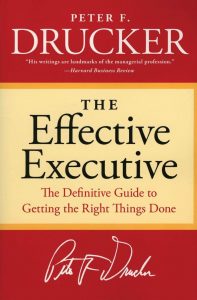
The Effective Executive: The Definitive Guide to Getting the Right Things Done by **Peter Drucker
Wally Bock:
If you’re going to be effective in a leadership role, you need to do the simple things it takes to get the right things done. This book will show you how. Execution is a habit. The Effective Executive will help you learn the necessary practices. You will become a better leader. I read this for the first time more than 25 years ago. Since then, I’ve dipped into it frequently and reread it several times, the last time was this summer.
Mike Figliuolo:
Stress causes our brains to light up ancient responses that don’t always serve us well. This book helps you understand why you react to stressors in certain predictable ways and, more importantly, how you can choose to react to them differently and more productively. These primitive stress reactions diminish our ability to deal with conflict and remain centered. Once you understand how, when, and why these dysfunctional reactions occur, you’ll be better able to manage yourself and deal with stressful situations in a more appropriate way.
The Seven Habits of Highly Effective People by Stephen R. Covey
Martin Norbury:
It should be law that every human must read Covey’s Seven Habits of Highly Effective People! It’s the one book that I constantly refer to and revisit for my own self-development, as well as that of my clients. Covey provides simple but incredibly practical self-awareness and self-improvement methods that anyone can implement in work or indeed life. A key element we focus on in our own business is working with the entrepreneur to help them as an individual, as well as their business, so this book is a perfect companion to our own methodology and programs.
The Sensuous Woman by J
Penelope Trunk:
I grew up with this book at eye level on the book shelf. I took it out all the time, trying to figure out what it was about. Finally, around high school, I realized that you can’t get people to do what you want if you’re not offering something they want. All relationships are compromise, even sex. A good leader is always thinking about how to help people so everyone stays on the same page. You can learn that in business school or you can learn that in 1970s sex guides.
Mike Figliuolo:
This book covers a straightforward way to articulate your personal leadership philosophy. It does so by pulling out your personal experiences and translating them into your own set of leadership “maxims” (principles or rules of conduct). In a world where authenticity is hard to come by, this book teaches you how to be your authentic self and describe your leadership style and expectations through powerful stories that have shaped your approach to leading others.
A Whole New Mind by Dan Pink
Margaret Heffernan:
If leaders can’t be creative, they won’t ever be leaders. A terrific early book on the creativity essential to any healthy organization.
Martin Norbury:
It’s no wonder Simon Sinek’s TED Talk on the subject of his book remains one of the most popular TED Talks ever. Today, it’s so much more than a book – it’s referred to as a ‘movement’ because if you read, learn and apply, it can genuinely be life-changing.
Start With Why looks at themes that world-class figures and leaders have successfully done. Leaders that have nothing in common – but all think, act and communicate in the same way. I love that you don’t have to be a ‘Captain of Industry’ or a significant key person of influence; the teachings in this book can be applied to anyone, in any size of business, working in any sector.
Leadership is a key element of what we focus on when scaling and exiting a business, so this book is one that I continue to take lessons from.
Wally Bock:
I read this book for the first time in 1987. I festooned the book with sticky notes and filled it with underlining and marginal comments. It is the best book I know about accomplishing the mission and caring for the people in an organization. Most business books are written once and then stay pretty much the same forever. This book is different because the authors have taken the time, made the commitment, and done the work to make each edition better than the last. The current edition is the 6th. If there’s a 7th edition, I’ll buy it.
Penelope Trunk:
The girls start a business together and they all get on each others’ nerves and they keep going anyway. They never seem to make money but they make enough so that no one quits. This is what a startup is. People think a startup succeeds because it’s great. Really a startup succeeds because they don’t quit. If you think the Babysitter’s Club is too stupid for this list you really underestimate how stupid founders feel running a startup.
Mike Figliuolo:
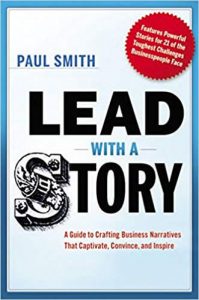
Stories resonate and are remembered. This book is a practical guide for how to create compelling narratives that will move your audience to action. It contains dozens of examples of great stories that can be used in a variety of situations. The research underpinning the method is extensive. The book lays out a straightforward formula for how to create your own stories that you can use every day. It’s an entertaining read with plenty of practical advice.
Wally Bock:
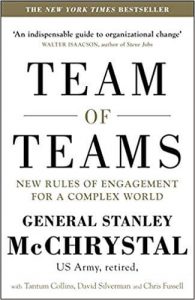
If you are interested in or concerned about the ways organizations must change to be effective in a complex and fast-moving world, this book is a must-read. If you want a good study of team dynamics, this book is worth your time. Team of Teams is about how the Joint Operations Task Force in Iraq adapted to both a new world and new “competition.” The task force and McChrystal had to change. This book tells you what they learned about leadership and organization and teamwork.
Martin Norbury:
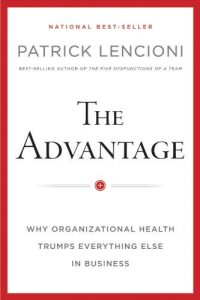
You hear a lot about the need for a sustainable competitive advantage, and many businesses we work with are successful because they have identified theirs. However, Lencioni takes it one step further and argues that it’s no longer enough to focus on how ‘smart’ we are but how ‘healthy’ we are as a business. The Advantage provides a model for ‘organisational health’ – how to make a company function effectively by focusing on leadership, clarity, communication and structure.
What I love most about this book is the simplicity of the model, developed from Patrick’s vast experience, and that it sits really well alongside our own Scale Model™.
Margaret Heffernan:
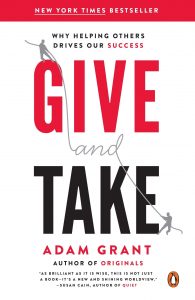
Generosity expresses agency, the ability to make your own choices and not be chewed up by corporate cultures. Great leaders are generous; it’s one reason they acquire followers
Penelope Trunk:
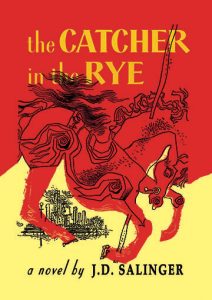
This book is famous because it changed how we think about first-person narrators. Salinger announces in the first line that he wants you to throw out Dickens because Dickens is outdated. It’s true. We read Dickens to understand the perils of Victorian England. And we read Salinger to understand the perils of the 1950s. Which is to say that we do not need to read these books unless we are historians. So read Catcher in the Rye to understand why the literary canon is really about history. Then spend your time reading books you love. If you spend your non-work time doing something you love then you won’t demand you love your job as well.
Meet our expert panel…
Always keen to understand what makes the world’s best leaders tick, I decided to reach out to leadership experts and ask them to nominate the best books they’ve read about leadership. They obliged and each nominated the three most informative books on leadership they’ve read; the result – a management-style-defining list of books. Let’s meet our amazing panel…
 Mike Figliuolo
 is an honor graduate of the United States Military Academy at West Point and served in the U.S. Army as an armor officer. Mike also spent time in corporate America as a consultant at McKinsey & Company and as an executive at Capital One and Scotts Miracle-Gro. His most recent book is entitled The Elegant Pitch.

Penelope Trunk
Penelope Trunk is a writer with a software and web development background who has created, run and sold a number of tech companies including Math.com – a teaching resource website. She made the switch to writing career advice when she started a family and hasn’t looked back since.
 Dr. Margaret Heffernan
 produced programmes for the BBC for 13 years. She then moved to the US where she led multimedia productions for various educational organisations. She was Chief Executive of InfoMation Corporation and others, and was named one of the “Top 100 Media Executives” by The Hollywood Reporter. Her newly updated book is entitled Wilful Blindness.

Martin Norbury
Martin Norbury is an entrepreneur who started his company, Advocate, to enable other business owners to learn how to work smart and manage their time in an effective way, and achieve the success they want. Martin’s most recent book, I Don’t Work Fridays is a guide for business owners seeking to scale their company.

Wally Bock
Wally Bock is a former U.S. Marine who went on to have a number of jobs including working as a freelance writer before forming his own consulting firm in 1982 which went on to be known as Three Star Leadership. He has published many books on leadership, most recently entitled Now You’re The Boss.
If you had to cast your vote for the best books on leadership of all time, which would you pick? Comment below and let us know which books on leadership you’d recommend as the most informative books you’ve read.
If you enjoyed this reading list, you may also enjoy reading about L. David Marquet’s most influential books.
As an Amazon Associate we earn from qualifying purchases made through links on this page.