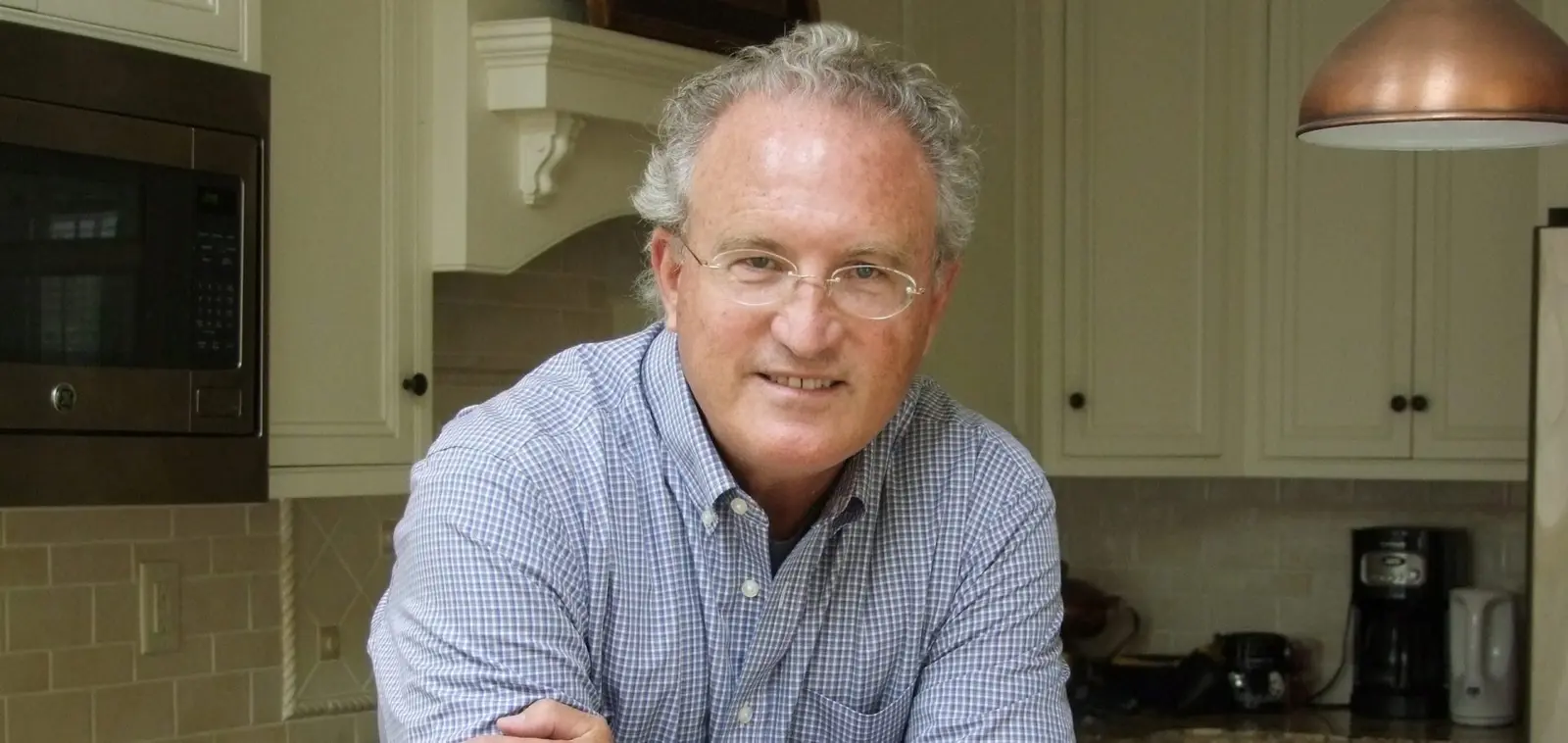
Mark Bowden: Good Writing Is Rewriting
Mark Bowden’s reading list
20 books mentioned in this interview
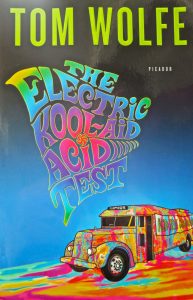
- The Electric Kool-Aid Acid Test · Tom Wolfe
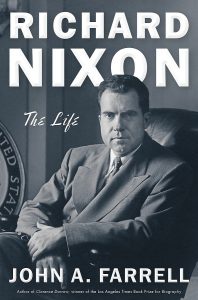
- Richard Nixon · John A. Farrell
- Trajectory: Stories · Richard Russo
- Samurai · Martin Caiden and Saburo Sakai
- Swallows and Amazons · Arthur Ransome
- Lord of the Flies · William GoldingRecommended 9 times
- A Farewell to Arms · Ernest HemingwayRecommended 4 times
- The Last of the Mohicans · James Fenimore Cooper
- Pride and Prejudice · Jane AustenRecommended 16 times
- For Whom the Bell Tolls · Ernest HemingwayRecommended 3 times
- The Right Stuff · Tom WolfeRecommended 4 times
- The Executioner’s Song · Norman Mailer
- Adventures of Huckleberry Finn · Mark TwainRecommended 12 times
- The Great Gatsby · F. Scott FitzgeraldRecommended 17 times
- The Rabbit Novels · John Updike
- The Loyal Son · Daniel Mark Epstein
- Parade’s End · Ford Maddox Ford
- Team of Rivals · Doris Kearns GoodwinRecommended 5 times
- The Grapes of Wrath · John SteinbeckRecommended 8 times
- Cartoon County
Books by Mark Bowden: Black Hawk Down, Hue 1968: A Turning Point of the American War in Vietnam
Mark Bowden is an American writer and author. He is a National Correspondent for The Atlantic and a contributing editor at Vanity Fair. Born in St. Louis, Missouri, Mark Bowden is a 1973 graduate of Loyola University Maryland. While at Loyola, he was inspired to embark on a journalistic career by reading The Electric Kool-Aid Acid Test by Tom Wolfe. In 2010, in his acceptance speech for a lifetime achievement award at the National Book Awards, Wolfe called Mark Bowden one of the two “writers to watch” (along with Michael Lewis). From 1979 to 2003, Mark Bowden was a staff writer for The Philadelphia Inquirer. Over the years, he has written for The New Yorker, Men’s Journal, The Atlantic, Sports Illustrated, and Rolling Stone. He has taught journalism and creative writing at Loyola University Maryland, and was Distinguished Writer in Residence at The University of Delaware from 2013-2017. Mark Bowden is the author of thirteen books, including the #1 New York Times bestseller Black Hawk Down. His most recent book is Hue 1968: A Turning Point of the American War in Vietnam. Please enjoy my interview with Mark Bowden…


How do you describe your occupation?
I’m a writer, more specifically, an author and a journalist.
Talk us through a typical day for you…
I am up early and spend most mornings when I am not travelling, working in my office, either writing, interviewing, or reading. I look for physical exercise early in the afternoon, either a long walk or a trip to the gym. In the late afternoon, I usually read or return phone calls. In the evenings, after dinner, I generally read, watch a ballgame, or find something interesting to watch on TV.
What are you reading at the moment and what made you want to read it?
I just finished Richard Nixon by John A. Farrell. I am fascinated by Nixon, and Farrell is an especially fine writer, a good reporter, and an old friend. I am now reading Trajectory: Stories by Richard Russo, which is up next in my book club.


Can you remember the first book you read by yourself?
I cannot with certainty. One very early read was Samurai by Martin Caiden and Saburo Sakai, about Japan’s leading fighter pilot in World War 2. This was compelling to me for a number reasons: It’s a great story well told; it was about WW2 fighter planes, a subject which then interested me greatly; and it told the story of the war in the Pacific through the eyes of a Japanese pilot, which, for a boy who had grown up surrounded with American accounts (movies, TV shows, and the stories told by my father and uncles) was a shockingly different point of view. At roughly the same time I read Swallows and Amazons by Arthur Ransome, and several of the Tom Swift Jr. books.


Are you a page folder or a bookmarker?
Bookmarker.
When did you fall in love with reading?
At a very young age. My parents had illustrated collections of nursery rhymes and Bible tales, and I also loved comic books.
Can you remember the first story you ever wrote?
My first serious effort was a humorous (nearly) true story called “The Great Semester,” about a group of my classmates at Loyola College (now University). It was published in the student newspaper, The Greyhound, of which I was the editor. Otherwise, it would never have been published anywhere.
If you could gift yourself books at age 16 and age 25 – what would they be and why?
At sixteen I would give myself books that exemplify good, simple storytelling. Anything by Elmore Leonard, Lord of the Flies by William Golding, A Farewell to Arms by Ernest Hemingway, The Last of the Mohicans by James Fenimore Cooper. At 25 I would give Pride and Prejudice by Jane Austen, For Whom the Bell Tolls by Ernest Hemingway, The Right Stuff by Tom Wolfe, or The Executioner’s Song by Norman Mailer, because they all exhibit both great storytelling and a superb sense of prose style.
- Lord of the Flies by William Golding
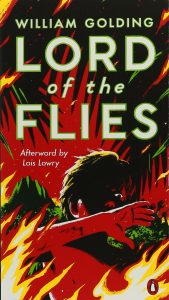 Lord of the Flies by William Golding
- A Farewell to Arms by Ernest Hemingway
 A Farewell to Arms by Ernest Hemingway
- The Last of the Mohicans by James Fenimore Cooper
 The Last of the Mohicans by James Fenimore Cooper
- Pride and Prejudice by Jane Austen
 Pride and Prejudice by Jane Austen
- For Whom the Bell Tolls by Ernest Hemingway
 For Whom the Bell Tolls by Ernest Hemingway
- The Right Stuff by Tom Wolfe
 The Right Stuff by Tom Wolfe
- The Executioner’s Song by Norman Mailer
 The Executioner’s Song by Norman Mailer
Can you talk us through your writing process, from the first spark of an idea, to having your first completed draft?
Since I write nonfiction, the process for me begins with research. I seek out books, articles, and other material in order to educate myself about my subject and what has already been written about it. Then I seek out and interview those directly involved in the story I intend to write. I usually begin sketching out a possible outline for my story and writing out possible passages (most of which never make it into the final draft), all the while revising the loose outline. At the midway point, I am spending half my time writing and half my time still interviewing and researching. Near the end, I am writing almost full time and still chasing down bits and pieces of the story. When I finish the first draft I get serious about the writing — good writing is rewriting.
For someone starting out in your career, which three books would you make required reading and why?
I think the choice of what to read is so subjective, and ought to be, that I would not make such a recommendation unprompted. But since I’ve been asked, as an American writer I’d suggest Adventures of Huckleberry Finn by Mark Twain, The Great Gatsby by F. Scott Fitzgerald, and The Rabbit Novels by John Updike. The first because it remains the greatest American novel ever, hilarious, provocative, deeply moving, and dealing with race, the central problem in our history. The second because Fitzgerald’s novel is a gem, a stylistic masterpiece, and Updike’s novels because they are amazingly written and document American life in the 20th Century better than any books I know.


If you could invite 5 authors (dead or alive) to a dinner party – who would they be and why?
Shakespeare, because everybody would love to meet him. Twain, because he was the funniest writer ever. Tom Wolfe, because his writing was (and is) such an inspiration to me; Stacy Schiff, because I love her books; and Robert Caro, because I so admire his work and I want a preview of the forthcoming final volume of his Lyndon B. Johnson biography.
What was the last book you purchased, and why did you buy it?
The Loyal Son by Daniel Mark Epstein, because I read everything I can about Ben Franklin, and because I love Epstein’s writing.

What is your favourite thing about reading?
Learning, and the way a great writer can put you inside someone else’s head in a different time and place.
What’s the best book you’ve read in the last 6 months?

If you could insert yourself into any book, which would you pick and why?
Team of Rivals by Doris Kearns Goodwin, because I would love to meet Abe Lincoln and witness first-hand the tumultuous years of his presidency.

What two pieces of advice would you give a young aspiring writer?
- Don’t seek or wait for permission. There is nothing stopping anyone from writing anything they wish, and it is unlikely you will find anyone who can share your vision and excitement for a story or a book. 2) Always be working on the most ambitious thing you’ve ever done. That way you will never stop pushing yourself and never stop getting better.
What is the book that you feel has had the single biggest impact on your life? What impact did it have?
The Electric Kool-Aid Acid Test by Tom Wolfe. I read it at about the time I was deciding to be a writer. At the time I imagined myself writing novels and short stories, but Wolfe showed how wildly creative and powerful reporting and writing nonfiction could be. The book convinced me to focus my efforts on true stories, because the reporting part of the process was full of excitement and adventure, and nonfiction writing could be incendiary.
Are there any books you haven’t mentioned that you feel would make your reading list?
The Grapes of Wrath by John Steinbeck. One of the greatest American novels, which displays the kind of close reporting that also distinguishes the best nonfiction writing.

Which book sat on your shelf are you most excited about reading next and why?
Cullen Murphy’s forthcoming Cartoon County, which tells the story of his father and the other illustrators and cartoonists he grew up among in Connecticut. I loved comic books and cartoon strips as a child, and I love to draw, and this beautifully illustrated book reveals how much of this work came from one small place, a pocket of Bohemia in the far suburbs of New York.

If you’d like to learn more about Mark Bowden, you can find him on his website, Facebook and Twitter.
Image credit: John Olson Photography
As an Amazon Associate we earn from qualifying purchases made through links on this page.
You might also like
Alec Ross: If You Don’t Read, You Cannot Be Wise.
Interview · 25 November 2016

Barry R. Ziman: Exploring vanity and greed in contemporary American politics
Interview · 13 March 2026
Lindsay Amer: Processing the World Around Me
Interview · 7 January 2021
Mike Massimino: A Citizen of Earth
Interview · 5 January 2021