The Best Books on Investing in the Stock Market
In this list
8 books
- The Intelligent Investor · Benjamin GrahamRecommended 3 times
- A Random Walk Down Wall Street · Burton G. MalkielRecommended 3 times
- One Up On Wall Street · Peter Lynch
- The Little Book of Common Sense Investing · John C. Bogle
- Common Stocks and Uncommon Profits · Philip A. Fisher
- The Psychology of Money · Morgan HouselRecommended 3 times
- The Simple Path to Wealth · J.L. Collins
- The Little Book That Still Beats the Market · Joel Greenblatt
Investing in the stock market is one of the most powerful tools ordinary people have for building long-term wealth, but it can also feel overwhelmingly complex, riddled with jargon, and frankly a little scary. Between the financial news cycles, the hot tips, and the promise of overnight riches, it’s easy to make costly mistakes before you’ve even begun.
The good news? Some of the world’s greatest investing minds have written all of this down. The books below aren’t get-rich-quick schemes or breathless promises. They’re the real thing: patient, proven wisdom from experts who have spent decades studying and navigating markets. Whether you’re putting away money for retirement, starting a brokerage account for the first time, or simply trying to make smarter decisions with your savings, these eight books will give you a solid, sensible foundation. All are written for everyday readers — no economics degree required.

If there is one book that serious investors return to again and again, it is this one. First published in 1949, Benjamin Graham’s masterwork laid the foundations for what we now call “value investing” — the idea of buying stocks that the market has underpriced relative to their true worth, then holding them patiently while others chase trends.
Warren Buffett, arguably the greatest investor who ever lived, has called it “by far the best book on investing ever written.” That alone is a compelling reason to pick it up. But what makes it so enduring is Graham’s insistence on discipline, rationality, and the protection of capital above all else. He introduces the concept of “Mr. Market,” a brilliantly simple metaphor that helps readers understand why markets behave irrationally — and how to take advantage of that irrationality rather than be swept along by it.
Modern editions include commentary by financial journalist Jason Zweig, who updates Graham’s examples for contemporary markets. It’s not the lightest read, but it rewards the effort many times over.

First published in 1973 and regularly updated ever since, this is one of those rare investing books that genuinely changed how millions of people think about the market. Malkiel, a Princeton economist and former dean of Yale’s School of Management, builds a compelling case for one central idea: that stock prices move in ways that are essentially unpredictable, and that trying to “beat the market” through stock picking or market timing is a fool’s errand for most investors.
His solution — low-cost index funds that simply track the broad market — was considered radical when he first proposed it. Today, it’s the cornerstone of mainstream personal finance. But the book is far more than a simple plug for index funds. Malkiel takes readers on a richly informative tour of market history, investment bubbles, and the psychology of speculation, all written with a warmth and clarity that makes it a genuine pleasure to read.
Whether you end up as an active or passive investor, reading this book will make you a sharper, less easily fooled one.

Peter Lynch managed the Fidelity Magellan Fund from 1977 to 1990, turning it into the best-performing mutual fund in the world during that period — averaging a 29.2% annual return. He then did something unusual: he retired young and wrote this book, sharing everything he knew with everyday investors.
Lynch’s central argument is wonderfully empowering: ordinary people have a genuine edge over professional Wall Street analysts, because they live in the real world. They notice which brands their neighbors are obsessed with, which restaurants have lines around the block, which products they can’t stop buying. That real-world awareness, Lynch argues, can be a goldmine of investing ideas — if you combine it with a little homework.
Written with tremendous good humor and accessible energy, this book makes stock research feel less like a chore and more like detective work. It’s one of the best books ever written for someone who wants to understand individual stocks, and it’s aged remarkably well.

John Bogle founded Vanguard and created the world’s first index mutual fund available to individual investors — a contribution to personal finance that is almost impossible to overstate. This slim, readable book is his distilled philosophy, and it boils down to a single, powerful truth: the more you pay in fees and trading costs, the less you keep. And over decades, those costs compound just as brutally as your returns.
Bogle’s message is clear and uncompromising — buy a low-cost index fund, hold it for decades, ignore the noise, and let the market do the work. He backs his argument with hard data and historical evidence, methodically dismantling the claims of active fund managers who promise to outperform the market (and mostly don’t, once fees are accounted for).
It’s a short book, and some find its message almost too simple. But simplicity is exactly the point, and Bogle makes it compellingly, with the authority of someone who built an empire on this very idea.

While Benjamin Graham taught investors to find undervalued stocks through financial analysis, Philip Fisher asked a different question: what makes a truly great company, and how do you find one before everyone else does? First published in 1958, this book introduced the concept of “scuttlebutt” investing — gathering intelligence on a company by talking to its customers, suppliers, competitors, and employees, not just reading its annual reports.
Fisher’s approach is about quality over quantity, patience over activity. He argues that truly outstanding businesses — those with strong management, genuine competitive advantages, and the ability to grow earnings over many years — are rare enough that a small number of them, held for a long time, can build extraordinary wealth.
Warren Buffett has cited Fisher as one of his two greatest influences (alongside Graham), describing himself as “85% Graham and 15% Fisher.” That’s a remarkable testament to a book that still reads as freshly relevant today as it did nearly seven decades ago.
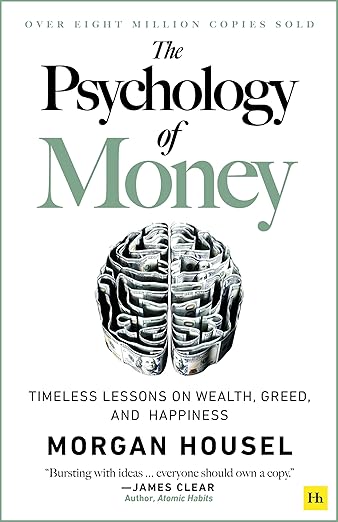
Published in 2020, this is one of the most important new entries in investing literature in years — and one of the most widely praised. Morgan Housel, a former columnist for The Wall Street Journal and The Motley Fool, argues that financial success has less to do with intelligence or knowledge than it does with behavior. Specifically: how we relate to money, risk, time, and uncertainty.
Through 19 short, beautifully crafted chapters, Housel explores the strange ways humans think about wealth — why we take risks we shouldn’t, why luck and skill are so hard to disentangle, why “enough” is such a difficult concept, and why the long game is almost always the right game. His storytelling is rich and vivid, drawing on historical anecdotes and personal experience rather than charts and data.
This book won’t tell you which stocks to buy. But it will help you understand your own instincts and biases well enough to stop those instincts from sabotaging your portfolio. For many investors, that knowledge is worth more than any hot tip.

Originally written as a series of letters to his daughter, J.L. Collins’ book has become a modern personal finance classic, particularly beloved in the financial independence community. Its message is simple enough to fit on a Post-it note: invest in low-cost index funds, avoid debt, and give your money time to grow. The rest, Collins argues, is just noise.
What makes this book sing is Collins’ voice — candid, warm, occasionally funny, and refreshingly free of jargon. He has no patience for complexity for its own sake, and his explanations of how markets work, why index funds outperform most managed funds, and how to think about risk feel genuinely illuminating rather than condescending.
If you’re just starting out and want a clear, practical roadmap that doesn’t require a finance background to follow, this is arguably the best first investing book you can read. It’s deliberately uncomplicated — and that’s its greatest strength.

Columbia University professor and hedge fund manager Joel Greenblatt wrote this book with a specific goal in mind: to explain his “magic formula” for investing in plain, readable English — including to his own children. The formula itself is elegantly simple: find companies that are both cheap (relative to earnings) and good (as measured by return on invested capital), buy a basket of them, and hold for a year. Then repeat.
Greenblatt backs his approach with impressive historical data showing that this systematic, emotionless method of stock selection has comfortably outperformed the market over long periods. More importantly, he explains the underlying logic in a way that makes intuitive sense: good companies at good prices tend to do well over time.
It’s a slim book, deliberately so, and Greenblatt’s light touch keeps it entertaining throughout. Even if you don’t end up following the formula to the letter, the thinking behind it — buy quality, don’t overpay, be patient — is wisdom worth absorbing from any angle.
Every one of these books carries a version of the same core message, however different their styles and strategies: investing is not about excitement, timing the market, or finding the next big thing. It’s about patience, discipline, understanding what you own, and letting time do the heavy lifting. Markets will rise and fall — they always do — but a well-read investor with a clear plan is far better equipped to stay calm, stay the course, and come out ahead.
Start with whichever title speaks to you most. You don’t need to read all eight before you invest a single dollar, but even one of them will give you a meaningful edge — not just in the market, but in the confidence with which you approach it.
If you’re just getting started with money, read our list of the best personal finance books for beginners first.
As an Amazon Associate we earn from qualifying purchases made through links on this page.
You might also like
The Best Books on Investing
Reading list · 6 April 2022

The Best Personal Finance Books for Beginners and Beyond (2026)
Reading list · 4 January 2023
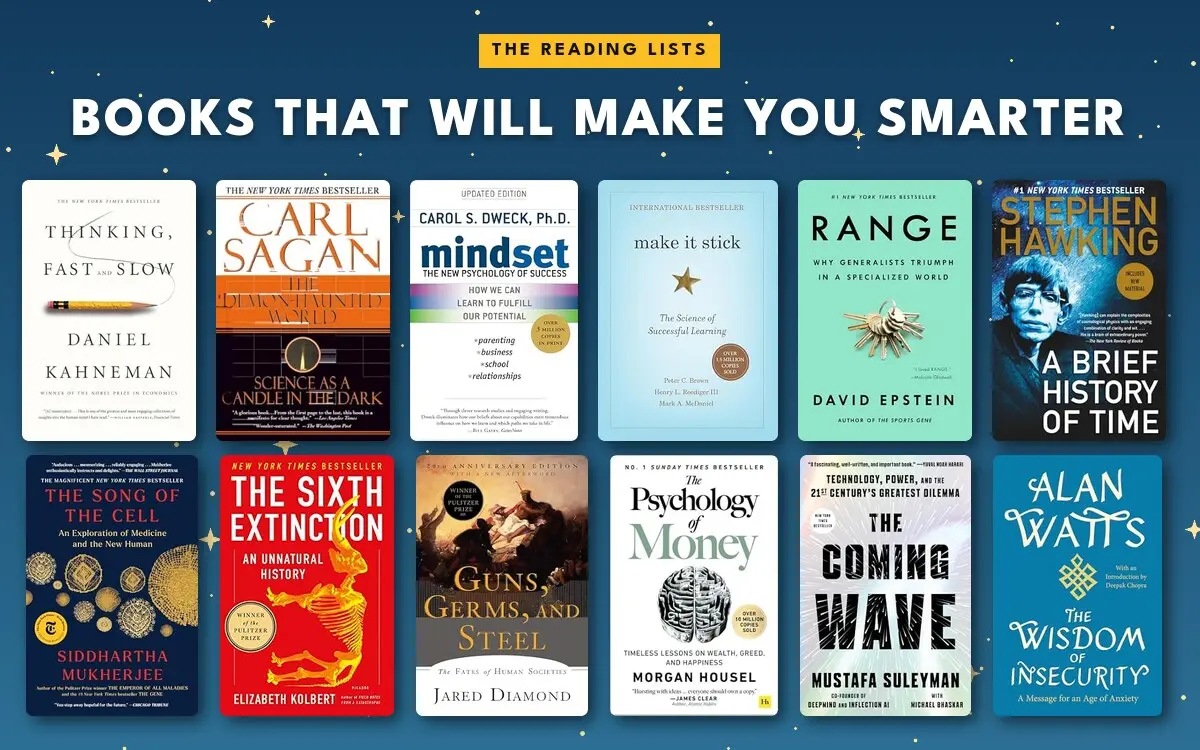
Books That Will Make You Smarter: 20 Books to Expand Your Mind
Reading list · 21 July 2023

Jeffrey Loewenstein: Learning New Perspectives
Interview · 5 July 2018