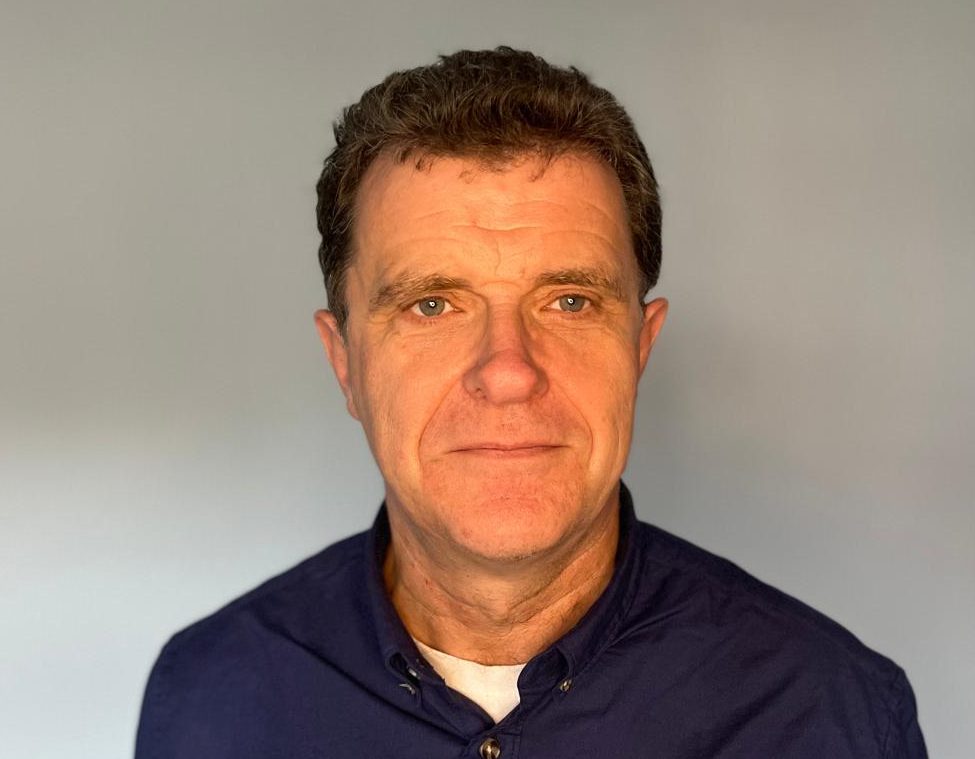
Steve Baker: Educator and Behaviour Consultant
Steve Baker’s reading list
24 books mentioned in this interview
- The List of Suspicious Things · Jennie Godfrey
- Comet in Moominland · Tove Jansson
- How Not to Be a Boy · Robert Webb
- Anne of Green GablesRecommended 12 times
- Pollyanna
- Down With Skool
- Back in the Jug Agane
- Whizz for Atomms
- They All Love Jack · Bruce Robinson
- Team of Rivals · Doris Kearns GoodwinRecommended 8 times
- The Gallows Pole · Benjamin Myers
- Things the Grandchildren Should Know · Mark Oliver Everett
- The Secret History · Donna TarttRecommended 7 times
- The Hotel New Hampshire
- A Prayer for Owen Meany · John IrvingRecommended 7 times
- Penguins Stopped Play · Harry Thompson
- Utopia Avenue · David Mitchell
- Birdsong · Sebastian FaulksRecommended 3 times
- On Green Dolphin Street
- The Rebel Angels · Robertson Davies
- Lustrum
- Imperium
- Dictator
- Outstanding
Books by Steve Baker: That Behaviour Book
Steve Baker is a former teacher and behaviour specialist who lives in Anglesey, North Wales, with his wife Sian. After a long career in education, from which he is semi-retired, he wrote his highly acclaimed non-fiction title, That Behaviour Book (Crown House Publishing, 2023), which won book of the year in the Teach Secondary awards. As a life-long comedy fan, he’s now written his first hilarious novel, Outstanding (Crown House Publishing, 2025).

When someone asks, ‘What do you do for a living?, how do you respond?
I am a freelance behaviour consultant. That means I work in schools giving strategic advice to leadership teams and work in a hands-on way with teachers in classrooms. I also get to lead training days for staff. I don’t work every day, but when you live on a farm, there are always things to clear, weed, demolish and cart about, so I keep busy.
What are you reading at the moment?
The List of Suspicious Things by Jennie Godfrey, which our daughter passed on to me.

When you think about your childhood, what book comes to mind?
Comet in Moominland by Tove Jansson. I loved the stories and the illustrations took me to a whole other world.

What did you want to be growing up?
My first idea was to be a journalist, but my parents disapproved of the drinking culture that gripped Fleet Street at the time. After four years at Bradford University, where all I ever did was rehearse for, and perform in, student shows, I told the Fellow-in-Theatre that I wanted to be an actor. He looked mildly embarrassed and suggested I trained to be a teacher, since plenty of theatre groups came out of Bretton Hall, which was a teacher training college at the time. I took his advice, stumbled into teaching and never looked back.
What do you think your school-aged self would think of you now?
I think he would approve. At the age of 17, I was convinced I had no personality and wasn’t in the least bit creative. The competitive atmosphere in a boy’s grammar school didn’t play to my strengths and I wasn’t equipped to deal with bullies. He would be immensely surprised to see the farm which we inherited from Sian’s parents. In fact, he’d probably be faintly alarmed by it. When the university theatre group travelled to perform at the Edinburgh Festival — I think it must have been August ’83 — we stopped halfway for a picnic and came upon a field of cows. My fellow students, mostly from comfortable middle-class homes, were confident with these animals but I was a chippy kid from Dagenham who had practically never seen a cow, never mind handled one, and I was very reluctant to go near them! I think my younger self would also be immensely impressed that I have managed to get two books published recently, one fiction and one non-fiction.
If you could wrap up a single book and gift it to yourself on your 21st birthday, what book would you choose and why?
How Not to Be a Boy by Robert Webb. I felt very much alone in a crowd as a young man and this book paints a very honest picture of how that feels. It’s also very funny. I think young Steve would be reassured and amused.

Do you have any books that you strongly associate with important people in your life?
I dedicated my book for teachers, That Behaviour Book, to the late Andrew Reid, who was an important figure in my teens and twenties. It was Andrew who told me the only thing your pupils need to know is that ‘Mr Baker cares‘. That piece of advice sustained me through an entire career.
Mum was very keen on Anne of Green Gables and Pollyanna. I never read the books but I did watch the TV series that was made in the ’70s and listed to Pollyanna on an LP record that she used to play.
I will always be grateful to my parents for giving me, one Christmas, when I was about 12 years old, a set of three books narrated by Nigel Molesworth called Down With Skool, Back in the Jug Agane and Whizz for Atomms, written and illustrated by Geoffrey Willans and Ronald Searle. I loved those books and I still have them. That was one memorable Christmas stocking!


Which book have you recommended most to friends and family?
Lately it has been They All Love Jack by Bruce Robinson, a hugely entertaining, thoroughly researched and totally compelling investigation into the identity of Jack the Ripper. I am utterly convinced by Robinson’s arguments, and I have been known to shout at the television when documentaries on the subject do not mention his book.
The other book that I recommend to everybody is Team of Rivals by Doris Kearns Goodwin. It tells the story of Abraham Lincoln’s life and focuses on his ability to weave together a successful team from his political opponents within the Republican Party. His wisdom, compassion and sense of humour are extremely impressive.


Do you prefer fiction or non-fiction? Ebooks, audiobooks or physical books?
I enjoy both fiction and non-fiction. I have just begun making use of audiobooks and I must say, when I’m performing a tedious task such as garden labouring or driving long distance, both of which I do a great deal, an audiobook in the headphones or over the car stereo is a very welcome distraction. Usually though, I am of the generation that likes to own books and music rather than borrowing them from an imaginary library in the sky called a ‘cloud’. I think ownership provides a different relationship with a piece of art.
What’s the best book you’ve read in the last six months?
The Gallows Pole by Benjamin Myers*.* I am a fan of the late Ted Hughes and Myers’ prose reminds me of Hughes’ poetry. The writing is so vivid; a feast for the senses!

Name a book that you feel everyone should read.
Things the Grandchildren Should Know by Mark Oliver Everett. Pete Townsend called it ‘one of the greatest books ever written by a contemporary artist’. Everett’s indie band is called Eels. The book celebrates his survival from a dysfunctional upbringing. It is the most honest, funny and moving book you will ever read. The word ‘unflinching’ might have been invented for it. I gave my therapist a copy when it was time for me to move on. It was the best gift I could think of. I would be very surprised if she’d ever heard a record by Eels in her life but that wouldn’t matter. What a great book.

Which book do you feel has had the biggest impact on your life?
This may sound strange, but I would have to say the Bible. Mum and Dad were Methodists and so I went to church twice on Sunday. At 14, I joined the youth group, where there were girls who would talk to me. I confused this with a religious experience and, before I knew it, I had qualified as a Methodist local preacher. Losing my faith soon afterwards, at 21, was hard. I may have lost my belief in the doctrines of the church but I can identify with what Bruce Springsteen said in an interview about Catholicism: ‘at some level, I am still on the team’.
Are there any books you haven’t already mentioned that you’d want to include on your ‘Top 10’ reading list?
The Secret History by Donna Tartt. I was completely gripped by it; perhaps because I felt like an outsider at university.
The Hotel New Hampshire and A Prayer for Owen Meany by John Irving, who creates unforgettable characters.
Penguins Stopped Play by Harry Thompson. Possibly the funniest book ever written. I laughed out loud all the way through and cried at the end when I discovered that this brilliant man had died so young.
Utopia Avenue by David Mitchell. Such a convincing portrait of a 1960s band that I had to keep reminding myself that it wasn’t real and I couldn’t buy the records.
Birdsong by Sebastian Faulks*.* I have read all his books, and this one stands out for me, along with On Green Dolphin Street, which had me calling out loud to the main character as I read the last few pages, imploring him to change his mind.
The Rebel Angels by Robertson Davies, which is set at a university like The Secret History. I like the way Davies mixes the profound and the profane. I chose it for its cover at an airport and ended up reading all his novels.
‘The Cicero Trilogy’ by Robert Harris: Lustrum, Imperium and Dictator. I don’t think Harris has written a better book than these three novels about Cicero.
- The Secret History
 The Secret History
- The Hotel New Hampshire
 The Hotel New Hampshire
- A Prayer for Owen Meany
 A Prayer for Owen Meany
- Penguins Stopped Play
 Penguins Stopped Play
- Utopia Avenue
 Utopia Avenue
- Birdsong
 Birdsong
- On Green Dolphin Street
 On Green Dolphin Street
- The Rebel Angels
 The Rebel Angels
- Lustrum
 Lustrum
- Imperium
 Imperium
- Dictator
 Dictator
Please tell us briefly about your latest book.
Outstanding is a comedy. The worst school in England is inspected by Ofsted. It sits between a pig farm and an ice-cream factory, and becomes collateral in the feud between the two. The head decides to volunteer for Educating Norfolk, a fly-on-the-wall documentary to be filmed in the school, and the film crew arrive the same day as the inspectors. There are many larger-than-life characters caught up in absurd situations.
People tell me it’s very funny. At the heart of the book, a newly appointed inspector full of idealism comes face to face with the consequences of his own judgements. This is the first fiction book that Crown House has published. I find their faith in me and in the book quite humbling.

If you were to write an autobiography, what would it be called?
It would have to be Growing Up in Public, because at various times in my life I have had to learn lessons while feeling exposed to scrutiny, most tellingly when I lost my faith. For most people that would be a private matter, but I was a preacher and I had to resign. I was away in Bradford and, after months of considerable anguish, I sat down and wrote my parents a long letter. We were soon reconciled but the episode has given me tremendous empathy for anyone who feels compelled to reveal their true nature to their parents. It isn’t easy.
If you have enjoyed this interview with Steve Baker, you can follow him on X, or find out more about him at the Crown House website.
As an Amazon Associate we earn from qualifying purchases made through links on this page.
You might also like
Eileen Cook: Destined to be Author
Interview · 14 September 2016
Shane Dikolli: The Importance Of Independence And Curiosity
Interview · 23 January 2019
Derek Owuso: Falling for Literature Instantly
Interview · 1 June 2020

Christopher Golden: Immersion In The Author’s Imagination
Interview · 6 December 2017