
Simon Høgsberg: The Relationship Between Books and Photography
Simon Høgsberg’s reading list
6 books mentioned in this interview
- Catch-22 · Joseph HellerRecommended 12 times
- The Map and the Territory · Michel Houellebecq
- The Brothers Lionheart
- Doctor Zhivago · Boris Pasternak
- The BibleRecommended 34 times
- Tao Te Ching · Lao TzuRecommended 7 times
Simon Høgsberg is a photographer who works from Copenhagen, having got his BA in Photography from the School of Media in London. His most notable work so far would be his amazing photography on the piece he called ‘We’re All Gonna Die – 100 Meters of Existence‘, where Simon spent 20 days capturing 3,000 images for the longest photograph in the world. The piece has been described as documentarian style with a deeply humanist core. I was eager to to speak with Simon Høgsberg and discuss the role of books in his life and his career as a photographer. So, here is my interview with Simon Høgsberg…
When someone asks you ‘what do you do for a living?’ – How do you respond?
When someone asks me ‘What do you do for a living?’ I’m immediately curious, how does it make sense to respond to the person asking this question? I could say ‘I work as a freelance photographer’. I could also say something that would surprise myself and perhaps also the person who asked me the question. Surprising myself is the biggest art of all, sometimes. We love to be surprised, don’t we? It’s wonderful I think to be with people who keep you on your toes.
What are you reading at the moment?
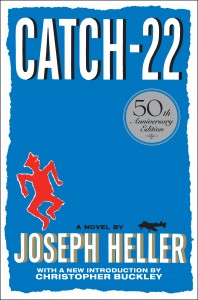
Lying next to the bed on the windowsill is Catch-22 by Joseph Heller. Ten pages have been read, the whole story is dark territory so far. Lying on another windowsill is The Map and the Territory by Michel Houellebecq.


When you think about your childhood, what book comes to mind?
The Swedish author Astrid Lindgren has written a book called The Brothers Lionheart. It’s about two brethren, the younger brother looking up to the older brother who is about to die. The book occupies a space in my mind, and what is remembered is the smell of white flowers from the garden of death that the older brother talks about to his younger brother and which he enters at some point. The inevitability of death hit me when the story was read aloud at bedtime. Was it too sad for a small child this book?

What did you want to be when you were growing up?
When I was growing up I wanted to be loved. I still do. Adults are really good at making it clear how others are imperfect. Children do that too but there is no disdain in their small hearts when they point to other’s imperfections. They forgive so fast. Being loving like children is possible. Perhaps what I wanted to be was loving, because you can be loving even though you don’t have to be loved to be loving. And then you’re free.
What do you think your school aged self would think of the present day you?
I can’t answer that question. I didn’t know who I was back then, I don’t know who I am now – what does one particle think of the other, I don’t know, does it matter?
If you could wrap up a single book and gift it to yourself as you left education – which book would it be?
There is a difference between who I am today and how I deal with situations compared to the way I would deal with situations around the time I left education. I would be very, very hesitant to ship any book back in time and see it be opened by the younger version of the individual I call ‘me’ today. Because why would I send a book back in time? What if that book changed the way I percieved the world? Would my actions change? Likely so. Would I become a different person, would I become very different? My habits would change, my personality perhaps would change. I’m 40 today, and the person we’re talking about receiving this book from the 40-year old me would not be how I am today. Because that book would change the behaviour of my younger self. There are no regrets today in terms of what I have become. And many good books were read back then, I can only be satisfied with the choice of books that were picked up by the younger me in the library without the help from whoever it is I am today.
Does your reading have routine? Is there a particular time or place that you like to read?
No routine. But there are specific times for sure where the hand reaches for the book almost automatically, when a night or a day has been spent with a person in whose company I have unloaded my mind to the extent where there is nothing more to give, hearing, absorbing like a sponge the words and the direct voice talking to me from the pages of a book feels like diving into a warm sweater when the body and bare skin has been exposed to cold rain for too long. Comfort. A sense of safety. Please just talk to me, book. You have my ears, and they just love to listen. The tea cup gradually is filled, the warmth from the water creeping into the porcelain, and one is reminded in a way where there is no doubt at all that literature constitutes a part of the human experience that is necessary and vital like the blood running through the veins.
What relationship do you think there is between books and photography?
When a person – let’s just call her an author – shapes sentences in an attempt to translate images in her mind to text, something is going on which for the outsider is not quite clear. What is she doing? She uses symbols, letters, and words to help herself and others see what she sees, yet what she sees is not necessarily clear. She makes a lot of choices. What fruit is lying in that bowl that the person she is writing about is looking at? An orange? Grapes? Oh, definitely grapes. If you asked the author after reading her text ‘why is the bowl containing grapes?’ it is not necessarily certain that she can explain why this particular fruit was chosen. The best literature, I think, comes about when the author leaves the stage and let’s her subconscious mind bring the goods to the table. The same thing goes for photography. It’s often impossible to explain why one picture works better than another picture, yet there is no doubt to the person whose camera took the pictures that photo number 2 is better than photo number 1. Opening up oneself to the creative process means, I think, to allow oneself to be mystified and accepting of the words and images that want to be born through the author, through the photographer. There isn’t a great deal of difference between sharing through images and sharing through text, the way the sharing is being done is essential, that’s what is important. As an author when you try to prove a point, you fail. The same goes with photography. You can’t take credit for being a good photographer. Because when you’re a good photographer; you didn’t do the pictures.
Which book has had the biggest impact on your career so far?
Simplicity. Patience. Compassion. Zen. Death. Moon Palace. Paul Auster. Fate. Faith. Point of no return. Cutting off all your hair. Fuck all. Fucking. Deep well. Endless joy. Not one book, a range of books. Gloom, doom, and… no, not gloom, doom. Working in the periphery and not doing what you do for anything else but the joy of doing it. Characters in books, simple men, Haruki Murakami, Raymond Carver, writing because writing is an addiction; being alone, ready, empty, this is freedom.
Do you have any books that you strongly associate with someone important in your life?
Maybe.
What book have you recommended the most to friends and family?
When I was younger, I sometimes read a book that made a big impression on me, and at times I would talk to people about this book that recently rocked my world. And perhaps after recounting the story of the book I would recommend the book to the person listening to my words. Because blindly and wildly influenced by the contents of the book and moved emotionally by it I would perhaps assume that the person I was talking to about the book would be equally moved if he or she would just pick it up and read it. Now I’m less of a loose cannon when it comes to recommending stuff to other people. Sharing ideas and information that influence us is natural and something I love to do. And I’m always, I think, happy and grateful when I hold the belief that the person or persons who listen to my words are enriched by the information they receive. But I also realise that you can pick any 10 people on a random street in a random city and find that though they have so many things in common – each of them has a heart, for instance, and a brain, and a need for other people also – their experience and interpretation of the world is different. They have different experiences and when you mention the word coffee cup 10 different images pop up in their minds. They don’t need my recommendation. I don’t know what they need, that’s my point.
Do you prefer fiction or non-fiction?
If asked the question ‘Do you prefer fiction or non-fiction’ you can waltz down a blind alley and on the way look for an appropriate answer that will satisfy the dog, the birds and the butterfly. So what is your answer to that question? Which do you prefer, lettuce or tomatoes? Potatos or a shovel. Well, give me some hot water and most likely that will be everything – let’s just say, a good beginning.
Do you think reading is important?
When I was a young man, we’re talking late teenager and a person in his early 20s, many hours were spent in the rather big library located 500 meters from the apartment where I lived. His head tilting and then regaining its upward position like that of a man taking a look under the bed, hours and hours were spent reading the names of authors and the titles of books turning their backs on their potential reader, allowing for their content to be revealed only through letters printed on the spines. Figuring out which books to pick and check out, and which to bring home was a slightly painful process. Patience was needed. And dear boy did I get impatient when for the fifth hundredth or so time I was informed by the text on the back cover of a book that it was about an elderly man or woman revisiting her past in an attempt to understand and settle the inner disputes still haunting his or her present day self. These books were put back on the shelves accompanied by an exclamation coming from me, one could hear it, the sound of irritation. Patterns were revealed over time in the form of what seemed to be identical subject matter in numerous books. And yet I was grateful that the library existed, that literature was an art form. Through literature I travelled the world. Through literature I had the chance to get a multi-faceted knowing of what constitutes humanity. Do I think literature is important, thank you so much to all the writers who thought up worlds and made such great effort to describe these worlds, allowing me to enter into them and be shaken in my beliefs, period.
What’s the best book you’ve read in the last 6 months?
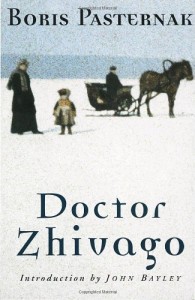
The book that took possession of me, you could say, almost physically and which was read during the last 6 months is Doctor Zhivago by Boris Pasternak. Every sentence is shaped in a way so that the story is absorbed from the pages effortlesly, and once in a while one must pause or will pause, I did for sure and many times so, and take a moment to acknowledge how considerate the author was when writing this book. It is evident throughout the whole book, and I will add it’s 500 pages, that the author did not cut any corners when writing this… I’m tempted to call it a masterpiece. This is fiction that is written in a way so that the story appears to be raw data from a period in history that it is difficult for modern people, especially westerners, to comprehend, were it not for writers like Boris Pasternak. I was left with a feeling of being slightly tipsy in maneuvering my way through the rooms and streets in Moscow and villages in Russia before, during and after the revolution that took place there. Through this book one gets a very clear idea of how much and to what degree fear is inseparable from the romantic ideas that set off the revolution. In such an environment there is no space for free thinkers. Our hero, Doctor Zhivago, is a free spirit who doesn’t want to conform, who can’t conform to manifestos that are shaped by the mind and much less by the heart.

Do you prefer real books or digital books?
I just love the fact that books are possible to get hold of, in whatever shape or form they come.
Name a book that you feel every human should have to read by law.
I’m not sure if what I’m going to say now is true. What would happen if every man and woman was obliged to read the same book. Personally, to begin with, I would feel, most probably, a growing sense of resistance against the rule that here is a bundle of information that I have to take in. If I don’t I may be caught and punished. The contents of the book may be beautiful, and according to the voices of many I have reason to believe that it would be good for me to read it. The image of a broccoli force-fed to a child comes to mind. Let’s say I read the book. Most likely I would interpret it, understand it, in light of the experiences I have had so far. My neighbour’s life-experiences are different than mine. So also is his interpretation of the contents of the book. We would meet in the yard, and the conversation between us will be about one of the characters in the book, the woman ploughing the field. And who then all of a sudden picks up a stick on the ground and starts hitting the oxen that is pulling the plow. Now, my neighbour’s interpretation of this scenario is completely different than mine. And we cannot come to an agreement. Why is this woman doing what she does?
Perhaps, deep down, we have an urge to be understood by the person we’re talking to, we feel an urge to justify our beliefs. To settle our dispute we agree to pay a visit to the group of 3 men and 3 women who has a reputation in the community we live in to be the superior interpreters of the contents of the book that everyone has to read by law. The dispute between my neighbor and me is presented to the group of 6 people, and the 6 people, it turns out, are more in favor of my neighbour’s interpretation of the story about the woman on the field and the oxen. But I know better. What the 6 individuals and my neighbour say runs counter to my view of the world. And therefore it is simply not possible for me to accept what they say. However well-meaning the intentions behind the law that all people must read this particular book, the law would give rise to conflicts between people. If I were a literary tyrant, I would follow the will of the people.
What is the book that you feel has had the single biggest impact on your life?
I would think that the book that has had the single biggest impact on my life is The Bible. Written by… I forget the authors’ names. I never read the book, I’m not sure my parents read the book but many people did, and the truthfulness hidden in the many parables in the book has been taken in and shared by people of such great numbers that my worldview in terms of moral models and what I find beautiful and fair more or less is an echo from the pages of this book.

What books or subject matter do you plan on reading in the next year?
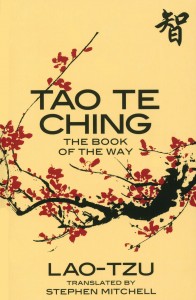
Three days ago I was informed through an interview with a man called Wayne Dyer that he I don’t know how recently made a translation of Tao Te Ching by Lao Tzu. I would like to read Dyer’s translation. This man, Lao Tzu, a philosopher from ancient China. His teachings were very plain and easy to understand yet mystical, and I’m drawn to his teachings because I know they’re true, and I know I don’t understand them fully. Bret Easton Ellis’ main character in Glamorama was throwing off one-liners and weird sentences that perhaps he really believed in and which it was difficult to get your head around. One of these sentences would sound like ‘The better you look the more you see’. Lao Tzu’s Tao Te Ching is full of sentences like that, fascinating. Thank you to Stephen Mitchell and to the 14,000 other people who made an attempt to spread Lao Tzu’s insights around the planet.

If you were to write an autobiography – what would it be called?
If one day the thought would come to me, ‘I wanna write an autobiography’, it should be a book that was not about that tiny, insignificant fragment being called Simon Høgsberg, the subject matter of the book would be a written attempt to detect universal laws, behavioral patterns in human activity, and other interesting stuff that hopefully would be experienced by the reader in such a way that he or she would feel that she was disintegrating in the reading process, falling apart and opening up and floating away from the pages in currents of invisible energy. Reading the book would be like dying. No pain, the opposite of contraction, we must understand that nothing dies when we die, and so we should learn to love death because death is laughter and like a sexual intercourse with all the fantastic realities that we’re so far removed from when the book is kept at a distance. The title, ‘You Haven’t Seen Nothing Yet – Paradise at Your Doorstep‘, an autobiography by one out of a trillion.
If you’d like to learn more about Simon Høgsberg, you can find him on his website.
As an Amazon Associate we earn from qualifying purchases made through links on this page.


