Michael Cheval: Books for Becoming a Harmonised Person
Michael Cheval’s reading list
8 books mentioned in this interview
- Winter Men · Jesper Bugge Kold
- The Old Genie Hottabych · Lazar Lagin
- Jonathan Livingston Seagull · Richard BachRecommended 7 times
- Islands in the Stream · Ernest Hemingway
- Les Essais · Michel de Montaigne
- Thinking, Fast and Slow · Daniel KahnemanRecommended 15 times
- Zealot: The Life and Times of Jesus of Nazareth · Reza Aslan
- Why Nations Fail: The Origins of Power, Prosperity, and Poverty · Daron Acemoğlu and James Robinson
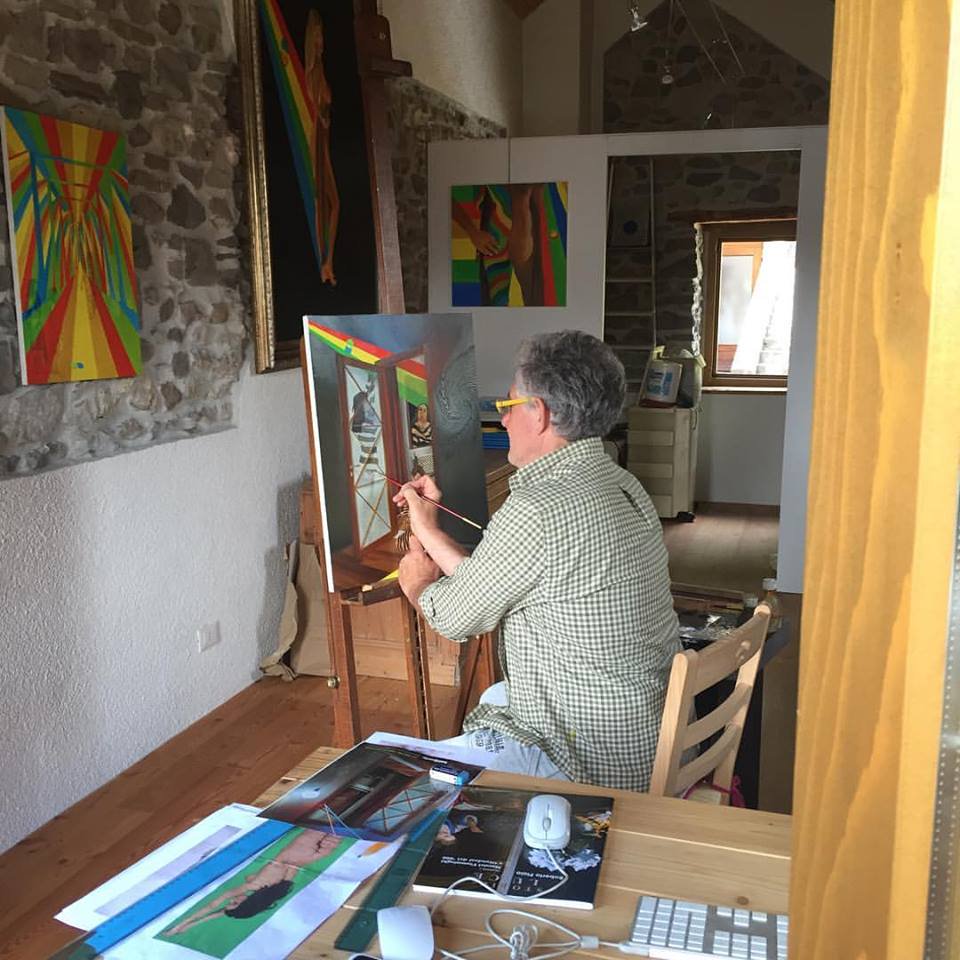
Michael Cheval is known as the world’s leading contemporary artist. He specialises in Absurdist paintings and portraits, and wonderfully describes absurdity as ‘an inverted side of reality, a reverse side of logic’. Michael Cheval was born in 1966 in a small town in Russia called Kotelnikovo, and demonstrated an early passion for art in his childhood. Graduating from Ashgabat School of Fine Art, Michael would go on to work as an independent professional artist, with his style and surrealistic direction inspired by Eastern philosophy. In 1998, Michael Cheval joined the renowned New York National Arts Club, where he would go on to win the Exhibition Committee Award in 2000. Michael’s work is internationally acclaimed and can be found all around the world. Please enjoy my interview with the incredible artist that is Michael Cheval…
When someone asks you ‘what do you do for a living?’ – How do you respond?
I am an artist, an occupation that is able to generate a sufficient income. Someone great once said that there are two kinds of professions that allow a person to always earn a piece of bread – an artist and a musician. My experience has shown that it’s the truth.
What are you reading at the moment?
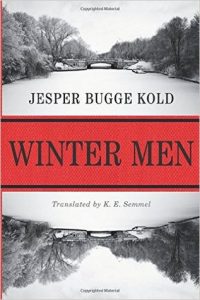
At the moment I’m reading a book called Winter Men by Jesper Bugge Kold. This book tells the story of two brothers during World War II in Germany. This is the story of two talented and intelligent men who, against their will, became a part of Hitler’s dreaded machines, which led to the tragedy of not only themselves but the whole German nation.

When you think about your childhood, what book comes to mind?
I find it difficult to answer this question. One of the first books that made a great impression on me was The Old Genie Hottabych by Lazar Lagin. This is the Soviet literature, which for the most of your readers will likely be completely unknown. This book talks about how a boy found an old bottle in a river. From this bottle emerged a real Genie, and then began an amazing adventure.

What did you want to be when you were growing up?
I always wanted to be an artist. I was sentenced to be one…
Did you demonstrate an affinity with art as a child?
Oh sure. I started drawing when I was 2 years old. Many might say that most kids draw at that age, but I doubt many drew and painted as much as I did. It has always been my passion. I was obsessed with painting.
What do you think your school aged self would think of the present day you?
I think I would say: “Wow!”. You have to understand that I grew up in the 70s in the Soviet Union. I could not imagine that I would go on to live in the United States and will be a popular and well-known artist. My childhood dreams were limited by the country where I was born and grew up.
If you could wrap up a single book and gift it to yourself as you left education – which book would it be?
I think the book, which is able to stimulate the further development of a man is Jonathan Livingston Seagull by Richard Bach. However, it needs to be correctly read. You need someone who will decrypt the message.

Does your reading have routine? Is there a particular time or place that you like to read?
Frank Zappa said, “a lot of books – not enough time”. I read when I have time for it. I fly a lot and travel a lot, so I mostly read whilst traveling. I miss the time when the book determined my time.
Which book has had the biggest impact on your career so far?
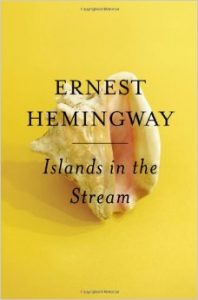
This is not a simple question. The book can not have a big impact on someone’s career. The book can only lead a person to believe, to give the right direction. Careers consist of many components, often of random encounters and conversations. However, I can mention a book that made me look beyond the horizon. It was the Islands in the Stream by Ernest Hemingway. I really liked Thomas Hudson, a creative and reckless man, and at the same time bold and decisive. I remembered this book when I came to exhibit my work in Key West for the first tim.

What two pieces of advice would you give a young aspiring artist?
You know, time changes so fast that I would not have anything to advise to young artists. It seems to me that I can’t catch up with what is happening in the art world. One single word I would say to young artists is: endeavour!
Who would you say are the three artists that continue to inspire you?
I admire many artists. It is very difficult to choose three, five or ten artists who still inspire me. But if you insist; it would be Albin Brunovsky, Ter Borch and Pieter Brueghel.
Do you have any books that you strongly associate with someone important in your life?
I associate poetry with most close and important people in my life. Poetry is a subtle association of connecting people and the past. It is the memory of sounds and smells, some fleeting images, faces, and voices. I love Russian poetry of the 20th century. Block, Pasternak, Tsvetaeva, Brodsky. Two of these poets were awarded the Nobel Prize for Literature.
What book have you recommended the most to friends and family?
To all my friends, I advise Les Essais by Michel de Montaigne. This book will never get old. Reading Les Essais; you plunge into a deep and wise dialogue with one of the most truthful people who ever lived on the planet.

Do you prefer fiction or non-fiction?
In my childhood and youth, I loved fiction. I loved adventure novels and science fiction. Over the years, I gravitate more to philosophical, historical and scientific non-fiction.
Do you think reading is important?
I think reading is the main condition for the development of personality. Without reading good and smart books it is impossible to become harmonised person.
What’s the best book you’ve read in the last 6 months?
The best books I’ve read in the last six months are Thinking, Fast and Slow by Daniel Kahneman and Zealot: The Life and Times of Jesus of Nazareth by Reza Aslan.


Do you prefer real books or digital books?
I prefer books in general. For me, there is no difference, e-book or paper book, as long as a book is interesting.
Do you think there is a relationship between books and art?
I think all the arts are interconnected. This is the Harmony. Words create an image, an artist imagines it and creates a visual example of his understanding of literature.
Name a book that you feel every human should have to read by law.
No such book should be read by law! For educated people, there are no criteria. Someone prefers Lao Tzu, some prefer Aristotle, and some love Schopenhauer. No one can impose taste or knowledge. A man must seek perfection in himself to seek guidance.
´;ion=ðt4Ð#).-,–,/(Ncj]N
What is the book that you feel has had the single biggest impact on your life?
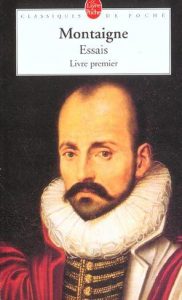
I have read many good and clever books. At various times I have experienced the excitement of reading them. But the book that keeps me coming back is Les Essais by Michel de Montaigne. I love this writer, I like his leisurely train of thought, I’d like to talk to him. Sometimes, it seems to me, I know him personally.
Are there any books you haven’t mentioned that you feel would make your reading list?
As I said earlier, I have read a lot of books in my life. The scope of this interview doesn’t allow me to share all I know about literature. But I’m happy to list the authors, which certainly need to be read, and everything they ever wrote. Anton Chekhov, Nikolai Gogol, Ivan Bunin, Mark Twain, Ernest Hemingway, William Faulkner, Sherwood Anderson, John Steinbeck, Kobo Abe, Akutagawa Ryunosuke, Erich Maria Remarque, Hermann Hesse, Gabriel Garcia Marquez, Jorge Luis Borges, Umberto Eco, Albert Camus and many, many others.
What books or subject matter do you plan on reading in the next year?
Next year I plan to read Why Nations Fail: The Origins of Power, Prosperity, and Poverty by Daron Acemoğlu and James Robinson. Also, I would like to read more books by Ayn Rand and Richard Pipes.

If you were to write an autobiography – what would it be called?
I hope it’s too early to think about writing an autobiography. But it seems to me that autobiographies should be simply called “Autobiography”. What is there to add? Read and understand everything.
If you’d like to learn more about Michael Cheval, you can find him on his website, Facebook and Twitter.
As an Amazon Associate we earn from qualifying purchases made through links on this page.